

Wanzhong Yixin Files IPO Prospectus: Bringing Semiconductor-Based Miniaturized Gene Sequencers to Community Healthcare
In recent years, precision medicine has garnered significant favor from investors, with an increasing number of institutions and enterprises entering the field, thereby driving market development in this sector.
According to data from the international market research firm BBC Research, the global precision medicine market was valued at approximately $60 billion in 2016. The industry’s global growth rate stood at around 15% between 2016 and 2018, and the market size is projected to surpass $100 billion by 2020.
Amidst this vast market opportunity, some companies are focusing on gene sequencing, others are starting with immune cell therapy, some are betting on oncology drugs, and others are entering the field of gene editing. Chengdu OneChip Biotechnology Co., Ltd. (hereinafter referred to as “OneChip”) has started by unleashing the technical potential of semiconductor chips, independently developing miniaturized rapid gene sequencing solutions, thereby contributing to the advancement of the gene sequencing industry.
Hu Wenchuang is among those who are highly sensitive to technological changes and possess a strong willingness to engage in practical application.
This overseas student, who graduated from Peking University and earned a Ph.D. in Molecular Electronics from the University of Notre Dame in the United States, has accumulated over twenty years of learning and R&D experience in multidisciplinary cross-fields such as semiconductors, nanotechnology, and biosensing.
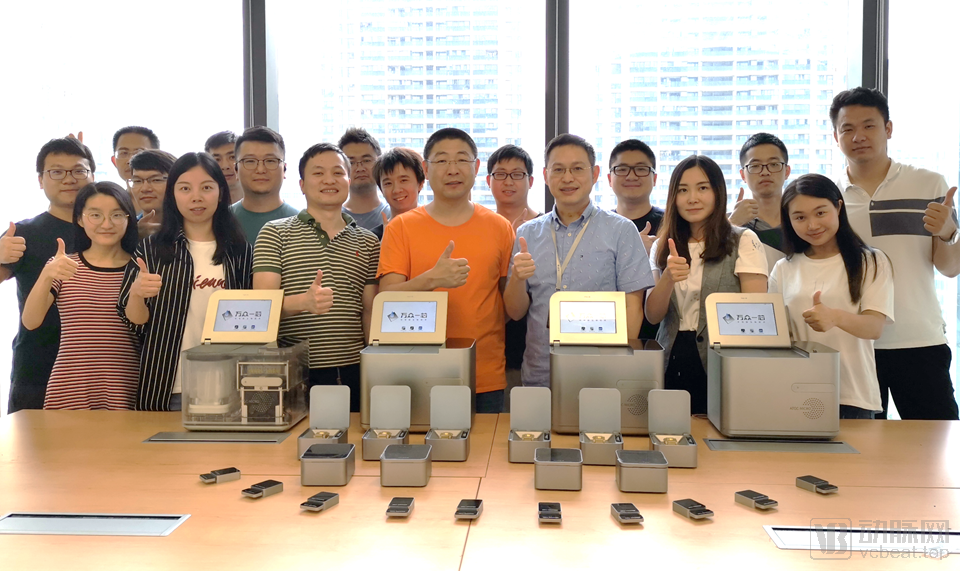
“This is a new technology with genuine social value.” After witnessing how precision medicine significantly enhanced the efficacy of disease diagnosis, treatment, and prevention, Hu Wenchuang decided to delve deeply into this field and founded OneChip Bio in 2017. The company’s name reflects the founding team’s original aspiration: to wholeheartedly safeguard the health and well-being of the general public.
Hu Wenchuang also recognized that although the entire gene sequencing industry has achieved rapid development in the field of precision medicine, there is still significant room for improvement in efficiency. The reason is that, in the current industry landscape, mainstream gene sequencer manufacturers have adopted a strategy of continuously increasing sequencing throughput to spread out user costs, thereby driving down the price of gene sequencing.
However, high-throughput gene sequencers are priced at several million RMB, and establishing a high-throughput sequencing laboratory requires nearly 500 square meters of high-end laboratory space along with specialized personnel. The fixed costs associated with each run remain prohibitively high, limiting the use of such equipment to large medical institutions. Meanwhile, in the low-throughput sequencing market for clinical applications, demand remains unmet due to challenges such as high costs and low efficiency. Consequently, compact gene sequencers with lower startup costs and faster workflows have become essential for large-scale clinical adoption.
“Without precise testing, so-called precision medicine is nothing but a castle in the air,” Hu Wenchuang told VCBeat. Gene sequencing should not be confined to large tertiary hospitals; the key to maximizing the value of precision medicine lies in implementing gene sequencing at the grassroots and community levels.
Efficiency is what matters.
Just as the digital industry has followed “Moore’s Law,” continuously advancing semiconductor technology over decades to transform supercomputers into handheld smartphones, Hu Wenchuang witnessed in the United States the profound transformation of gene sequencing technology from optical to electronic methods, and ultimately to large-scale integrated circuits.
“Every participant is striving to make the industry better, which has improved the overall efficiency of the sector,” said Hu Wenchuang. One-Chip Bio’s approach focuses on semiconductor technology. “Ion Torrent, a U.S. company, also specialized in semiconductor-based gene chips and successfully developed and commercialized its products. However, its instruments and chips remain expensive, and its complex magnetic bead-based water-in-oil emulsion sample preparation process fails to fully leverage the powerful advantages of semiconductor technology.” After several years of dedicated research, One-Chip Bio successfully developed and began mass production in 2019 of semiconductor gene chips that are more sensitive and cost-effective than traditional methods.
In terms of products, Zhangjiagang One-Chip has developed digital PCR instruments based on semiconductor CMOS chips and the ATGC MICRO semiconductor gene sequencer. Specifically, by eliminating the magnetic bead workflow found in Thermo Fisher Scientific’s products, the digital PCR instrument enables rapid sample library preparation. Unlike instruments that utilize fluorescence-based sequencing, the ATGC MICRO semiconductor gene sequencer can process dozens of samples per run without the need to batch large numbers of samples together. It completes the entire sequencing process in just five hours, and its low-cost consumables lower the barrier to operating the sequencer, significantly improving work efficiency. Furthermore, Zhangjiagang One-Chip’s ATGC MICRO gene sequencer is compatible with a variety of third-party diagnostic kits for diseases such as lung cancer and cardiovascular and cerebrovascular disorders, thereby enhancing the efficiency of medication management.
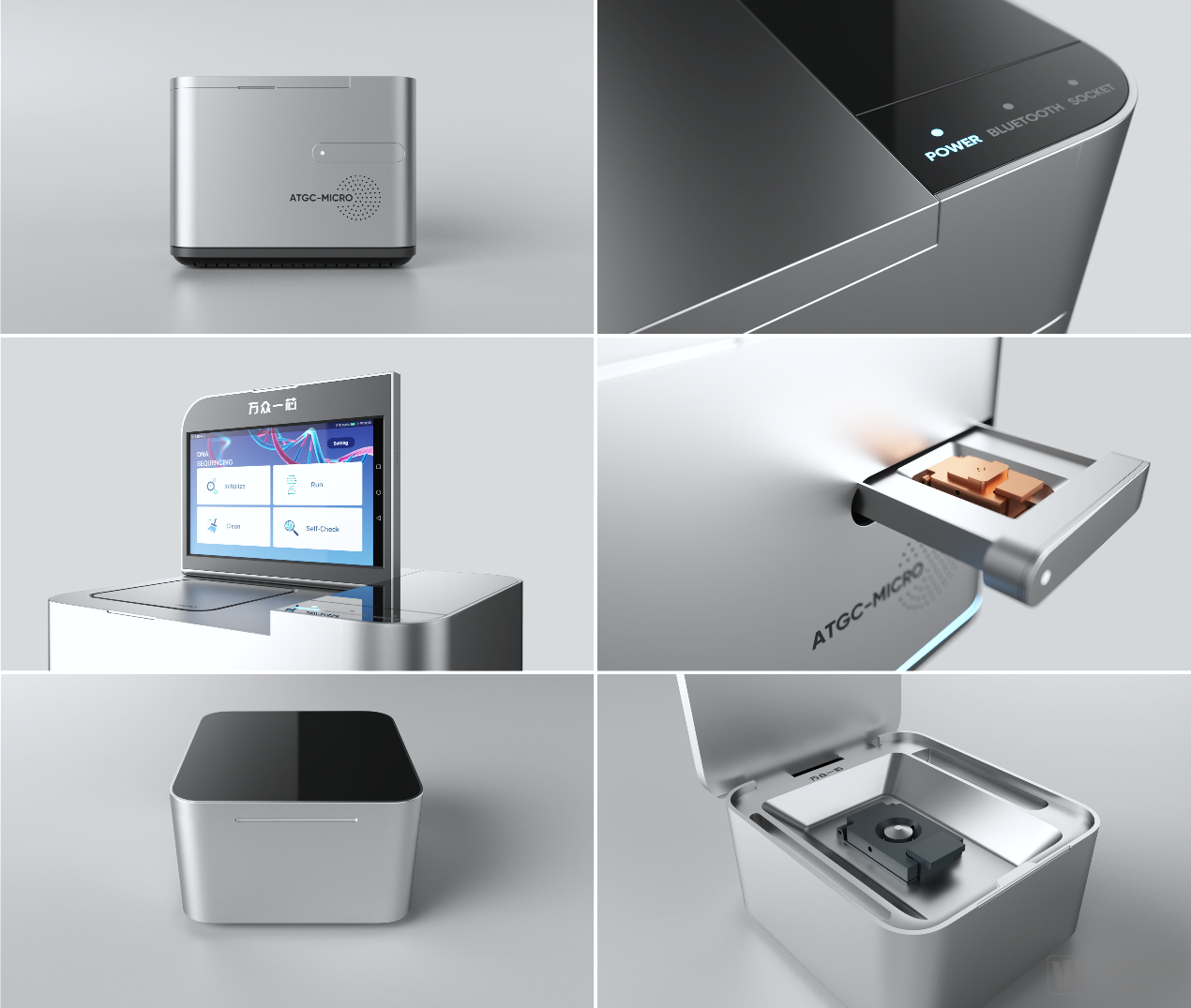
According to Hu Wenchuang, the company’s remarkable breakthroughs are attributable to the “R&D DNA” of Zhangjiagang One-Chip Bio-technology Co., Ltd. Currently, the team comprises nearly 50 members, with R&D personnel accounting for over 70%, and holds more than 90 intellectual property rights.
It is precisely the unique barriers built on technology and products that have made OneChip Bio consistently favored by capital. The company has now completed three rounds of financing: a seed round of several million RMB invested by Zhichu Capital; a Series A round of tens of millions of RMB led by New Tongde Capital and Zhenyun Ventures, among others; and a Series A+ round of tens of millions of RMB with follow-on investment from Youxuan Capital.
The sun is just rising, and the road ahead is still long.
Zhangjiagang One-Chip Bio-technology Co., Ltd. has only just embarked on the journey toward realizing its vision of bringing gene sequencing to grassroots settings, including community hospitals, clinic pharmacies, and outdoor testing sites.
So, how can we accelerate the transition to the next stage? Beyond technological advancements, commercialization considerations are also essential. Hu Wenchuang stated that all OneChip devices have been automated to optimize user experience. “The sequencing process can be easily completed simply by operating a mobile app, which lowers the barrier to entry. After brief training, staff members can become operational, thereby saving medical institutions costs associated with training and recruitment.”
In terms of pricing, the complete solution package for digital PCR and the ATGC MICRO gene sequencer is currently priced between RMB 150,000 and RMB 200,000. The entire gene sequencing laboratory requires a construction area of 30 square meters, with total costs not exceeding RMB 400,000.
“For users, the most critical factors in genetic sequencing are testing accuracy and price. Therefore, our continued efforts will focus on further improving cost-effectiveness and convenience.” In Hu Wenchuang’s view, considering the development direction of medical equipment from the perspective of the general public is the key to creating value and capturing greater market opportunities.
Looking ahead, Zhangjiagang one-chip Bio-technology Co.,Ltd. will focus on two key areas. First, it will continue to pursue technological innovation through multidisciplinary integration, while strengthening its organizational framework and incentive mechanisms to drive technical advancements. Second, guided by the commitment to creating social value, the company will translate its technological capabilities into tangible products that deliver real-world value.