

Harvard Postdoc-Led Huaxia Siyin Develops Intraoperative 3D Bioprinting Gun and Bioinks, Files IPO Prospectus
In recent years, 3D printing technology in the medical field has achieved rapid development, with research on its application in bioprinting human organs becoming a focal point of public attention.
Behind this trend, two factors stand out. First, the application of new materials and the increasing maturity and stability of bioprinting equipment have advanced significantly. Second, with the accelerating aging of the population, diseases such as osteoarthritis are becoming more prevalent. Meanwhile, as national fitness initiatives gain momentum, cases of cartilage injury caused by sports activities continue to rise. These developments have unveiled growing opportunities in the medical 3D printing market: according to projections by SmartTech, a leading player in the 3D printing industry, the global market size for medical 3D printing was expected to reach $8.9 billion in 2022.
Huaxia Siyin (Shanghai) Biotechnology Co., Ltd. (hereinafter referred to as “Huaxia Siyin”) is a high-tech enterprise deeply engaged in the medical 3D printing industry. As a wholly-owned subsidiary of Jiangyin Siteyi Biotechnology Co., Ltd., the company primarily focuses on the research and development, clinical translation, and standardized, large-scale production of stem cells and bio-3D printing applications in regenerative medicine, as well as bio-3D printing materials (bioinks). It operates three cGMP (current Good Manufacturing Practice) production lines dedicated to stem cells, bio-3D printing, and bioinks.
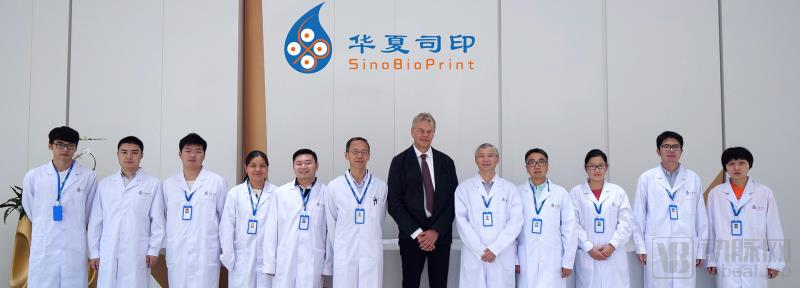
Group photo of Nobel laureate Edvard Moser with the entire team of SinoCellular (Shanghai) Biotechnology Co., Ltd. during his visit to Huaxia Yuan Cell Engineering Group Co., Ltd. and SinoCellular (Shanghai) Biotechnology Co., Ltd. in September 2019
Currently, Huaxia Siyin has developed five clinical medical device projects based on its core platforms of Harvard University-derived stem cell technology and bio-3D printing. These include a bio-3D printing gun and cartilage-regenerating hydrogel for minimally invasive surgeries in orthopedics and plastic surgery; an osteochondral 3D-printed scaffold for the treatment of local injuries in knee osteoarthritis (OA); a 3D-printed living ear cartilage graft for the treatment of microtia; and a 3D-printed living articular cartilage graft for the treatment of hip osteoarthritis (OA).
As a company with robust R&D capabilities, what technological barriers has Huaxia Siyin established? What strategic considerations have guided its product commercialization efforts? And what is the company’s future direction? To address these questions, VCBeat conducted an exclusive interview with Dr. Chen Huimin, Founder and CEO of Huaxia Siyin.
3D printing technology originated in the United States in 1892. After nearly a century of slow development, the launch of the world’s first industrial 3D printer by 3D Systems Corporation in 1988 marked the true commercialization of 3D printing technology. Subsequently, emerging technologies such as FDM, SLS, LENS, and CLIP were developed and applied in fields including aerospace, automotive manufacturing, jewelry processing, and healthcare.
Thanks to the efforts of professionals in the 3D printing industry, 3D printing is gradually entering a stage of industrialized development, with an increasing number of market participants. In the field of medical 3D printing, current players include multinational corporations such as Stratasys, 3D Systems, Organovo, and EnvisionTEC, as well as domestic startups like Janus Bioprinting (Jie Nuofei), Shangpu Boyuan, Jiesheng Kai'er, Jike San Medical, Pulino, and Born Biotech.
Given the broad range of applications for medical 3D-printed products, spanning preoperative planning, dental restoration, surgical guides, prosthetics, implants, and organ tissues, relevant companies have identified distinct niches within specific sub-sectors. Taking Chinese enterprises as examples, Janus Bio and Shangpu Boyuan focus on the research and development of bioprinters; Jike San Medical specializes in medical 3D models; Jiangsu Jieshengkai'er and Zhejiang Derda Medical primarily target preoperative planning, 3D modeling, and surgical guides; Printal has entered the field of dental restoration, while Boen Biotechnology is involved in orthopedic implants; Beijing Amate’s 3D-printed vascular stents have entered clinical trials; and Huaxia Siyin focuses on the large-scale production of bioinks and the development of cartilage-related clinical products.
“Our parent company, Jiangyin Siteyi Biotechnology Co., Ltd., has a 13-year history in stem cell research. We aim to translate stem cells into clinical applications, and since bioprinting is regarded as the ‘last mile’ for the clinical application of stem cell regenerative medicine, we chose to focus on bioprinting,” Chen Huimin told VCBeat. She noted that entering the field of bioprinting requires at least three essential components: cells, biomaterials, and bioprinting devices.
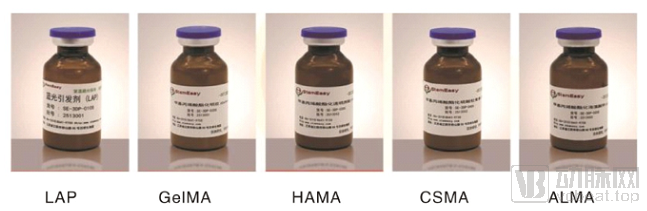
At the material level, in addition to printability and mechanical properties, biocompatibility must also be considered in bio-3D printing. To address this, Huaxia Siyin has independently developed and manufactured GMP-grade bioinks, with ten variants currently available, including gelatin methacryloyl (GelMA), hyaluronic acid methacryloyl (HAMA), and collagen type I methacryloyl. “These materials are modified biopolymers derived from components of the human extracellular matrix; specifically, they have undergone methacrylation to impart photocuring capabilities to natural materials,” stated Chen Huimin. She noted that acrylates, which are components of bone cement and commonly used materials in orthopedic surgery, have had their biosafety and biocompatibility validated through long-term clinical use.
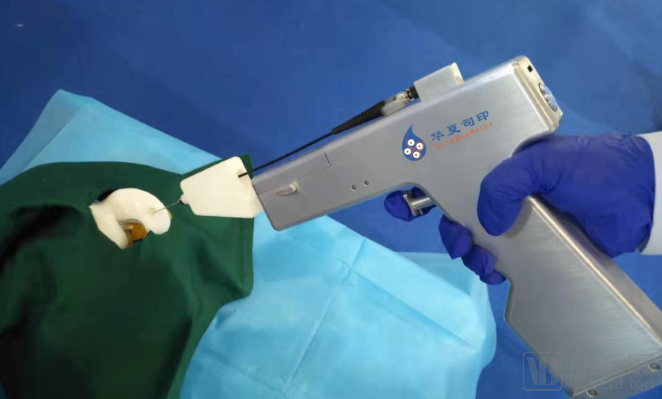
At the 3D printing level, Huaxia Siyin has adopted a dual-pronged strategy: first, collaborating with third-party companies. It has established strategic partnerships with internationally renowned bioprinting firms EnvisionTEC, CELLINK, and Allevi; second, independently developing miniaturized devices for clinical use. The company has successfully developed a bioprinting pen, which is portable and user-friendly, allowing surgeons to operate directly in the operating room. With material solidification within five seconds, the device offers rapid and efficient performance, providing technical support for patient tissue repair.
Safety is the paramount concern for medical devices. Therefore, ensuring the consistency and stability of product quality is critical. Huaxia Siyin’s solution is to implement the latest standard, “YY/T 0278-2017/ISO 13485:2016 Medical Devices—Quality Management Systems—Requirements for Regulatory Purposes.” This framework covers the entire process, including design and development, personnel training, equipment management, raw material control, environmental control, standard operating procedures, quality assurance, and regulatory registration submissions. To ensure the long-term effectiveness of the quality management system, it is continuously improved in accordance with national standards, industry standards, and customer requirements.
Regarding the team, Huaxia Siyin currently has nearly 20 members, all of whom are R&D personnel. Among them, Dr. Chen Huimin, the founder and CEO, holds a Ph.D. from Beijing Medical University and served as a lecturer and postdoctoral fellow at Harvard University. She possesses over ten years of comprehensive experience in R&D and management at Wyeth and GSK. A Class II medical device she developed in her early career has been sold to 33 countries worldwide.
The challenges of 3D bioprinting lie not only in technology but also in regulatory approval.
Due to the absence of applicable industry standards and product registration regulations for bio-3D printing products, the cost of registration applications remains substantial. Currently, there are no relevant categories in the Medical Device Classification Catalog. As a result, Huaxia Siyin must start from the early stages of classification identification and apply for the addition of new categories. However, Chen Huimin believes that the situation is moving in a positive direction. Relevant government agencies have provided significant assistance, and challenges present opportunities; once certification is obtained, it will establish a high barrier to market competition.
Policies have consistently supported the development of bio-3D printing technology. In 2017, the Ministry of Science and Technology of China released the "13th Five-Year Plan for Special Projects in Biotechnology Innovation," which listed "stem cells and regenerative medicine" as a key priority area for support. The plan affirmed that "stem cells and regenerative medicine have opened up entirely new avenues for disease treatment." During the 13th Five-Year Plan period, efforts would focus on strengthening basic and translational research on stem cell applications, promoting the interdisciplinary integration of stem cells, biomedical materials, and tissue engineering, guiding technological upgrades in China’s biomedical materials industry, and standardizing the clinical application of novel therapeutic approaches such as cell therapy.

In July 2019, the state issued the "Regulations on the Supervision and Administration of Custom-Made Medical Devices (Trial)," which specified norms for the filing management, design and processing, usage management, and supervision of custom-made medical devices. The regulations have been in effect since January this year and are expected to provide a significant boost to medical 3D printing.
Regarding the company’s future development, Chen Huimin stated that Huaxia Siyin will continue to develop and refine its material- and bio-based 3D printing clinical products, while expanding market collaborations with more hospitals and research institutions. In terms of financing, Huaxia Siyin previously secured Pre-A round investment from SinoCellular Engineering Group Co., Ltd. and is currently seeking approximately USD 10 million in Series A funding.