

Ayala Pharmaceuticals Rises on Nasdaq Debut as Rare Disease Indications Drive Accelerated Approval Pathway

Ayala Pharmaceuticals
Developer of Tumor Gene Therapy Drugs
VCBeat learned that Ayala Pharmaceuticals listed on the Nasdaq on May 8, U.S. time. The IPO price was set at $15 per share, the midpoint of the offering range, with a total of 3.333 million shares issued.
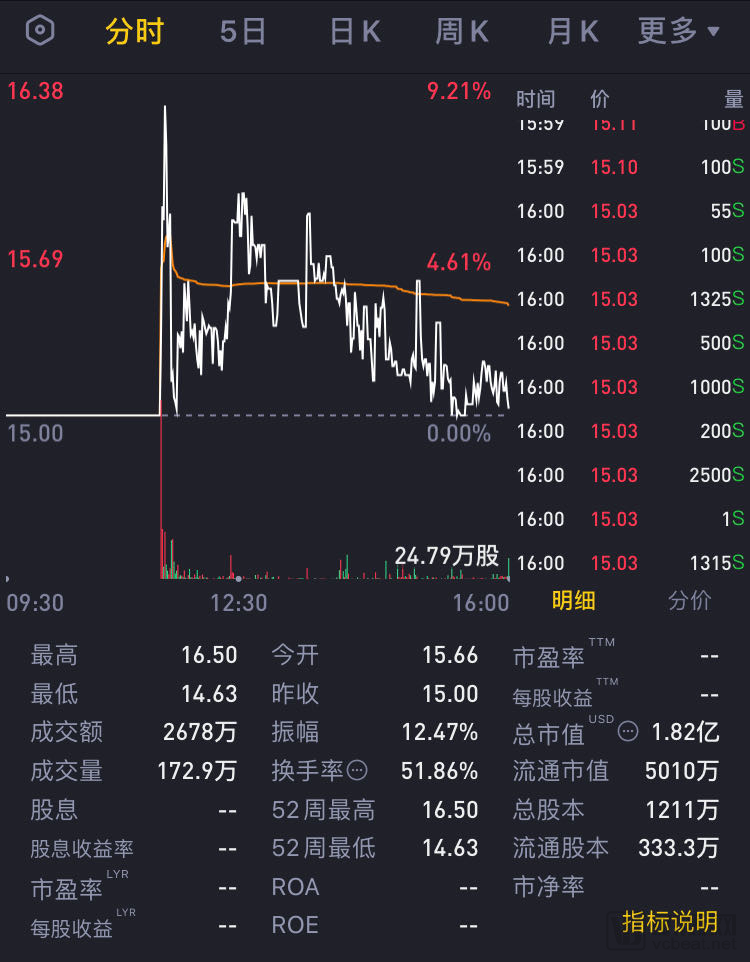
Image source: Laohu Finance
Ayala opened at $15.66 today, then quickly rose before gradually falling back, with the final share price settling at $15.03.
Ayala is a small-molecule drug R&D company dedicated to the treatment of rare diseases and oncology, with its research focus centered on the Notch signaling pathway. The Notch signaling pathway is closely related to the developmental processes of organisms; its aberrant activation has been found to be associated with various solid tumors and hematologic cancers, and is often linked to more aggressive forms of cancer.
Ayala’s core team is primarily drawn from the industry. Founder and CEO Roni Mamluk previously served as CEO of Chiasma, a rare-disease drug development company. Chief Medical Officer (CMO) Gary Gordon formerly held the position of Vice President of Oncology Development at Abbott and AbbVie.
Ayala’s expertise in the Notch signaling pathway stems primarily from its scientific advisor, Jon Aster. Dr. Aster is a Professor of Pathology and Director of Hematopathology at Harvard Medical School, with over 20 years of research experience in the Notch signaling pathway, and he developed the first mouse models of Notch-driven leukemia.
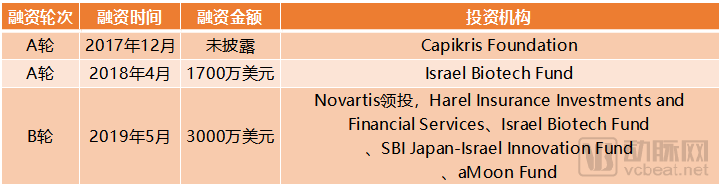
Since its inception, Ayala has raised a total of $47 million in financing, with its Series B round completed in May 2019 led by pharmaceutical giant Novartis.
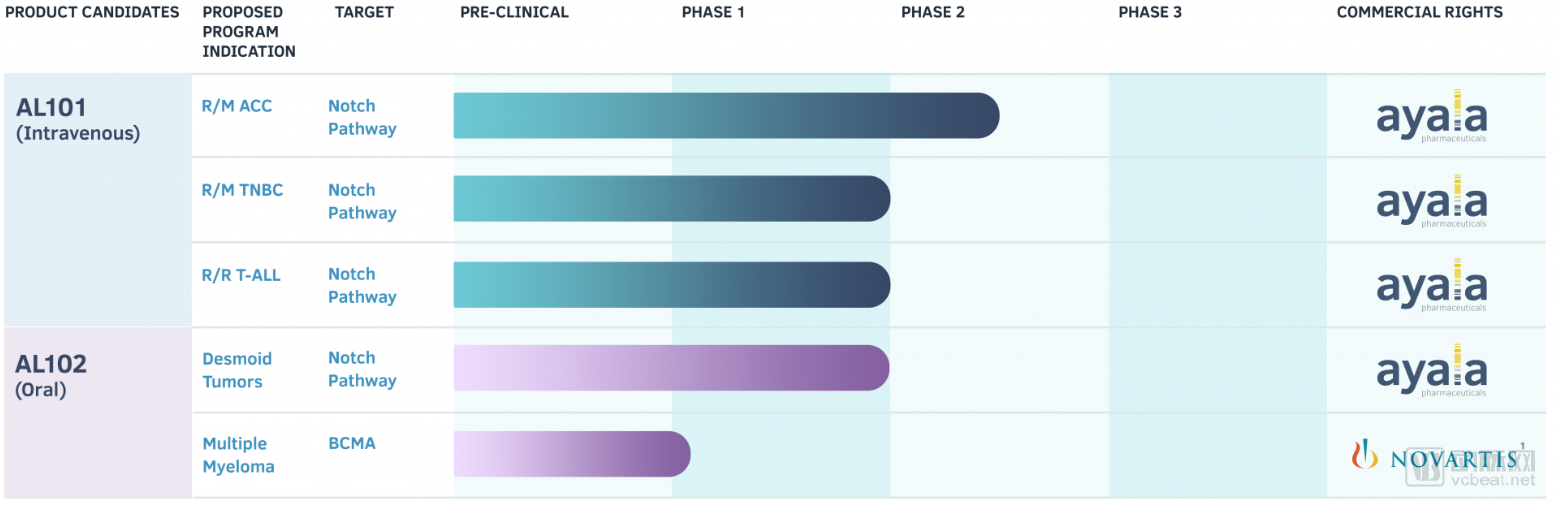
Ayala Pharmaceuticals’ two lead investigational products, AL101 and AL102, are both licensed from Bristol Myers Squibb (BMS). In 2017, Ayala secured exclusive global licensing rights for these two drugs from BMS, with milestone payments totaling $142 million spanning clinical development through commercial launch. Additional milestone payments and sales royalties also apply.
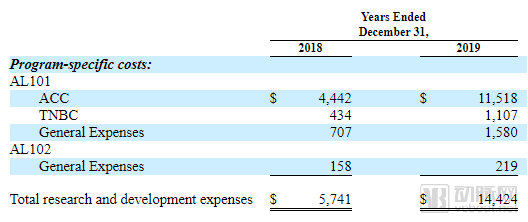
AL101 is Ayala’s flagship product, and the company is actively advancing its clinical research in adenoid cystic carcinoma (ACC). ACC is a very rare tumor type, accounting for only 24% of malignant salivary gland tumors. Therefore, although AL101 has entered Phase II clinical trials, Ayala’s clinical trial expenditures remain relatively modest; in 2019, R&D spending on AL101 for ACC amounted to approximately USD 11.5 million.
Ayala’s strategic intent is quite evident: it aims to accelerate AL101 to market approval by first targeting rare disease indications, followed by further indication expansion. Following adrenocortical carcinoma (ACC), the next focus is triple-negative breast cancer (TNBC). If AL101 ultimately gains approval for TNBC, its market potential would be substantial. Research on TNBC has already entered the clinical trial phase.
AL102 has progressed relatively slowly and is currently being developed primarily for glioma. In late 2018, prior to investing in Ayala Pharmaceuticals, Novartis obtained the license for AL102 in the indication of multiple myeloma from Ayala Pharmaceuticals.
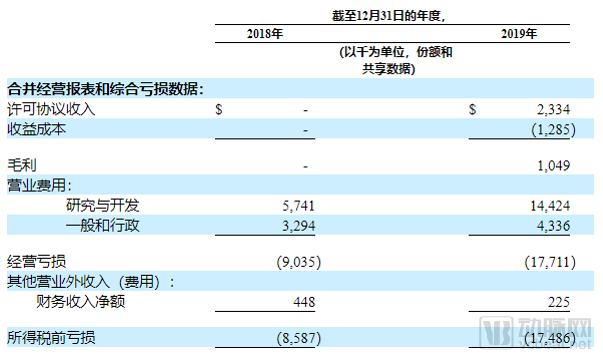
As Ayala primarily focuses on the rare disease sector, its overall revenue and expenditures are not substantial; in 2019, total revenue and expenditures amounted to only approximately $14.42 million. However, with the advancement of clinical trials for its two product candidates, R&D expenses are likely to rise rapidly.
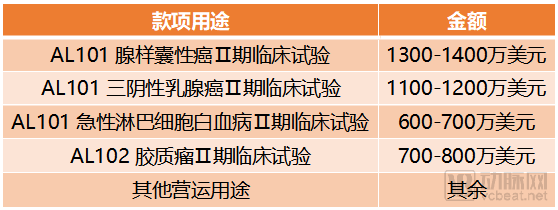
Ayala raised approximately $44 million in its IPO (based on the midpoint offering price of $15 per share), with nearly all proceeds designated for Phase II clinical trials supporting product indications. Three Phase II clinical trials for AL101 represent the primary focus of capital expenditure.