

Hologic: A Global Leader in Women's Health Diagnostics – IPO Prospectus

Hologic
Developer of Medical Imaging Systems and Diagnostic and Surgical Products
As modern women shoulder increasing pressures from work and daily life, the detrimental effects of long-term hormonal imbalances are becoming increasingly apparent, with gynecological tumors showing a trend toward affecting younger populations. Various gynecological tumors, which previously predominated in older women, are now also commonly seen in young, nulliparous women.
According to data from the World Health Organization (WHO), there are nearly 600,000 new cases of cervical cancer globally each year, resulting in approximately 300,000 deaths. Developing countries are disproportionately affected by this disease, accounting for 200,000 deaths annually, or 80% of the global total. Currently, China has approximately 400,000 patients, with around 130,000 new cases each year and a mortality rate of 11.34%.
Achieving more accurate and sensitive cancer detection to facilitate early detection, diagnosis, treatment, and prevention in female patients is a top priority in clinical practice. With media promotion and increased public awareness of cervical cancer, trust and reliance on the “HPV vaccine” among the general population have reached levels akin to “obsession” and “frenzy,” making cervical cancer vaccines seemingly “hard to get by appointment” and leading to a situation where demand outstripped supply.
Certainly. Beyond cervical cancer, the three most common malignant tumors in women are cervical cancer, breast cancer, and ovarian cancer. This substantial demand has accelerated market growth and spurred increased research investment, with multiple companies now establishing a presence in the field of early screening for gynecologic cancers. Hologic is one such company.In HPV testing, Hologic holds a leading position, ranking among the top three alongside Roche and Qiagen.
Hologic, founded in 1985 and headquartered in Boston, Massachusetts, USA, is an innovative medical technology company that develops, manufactures, and markets diagnostic products, medical imaging systems, and women’s surgical care products.
As an innovative medical technology company, Hologic is dedicated to bringing health and well-being to women worldwide through early detection and treatment. Guided by its mission of “Innovative Medical Technology, Focused on Women’s Health,” Hologic stands at the forefront of technological solutions for women’s health.
Hologic primarily operates through four core divisions: Breast Health, Diagnostics, Gynecologic Surgery, and Skeletal Health. Its key offerings include the diagnosis and treatment of breast cancer, cervical cancer screening, prenatal testing, and osteoporosis detection.
Stephen MacMillan is the current Chairman, President and Chief Executive Officer of Hologic., he joined Hologic in December 2013, leading the company through a significant transformation. MacMillan has 24 years of operational experience in the healthcare industry. He holds a Bachelor of Arts degree in Economics from Davidson College and is a graduate of the Advanced Management Program at Harvard Business School.
MacMillan began his career at Procter & Gamble and later spent 11 years at Johnson & Johnson, where he held various senior positions in the United States and Europe, including President of the joint venture between Johnson & Johnson and Merck. Subsequently, MacMillan served as a senior executive at Pharmacia, overseeing five global business units with annual revenues exceeding $2 billion each.
MacMillan also served as Chairman, President, and Chief Executive Officer of Stryker Corporation, a global medical device company. He led the company through a series of key strategic acquisitions and launched numerous products in its orthopedic implants and medical devices segments, helping Stryker achieve strong operational performance: from 2003 to 2011, Stryker’s revenue grew from $2.8 billion to $8.3 billion.
As Hologic was established at an earlier stage, to provide readers with a clearer understanding of the context of its development history, we will temporarily divide Hologic’s development trajectory into two phases:
1. (1985-2011) Hologic’s foundational build-up, with core products established and taking shape;
2. (2011–Present) Continuous R&D and innovation in the foundational product line; leveraging capital to strengthen its influence in the breast health sector.
Phase I (1985–2011): Foundation Building and Maturation of Core Products
In 1985, shortly after its establishment, Hologic received FDA approval to use DNA probe technology for clinical diagnostic testing and launched its first-generation product in the United States—the Mycoplasma Tissue Culture Test.Two years later, Hologic released its first revolutionary bone densitometer, completed its initial public offering (IPO), and was listed on the NASDAQ Stock Exchange, raising a total of $16.2 million.
In 1988, Hologic launched its first-generation testing platform—the PACE® assay—for Chlamydia trachomatis (CT) and Neisseria gonorrhoeae (GC), targeting the sexually transmitted infections prevalent at the time. Subsequently, Hologic secured patents for its ribosomal ribonucleic acid (rRNA)-based detection technology, and its four AccuProbe culture confirmation assays received FDA approval for commercial sale.
In 1994, Hologic launched four foundational products in the United States: the GASDIRECT® assay for direct detection of Group A Streptococcus, the PACE® 2 combo assay for CT and GC, the probe-based assay for CT, and the probe-based assay for GC, further expanding its first-generation product portfolio.
In 1995, Hologic’s proprietary DNA sequence amplification technology—Transcription-Mediated Amplification (TMA)—was granted a U.S. patent. Subsequently, in 1996, Hologic’s ThinPrep® liquid-based cytology test received FDA clearance, marking the company’s successful entry into the field of liquid-based cytology testing for cervical cancer. To this day, the ThinPrep® liquid-based cytology test remains one of the most widely used liquid-based cytology technologies globally.
In 2001, to address the issue of heavy menstrual bleeding in women, Hologic successfully developed the NovaSure® Impedance-Controlled Endometrial Ablation System, a safe, rapid, simple, and effective minimally invasive treatment technology with a system operating time of only 90–120 seconds. Subsequently, Hologic continued to expand into the field of breast cancer imaging screening. Two years later, its representative product, the Selenia Digital Mammography System, successfully received FDA clearance. With this milestone, Hologic’s first-generation products were launched, and its product portfolio was essentially established.
Hologic: Milestones in Phase I Development
Phase II: (2011–Present) Continuous R&D innovation on the core product line, with Hologic leveraging capital to strengthen its influence in the breast health sector
1.1. Continuous R&D Innovation on the Basic Product Line
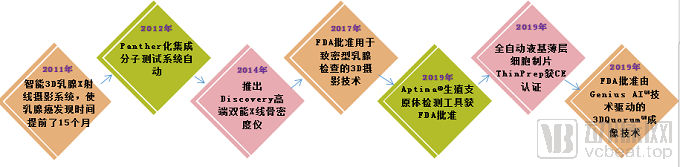
In 2011, Hologic continued to innovate in mammography systems. Its newly developed Hologic Intelligent 3D Mammography System received FDA clearance, significantly increasing the detection rate of invasive breast cancer and advancing the time of breast cancer discovery by 15 months.
In 2012, Hologic launched the Panther fully automated integrated molecular testing platform, capable of performing a wide range of molecular tests for infectious diseases, chronic genetic conditions, and complex disorders. In 2013, its next-generation Aptima® E6/E7 mRNA HPV assay was introduced, effectively reducing the excessively high false-positive rates associated with traditional methodologies. This product was also the world’s first HPV molecular diagnostic test targeting E6/E7 mRNA as the analyte.
In 2014, building on three decades of development in the field of bone densitometry, Hologic developed the next-generation Discovery high-end dual-energy X-ray absorptiometry (DXA) system. In 2017, Hologic’s subsequently developed 3D imaging technology received special FDA approval for use in the examination of dense breast tissue.
On January 25, 2019, Hologic launched Aptima®Mycoplasma genitalium Testing Tool Receives FDA Approval; Hologic Claims the Product Combines a Series of Its Proprietary Test Methods to Help Address the Growing Sexually Transmitted Infection Crisis in the United States. This Is the First and Only FDA-Approved Product for Sexually Transmitted Infection (STI) Testing.
On April 17 of the same year, Hologic’s fully automated ThinPrep liquid-based cytology processor received CE marking in Europe for use in preparing cytology slides and molecular testing specimens. The ThinPrep system not only achieves a 100% detection rate for cervical cancer but also improves the detection rate of precancerous lesions by 23.3% compared with conventional Pap smears.
On June 13, 2019, Hologic was recognized by the National Association of Manufacturers (NAM), the largest manufacturing association in the United States, at the Manufacturing Leadership Awards and Summit, where it received the Manufacturing Leadership Award for Excellence in Operations and Sustainability.
On November 12, 2019, Hologic’s 3DQuorum™ imaging technology received FDA approval. Working in conjunction with Clarity HD™ high-resolution imaging technology, it reduces CT image data volume by 66% while maintaining image quality. On the 20th, Hologic sold its Cynosure medical aesthetics business to an investment fund managed by Clayton, Dubilier & Rice for a total cash consideration of $205 million. After deducting transaction-related expenses, Hologic expects net cash proceeds of approximately $138 million.
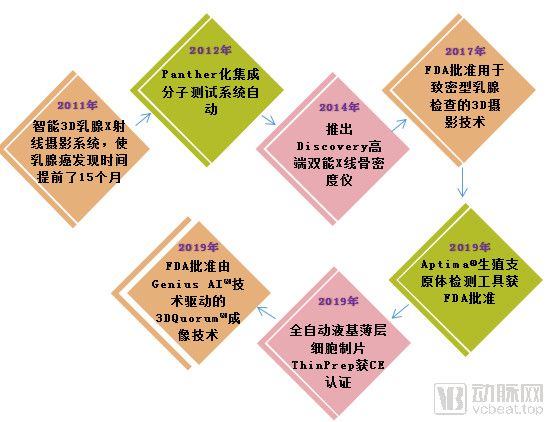
Hologic: Milestones in Phase II Development
1.2. Hologic Transforms into a Capital Powerhouse, Launches Aggressive M&A Strategy in Later Stages to Integrate Diverse Resources and Expand Its Product Portfolio
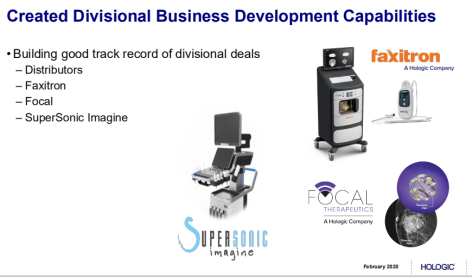
In June 2011, Hologic completed the acquisition of the Chinese distributor for Cytyc’s ThinPrep (TCT) medical products for $300 million.
On December 14, 2016, Hologic announced that it would sell its blood screening business to the Spanish healthcare company Grifols SA for $1.85 billion, as sales of blood screening products in its diagnostics segment were underperforming, thereby reallocating capital to more strategic product portfolios.
In March 2017, Hologic acquired Cynosure for $1.65 billion. Cynosure’s product portfolio focuses on women’s health, primarily serving non-invasive body contouring, hair removal, and skin rejuvenation applications. The company has achieved double-digit revenue growth for seven consecutive years, with revenues reaching $433.5 million in 2016.
On July 31, 2018, Hologic completed the acquisition of Faxitron Bioptics for approximately $85 million. Faxitron Bioptics is a private company and a leader in the field of digital specimen imaging technology. Its product portfolio primarily includes digital specimen radiography, breast lesion localization, and sentinel lymph node biopsy.
More than a month after Faxitron announced the transaction, Hologic made another acquisition to enhance its breast health portfolio: it acquired private company Focal Therapeutics for a total consideration of approximately $125 million. Through this acquisition, Hologic gained BioZorb, an implantable stereotactic marker that helps surgeons better perform breast-conserving surgery or lumpectomy.
Building on the positive impact of its prior acquisition of Faxitron Bioptics, Hologic has further strengthened its influence in the rapidly growing breast-conserving surgery market.
In June 2019, to further expand its market in clinical breast applications, Hologic acquired the French company Supersonic Imagine, which specializes in ultrasound medical imaging. The acquisition of Supersonic Imagine not only helped Hologic broaden its business scope and consolidate its position in the breast imaging market, but also enabled Hologic to conduct more in-depth exploration in the field of breast products, leveraging Supersonic Imagine’s research expertise in ultrasound technology.
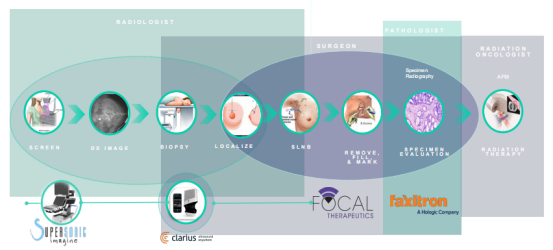
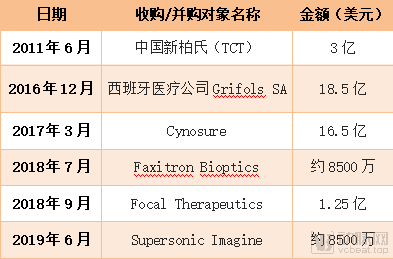
Table 1. Key M&A Transactions of Hologic in Recent Years
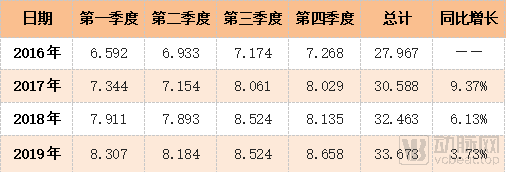
Table 2. Hologic’s Revenue Performance, 2016–2019
(Note: 2016 is used as the base year, with all amounts expressed in hundreds of millions of U.S. dollars; data source: Hologic’s 2016–2019 financial reports)
From 2017 to 2019, a span of just three years, Hologic’s total M&A expenditure reached $1.945 billion (approximately RMB 13.8 billion). Leveraging the positive impact of certain acquisitions, Hologic’s annual revenue has steadily climbed, with its total annual revenue in 2019 approaching $3.367 billion (approximately RMB 23.9 billion).
Hologic’s aggressive M&A strategy reveals its substantial investment in women’s health products, particularly in the field of breast imaging. Its rapid market expansion has enabled end-to-end care for breast cancer patients—from screening and diagnosis to treatment—underscoring its ambition in the breast imaging market.
However, Hologic is dissatisfied with the current market status.
Hologic believes that in this era of continuous socioeconomic development and rapid advancements in medical technology, although women have gained a clearer understanding of their life values and health pursuits, as well as greater autonomy in healthcare consumption, awareness and action regarding the early prevention and treatment of “the two cancers” (breast cancer and cervical cancer) still need to be improved, particularly among women in developing countries.
This is indeed the case. In China, disparities in economic development and medical resources across different regions have resulted in low coverage rates for cervical and breast cancer screening among women, which directly impacts the five-year survival rate for female patients with these cancers. Furthermore, since many women in China only seek medical attention when they experience symptoms (“seeking care while already ill”), a significant proportion of female cancer patients miss the optimal window for treatment.
In light of this situation,Since 2017, Hologic has actively promoted health concepts to partners and consumers under the “ONE HOLOGIC” brand and strategy, advocating for and vigorously promoting the “Integrated Solution for Precision Screening of Breast and Cervical Cancers.”
For instance, on International Women’s Day in 2018, Hologic released the “Precision Screening Guide for Two Major Cancers in Women” to highlight the importance of screening for these two cancers among women. Subsequently, in August, Hologic partnered with United Family Healthcare (United Family Medical Group) to launch a Hologic-exclusive “Precision Screening Package for Two Major Cancers,” which was simultaneously made available on United Family Healthcare’s Tmall store, enabling ordinary consumers to conveniently purchase precise screening health checkup services online.
On May 25, 2019, Hologic, in collaboration with the Pink Ribbon Care Foundation, hosted the “525 (a homophone for ‘I Love Myself’) Ignite Women’s Health Power” Women’s Health Screening Day at The MixC in Shanghai, inviting numerous media outlets and health-conscious individuals to witness and participate in the event.
In recent years, Hologic has continuously increased its investment in public education, aiming to integrate screening for breast and cervical cancer into women’s daily lives in an accessible manner through diverse science popularization initiatives.
As mentioned above, Hologic’s product portfolio is primarily focused on breast health, diagnostics, skeletal health, and gynecological surgery. The following section provides a brief introduction to several key products in these areas.
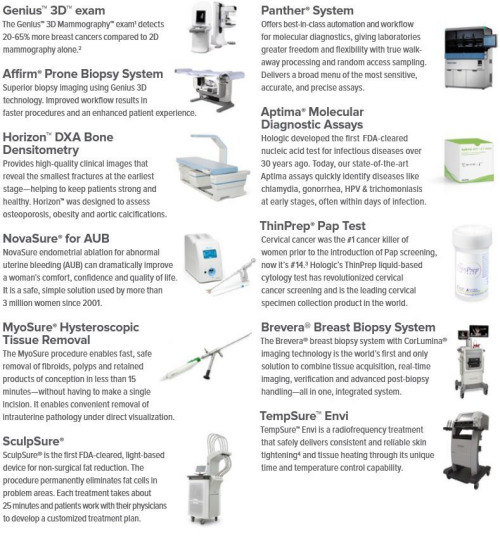
Hologic Product Line Overview (Image source: public information)
1. Panther®System — Integrated Molecular Diagnostic Solutions
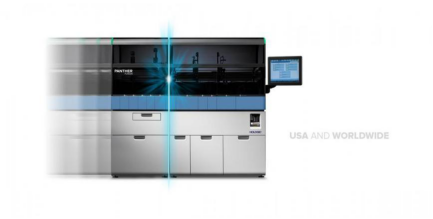
Next-Generation Fully Automated Nucleic Acid Testing System: Panther System
The next-generation fully automated nucleic acid testing device, the Panther System, leverages Transcription-Mediated Amplification (TMA) isothermal nucleic acid amplification technology to create a convenient and efficient molecular diagnostics platform. It breaks through the batch limitations of traditional testing by allowing new samples and reagents to be loaded at any time during instrument operation. Furthermore, it can perform four different tests on a single sample simultaneously. The system operates on a "sample in, result out" basis, requiring no manual intervention or attendance, and delivers results within 3.5 hours. It also features automatic barcode tracking and bidirectional LIS integration. Amplification products are automatically inactivated, ensuring enhanced safety.
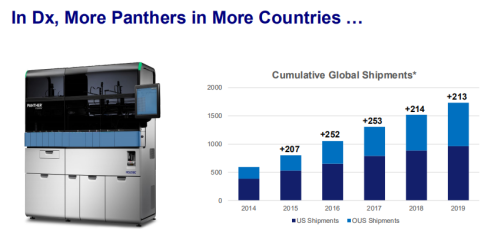
Growth Trends in Business Related to the Next-Generation Fully Automated Nucleic Acid Testing System, Panther
(Image source: Hologic 2019 Annual Report)
In 2014, the National Health and Family Planning Commission officially launched the pilot project for primary HPV screening for cervical and breast cancers, covering 28 provinces (autonomous regions and municipalities) across China. The Outline for the Development of Chinese Women (2011–2020) set a target to achieve an 80% coverage rate for cervical cancer screening. This may serve as a significant driver fueling the growth of Hologic’s diagnostic business volume in China.
2.Aptima®+ThinPrep®Cervical Health—Flagship Viral Testing Products
ThinPrep®ThinPrep Slide Scanning and Image Analysis System®Imaging System (TIS) seamlessly integrates physicians’ slide-reading expertise with powerful computer-based image processing capabilities. Compared to traditional manual microscopy of smears, TIS can improve physicians’ work efficiency by 75% and reduce the false-negative rate to 0.012%.
ThinPrep®(ThinPrep®) Liquid-based cytology products are the first liquid-based cytology products approved by the U.S. Food and Drug Administration (FDA).
Next-Generation Aptima®HPV testing is also currently the only HPV test kit based on oncogenic E6/E7 mRNA approved by the FDA/CE/CFDA.Compared with traditional HPV DNA detection reagents, Aptima®Focus more on detecting high-risk HPV infections with genuine carcinogenic potential.
3.3Dimensions™ Mammography System——3D Molybdenum Target
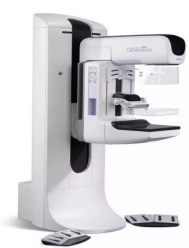
Hologic Digital Mammography System
In the field of breast cancer screening, prevention, and treatment, microcalcifications are a significant indicator of early-stage breast cancer, while the dense breast tissue commonly seen in Asian women poses additional challenges for image interpretation. On conventional 2D mammograms, dense glandular tissue and malignant tumors appear very similar. In contrast, 3D digital breast tomosynthesis can reveal subtle distinctions between tumors and dense breast tissue.
Hologic’s 3D digital breast tomosynthesis technology provides a more precise solution. It is also the first FDA-cleared preferred screening technology for dense breasts in the United States, garnering increasing recognition from radiologists, hospitals, imaging centers, professional societies, and patient advocacy groups.
Selenia® Dimensions®The global high-end digital mammography platform of the digital breast X-ray system features ultra-high resolution with 70 μm pixel size, enabling clear visualization of microcalcifications. Coupled with advanced tomosynthesis capabilities, it allows for simultaneous acquisition of 2D and 3D digital breast X-ray images.
Extensive clinical and research findings have confirmed that Hologic’s 3D technology increases the early detection rate of invasive breast cancer by 41%, improves the overall breast cancer detection rate by 27%, and reduces recall rates by 20%–40%. This system enables breast cancer to be detected 15 months earlier, facilitating earlier diagnosis by physicians and significantly reducing mortality from breast disease.
Notably, this device can generate a 3D image of a single view within six seconds—only one-tenth to one-twentieth the time required by other devices—significantly reducing discomfort caused by breast compression during screening.
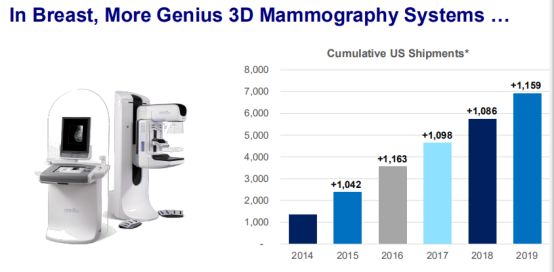
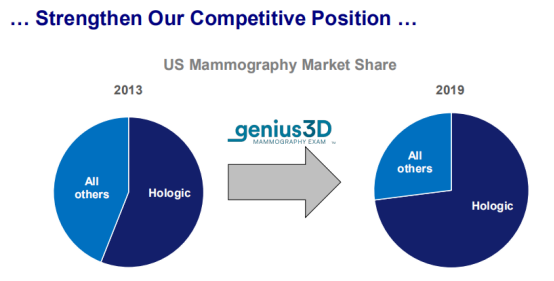
Growth and Market Share of the 3Dimensions™ Mammography System Business in Recent Years
(Image source: Hologic 2019 Annual Report)
Currently, the mainstream international brands in mammography include Hologic, GE, Siemens, Toshiba of Japan (acquired by Canon in 2016), and IMS of Italy. Hologic has completed the installation of 5,700 3D mammography systems in the United States, achieving a 60% penetration rate among its installed base of mammography customers. This indicates that there are still nearly 4,000 potential customers with 2D systems in this field, suggesting significant room for growth.
4.ATEC®Sapphire Breast Biopsy and Vacuum-Assisted Excision System
In the field of breast surgery, Hologic launched ATEC®Sapphire Breast Biopsy and Excision System and Trident™ Intraoperative Specimen Imaging System. Unlike traditional open surgery, ATEC®The Sapphire breast biopsy and vacuum-assisted excision system minimizes the impact on breast appearance while removing small lesions. Its integrated handle and probe effectively prevent infection; it can be quickly activated in just one minute, offering great convenience and efficiency; it also significantly reduces intraoperative bleeding and the incidence of postoperative hematomas.
The Trident™ Jieying Intraoperative Specimen Radiography System enables the acquisition of specimen X-ray images during surgery, thereby improving surgical efficiency. It also effectively shortens the ischemia time during specimen transport, reduces the false-positive rate of excisional biopsies, and provides surgeons with more detailed lesion information, enhancing treatment efficacy.
5. MyoSure® Hysteroscopic Tissue Removal System
As a new generation of hysteroscopic tissue resection technology, MyoSure®It can effectively remove intrauterine tissues such as endometrial polyps and submucosal fibroids, while ensuring no damage to the normal endometrium. With minimal impact on the endometrial microenvironment, it facilitates rapid patient recovery and provides robust technical support for enhancing fertility. It is an ideal choice for women of all ages, including those who wish to preserve their fertility.
6. NovaSure®) Impedance-Controlled Endometrial Resection System
To address the issue of heavy menstrual bleeding in women, Hologic has launched NovaSure®) The impedance-controlled endometrial resection system provides physicians and patients with a safe, simple, and rapid minimally invasive surgical solution:
The system operates for only 90–120 seconds and requires no pre-processing;
Rapid patient recovery with no need to wait for the menstrual cycle;
Personalized treatment can be provided based on the individual condition of the patient;
Low procedural difficulty for physicians, ease of training, and the ability to be safely performed in an outpatient setting with only minimal anesthesia, thereby enhancing hospital bed turnover rates.
Over the past five years, Hologic has demonstrated robust financial growth.In 2019, Hologic generated $3.367 billion in revenue, with strong profit growth.Among these, the breast health and molecular diagnostics businesses have consistently delivered strong performance. Revenue from products, services, and capital forms a three-pronged structure. Geographically, Hologic’s market remains predominantly concentrated in the United States, indicating substantial potential for international expansion.
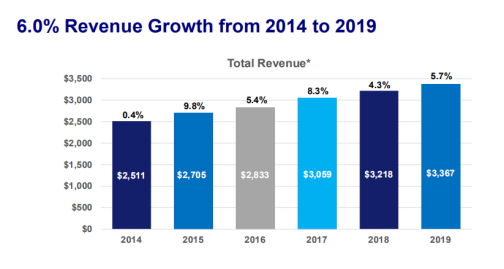
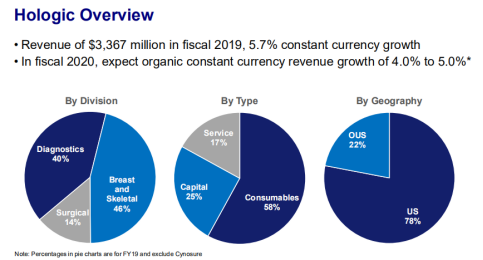
Hologic Inc.’s Financial and Business Distribution (Image Source: Hologic 2019-2020 Financial Report)
In the fourth quarter of 2019, Hologic Inc. reported total revenues of $865.8 million, a year-over-year increase of 6.4%, with earnings per share of $0.65.Among them, U.S. revenue reached $656.2 million, representing a 6.7% increase—the highest annual growth rate. International revenue amounted to $209.6 million, up 5.7%, showing improvement compared to the previous two quarters.
Revenue growth in the fourth quarter was primarily driven by breast health, molecular diagnostics, and surgical medicine.Among these, revenue from the Breast Health business reached $342.6 million, a year-over-year increase of 6.3%; revenue from the Molecular Diagnostics segment amounted to $172.1 million, up 9.0% year over year; and revenue from Gynecologic Surgery totaled $114.5 million, representing a 6.6% year-over-year growth—the highest growth rate for this segment in ten quarters.
In the first quarter of 2020, Hologic Inc. reported total revenue of $850.5 million, a year-on-year increase of 2.8%.Among these, the Molecular Diagnostics segment generated $178.5 million in revenue, an 8.6% year-over-year increase; Gynecologic Surgery revenue reached $114.5 million, up 9.9% year over year, marking its highest growth rate in 11 quarters.
Although Hologic is a leader in the field of HPV testing for early cervical cancer screening, it still faces strong competitors in this area. As of May 2019, several well-known pharmaceutical companies had already entered the market for new technologies in HPV testing for early cervical cancer screening.
such as Cobas, manufactured by Roche®The 4800 Fully Automated HPV Sample Preparation and Testing System comprehensively elucidates and monitors the progression of oncological diseases, enabling precise screening and risk stratification for cervical cancer (low-risk vs. high-risk), thereby effectively reducing false-negative and false-positive results. Used in conjunction with traditional immunohistochemistry and TCT pathological examination, this product has received FDA approval for primary screening of cervical cancer.
Qiagen’s HC2 HPV test, developed based on hybrid capture second-generation technology, has received FDA approval. The HC2 assay is currently the gold standard for clinical HPV DNA testing.
BD’s Onclarity HPV Assay, developed using real-time quantitative PCR technology, detects HPV types 16 and 18 as well as 12 other high-risk HPV subtypes, and has received FDA clearance.
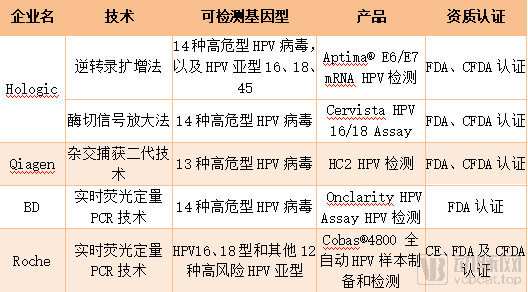
Overseas Landscape of HPV Testing Companies and Products for Early Cervical Cancer Screening (Compiled from Public Information)
Nowadays, Hologic’s business landscape is continuously expanding. Although it possesses core technologies and products in each niche segment, the company remains steadfastly focused on the field of women’s health.
Mr. Xu Li, Vice President of Hologic and General Manager of its China region, stated, “As one of the world’s leading healthcare companies, our commitment to serving women has never wavered, nor has our pace of progress slowed. Hologic remains dedicated to raising awareness among women in China about breast disease prevention, continuously increasing R&D investment, driving technological innovation, introducing globally leading technologies to China, empowering clinical practice, and ultimately benefiting more patients.”
Hologic has also been highly active in recent epidemic prevention and control efforts.
On March 17, 2020, Hologic received funding support from the Office of the Assistant Secretary for Preparedness and Response (ASPR) under the U.S. Department of Health and Human Services (HHS) to develop molecular diagnostic products for coronavirus disease 2019 (COVID-19). The Biomedical Advanced Research and Development Authority (BARDA) will provide $699,000 to help Hologic accelerate the development of tests for detecting the genetic material of SARS-CoV-2, the virus that causes COVID-19.
This assay will be used on Hologic’s Panther Fusion platform, for which the FDA has granted Emergency Use Authorization (EUA) to Hologic’s Panther Fusion® SARS-CoV-2 Assay. Starting in April, Hologic expects to supply approximately 600,000 test kits per month.