

Post-Pandemic Surge in Demand for Digital Immunization Services: Parental Support for Online Vaccination Appointment Rises from 78% to 92%
Phase-based achievements have been made in the prevention and control of the COVID-19 pandemic. What is the current level of awareness among Chinese households regarding the epidemic? How do they assess its future trajectory? How has it influenced their attitudes and behaviors toward vaccination? To what extent do parents from different regions, educational backgrounds, and age groups differ in their responses to these questions? By conducting precise population surveys and data analysis, we aim to derive evidence-based insights that provide valuable references for national regulatory authorities.
In March 2020, the Xiaodoumiao APP conducted a special survey on COVID-19 among its user base of over 25 million parents. A total of 43,192 parents from across China completed the questionnaire, enabling in-depth insight analysis and the compilation of this “White Paper on Chinese Families’ Awareness and Behaviors Regarding the COVID-19 Epidemic.” As a leading platform in the “vaccination + internet” sector, Xiaodoumiao currently provides one-stop childhood vaccination services to more than 25 million parents. Since 2015, we have conducted annual industry surveys, collaborating with government regulatory authorities, industry enterprises, and various sectors of society to promote the healthy development of China’s vaccination initiatives and contribute to the Healthy China strategy.
VCBeat has excerpted portions from the White Paper on Chinese Households’ Awareness and Behaviors Regarding the COVID-19 Epidemic for readers’ reference.
Survey of User Geographic and Age Distribution
Among the 43,192 parents who participated in the survey, the proportions of those residing in provincial capital cities, non-provincial capital cities, county seats, towns/townships, and rural areas were similar, indicating a relatively uniform distribution. In terms of age, nearly 50% of the parents were between 20 and 30 years old, and 93% were under the age of 40. Regarding educational attainment, nearly 40% had a high school education or below.
Attention to the Epidemic
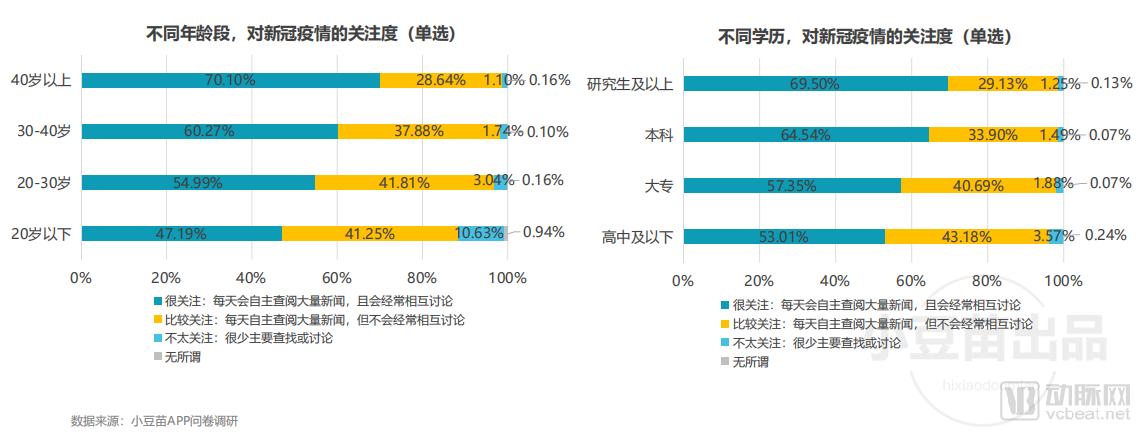
Overall, most parents are concerned about the pandemic. Our survey reveals that parental concern increases with age and educational attainment. Parents aged over 40 and those holding a master’s degree or higher exhibit the highest level of concern. In contrast, among parents who indicated they were “indifferent,” those under 20 years of age and those with a high school education or below accounted for a relatively high proportion.
Understanding of the Transmission Routes of SARS-CoV-2
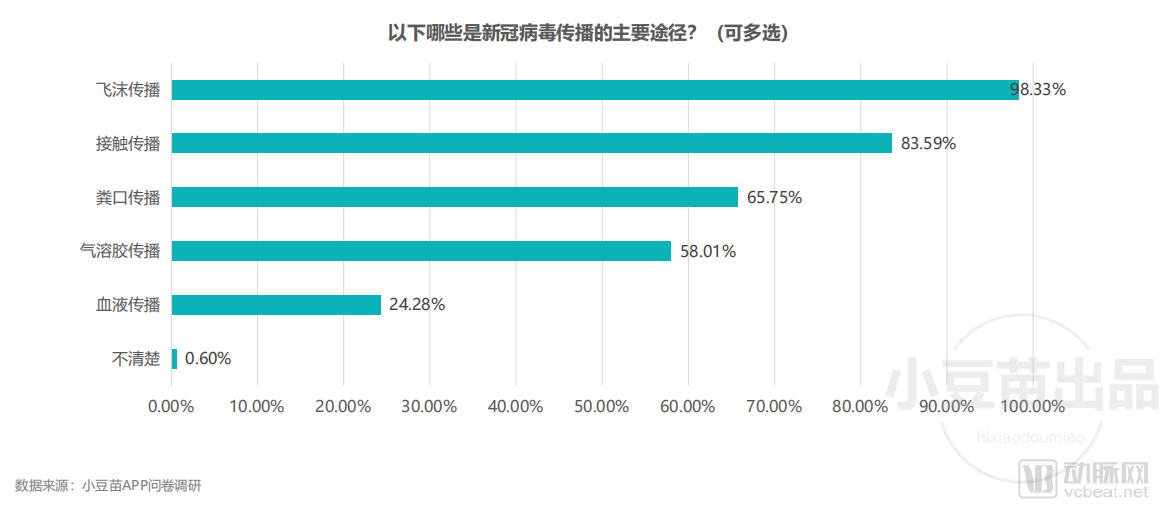
Survey results indicate that over 80% of parents are aware that the novel coronavirus can be transmitted via droplets and contact, demonstrating a clear understanding of the primary modes of viral transmission. Additionally, more than 65% of parents believe in fecal-oral transmission, although this route has not been confirmed.
Understanding the Trajectory of Viruses
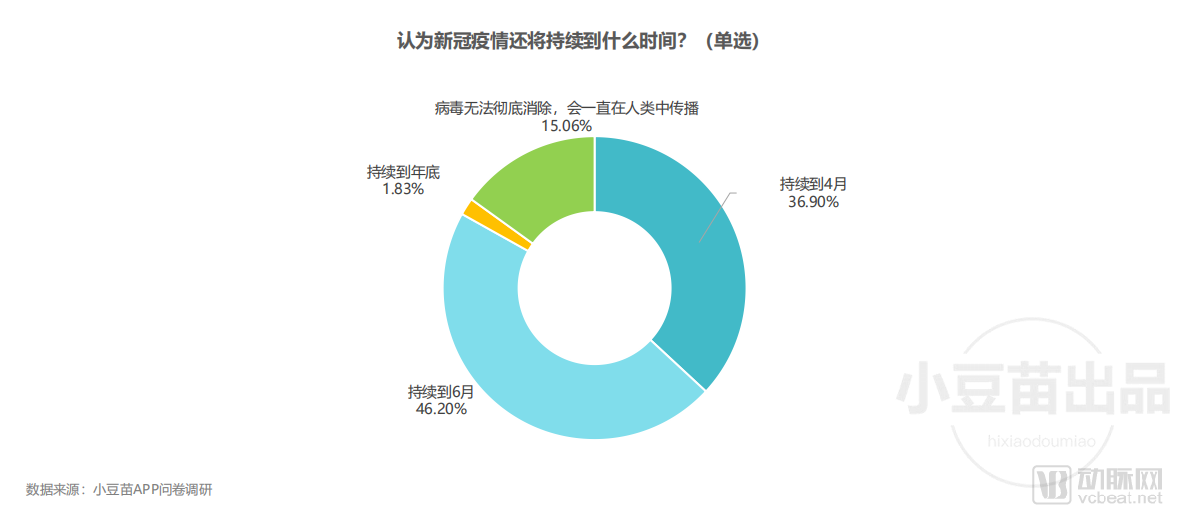
A survey shows that 83% of parents believe the pandemic will end before June, while 15% believe that the novel coronavirus cannot be eradicated and will continue to circulate in human society.
Changes in Personal Hygiene Habits Before and After the Pandemic
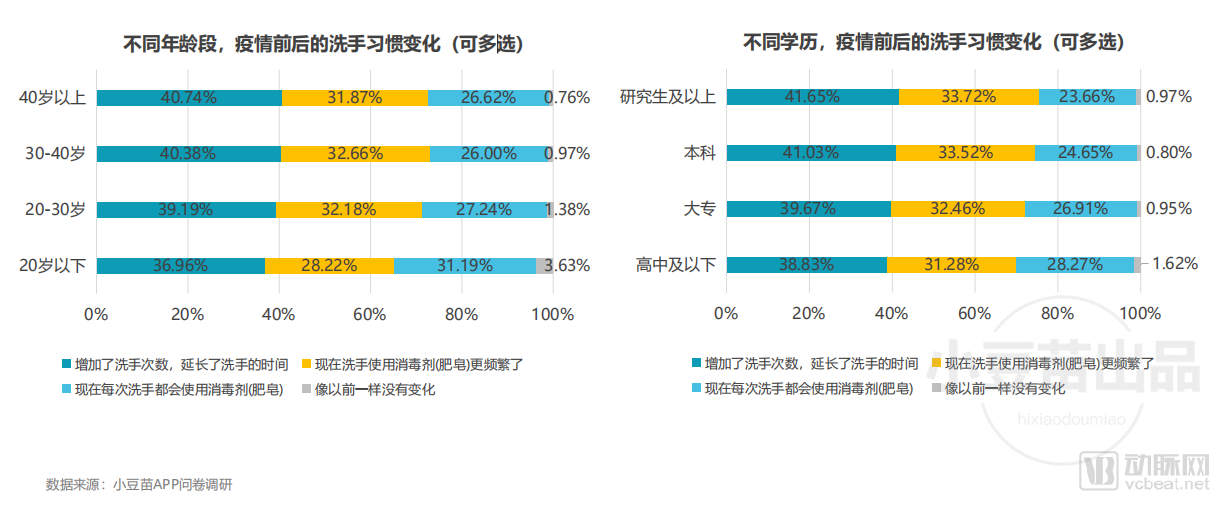
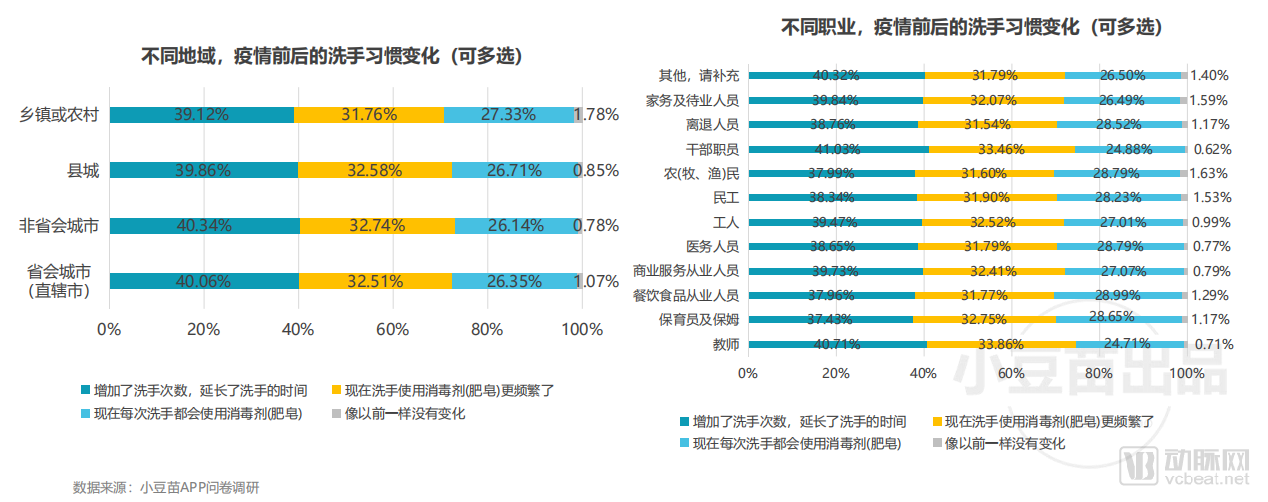
Regarding handwashing habits, the proportion of parents who reported “no change from before” across different age groups or education levels was very small, ranging from 0.7% to 3.7%; this proportion was slightly higher among parents under 20 years of age and those with a high school education or below.
Regarding handwashing habits, the proportion of parents reporting “no change from before” was very small across different regions and occupations, ranging from 0.6% to 1.8%. This proportion was slightly higher among parents in townships or rural areas. By occupation, farmers (including those engaged in animal husbandry and fisheries) had a relatively higher proportion.
Handling Procedures for Suspected Symptoms
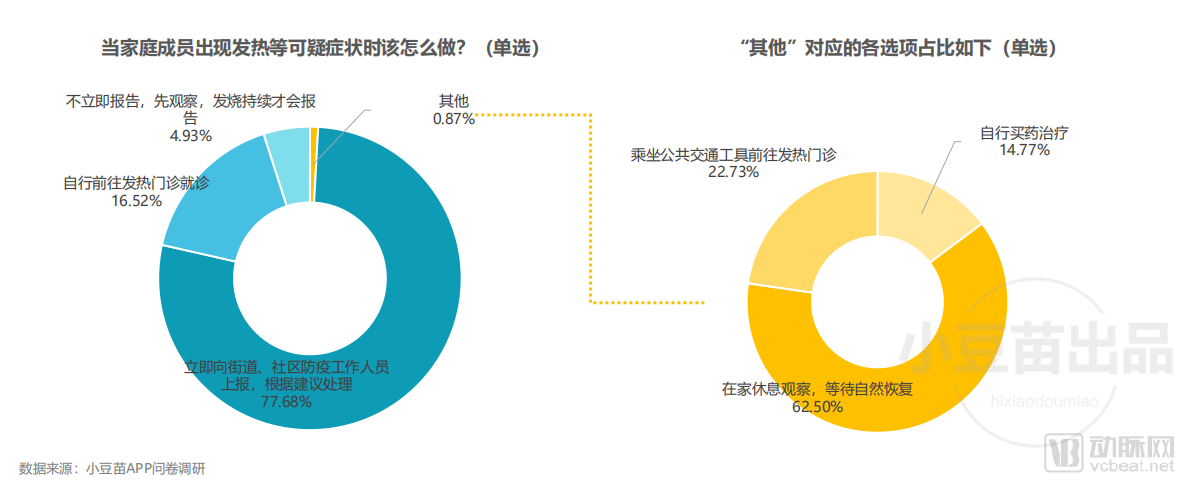
Survey results indicate that when family members exhibit suspicious symptoms, nearly 80% of parents choose to immediately report the situation to epidemic prevention personnel at the sub-district or community level. This demonstrates that community-based epidemic control measures have earned the trust and recognition of parents.
The Impact of the Pandemic on Vaccination
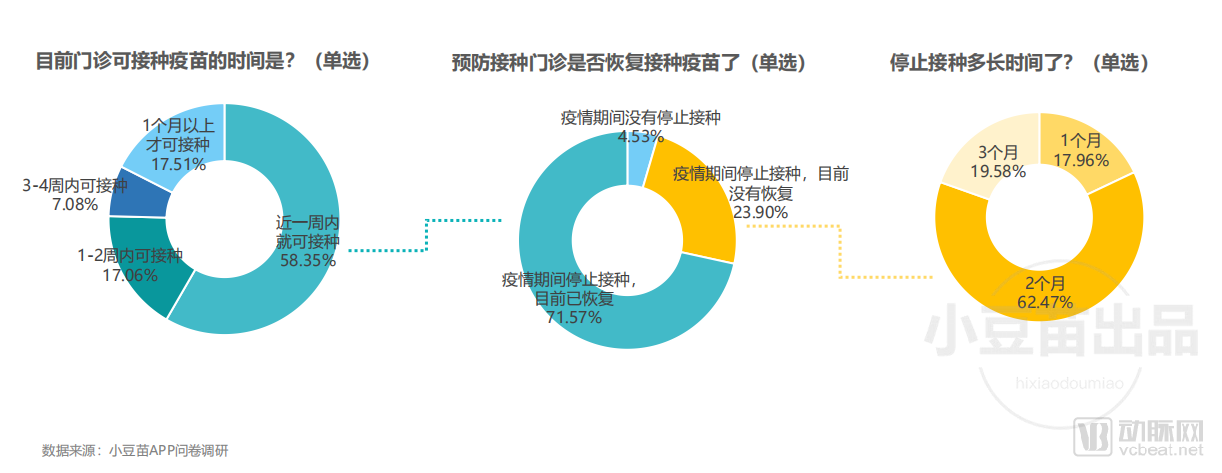
Survey results as of March 15, 2020, showed that 96% of outpatient clinics suspended vaccination services during the epidemic, while 72% have currently resumed such services. Among the clinics that have resumed vaccinations, 82% of patients are able to receive vaccinations at these facilities within one month.
Parental Vaccination Schedule
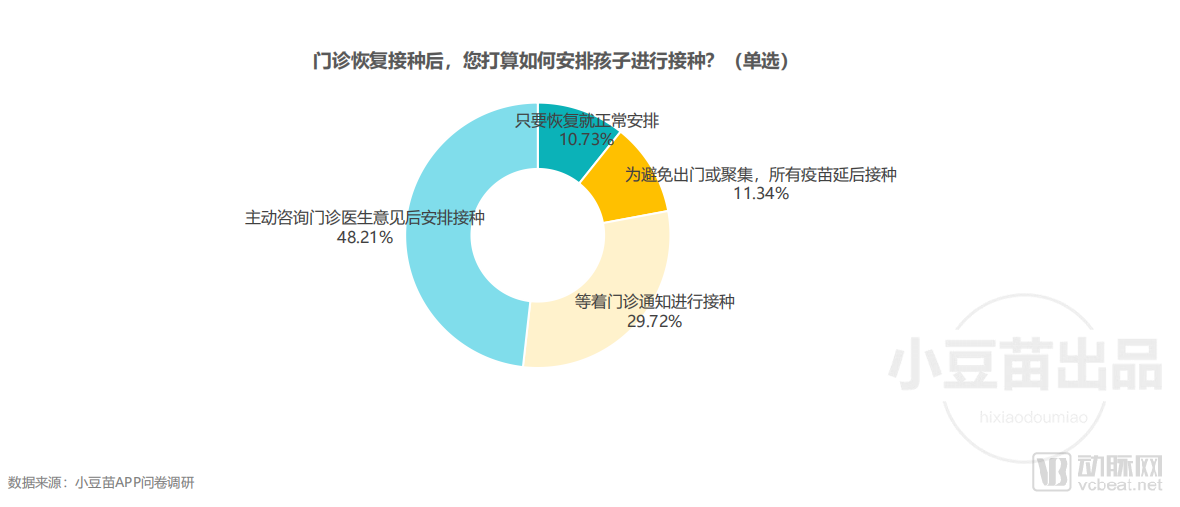
Survey results indicate that following the resumption of outpatient vaccination services, nearly 80% of parents schedule vaccinations after receiving notifications from the clinic or consulting with outpatient physicians. This suggests that parents are more inclined to follow the advice of professional institutions or healthcare professionals regarding vaccination.
Attitudes Toward the Implementation of Online Appointment Services in Outpatient Clinics
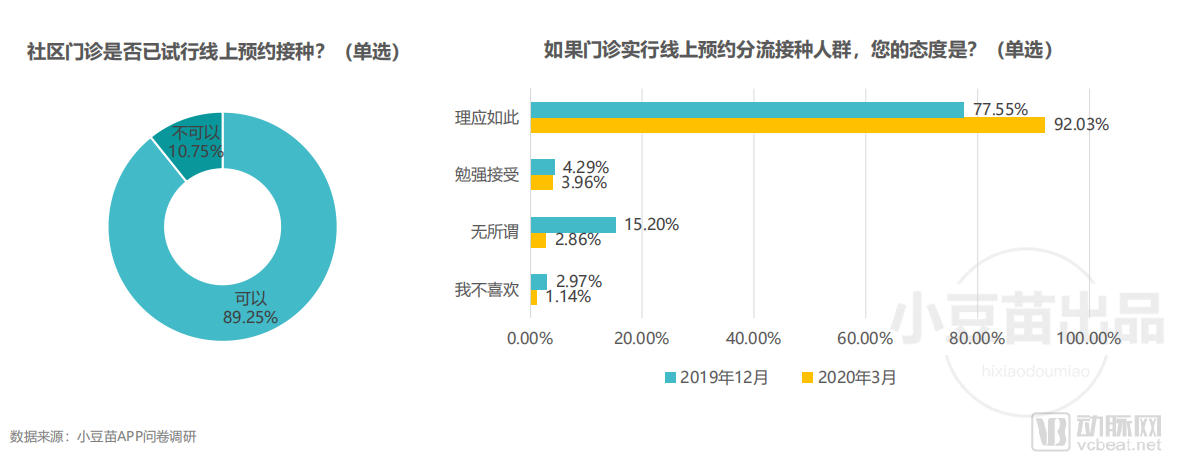
Survey results indicate that 89% of parents currently report that community clinics offer advance appointment scheduling for vaccinations. In comparison with the findings from the “2019 White Paper on Chinese Parents’ Attitudes and Behaviors Toward Childhood Vaccination” released by Xiao Dou Miao in December 2019, the proportion of parents supporting the implementation of online appointment services at clinics has increased from 78% to 92%.
Attitudes Toward Vaccination in the Post-Pandemic Era
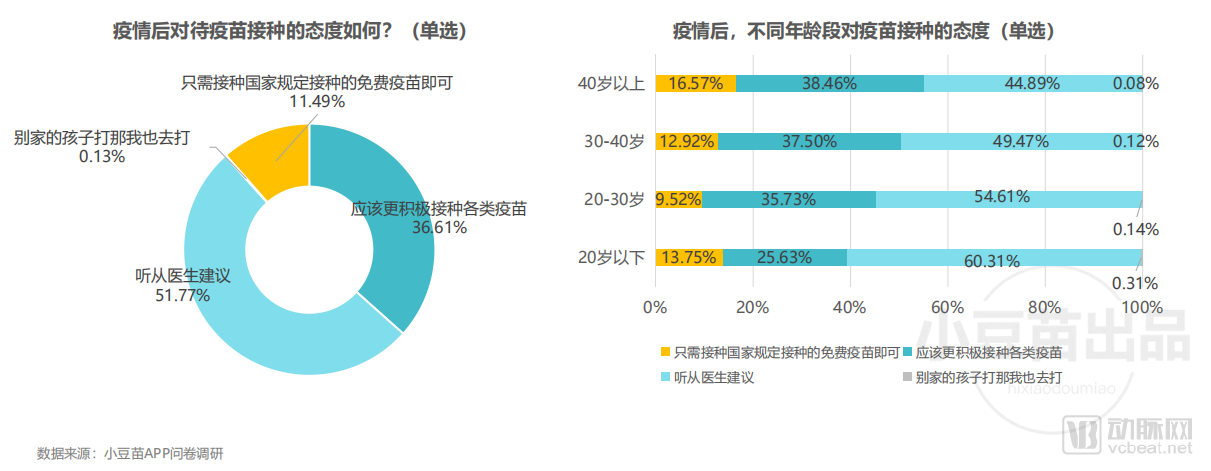
Survey results indicate that the vast majority of respondents hold a positive attitude toward vaccination. Approximately 37% of parents believe that various vaccines should be administered more proactively, while over 50% of parents choose to follow their doctors’ advice. A comparative analysis by age group reveals that parents aged 40 and above exhibit a more proactive stance on vaccination, whereas parents under the age of 20 are more inclined to heed professional medical recommendations.
Awareness of Pneumococcal Vaccines
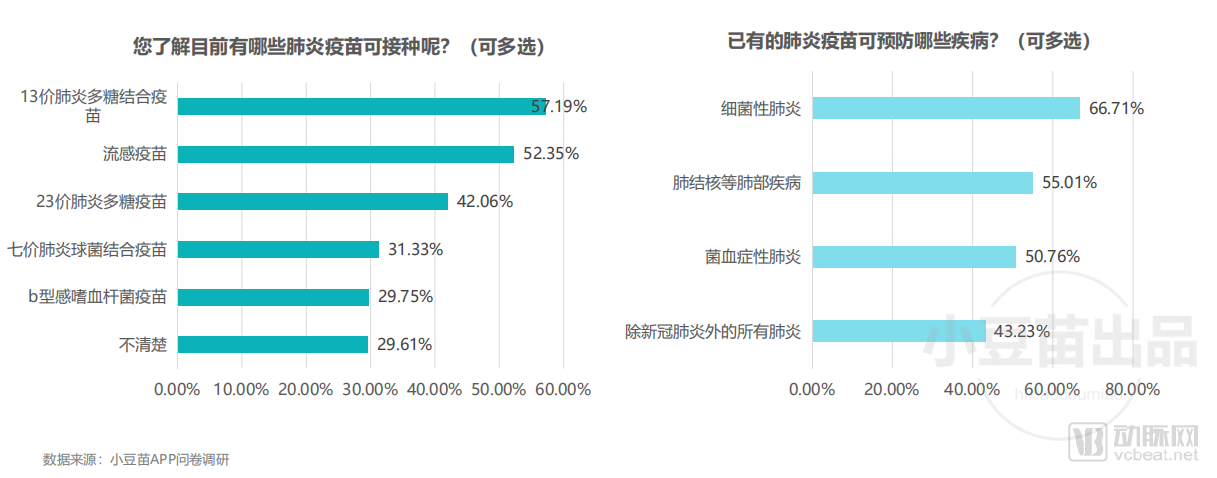
Surveys show that nearly 30% of parents are unaware of which pneumonia vaccines are currently available for immunization, and over 50% mistakenly classify the influenza vaccine as a type of pneumonia vaccine. More than 40% of parents believe that receiving the pneumonia vaccine can prevent all types of pneumonia except for COVID-19.
Understanding of the COVID-19 Pandemic
1. Over 97% of parents proactively seek out news related to the COVID-19 pandemic, indicating a very high level of concern among parents regarding the outbreak;
2. More than 70% of parents primarily obtained pandemic-related information through television news or mobile news apps, with WeChat Moments and official accounts also serving as major sources of such information;
3. More than 80% of parents are aware that the novel coronavirus can be transmitted via droplets and contact, indicating a clear understanding among parents of the primary routes of viral transmission; additionally, over 65% of parents believe in fecal-oral transmission, although this route has not been confirmed.
4. More than 80% of parents believe that the epidemic will be controlled within half a year, while less than 20% believe that it will last for a long time;
5. Among parents who believe that the novel coronavirus will “continue to circulate in human society,” those aged 40 and above account for a relatively higher proportion, reaching 17.04%; by education level, parents with a postgraduate degree or higher represent the largest share, at 18.25%.
Protective Awareness and Measures During the Pandemic
1. Over 96% of parents are aware that measures such as wearing masks, frequent handwashing, avoiding gatherings, and regular ventilation can help prevent COVID-19 during the pandemic; however, some misconceptions persist, such as not wearing masks in crowded places and believing that medications can prevent COVID-19.
2. Following the outbreak, parents’ hygiene habits have changed significantly. When coughing or sneezing, the majority know how to take proper precautions to prevent transmission. Regarding handwashing, nearly 90% of families have increased both the frequency and duration of handwashing, and approximately 60% of families use disinfectants or soap every time they wash their hands. Over 90% of respondents believe that temperature screening for entry and exit implemented by streets and communities is highly necessary, and most express approval of measures such as entry/exit registration, temperature checks, and strict restrictions on personnel movement.
3. When family members exhibit suspicious symptoms, nearly 80% of parents immediately report them to epidemic prevention personnel from subdistricts and communities, indicating that the community’s epidemic control efforts have gained parental recognition.
Impact on Knowledge and Attitudes Toward Vaccination
1. Survey results as of March 15, 2020, showed that 96% of outpatient clinics suspended vaccination services during the epidemic; currently, 72% of these clinics have resumed vaccinations. Among the clinics that have resumed services, 82% of patients are able to visit for vaccination within one month.
2. After outpatient vaccination services resumed, nearly 80% of parents scheduled vaccinations upon receiving notifications from the clinic or after consulting with outpatient physicians, indicating that parents are more inclined to follow the advice of professional institutions or healthcare professionals regarding vaccination;
3. The survey shows that 89% of respondents currently indicate that community clinics offer advance appointment scheduling for vaccinations. In comparison with the findings from the “2019 White Paper on Chinese Parents’ Attitudes and Behaviors Toward Childhood Vaccination” released by Xiao Dou Miao in December 2019, the proportion of parents supporting the implementation of online appointment services at clinics has increased from 78% to 92%.
4. Regarding vaccination, the vast majority hold a positive attitude toward receiving vaccines; approximately 37% of parents believe that various vaccines should be administered more proactively, and over 50% of parents choose to follow their doctors’ advice. A comparison by age group reveals that parents aged 40 and above demonstrate a more positive attitude toward vaccination.
5. Nearly 30% of parents are unaware of the currently available pneumonia vaccines, and over 40% mistakenly believe that vaccination can prevent all types of pneumonia except for COVID-19.
Follow the “Listen to the Experts” official account and reply with “White Paper” to obtain the full report.