

Digital Therapeutics Emerges as the Next Blue Ocean: FDA Approves 7 New Therapies in Six Months, China Sees New Progress
The global spread of the novel coronavirus has dealt a severe blow to the economy. To prevent further transmission of the epidemic, most regions have implemented measures such as quarantine and social distancing. However, these measures have also had a significant impact on patients with chronic diseases and those with mental health issues. Given the increasing likelihood of the pandemic’s cyclical effects, it is imperative to leverage innovative technologies to address the challenges faced by these patient populations.
As a novel solution, digital therapeutics have been placed on the agenda in the United States. Recently, the U.S. Department of Health and Human Services (HHS) and the Food and Drug Administration (FDA) jointly issued the “Enforcement Policy for Digital Health Devices Used to Treat Psychological Disorders During the COVID-19 Pandemic.” This policy temporarily waives certain requirements for low-risk software tools related to mental health, such as those pertaining to reporting corrections and deletions, as well as registration and listing obligations.
This policy has had a positive impact on digital therapeutics. Shortly after its introduction, several digital therapeutic products received emergency approval and were made available to the public. This also signals another acceleration in the momentum of digital therapeutics, which have been gaining traction abroad in recent times. VCBeat (WeChat ID: Vcbeat) has also compiled an overview of the latest developments in digital therapeutics over the recent period.
What Problems Can Digital Therapeutics Solve During the Pandemic?
Digital Therapeutics (DTx) is a software-based therapy that provides patients with evidence-based therapeutic interventions to prevent, manage, or treat diseases. It can be used independently or in conjunction with medications, devices, or other therapies. Traditionally, patients would fill prescriptions issued by physicians at pharmacies. Digital therapeutics essentially replace the medication with a specific mobile app—though they may also take the form of integrated hardware-software products.
For behavior-mediated conditions (such as depression, post-traumatic stress disorder, smoking cessation, type 2 diabetes, and insomnia), traditional pharmacotherapy offers limited benefit and carries a high risk of drug addiction—the opioid epidemic plaguing the United States is one prominent example of the drawbacks associated with medication-based treatment. However, clinical trials conducted over the past several years have demonstrated that digital therapeutics yield significant efficacy in managing these conditions.
Taking SilverCloud Health’s digital therapeutics as an example, clinical studies have shown that after three months, university students participating in the trials demonstrated a 25–45% improvement in assessments of mental health domains such as depression, anxiety, and stress. After 12 months of continuous use of the digital therapeutics, patients exhibited sustained positive effects in the alleviation of depression, anxiety, and stress. Clinical data from Happify’s digital therapeutics further support this finding, indicating that its digital therapeutics can improve anxiety and stress conditions by 25% among study participants.
Big Health’s digital therapeutic, Sleepio, demonstrated in 11 additional placebo-controlled studies that it improved sleep health for 76% of users. Meanwhile, Sleepio also helps reduce healthcare costs.
PTSD (post-traumatic stress disorder) patients are among the groups at highest risk for substance use disorders, which is the primary reason Palo Alto Health Sciences selected this indication as the main focus for its Freespira digital therapeutic. Clinical trial data show that over 80% of PTSD patients exhibited no signs of relapse after four weeks of digital therapeutic treatment, and more than 88% demonstrated significant improvement on PTSD assessment scales two months after completing the digital therapeutic intervention.
Digital Therapeutics Offer Hope for Patients with Mental Health Conditions Affected by the PandemicThe impact of digital therapeutics on mental health conditions is welcome news for patients affected by the pandemic. Due to pandemic-related disruptions—such as the inability to attend regular medical consultations, prolonged isolation, social distancing measures, and significant stress stemming from profound uncertainty about the future—the conditions of patients with mental health disorders and chronic diseases deteriorated rapidly during this period.
Most patients with mental illnesses currently require immediate treatment, but this would undoubtedly overwhelm the already overburdened U.S. healthcare system. Furthermore, for elderly patients, visiting medical facilities during the pandemic carries a very high risk.
At this critical juncture, the advantages of digital therapeutics are amplified: First, digital therapeutics enable remote consultations and treatment delivery, thereby reducing unnecessary visits to hospitals and clinics during the pandemic. Second, they can be personalized to accommodate patients’ schedules and physical environments. Furthermore, digital therapeutics are highly scalable and can be conveniently accessed via smartphones or tablets.
As a clinically validated, serious diagnostic and therapeutic modality, digital therapeutics can acquire authentic and actionable patient data, optimize patient outcomes, prevent disease progression thereby reducing hospitalizations, and provide patients, caregivers, and clinicians with on-demand progress updates, thus enabling intelligent care management and optimized clinical decision-making. For instance, it can automatically measure medication consumption and transmit this information to pharmacies to facilitate personalized home delivery services, avoiding the need to visit pharmacies during the pandemic.
Compared with traditional therapies, digital therapeutics are more affordable, thereby reducing the financial burden on patients. Meanwhile, they can expand the scope of treatment without expanding medical resources, indirectly lowering costs.
How FDA Policies Drove the Development of Digital Therapeutics During the Pandemic
The FDA believes that mandating policies to temporarily waive approval and registration requirements for low-risk digital therapeutics during the pandemic can rapidly expand access to these interventions, thereby enabling patients to more conveniently obtain digital therapeutics for mental health conditions.
As previously mentioned, this also helps alleviate the burden on healthcare institutions, allowing them to focus their primary efforts on combating the epidemic; it also reduces the risk of viral infection and aids in controlling the outbreak.
Currently, the FDA has designated two categories of digital therapeutics that may be temporarily exempt from approval and registration: one is “digital behavioral therapy devices for mental health disorders and other digital therapeutic devices”; the other is “low-risk comprehensive wellness care and digital health products for the treatment of mental health and psychological conditions.”
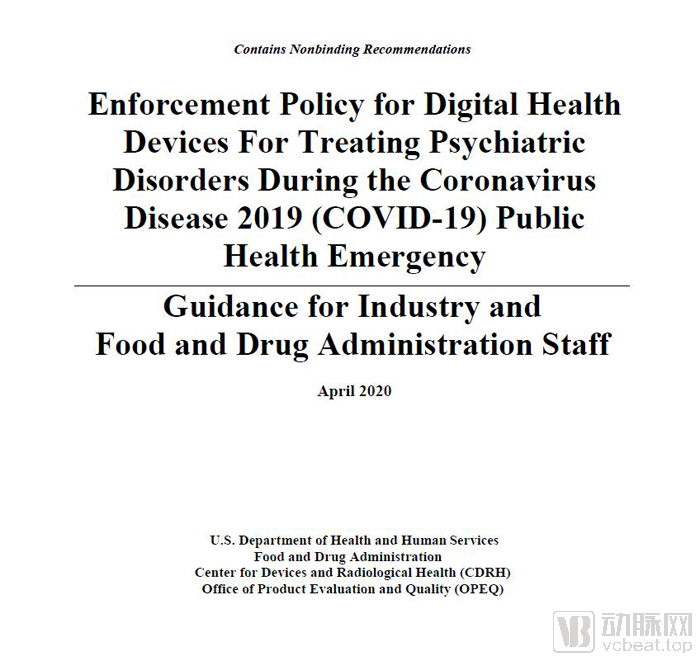
FDA Issues Emergency Approval Guidelines for Digital Therapeutics
Of course, this does not mean that these low-risk digital therapeutics can be released arbitrarily. They still need to undergo quality assessments, including software validation and cybersecurity measures.
The FDA also requires companies to clearly label their products so that users can easily distinguish between those that have received full approval and those authorized only under emergency use. Additionally, companies must clearly indicate the product’s indications, applicable age groups, and a description of clinical trials; if the product includes content not covered in FDA guidance, this must also be clearly stated.
Following the FDA’s release of the guidance in late April, at least three companies—Akili Interactive Labs, Livongo, and Pear Therapeutics—have made their digital therapeutics available to the public under this emergency guidance.
Prior to the pandemic outbreak, Akili Interactive Labs had completed randomized clinical trials for its digital therapeutic targeting pediatric attention-deficit/hyperactivity disorder (ADHD). A total of 348 children participated in the trials, and the data demonstrated that this video game-based digital therapeutic offered statistically significant benefits in improving symptoms of ADHD in children.
Akili Interactive Labs is still seeking 510(k) clearance for its digital therapeutic; however, in accordance with the FDA’s emergency guidance, the therapy is currently available to the public free of charge. Undoubtedly, its performance during this free-access period will have a significant impact on its eventual clearance.
The FDA has also granted emergency authorization for Livongo’s digital therapeutics targeting patients with type 1 diabetes, type 2 diabetes, hypertension, and other chronic conditions. Hospitals can leverage these digital therapeutics, paired with home blood glucose monitors, to remotely monitor the blood glucose levels of mildly symptomatic COVID-19 patients isolating at home.
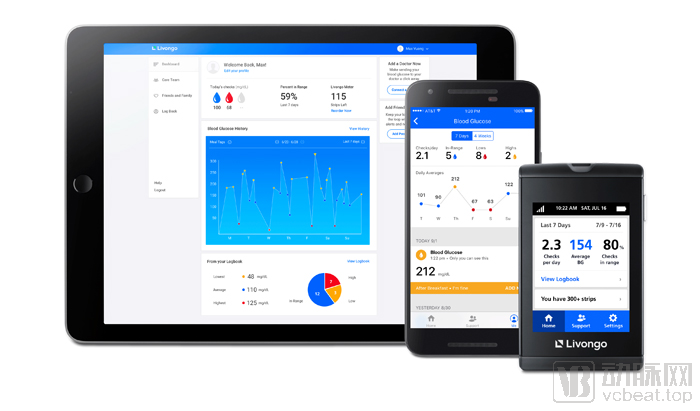
Livongo's Digital Therapeutics
This emergency approval aims to reduce the depletion of personal protective equipment (PPE) caused by mild COVID-19 patients visiting hospitals for blood glucose monitoring, thereby enabling hospitals to provide better medical care for hospitalized COVID-19 patients. Patients can use digital therapeutics to monitor their blood glucose levels at home. The data can be uploaded to healthcare institutions for remote chronic disease management.
Unlike the two companies mentioned earlier, Pear Therapeutics, a leading player in the digital therapeutics industry, currently has three digital therapeutics that have received FDA clearance. In January 2020, it also acquired two VR-based digital therapeutics designed for pain management.
Pear-004, a digital therapeutic for schizophrenia, was approved via the emergency review pathway, further expanding its product pipeline.
This therapy is designed to work in conjunction with medication, providing patients with schizophrenia access to cognitive behavioral therapy and training to help manage their condition. Although this therapy has not yet undergone pivotal clinical trials, Pear Therapeutics states that two clinical studies conducted to date have demonstrated high levels of patient satisfaction and engagement.
During the current outbreak, the FDA has primarily relaxed regulations for digital therapeutics targeting mental health. By making these tools accessible to the public, companies can gather valuable data and user experience feedback, enabling targeted improvements and enhancing clinical trials. This will significantly facilitate eventual regulatory approval.
For patients and healthcare institutions, this enables firsthand experience of the actual efficacy of digital therapeutics (DTx), alleviating prior concerns; it also helps persuade payers to cover DTx costs, thereby laying the foundation for its broader adoption in the future.
Certainly, it is not only mental health-related digital therapeutics; for instance, Livongo’s low-risk digital therapeutic for chronic disease management also received emergency approval. In fact, such low-risk digital therapeutics constitute the majority of the digital therapeutics landscape. This demonstrates that digital therapeutics have seen significant growth during the pandemic, driven by their inherent advantages in technology and efficacy.
Indeed, digital therapeutics are primarily reimbursed by commercial insurers, which also serve as the main payers. Nevertheless, digital therapeutics are not currently covered by Medicare or most state Medicaid programs. Prevailing perceptions and doubts regarding clinical efficacy remain the primary barriers preventing payers from covering digital therapeutics.
Prior to the pandemic, digital therapeutics (DTx) had been attempting to address reimbursement challenges by bundling their offerings with those of pharmaceutical and medical device companies. The unique circumstances during the pandemic forced more patients to adopt DTx, presenting a significant opportunity to shift perceptions and demonstrate the clinical efficacy of these interventions.
Last October, we summarized the state of digital therapeutics at that time. Since then, four additional digital therapeutics have received FDA clearance. Including three digital therapeutics approved under emergency use authorization, a total of seven new digital therapeutics have become available to the public in just over six months.
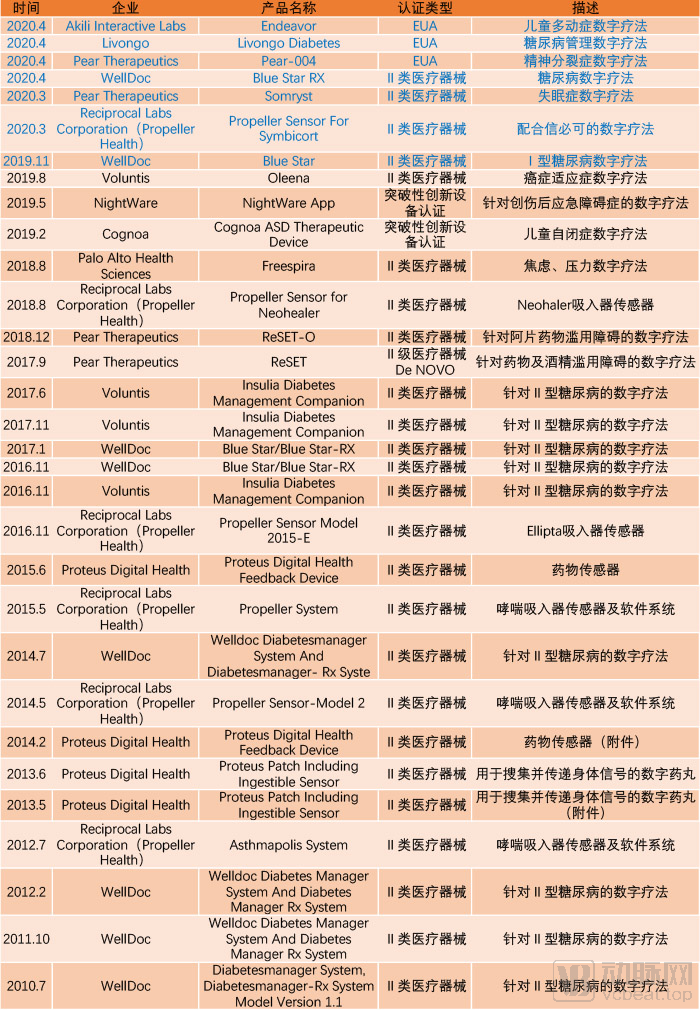
FDA Digital Therapeutics Approval Status in Recent Years (Blue Text Indicates Additions After October 2019)
Traditional pharmaceutical and medical device companies are increasingly strengthening their collaborations with digital therapeutics (DTx) firms to extend their product pipelines through DTx integration, a trend that is gaining momentum within the industry. According to statistics from the Artery Orange database, there have been as many as seven major partnership events in this field over the past six months.
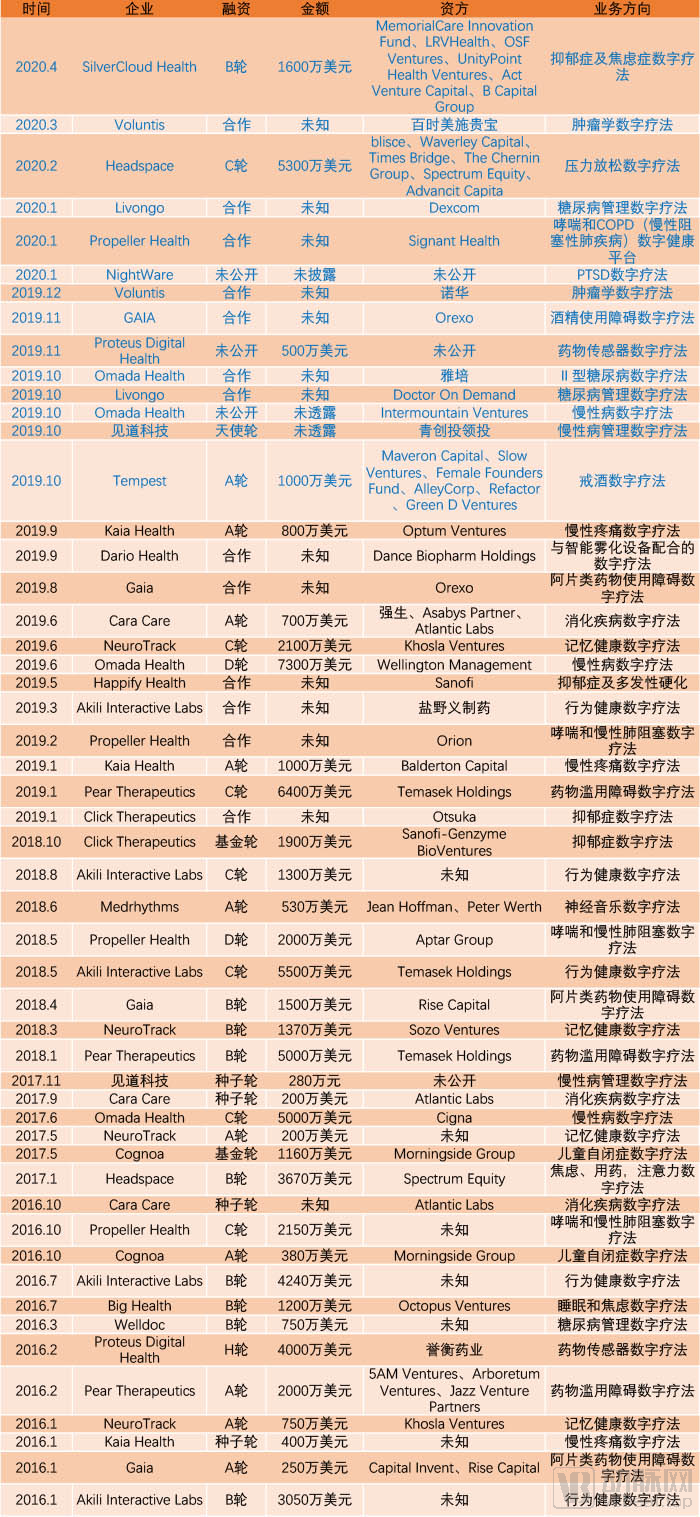
Digital Therapeutics: Financing and Partnership Trends in Recent Years (Blue Text Indicates New Additions Since October 2019)
Digital therapeutics have also attracted significant investor interest. In the six months from last October to the present, the sector has secured three rounds of financing, totaling over $70 million. Notably, the funding rounds for Headspace and SilverCloud Health were both completed in 2020. With the immense potential of emerging medical technologies such as telemedicine and digital therapeutics becoming evident during the pandemic, coupled with supportive policy initiatives, VCBeat believes that more capital will flow into this field in 2020.
Current Status of Digital Therapeutics in China
Compared with foreign countries, the development of digital therapeutics in China is less than satisfactory. VCBeat interviewed He Zeyi, founder of Jiandao Technology, a pioneer in China’s digital therapeutics sector, to discuss the current overall state of the industry.
He Zeyi stated that the understanding of digital therapeutics in China is gradually evolving. In recent years, large tertiary hospitals have developed a certain level of awareness regarding digital therapeutics; they are not resistant to them, and demand is steadily increasing. In contrast, community and primary healthcare institutions, having had less exposure to digital therapeutics, tend to harbor some initial skepticism when first encountering these solutions.
Patient acceptance of digital therapeutics varies depending on individual circumstances. Generally, patients who frequently use smartphones and the internet, and who are more open to acquiring new knowledge, tend to exhibit higher acceptance of digital therapeutics.
Healthcare regulatory authorities are increasingly improving their perception of digital therapeutics, primarily for several reasons. First, the national strategy advocates shifting the focus of healthcare upstream, gradually transitioning from "treatment" to "prevention." Second, China is increasingly incorporating pharmacoeconomics into its healthcare system, emphasizing early intervention to reduce health insurance expenditures. Digital therapeutics effectively address the improvement needs from both perspectives.
“Two years ago, when we went to hospitals to implement the promotion of digital therapeutics, only about one in ten specialists were receptive; now the situation has improved significantly, with approximately half of specialists accepting it.” He Zeyi believes that, compared with previous years, the acceptance of digital therapeutics in China has shown marked improvement.
The limited recognition of digital therapeutics in China stems from multiple factors.
First, conditions that have driven the development of digital therapeutics abroad—such as mental disorders, behavioral disorders, and pain syndromes—are not given sufficient attention in China. Moreover, due to strict controls on narcotics, opioid addiction, which has become epidemic in the United States, is not a significant issue in China.
Conversely, the concept that “all medicines carry some degree of toxicity” is deeply ingrained in China, leading to generally suboptimal medication adherence among patients with chronic diseases. Taking diabetes, the most closely monitored condition, as an example, although China has more than 100 million diabetic patients, only tens of millions adhere to their prescribed regimens due to concerns about developing drug dependence. Consequently, digital therapeutics often struggle to gain traction.
Secondly, U.S. digital therapeutics companies have positioned themselves as equivalent to pharmaceutical products from the outset. Consequently, digital therapeutics have developed following a pharmaceutical model—gaining regulatory approval through clinical efficacy validation, and then leveraging cost-saving advantages to attract commercial insurers or users to cover the costs.
This approach is equally unfeasible in China. After exploring multiple channels, He Zeyi believes that digital therapeutics in China can only achieve effective adoption once they gain recognition from medical institutions and become a beneficial complement to the national healthcare system.
From a payment perspective, the reimbursement models for digital therapeutics (DTx) in China are far less clear-cut than those in the United States. In the U.S., DTx is primarily reimbursed by commercial health insurance providers. By helping insured individuals reduce disease incidence, DTx enables these insurers to lower overall costs, thereby justifying coverage for DTx products. Meanwhile, commercial health insurance serves as the primary payer for healthcare services overseas.
In contrast, the share of commercial health insurance in China’s overall medical insurance system is virtually negligible. Consequently, the current strategic priority for commercial insurers remains capturing market share, and allocating funds to digital therapeutics offers little benefit toward this objective. Therefore, the payment models for digital health prevalent in the United States are clearly not viable in China.
Finally, from the perspective of regulatory approval, the United States has established a separate approval catalog and process tailored to the characteristics of digital therapeutics after early exploration. In China, no separate catalog has been established yet; instead, digital therapeutics are classified under the traditional medical device category, which does not align with the product characteristics of digital therapeutics.
The "Technical Review Guidelines for the Registration of Mobile Medical Devices," released in December 2017, clarified that all standalone mobile medical software or software-plus-hardware solutions used for patient management are classified as medical devices, and their regulatory scope and requirements need to be clearly defined.
It Is Imperative to Develop Digital Therapeutics with “Chinese Characteristics”
These differences have rendered the direct replication of foreign models for digital therapeutics less than ideal. In fact, as early as 2016, the publicly listed company Yuheng Pharmaceutical invested a total of $40 million in preferred shares of Proteus Digital Health, a pioneer in digital therapeutics, through its wholly-owned subsidiary Yuheng Hong Kong (via direct investment) and Shanghai Sailings Boda Keer Investment Partnership (via indirect investment), thereby securing the right to appoint a board observer to the latter’s board of directors.
From a timing perspective, this transaction was quite forward-looking; in terms of scale, it represented a significant investment at the time. In its announcement, Yuheng Pharmaceutical also stated that the company aimed to introduce internationally advanced technologies and concepts through Proteus Digital Health’s “smart pills,” thereby helping Yuheng Pharmaceutical establish a presence in the chronic disease management sector.
However, as Proteus Digital Health shifted its strategic focus from being a smart pill manufacturer to becoming an integrated platform for disease management, and due to Yuheng Pharmaceutical’s own operational issues and the domestic situation in China, this transaction did not deliver the value originally anticipated.
In its latest 2019 annual report, Yuheng Pharmaceutical also noted that due to significant changes at Proteus Digital Health, including downsizing, transfer of core technologies, and uncertainty in financing, the company determined that the fair value of this investment had decreased by as much as 65%.
It is for this reason that He Zeyi believes digital therapeutics should also explore a “Chinese characteristic” approach—domestic digital therapeutics companies need to start from three aspects: localization, personalization, and patient education, to create a development model for digital therapeutics that aligns with China’s current realities.
Externally, the explosive growth of digital healthcare in China also requires the fulfillment of certain external conditions.
First, healthcare payment mechanisms need to become more diversified, and commercial health insurance must reach a certain level of development. Given the rapid growth of commercial health insurance currently, this is merely a matter of time.
Second, preventive healthcare requires clearer and more substantial development.
Third, clear delineation of rights and responsibilities in tiered diagnosis and treatment. Once the rights and responsibilities within the tiered diagnosis and treatment system are clearly defined, the value of digital therapeutics can be fully realized—enhancing clinical outcomes for large hospitals while helping primary healthcare institutions reduce labor costs.
Fourth, healthcare institutions and regulatory bodies should consider giving due attention to innovations in digital therapeutics. For instance, regulators could establish a separate catalog tailored to the characteristics of digital therapeutics, along with dedicated standards for pharmacoeconomics and clinical validation. Additionally, the contribution of digital therapeutics to reducing medication dependence, lowering health insurance expenditures, and decreasing societal costs should be taken into account. As for healthcare institutions, they could reduce administrative burdens on hospitals and open up more experimental channels for innovative diagnostic and therapeutic approaches.
“Stay true to your original mission, build a core competitive moat, and prepare for long-term holding despite short-term volatility; the golden age of digital therapeutics will eventually arrive.” This is the advice He Zeyi offers to Chinese enterprises aspiring to make their mark in the field of digital therapeutics.
Compared with previous years, digital therapeutics have shown strong momentum this year. Both the FDA’s relaxation of emergency approval requirements and the increase in approvals and partnership activities indicate that the sector is gradually entering a phase of accelerated growth. While the impact of the pandemic has certainly played a role, the long-term efforts by digital therapeutics companies to strengthen their core capabilities and ultimately demonstrate their value have also been critical factors.
Encouragingly, China’s digital therapeutics sector has also delivered a pleasant surprise. Although still in its nascent stage and requiring improvements in the external environment, this very immaturity signifies substantial market opportunities. We will continue to closely monitor whether this blue-ocean segment will emerge as the next breeding ground for unicorns.