

Medical Tourism and Import Substitution: The Eight-Year Growth of Boao Lecheng
The global COVID-19 situation reversed starting in March.
During the pandemic, the non-internet economy experienced a comprehensive retreat. In the healthcare sector, sales at third-party medical institutions such as clinics and testing centers were nearly halved, with these entities losing almost all sources of revenue under "lockdown" policies. However, other segments, such as physical institutions in medical tourism, are seizing the opportunity to turn things around as the epidemic comes gradually under control.
In recent years, the demand among Chinese residents for high-end medical services abroad has continued to rise, reaching a scale substantial enough to constitute a distinct sector within the healthcare industry. Companies such as Shengnuo Yijia, Chunyu International, WeDoctor, and Haodafu Online have all entered this space by launching platform-based businesses. Meanwhile, on the offline front, the government has introduced numerous policies aimed at achieving “import substitution” in medical services.
On February 28, 2013, the State Council officially approved the establishment of the Boao Lecheng International Medical Tourism Pilot Zone in Hainan Province and granted nine supportive policies, making Lecheng China’s first medical tourism pilot zone. Subsequently, the Changzhou International Medical Tourism Pilot Zone, Shangrao International Medical Tourism Pilot Zone, and Qingdao International Medical Tourism Pilot Zone were established in succession. However, constrained by Hainan’s relatively undiversified economic structure, the Boao Lecheng Pilot Zone has shouldered greater expectations and received more substantial support.
The Boao Lecheng Pilot Zone has taken shape. As early as mid-April, the cafeteria at the Boao Yiling Life Care Center was already packed with guests coming for vacation and wellness retreats, including many children and young adults. “Hainan Province lowered its public health emergency response level earlier than most other provinces and municipalities,” said a staff member from Yiling. “By March 25, Hainan had recorded zero active COVID-19 cases. It was around that time that Yiling resumed operations, with guests gradually arriving from cities less severely affected by the epidemic, as they had grown unaccustomed to being confined at home.”
The Boao Yiling Life Care Center is a microcosm of the current development in the Boao Lecheng International Medical Tourism Pilot Zone. Today, the area features a complex of nine top-tier medical institutions situated along the Wanquan River, where lights are gradually illuminating what was once wasteland.
Throughout history, Boao Town has remained a small coastal fishing village. It experienced brief periods of prosperity, but for the most part, its ordinary agrarian life flowed quietly amidst the sweeping changes of the wider world.
It was not until 1992, when Jiang Xiaosong first set foot on this land, that he was captivated by its geographical advantages and magnificent scenery, and began to envision the potential commercial prospects of Boao in the following years. Thanks to his efforts, the Boao Forum for Asia was officially established in 2001. This once-obscure fishing village suddenly transformed into one of Hainan Province’s calling cards, marking Boao’s first step onto the global stage.
However, the annual Asian Forum alone is not sufficient to immediately transform the culture and appearance of this small town, but the economic effects brought by the forum are gradually changing the lives of local residents. With the influx of capital, more and more hotels have sprung up in Boao Town and around the forum venue, and local fishermen have transitioned from self-sufficient fishing and farming industries to service and construction sectors. In addition, relying on the reputation of the Asian Forum, more small-scale forums have chosen this location, accelerating the pace of change.
The 12 years following the establishment of the Boao Forum for Asia (BFA) marked the second phase of Boao’s development. During this period, Boao underwent a structural transition from the primary sector to the secondary and tertiary sectors, gradually acquiring the foundational characteristics of a modern city. However, the BFA remained Boao’s sole distinguishing feature, as the town lacked specialized industries to serve as its economic pillars.
By 2007, the constraints on Boao’s economic development had become increasingly apparent. At this juncture, Jiang Xiaosong returned to Boao Town and proposed the Lecheng Project, which continues to exert influence to this day. He sought to build a futuristic industrial ecosystem in this scenic locale, integrating energy and cultural industries to address Boao’s deficiencies, with healthcare as the ultimate industrial output.
Specifically, the industrial park will be developed 5 kilometers from the estuary of the Wanquan River, spanning both banks. The south bank will focus on “healthcare and wellness,” featuring five major functional centers: a Traditional Medicine Center, a Sub-health Recuperation Center, a Medical Aesthetics and Plastic Surgery Center, an Elderly Health Care Center, and a Chronic Disease Rehabilitation Center. The north bank will center on “medical treatment,” introducing advanced medical equipment and technologies from around the world, collaborating with renowned healthcare institutions in developed countries, and establishing a world-class integrated base for industry, academia, and research that combines medical care, scientific research, and education.
The Path to an Ideal Became Reality in 2013. On February 28 of that year, the State Council officially approved the establishment of the Boao Lecheng International Medical Tourism Pilot Zone in Hainan Province and granted nine supportive policies. The “Nine National Measures” include accelerating the import registration and approval of medical devices and pharmaceuticals in the pilot zone; allowing the pilot zone to leverage its technical capabilities, encouraging it to utilize various financing channels, and attracting social investment, among other provisions.
From a policy and strategic perspective, the development direction of Boao Lecheng is very clear. With its mountains, water resources, overseas pharmaceuticals and medical devices, and overseas physicians, Qionghai will fully shift the core of its industrial support toward tourism healthcare. Meanwhile, Lecheng itself will become an international medical tourism destination, a base for cutting-edge medical research and development and translation, and a national-level cluster of new medical institutions.
In 2015, driven by the Hainan Provincial Government, personnel were drawn from various administrative levels to form a “market-oriented” management team that implemented “corporate-style” governance. As Dai Xiaolong, head of the Boao Lecheng Administrative Bureau, stated, “A market-oriented government places greater emphasis on service. None of our staff members hold established civil service positions; instead, they are employed by a statutory body. This means that high performers can stay, while those who underperform may be dismissed at the discretion of management. Boao Lecheng is transitioning toward corporate-style management.”
At the same time, investment promotion and infrastructure development were launched accordingly, marking the third step in Boao’s journey toward the industrialization of its medical tourism sector.
Before the third step was even halfway taken, another major policy was rolled out for the Boao Lecheng International Medical Tourism Pilot Zone. In 2019, four national ministries and commissions jointly issued the “Implementation Plan for Supporting the Development of the Boao Lecheng International Medical Tourism Pilot Zone,” also known as the “New National Nine Articles.” Building on the previous allowance for limited use of drugs already approved in the United States, Japan, and the European Union but not yet registered in China, this new plan further permitted patients with chronic diseases to take these medications home for personal use. More importantly, the policy allowed overseas pharmaceutical and medical device products to conduct real-world data studies within China, thereby shortening the time required for foreign drugs to enter the domestic market. This signifies that the Pilot Zone will become a core hub for regulatory approval of pharmaceuticals and medical devices from overseas companies.
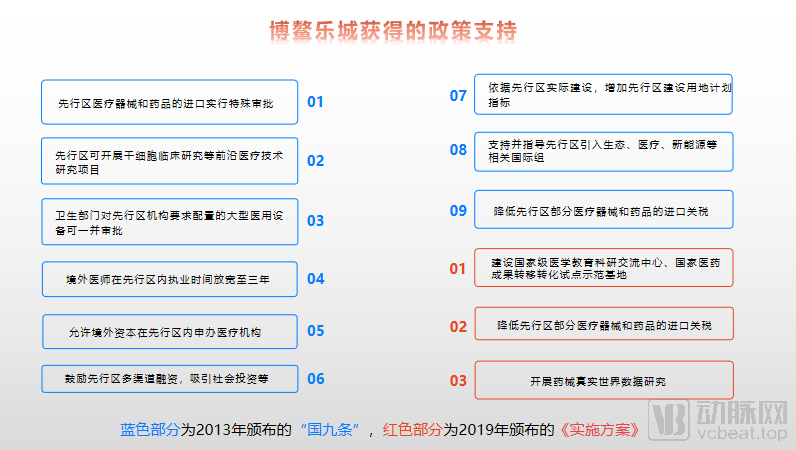
Following the implementation of this policy, Boao Lecheng has gained greater capacity to utilize advanced overseas pharmaceuticals and medical devices. Coupled with the establishment of a national-level scientific research base, the area is gradually emerging as a hub for exchanges of advanced pharmaceuticals and medical devices between China and foreign countries.
Looking back at the development of Boao Lecheng, the foundational theme of “medical tourism” was established as early as 2007. At that time, the medical tourism market was not yet as vast as it is today, compelling us to admire Jiang Xiaosong’s foresight.
Over the past four decades since the launch of reform and opening-up, China’s economy has achieved substantial and rapid growth. This growth, driven by infrastructure development, has facilitated the transition from the primary to the secondary sector, but has also led to an increasingly pronounced structural disparity between the secondary and tertiary sectors in the early 21st century.
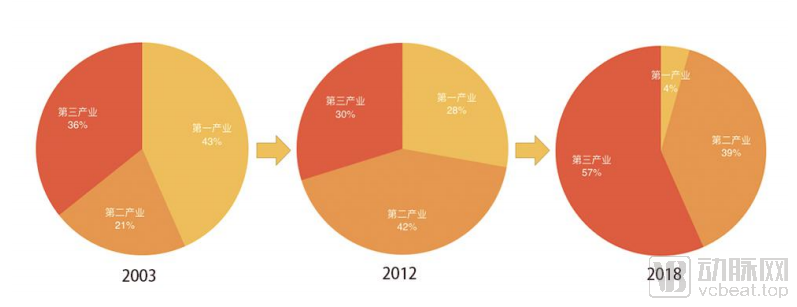
Industrial Structure in China Across Three Periods
Evidently, under such disparate development trajectories, the growth of China’s healthcare industry has prioritized broad accessibility over the stratification of medical needs. Coupled with the historical gap in medical services between China and developed nations, medical tourism has gradually evolved into a substantial industry. Meanwhile, economic growth has injected fresh vitality into this sector, resulting in a more clearly defined service chain.
According to macro-level data from the China National Medical Products Administration (NMPA), the global medical tourism market was valued at approximately RMB 440 billion in 2013, rising to around RMB 680 billion by 2017, representing a compound annual growth rate (CAGR) of 11.50%. While there is no clear domestic market data available, estimates from marketing personnel at a medical enterprise specializing in “anti-aging” medical tourism suggest that China had 60,000 billionaires in 2015. Based on an average annual expenditure of approximately RMB 1 million per person, the market depth at that time was at least RMB 60 billion. Calculated based on international market trends, the current domestic medical tourism market may have reached approximately RMB 103 billion. Furthermore, as overseas medical aesthetics with relatively lower unit prices become commonplace, this estimate still has significant room for growth.
The leading cross-border medical tourism destinations for Chinese travelers, ranked by popularity, are Japan, South Korea, the United States, Taiwan (China), Germany, Singapore, Malaysia, Switzerland, Thailand, and India. In addition to niche services such as premium health screenings, genetic testing, and chronic disease management, mainstream offerings in outbound health and wellness tourism include anti-aging and aesthetic treatments, body detoxification, yoga and meditation, Zen retreats and pilgrimages, as well as fitness-focused wellness travel abroad. These services are not irreplicable.
Therefore, from an industry perspective, the Boao Lecheng International Medical Tourism Pilot Zone stands at the forefront of the booming overseas medical care sector. By replicating existing successful projects in Lecheng while introducing innovative initiatives with Chinese characteristics, it holds substantial potential to capture a significant share of this vast market. This is precisely the strategic direction being pursued by Boao Lecheng.
To date, a total of nine medical institutions have been established in Lecheng: Boao Super Hospital, Boao International Hospital, Boao Yiling Life Care Center, Ciming Boao International Hospital, Boao Evergrande International Hospital, Hainan Xinshengquan International Cell Therapy Hospital, Hainan Boao Ruida Medcell International Hospital, China Stem Cells Group’s Affiliated Stem Cell Hospital in Boao, Hainan, and Qiyan Stem Cell Anti-Aging Hospital.
Currently, all surgical procedures involving licensed medical devices are performed at Boao Super Hospital. The hospital adopts a “1+X” model, comprising “one shared hospital (platform) plus multiple clinical medical centers.” To date, expert teams led by academicians from 17 medical specialties have officially joined Boao Super Hospital, including Academician Zheng Shusen, Academician Wang Chen, Academician Zhang Zhiyuan, Academician Dong Jiahong, Academician Ge Junbo, as well as the teams led by Academician Li Lanjuan, Academician Sun Yinghao, Academician Han Demin, Academician Ning Guang, and Professor Li Mingding.
Since commencing operations on March 31, 2018, Boao Super Hospital has successfully performed numerous complex treatments and achieved multiple “firsts in China,” including the country’s first surgery using a specially imported cochlear implant and the first fully visualized cardiac surgery with combined magnetic and electrical dual-positioning.
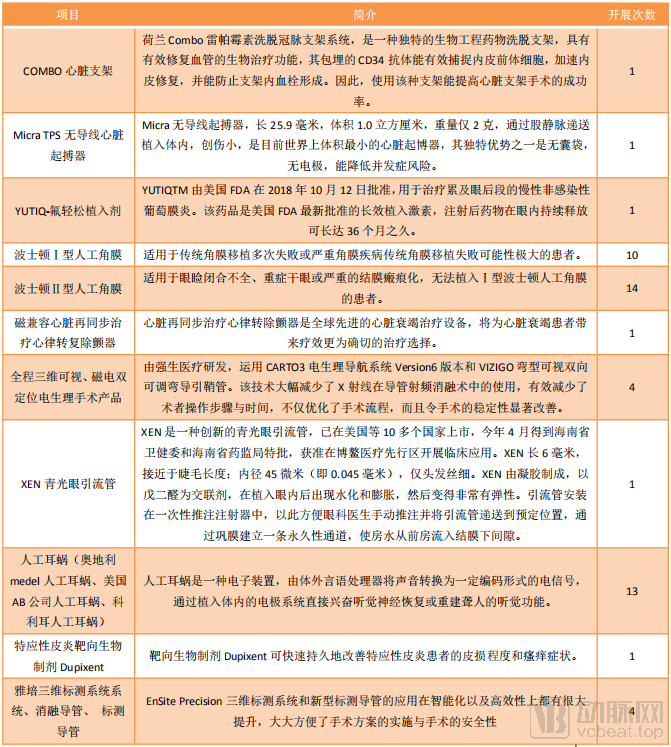
Licensed Drug and Medical Device Projects Implemented by Boao Super Hospital
At the current stage, the licensed medical device and pharmaceutical projects completed by Boao Super Hospital are dominated by medical devices, with relatively fewer pharmaceutical products. In addition to the pharmaceutical projects mentioned in the table above, the Super Hospital can also provide patients with secukinumab monoclonal antibody. In May 2018, Boao Super Hospital leveraged preferential policies to introduce Gardasil 9; the entire process from application submission to market approval took only eight days. On March 28, 2020, the Boao Lecheng International Medical Tourism Pilot Zone achieved another institutional breakthrough, allowing patients to take out of the Pilot Zone small quantities of orally administered, clinically urgent imported drugs for personal use only.
In recent years, hot sectors such as assisted reproductive technology (ART), medical aesthetics, and stem cell therapy have established a presence in Boao Lecheng. Taking Ciming Boao International Hospital as an example, its ART protocols utilize FDA-approved imported pharmaceuticals, while its reproductive center, embryology laboratory, and clinical team all adhere to U.S. standards. This is akin to relocating a U.S.-based ART center to China, enabling patients to access top-tier ART services without the need for long-distance travel. Consequently, Hainan has become a viable alternative for patients who previously traveled to Thailand or the United States for ART.
In contrast, the Boao Yiling Life Care Center places greater emphasis on integration and innovation, specifically manifested in the fusion of Traditional Chinese Medicine (TCM) with Western medicine, as well as the harmonization of traditional culture with modern lifestyles. The introduction of advanced equipment, such as specialized cardiovascular CT systems and the latest generation of high-end 3.0T research-grade magnetic resonance imaging (MRI) scanners, ensures the center’s medical quality. Collaborations with renowned senior TCM practitioners, including Zhang Yongjie and Zhou Shaohua, have driven the development of its health and wellness services, aligning closely with the needs of middle-aged and elderly individuals.
It is worth noting the existing real-world data research capabilities in Boao Lecheng. On March 26, 2020, the National Medical Products Administration (NMPA) approved the first marketing application for a glaucoma drainage device from Allergan Inc., USA, which utilized clinical real-world evidence collected in the Hainan Boao Lecheng International Medical Tourism Pilot Zone to evaluate ethnic differences. This approval marked a pioneering step in using clinical real-world evidence for the regulatory approval of medical devices.
This means that if the sponsor has already conducted well-designed clinical studies outside China, the real-world evidence (RWE) collected in the “Pilot Zone” can serve as a bridging study for the Chinese population, demonstrating that the device also exhibits favorable safety and clinical performance when used in the Chinese population.
Real-world data serves as a bridge for Sino-foreign cooperation in Boao Lecheng, which has already partnered with numerous pharmaceutical and medical device companies, including Medtronic, Roche, Johnson & Johnson, and Pfizer. While achievements in medical devices have been realized, real-world data protocols for pharmaceuticals are currently under development.
Expanding a new industrial park is no easy feat. First, it requires policy support to endorse and drive the development of specific industries. Second, it demands capital to complete the park’s foundational infrastructure. Third, it needs advanced enterprises to inject technological expertise and maintain competitiveness.
Lecheng has met the three aforementioned requirements, but this does not mean it is invincible. Japan’s nuclear medicine imaging examinations, Thailand’s assisted reproductive technologies, and South Korea’s medical aesthetics and plastic surgery are not only globally leading in technology but have also ingrained such impressions in the minds of many people. For example, when women who care about their appearance consider facial feature enhancement, South Korea is invariably the first country that comes to mind.
It is extremely challenging to imprint the connection between medical-elderly care, medical aesthetics, and Boao Lecheng onto consumers’ minds in a short period. This difficulty stems, on one hand, from the prejudices held by high-net-worth individuals toward domestic medical services; on the other hand, it is difficult for them to visit Lecheng to experience its services for the first time.
Therefore, the disruption of international connections caused by COVID-19 has undoubtedly presented a significant opportunity for Boao Lecheng. During the pandemic, demand for assisted reproductive technologies and medical aesthetics did not disappear but was merely deferred. Thus, at a time when overseas markets are in disarray while domestic conditions have returned to stability, it is the optimal moment for Boao Lecheng to capture market share.
Dai Xiaolong, Head of the Investment Promotion Department at Boao Lecheng, told VCBeat, “As of April 27, excluding routine surgeries, Boao Super Hospital has performed 42特许 surgeries alone. What does this figure signify? From the second half of 2018 to the first half of 2019, the total number of patients amounted to only two to three hundred. This volume has increased several-fold.”
“During this period, we have been consistently driving our promotional efforts, with synchronized online and offline campaigns. Meanwhile, we will continue to accelerate collaborations with domestic and international enterprises, engaging more doctors, institutions, and patients to further develop and scale the Lecheng Model.”
Based on existing collaborations, Boao Lecheng has established extensive partnerships with domestic and international pharmaceutical and medical device companies, healthcare institutions, and insurance providers. However, it still faces shortcomings in its promotional channels. In the current market, platforms such as Chunyu Doctor, Haodaifu, JiuYi 160, and Haodaifu Online command substantial user resources. During the COVID-19 pandemic, most companies suspended their overseas medical programs, presenting Lecheng with an opportunity to leverage internet-based healthcare services to direct patient flows to institutions within the region. Furthermore, upstream in the industry, Ctrip, Tuniu, and Qunar.com remain key entry points for traditional medical tourism.
Next, in terms of tourism services, current offerings linked to Boao Lecheng are limited and primarily concentrated around the Boao area, failing to fully leverage Hainan’s broader tourism resources. Therefore, there is significant room for expanding existing tourism activities. Lecheng could potentially collaborate with cities such as Haikou and Sanya to develop more diverse and comprehensive tourism routes.
Finally, the scale-up construction in Boao Lecheng must be accelerated. Although nine medical institutions have already been built, there is still a long way to go before fully completing the “third step.” It is precisely during this period that both opportunities and challenges for Lecheng and healthcare companies are being forged.