

Qitan Technology Secures Over RMB 1 Billion in Series A Funding, Paving the Way for China's First Nanopore Single-Molecule Sequencer
QitanTech
Gene Sequencing Technology R&D Provider
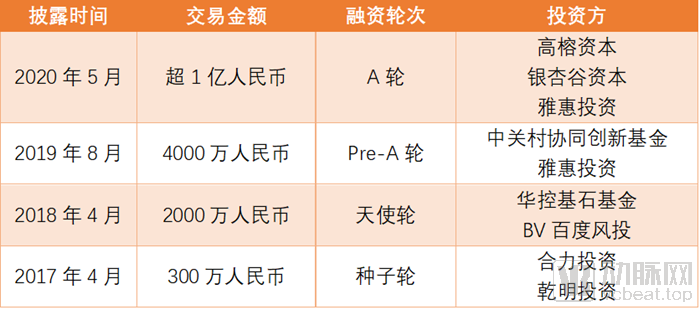
VCBeat (WeChat ID: vcbeat) has learned that QitanTech, a startup focused on innovative nanopore single-molecule gene sequencing technology, recently completed its Series A financing round of over RMB 100 million. The investors included Gaorong Capital, Ginkgo Valley Capital, and Yahui Investment. It is understood that the funds from this round will be used to further increase investment in product research and development, production line construction, and commercial development.
To date, QitanTech, founded in 2016, has completed four rounds of financing totaling nearly RMB 200 million prior to the pilot-scale production of its commercial products.
Notably, QitanTech stated that with the form factor of its first-generation nanopore single-molecule sequencer largely finalized, and its integrated proteins and chips standardized, the device achieves a single-pass sequencing accuracy of 85% and a throughput of up to 1 Gb. The company plans to launch a minimum viable product (MVP) within 2020, allocating part of the funds raised in this round to further refine product design and enhance performance. It expects to achieve small-scale production of the single-molecule sequencers, reagents, and consumables in 2020, and gradually release the final products to a diverse user base.
Bai Jingwei, Co-founder of QitanTech, stated: “We sincerely appreciate the trust and support from both new and existing investors. Since our inception in 2016, QitanTech has consistently adhered to its R&D roadmap, striving to demonstrate that domestic teams possess the capability to commercialize single-molecule nanopore gene sequencing products. Over the past four years, we have achieved critical milestones at many key stages, progressing from a proof-of-concept prototype to an engineering prototype, and further iterating to the second-generation engineering prototype. Moving forward, we will continue to advance product commercialization while steadily expanding our team.”
The project lead from Gaorong Capital, the lead investor in this round, stated that QitanTech’s development of nanopore gene sequencing equipment represents a multidisciplinary technological breakthrough and has already achieved remarkable progress. Significant accomplishments have been made across various domains, including protein engineering, microfluidic chips, electronic instrumentation, and base-calling algorithms, demonstrating QitanTech’s robust R&D capabilities. Looking ahead, we are highly optimistic about the unique advantages of single-molecule sequencing technology—such as long read lengths, low cost, and portability—in advancing our understanding of diseases related to the microbiome, infectious diseases, and complex structural variants. Furthermore, we anticipate the scalability of nanopore technology as a platform, with the potential to expand from genomics to transcriptomics and even proteomics, thereby enabling a more comprehensive perception of life.
A project lead at Ginkgo Valley Capital stated that the new generation of nanopore sequencers offers advantages such as long read lengths, low cost, miniaturization, and single-molecule sequencing capability, with continuous technological advancements and iterations in recent years. The development of next-generation gene sequencers requires top-tier multidisciplinary talent, and QitanTech has assembled such experts, achieving notable progress and breakthroughs. Looking ahead, Ginkgo Valley Capital remains optimistic about the prospects of data-driven new technologies and their development in the life sciences sector.
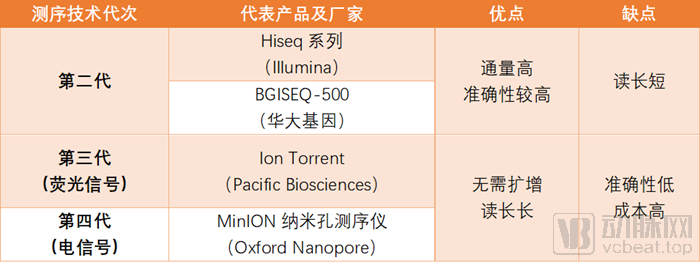
Currently, gene sequencing technology has undergone four technological iterations, evolving from capillary electrophoresis to nanopore single-molecule sequencing. Nanopore single-molecule sequencing is regarded as the fourth-generation gene sequencing technology and emerged slightly later than high-throughput sequencing technology (also known as next-generation sequencing, NGS).
In 1989, David Deamer, a pioneer in nanopore technology, used electrophoresis to drive a single-stranded DNA molecule through a nanoscale pore and recorded the resulting translocation current signals to infer sequence information. In 1996, Daniel Branton of Harvard University, David Deamer of the University of California, and their colleagues published a seminal paper in the Proceedings of the National Academy of Sciences (PNAS), demonstrating that membrane channels could be used to detect polynucleotide sequences. They proposed that nanopore-based single-molecule gene sequencing was a promising direction, thereby attracting a large number of researchers to the field.
Coincidentally, during the 1980s and 1990s, researchers also began to explore the application of next-generation sequencing (NGS) technology in scientific research and clinical practice, achieving groundbreaking technological advancements around 2005 that profoundly impacted gene sequencing. In recent years, gene sequencing has become a critical component of precision medicine, with NGS—characterized by high throughput and low cost—being the predominant technology.
In terms of the market, the genetic testing industry can be divided into three major segments: research-grade genetic testing, clinical-grade genetic testing, and consumer-grade genetic testing. Statistical data from Jingzhun Research Institute in mid-2019 showed that there were 259 companies in China providing genetic testing services based on NGS technology, among which 118 companies offered research-grade genetic testing services, 126 companies provided clinical-grade genetic testing services, and 113 companies delivered consumer-grade genetic testing services.
According to the “Report on Market Prospects and Investment Strategic Planning for the Gene Sequencing Industry” by Qianzhan Industry Research Institute, the global gene sequencing market size was approximately USD 7 billion in 2016, having maintained a rapid growth trend from 2007 to 2016. Conservatively estimated, the global gene sequencing market will grow at an annual rate exceeding 20% between 2017 and 2022, reaching a market size of over USD 20 billion by 2022.
The gene sequencing market comprises sequencers,配套 reagents, consumables, and related services. On the supply side of next-generation sequencing (NGS) instruments, a typical oligopolistic market structure has emerged. Illumina, which pioneered the development and commercialization of NGS sequencers, has been the undisputed market leader since launching its first product in 2006. Following the release of its HiSeq series in 2017, Illumina further solidified its market position, gradually establishing a dominant monopoly. By 2018, Illumina’s combined market share for sequencers and配套 reagents had risen to 84%, achieving substantial commercial success amid the transformative wave of NGS technology in gene sequencing.
Against this backdrop, how will fourth-generation gene sequencing technology enter the market? Bai Jingwei stated that nanopore single-molecule sequencing technology offers advantages over next-generation sequencing (NGS), including long read lengths, direct detection of RNA and epigenetic modifications, and simplified library preparation. As such, it may replace NGS in certain application scenarios after market entry. More importantly, due to its inherent flexibility, portability, and rapid turnaround time, nanopore single-molecule sequencers could give rise to new gene sequencing applications, such as liberating scientific research from the laboratory and enabling rapid, visual at-home gene sequencing.
Nanopore single-molecule sequencing technology boasts performance advantages unparalleled by next-generation sequencing (NGS) technologies, sparking immense imagination among researchers at its inception. However, more than two decades later, clinical applications of this technology are still under development.
“Proposing technical concepts is always relatively easy, whereas driving the practical implementation of technology is difficult and requires support from overall technological progress,” pointed out Bai Jingwei. “The tremendous success of NGS technology owes much to Illumina’s launch of the HiSeq.” Nanopore single-molecule sequencing is a highly challenging and complex technology that integrates multiple disciplines; a bottleneck in any one field could stall its development.
For a considerable period, the core hardware of nanopore single-molecule sequencers remained unavailable due to the inability to rapidly and accurately identify suitable nanopore proteins. With advances in structural biology, researchers have been able to discover appropriate nanopore proteins by resolving their structures and produce target proteins using relatively simple processes, thereby propelling nanopore single-molecule sequencing technology onto a fast track of development.
Another critical technological milestone that has been particularly instrumental to the advancement of nanopore single-molecule sequencing is the deepening understanding of biological enzymes. Bai Jingwei told VCBeat that a series of reliable tools, developed through long-term scientific research and accumulation in enzyme technology, have made it possible to accurately study biological behaviors at the molecular level, particularly the movement of biological enzymes on DNA. Furthermore, in-depth research across various disciplines, including computer science, kinetics, and thermodynamics, has laid the foundation for the commercialization of nanopore single-molecule sequencing technologies.
During its product development process, QitanTech has continuously built a highly interdisciplinary team of experts capable of meeting comprehensive technical demands. Jingwei Bai holds a bachelor’s degree in Chemistry from Peking University, a Ph.D. in Materials Science from the University of California, Los Angeles (UCLA), and completed his postdoctoral fellowship at IBM Watson Research Center. He previously worked in R&D at Illumina, bringing extensive experience in micro/nano devices and nucleic acid molecular biology. Geng Hu earned his Ph.D. in Automation from Tsinghua University and is an expert in electronic instrumentation; he was selected for the Siemens China Young Talent program in 2015. Dan Xie received his Ph.D. from the University of Illinois at Urbana-Champaign and completed his postdoctoral training at Stanford University School of Medicine, possessing substantial expertise in sequencing technologies and bioinformatics.
Developing a domestically produced nanopore single-molecule sequencer has been QitanTech’s unwavering entrepreneurial goal since its inception. Developing breakthrough products in a relatively new field is akin to embarking on an uncharted journey without a map; every difficulty encountered along the way must be creatively resolved based on the team’s knowledge and experience.
Hu Geng told VCBeat that QitanTech actually identified the most suitable transmembrane protein by leveraging its team’s strong expertise in protein research, even without fully resolving the protein structure, thereby saving a significant amount of time. “In fact, continuous and bold technological innovation has become a hallmark of the QitanTech team in new product development. These incremental innovations have accumulated over time, enabling our final product prototype to substantially reduce the cost of single-molecule sequencing.”
In Hu Geng’s view, after four years of entrepreneurship, QitanTech has developed two core competitive advantages through practical experience. On one hand, interdisciplinary communication flows smoothly. From the founders coming together to building a team of over 50 members, long-term interaction and collaboration have enabled team members with diverse academic backgrounds to understand each other’s professional languages, fostering both overlap and coordination. “Achieving this is actually quite difficult.”
On the other hand, the entire team at QitanTech works with curiosity and imagination. According to Hu Geng, during the development of nanopore single-molecule sequencers, the team encountered numerous problems for which there was no existing literature to reference. Drawing inspiration from evolving technologies—ranging from 3D printing and speech recognition to artificial intelligence—the team found support for overcoming technical challenges and achieving product innovation.
Currently, QitanTech has established a relatively comprehensive intellectual property portfolio. The development of its product prototypes has entered the final sprint phase, and the company is collaborating with top-tier medical research institutions and third-party testing laboratories in China to explore medical applications. It plans to launch products that meet the quality requirements for medical device licensing in 2020.
VCBeat will continue to closely monitor QitanTech and the progress of its nanopore single-molecule sequencing products.