

Pi-Cardia Secures $27M Funding to Advance Leaflex™ as a Non-Implant Alternative to TAVR for Aortic Stenosis

Pi-Cardia
Medical Device R&D and Manufacturer
Aortic stenosis is one of the most common cardiac conditions, with its prevalence increasing with age; it is estimated that 25% of the population aged over 64 years is affected by this disease. Historically, valve replacement surgery was the only treatment option for patients with severe symptomatic aortic stenosis.
In recent years, the cardiovascular field has been undergoing a revolution with the development of minimally invasive aortic valve implantation, known as Transcatheter Aortic Valve Replacement (TAVR). However, TAVR has several limitations. First, bioprosthetic valve implants have limited durability. Second, if a bioprosthetic valve is implanted in patients with a longer life expectancy, there is a risk of valve deterioration, necessitating the implantation of a new valve within the first one; however, reintervention may be detrimental to many patients. Finally, TAVR technology is expensive.
Pi-Cardia has brought a new solution for patients with aortic stenosis. So, how does the company address these issues?
Pi-Cardia, established in 2009 and headquartered in Rehovot, Israel, is a medical device company. It has developed a novel low-profile catheter for the treatment of aortic stenosis, known as the Leaflex Performer catheter, which offers excellent durability and is more cost-effective than aortic valve replacement surgery.
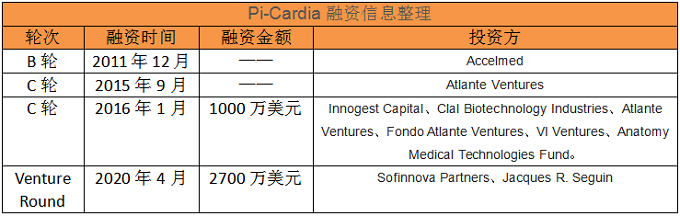
On April 21, 2020, Pi-Cardia announced the completion of a $27 million financing round. The round was led by Sofinnova Partners, a European life sciences venture capital firm, with participation from Professor Jacques Séguin, the company’s Chairman. The funds will be used to support parallel clinical trials in the United States and Europe.
Although TAVR can address aortic valve stenosis, it is costly and may lead to vascular and neurological complications. Erez Golan and Eyal Kolka have recognized these limitations of the technology.

Erez Golan, Founder and CEO of Pi-Cardia, stated, “Although TAVR has improved and become a routine procedure with lower surgical risk, it remains a relatively complex and expensive intervention. In today’s budget-sensitive environment, there is growing dissatisfaction with the high cost of TAVR. Many developed countries are seeking alternative technologies to TAVR, which has increasingly become an option of last resort.”
Erez, an entrepreneur with a bachelor’s degree in physics and mathematics and a master’s degree in physics from the Hebrew University of Jerusalem, spent the 20 years prior to founding his company dedicated to building medical device startups. Early in his career, he led technical projects in the Israeli Air Force. He subsequently entered the field of medical imaging, where he was responsible for developing novel algorithms for tissue characterization using intravascular ultrasound at Medinol.
Later, Erez met Eyal Kolka, a like-minded individual. Eyal holds a Bachelor’s degree in Mathematics and a Master’s degree in Physics from the Hebrew University of Jerusalem, as well as an MBA from Tel Aviv University. He previously served as a physicist in the Israel Defense Forces. Subsequently, he joined Sigma P.C.M. Capital Markets as an investment banking partner, where he was responsible for asset management and banking investment operations, thereby accumulating extensive experience in corporate management.
In 1999, Erez co-founded TopSpin Medical with Eyal Kolka and served as its CEO for eight years. TopSpin developed a revolutionary miniature MRI catheter for diagnosing plaque composition in coronary arteries. The company successfully completed clinical trials and commercialized its products in the United States and Europe, and was listed on the Tel Aviv Stock Exchange in 2005. This experience laid the groundwork for their next ventures. From 2008 to 2010, Erez and Eyal Kolka jointly established two new companies: Pi-Cardia and Clear Cut Medical. Pi-Cardia developed non-implantable treatments for aortic stenosis, while Clear Cut Medical developed intraoperative MRI systems to guide cancer surgeries.
The imperfections of current technologies and the needs of patients are calling for new approaches in the market. The founders’ extensive entrepreneurial experience and professional medical expertise have laid the foundation for the establishment of Pi-Cardia.
Pi-Cardia’s R&D team believes that the first-line treatment for aortic stenosis should be conservative repair of the patient’s native valve. If valve repair can delay symptom onset by several years, patients may avoid valve replacement surgery altogether, allowing transcatheter aortic valve replacement (TAVR) to be employed more selectively only when implantation of a new valve is absolutely necessary.
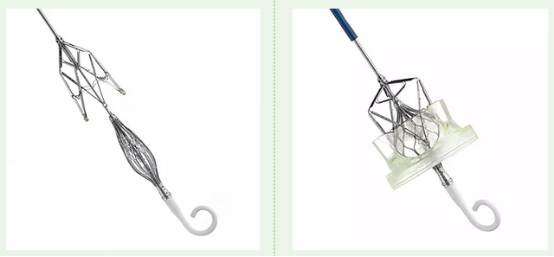
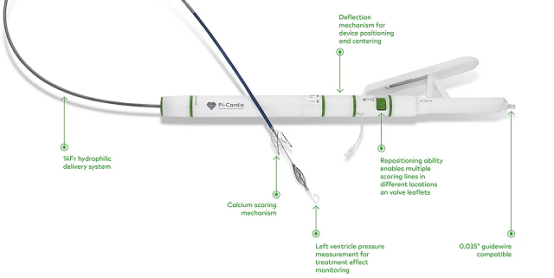
Based on this, Pi-Cardia has developed a unique valve replacement method—Leaflex, a non-implantable, low-profile catheter. It is a cost-effective, durable, standalone treatment.
The Leaflex catheter can serve as a cost-effective and durable standalone therapy or as a pretreatment strategy to improve valve implantation outcomes in patients with heavily calcified bicuspid aortic valves.
Leaflex can be easily delivered to the valve and positioned on it to record calcification and restore leaflet flexibility, thereby improving valvular hemodynamics.
Pi-Cardia’s proprietary technology delivers mechanical impacts without damaging surrounding soft tissues, creating a fracturing effect at sites of valvular calcification to repair calcified aortic valves and address valvular stenosis. This procedure, which takes only seconds, increases the effective orifice area of the valve without requiring valve replacement. Consequently, it resolves the issue of repeat valve replacements associated with TAVR, slows disease progression, and significantly reduces or even eliminates the need for subsequent valve replacement surgery.
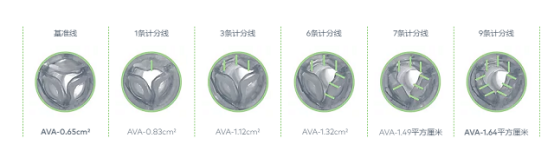
Pi-Cardia employs finite element analysis modeling to address aortic stenosis, introducing the concept of "scoring lines." In vitro analyses have determined specific scoring line configurations that minimize pressure gradients and maximize the aortic valve area. Benchmark testing of 3D-reconstructed prosthetic valves further demonstrates that creating scoring lines within the natural folding lines of the leaflets effectively enhances leaflet flexibility, thereby increasing and improving the valve's effective orifice area.
Leaflex has several application scenarios: first, for patients who are not candidates for transcatheter aortic valve replacement (TAVR); second, to delay the timing of TAVR in patients who are too young to undergo the procedure; and third, as a pretreatment method to improve TAVR outcomes in patients with severe calcification and bicuspid aortic valves.
To demonstrate safety, feasibility, and mechanical performance, Pi-Cardia conducted two sequential first-in-human trials: one study in Krakow, Poland, involving five patients in whom Leaflex was used prior to arteriovenous malformation surgery; and a second study comprising sixteen real-world cases performed at leading TAVR centers across Europe and Israel, where Leaflex was applied prior to TAVR to evaluate its safety, feasibility, and efficacy in improving valvular hemodynamics.
The safety and other performance attributes of the device have been validated through experimental studies. Pi-Cardia also strives to alleviate the financial burden on patients through its own approaches. Cardiovascular interventions involve high-value, high-consumable materials, and medical devices have long been a hotspot for investment. To facilitate widespread global adoption, Leaflex aims to price its product below that of TAVR, thereby generating significant cost savings for patients and their families.
Erez, CEO and Founder of Pi-Cardia, stated, “We are now ready to enter the next phase and establish the long-term safety and efficacy of Leaflex as a standalone treatment for patients with aortic stenosis.”
Currently in China, the primary approach to treating aortic valve stenosis is interventional therapy. This mainly involves balloon valvuloplasty for stenotic valves. For patients with severe pure mitral stenosis, aortic stenosis, or congenital pulmonary valve stenosis without significant valve calcification, percutaneous balloon valvuloplasty can be selected. This procedure aims to increase the valve orifice area, alleviate valve stenosis, and improve hemodynamics and clinical symptoms.
The heart is the power source for human activity, and having a healthy heart is crucial for everyone. As early as 2010, China achieved its first successful transcatheter heart valve replacement procedure, bringing hope to patients.
With the introduction of TAVR technology to China, our technical team has also developed several valves tailored to the specific conditions in our country. Breakthrough progress has been made in the development of domestically produced valves, with further improvements in safety and efficacy. In April 2017, the first domestically produced valve, VENUS A, received CFDA approval for market launch.
For example, Venus MedTech’s VenusA-Valve transcatheter heart valve replacement system was the first transcatheter heart valve system approved for market launch by the China Food and Drug Administration, ushering in a new era of transcatheter aortic valve replacement (TAVR) in China.