

Lanqian Biotech Launches 'AI Pathologist Dr. Lan' to Fill the Gap in Histopathology AI Solutions
Today, the artificial intelligence industry is thriving. The integration of AI with various sectors has created new ecosystems that were once unimaginable. In the realm of AI + healthcare, it is evident how AI enhances efficiency and reduces costs across all stages of medical care, from early-stage drug development to clinical decision support systems. AI is continuously creating new possibilities and value for medicine.
In the field of pathology, the concept of “digitalization and intelligentization of pathology” has gained increasing momentum in recent years. In particular, the integration of AI with pathology has effectively facilitated the transition toward digital diagnosis, thereby freeing up physicians’ resources.
“Dr. Lan (AI Pathologist) is a product that fully integrates AI with pathology. Focusing on histopathology, it employs state-of-the-art big data and deep learning methods. Its adoption will significantly enhance the work efficiency of clinical pathologists and address challenges such as staffing shortages and low operational efficiency in pathology departments,” said Zhou Yijian, Co-founder and CEO of Lanxi Bio.
Zhou Yijian, co-founder of Lanxi Biotech, introduced Dr. Lan (AI Pathologist), a product tailored for pathologists who traditionally use microscopes. It integrates common pathological analysis functions, including digital whole-slide imaging, intelligent histopathological early warning, and automatic generation of pathological diagnosis report templates. This solution alleviates the workload of pathologists, allowing them to focus their expertise where it matters most. The product also supports remote pathological consultations, facilitating tiered diagnosis and treatment systems and assisting pathologists in primary care hospitals in making rapid and accurate diagnoses. The equipment can broadly serve needs in pathology, teaching, scientific research, and clinical practice.
In the medical community, pathological diagnosis is the “gold standard” of medical diagnosis and serves as the cornerstone for physicians to provide appropriate treatment to patients.
Insufficient staffing in pathology departments is a typical pain point in the pathology industry. According to data released by the Pathology Branch of the Chinese Medical Association, in 2019, there were more than 4,900 pathology departments nationwide, with over 17,000 pathologists and more than 13,000 pathology technicians. In terms of professional titles, among pathologists, 9.8% held senior professional titles, 19.5% held associate senior titles, and 70.7% held intermediate or junior titles, with the vast majority being entry-level junior staff. Among pathology technicians, only 4.5% held senior professional titles, while 95.5% held intermediate or junior titles.
Based on educational attainment data, among pathologists, 11% hold doctoral degrees, 33% hold master’s degrees, and 56% have a bachelor’s degree or below. Among pathology technicians, only 1% hold doctoral degrees, 8% hold master’s degrees, and 91% have a bachelor’s degree or below.
It is evident that pathology departments are not only understaffed but also suffer from a severe shortage of highly educated professionals, making it difficult for the current workforce to meet the personnel demands of pathology services in the new era.
Zhou Yijian, co-founder of Lanxi Bio, stated that the company was established to address clinical pain points, aiming to empower pathology with AI technology and mitigate the shortage of pathologists.
Lung cancer is one of the malignant tumors with the most rapid increase in incidence and mortality rates, posing the greatest threat to public health and life. In recent years, both the incidence and mortality rates of lung cancer have risen significantly, with the number of patients increasing year by year. Many patients face premature death due to delayed early detection, whereas early diagnosis and early treatment are key to improving lung cancer survival rates. Unfortunately, a severe shortage of pathologists frequently leads to delays in diagnosis and untimely treatment.
“Often, by the time patients are transferred from primary care facilities to tertiary hospitals, their disease has already progressed to an intermediate or advanced stage, making treatment difficult. Faced with this dilemma, we envision a future where scientific technology and medical data resources can be integrated to effectively improve the efficiency of lung cancer diagnosis, thereby benefiting patients and alleviating the burden on healthcare providers. This was the original motivation behind Lanxi Biotech’s decision to develop an AI pathologist,” said Zhou Yijian, Co-founder of Lanxi Biotech.
From dream to product, it takes not only the compassion of a healer but also scientific guidance, engineering expertise, and market insight. Since 2014, Lanxi Biotech has been laying the groundwork, assembling its team, and preparing its technologies. In 2018, Lanxi Biotech was officially established, bringing together a group of top-tier talents from the fields of medicine and engineering.
The medical experts include national-level committee members of the Pathology Branch of the Chinese Medical Association, renowned pathologists in China with postdoctoral experience in the United States, young experts from the Sun Yat-sen University Cancer Center with scholarly experience in Germany, as well as pathology specialists from the University of Minnesota Medical School and bioinformatics experts from Emory University. The engineering experts are affiliated with multiple colleges at the National University of Defense Technology, specializing in artificial intelligence-based object recognition, visual signal processing, high-performance computing, and automatic control, and possess nearly 20 years of experience in military product development.
In addition, he possesses extensive operational and management experience in the fields of internet hospitals, medical consortia, and digital healthcare services. As a co-founder of WeDoctor Beilian (WeDoctor Internet Women’s and Children’s Hospital), he joined as a partner, established the operations team, and built operational advantages for Lanxi Biotech.
From the perspective of disease diagnosis, histopathological examination is undoubtedly the gold standard and cannot be replaced by any other diagnostic test.
Traditionally, pathologists rely on microscopes to observe cellular morphology and architecture on glass histological slides. This approach is characterized by low diagnostic efficiency, difficulties in information dissemination, and high rates of missed and misdiagnoses. Currently, the development of pathology departments in primary healthcare institutions in China significantly lags behind. There is a severe shortage of pathologists, and their distribution across hospitals at various levels is highly uneven. Primary care facilities see far fewer pathology cases than provincial or municipal tertiary hospitals, resulting in severe overload at large hospitals while pathology departments in primary care institutions remain largely underutilized.
Furthermore, a large number of high-throughput scanners from various brands have emerged on the market. These devices have not fundamentally reduced the workload of pathologists; instead, they have elongated workflow processes and increased operational complexity, thereby lacking appeal to pathologists.
“Pathological diagnosis carries a certain degree of decisiveness and authority, making it highly significant. Currently, AI solutions are primarily focused on cytopathology, which is relatively easier to implement, while histopathology, despite its urgent clinical need, has received little attention due to its technical complexity,” said Zhou Yijian, co-founder of Lanxi Bio.
Against this industry and market backdrop, leveraging its years of expertise in artificial intelligence and digital pathology, the Lanxi Bio team has developed a multi-functional intelligent pathology system—“AI Pathologist”—starting from histopathology. This integrated platform combines whole-slide imaging, AI-assisted diagnostic analysis, and remote consultation capabilities. The system enables pathologists to more efficiently manage the entire workflow, from digital slide review to the diagnosis of complex cases, fundamentally reducing their workload and alleviating the critical shortage of pathologists.
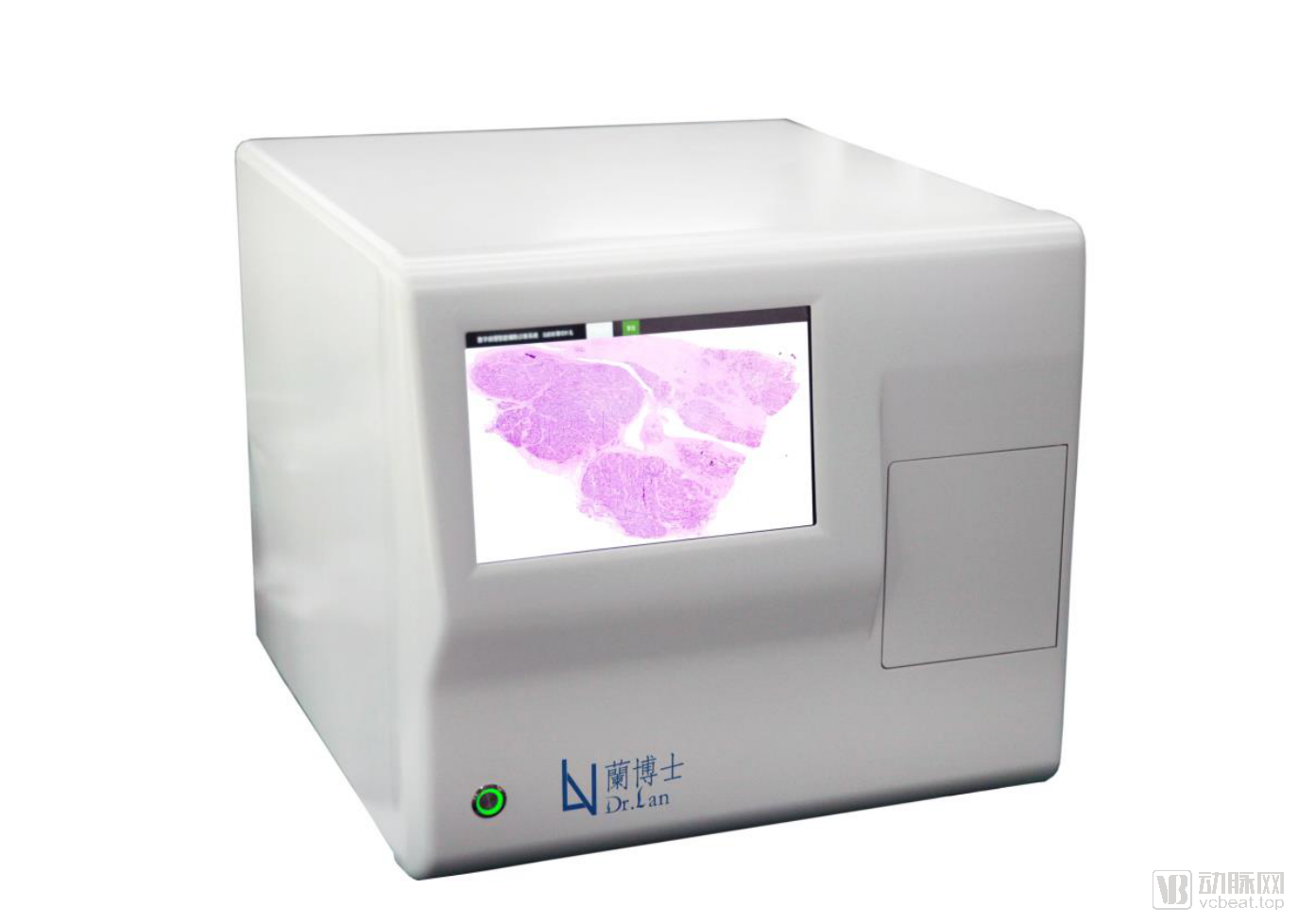
(Product Image)
Dr. Yu Li, Co-founder and CTO of Lanxi Biotech, stated that the company’s AI pathology products are currently designed in two versions to meet user needs. One is an inclusive version with high efficiency and low cost, primarily intended for use in primary care hospitals. The other is a premium version featuring comprehensive functionality and superior performance; this integrated hardware-software solution enables scanning, storage, and intelligent auxiliary diagnosis, allowing real-time scanning and report generation. It achieves a 96% recognition rate and 90% specificity for breast cancer.
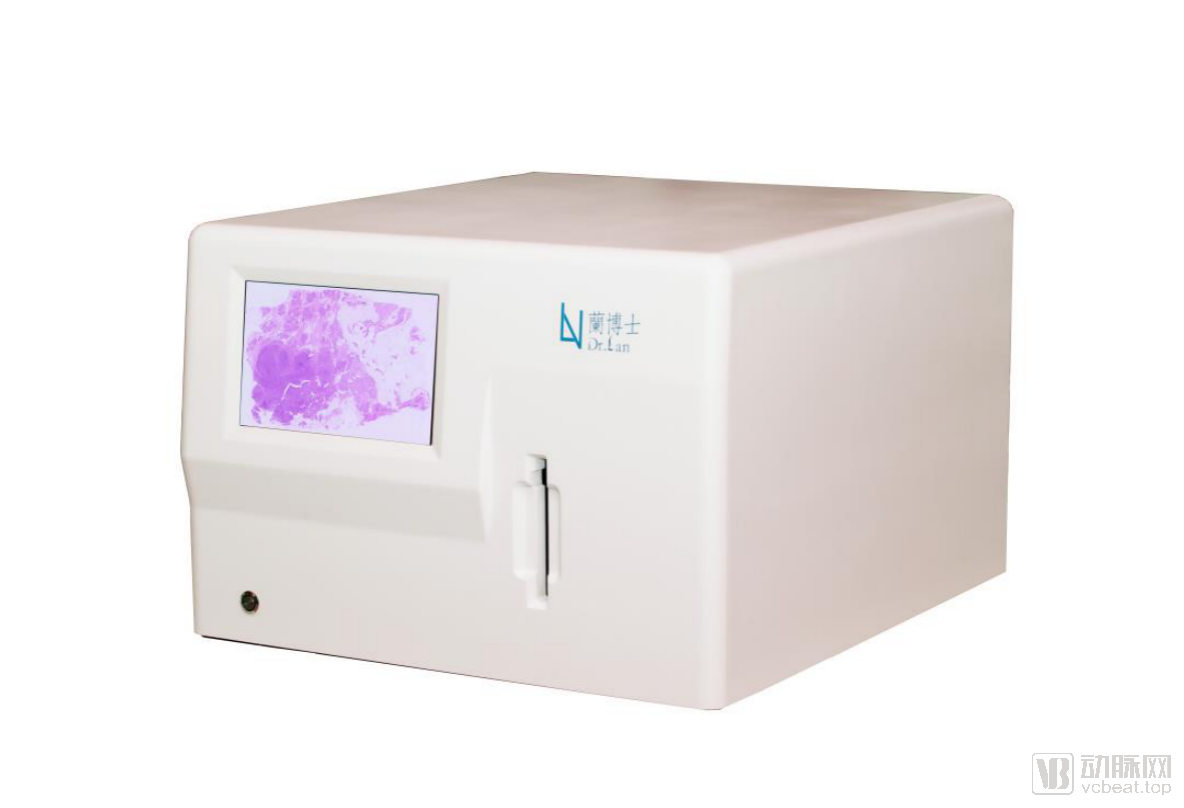
(Product Image)
“The advantage of the ‘AI Pathologist’ product lies in its ability to reduce workload, enhance speed and accuracy, and alleviate the long-standing shortage of pathologists for physicians; for patients, it enables faster and more accurate diagnoses, facilitating early detection and treatment,” said Dr. Yu Li, Co-founder and CTO of Lanxi Biotechnology.
She noted that, leveraging years of experience in the military-industrial sector, the AI Pathologist product not only delivers outstanding performance but also achieves excellent cost control. The product is currently being trialed at partner hospitals, including Xiangya Second Hospital of Central South University, Hunan Cancer Hospital, Miluo People’s Hospital, and Jiahe Hengjia People’s Hospital, where it has demonstrated stable and reliable performance.
Furthermore, Lanxi Biology has maintained close collaborations with Memorial Sloan Kettering Cancer Center (MSKCC) in the United States and Eindhoven University of Technology in the Netherlands. Together, they successfully co-hosted the ISBI ACDC Challenge 2019, one of the three premier academic conferences in the field of biomedical imaging, garnering widespread attention from researchers both domestically and internationally. The company published the world’s first paper on artificial intelligence-based histopathological recognition of lung cancer (arXiv: Computer-aided diagnosis of lung carcinoma using deep learning – a pilot study). To date, it has filed three invention patents, four utility model patents, and two software copyrights.
Dr. Yu Li, Co-founder and CTO of Lanxi Bio, stated that the AI Pathologist product is expected to obtain the NMPA Class II medical device registration certificate this year.
Regarding future plans, Zhou Yijian, co-founder of Lanxi Bio, stated that after obtaining the NMPA certification for its first-generation product, the company will establish close collaborations with large tertiary hospitals, prefecture-level city hospitals, and county-level hospitals within Hunan Province.
In terms of financing, the company plans to initiate its Pre-A funding round this year. Upon securing the investment, it will comprehensively expand its team and strengthen the recruitment of top-tier technical talent for product research and development. The future product portfolio is planned to cover areas including histopathology, cytopathology, molecular pathology, intraoperative frozen section analysis, precision diagnosis and treatment, and remote consultation.
In terms of product portfolio, a matrix-style product line will be established. In addition to pathology, two new product lines—static sperm analysis and chromosomal morphology testing—will be launched. Product design has been preliminarily completed, and collaborations with several large reproductive centers have been initiated, indicating broad market prospects.
In terms of market expansion, comprehensive, multi-disease intelligent diagnostic devices will enter the market within the next two years; the recruitment of distributors for core products will be launched on a global scale; the number of third-party pathology centers and precision medicine wards will be expanded to cover ten hospitals; the construction of a hospital big data platform for "multi-disease" applications is expected to be completed; the establishment of a medical big data platform featuring four major operational modules is planned; the setup of overseas subsidiaries and overseas market operation centers will be initiated; and a seamless transition from R&D to commercial operations will be achieved.
“Our goal is to become a premier provider of AI-powered pathology solutions and to establish industry standards for AI applications in histopathology and immunohistochemistry in China,” said Zhou Yijian, co-founder of Lanxi Biotech.