

China Internet Chronic Disease Management Industry Blue Book: Market Potential Reaches RMB 300 Billion, Driven by Five Key Factors

Medlinker
Chronic Disease Management Platform Provider
Chronic diseases are characterized by complex etiologies, incurability, and prolonged treatment courses.
In China, there is a large population of patients with chronic diseases, with the number of patients for various types of chronic conditions reaching tens of millions or even hundreds of millions. In 2019, there were 340 million patients with hypertension and heart disease, 130 million patients with chronic kidney disease, 120 million patients with diabetes, and 110 million patients with hepatitis B and hepatitis C combined.
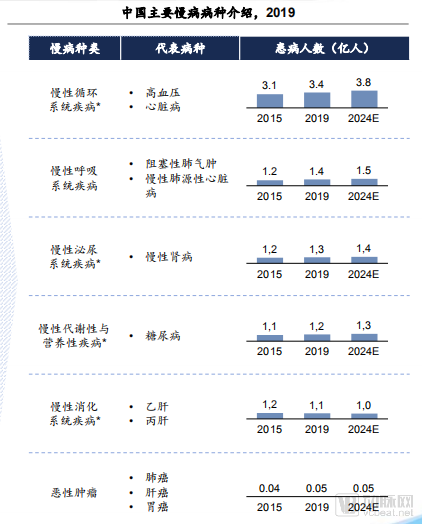
Source: "Blue Book on China's Internet Chronic Disease Management Industry"
Chronic diseases pose a serious threat to the life and health of residents. For instance, deaths from cardiovascular diseases account for more than 40% of all disease-related mortality among the population. Other chronic conditions, such as diabetes, hypertension, and hepatitis B, also exhibit high case fatality and disability rates, similar to cardiovascular diseases.
A substantial body of evidence-based medical research has demonstrated that internet-based chronic disease management helps slow disease progression, prevent complications, and reduce patient mortality and disability rates, potentially achieving outcomes that do not adversely affect patients’ quality of life.
What stage of development is China’s internet-based chronic disease management industry currently in, what are the key drivers of the industry, and what are its future development trends?
In response, China Insights Consultancy released the Blue Paper on China’s Internet-Based Chronic Disease Management Industry (hereinafter referred to as the “Blue Paper”) on May 13, aiming to provide industry participants with authentic reference information. VCBeat has compiled and interpreted the findings from the Blue Paper as follows.
Core Viewpoints:
1. In 2019, the market size of China's internet-based chronic disease management industry reached RMB 69.4 billion, with a potential market size of RMB 300 billion. The market size is projected to reach RMB 217.7 billion by 2024, representing a compound annual growth rate (CAGR) of 25.7% during the forecast period;
2. The need for rational utilization of medical resources, the demand for cost containment in health insurance, the maturation of the internet ecosystem, users’ habitual adoption of online services, and heightened health management awareness will drive the rapid development of internet-based chronic disease management platforms;
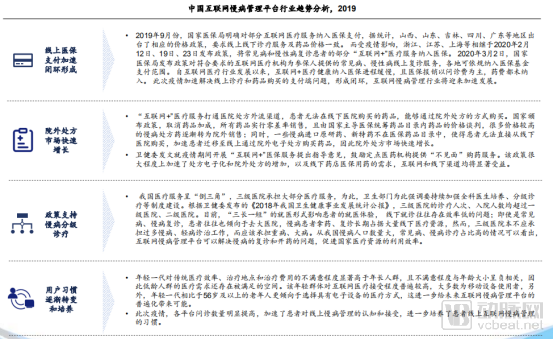
3. The integration of online medical insurance, the growth of out-of-hospital prescriptions, tiered diagnosis and treatment for chronic diseases, and the shift in user behavior from offline to online will be the main development trends in the internet-based chronic disease management industry;
4. The Chinese internet-based chronic disease management market is still in its developmental stage; stable physician-patient relationship chains, the availability of new and specialized drugs, a robust supply chain, and online medical insurance payment capabilities will be key factors driving platform success;
5. Analysis of Typical Enterprises in the Internet-Based Chronic Disease Management Industry.
Internet-based chronic disease management platforms, built upon internet hospitals, enable specialist physicians to provide online follow-up consultations, issue electronic prescriptions, monitor patient data, offer medication guidance, conduct regular follow-ups, and deliver chronic disease intervention services.
Compared with traditional chronic disease management methods, internet-based chronic disease management platforms can aggregate industrial chain resources—including medical insurance providers, patients, hospitals, physicians, pharmaceutical companies, and pharmacies—and empower both upstream and downstream segments of the industry, thereby establishing a comprehensive ecosystem.
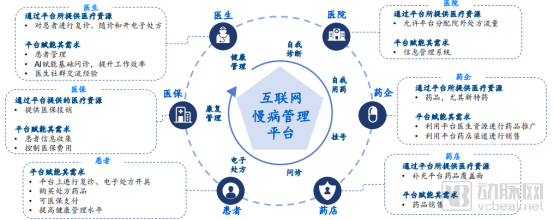
Ecosystem of China's Internet-Based Chronic Disease Management Platforms
Within the ecosystem, internet-based chronic disease management platforms help hospitals improve the utilization of medical resources, assist physicians in managing patients more efficiently and with higher quality, and enable patients to access medical resources more conveniently. These platforms not only aggregate resources from various stakeholders but also empower all participants, fostering mutual benefits and driving the development of the chronic disease management industry.
During the development of internet-based chronic disease management, successive policies have been issued to establish standards for this field. This has not only facilitated regulatory oversight but also promoted industry prosperity.
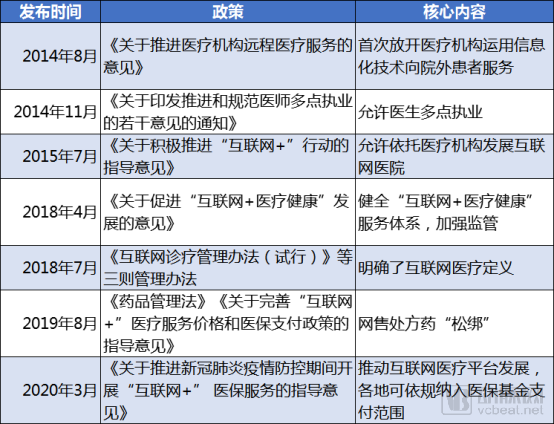
Key Policies on Internet-Based Chronic Disease Management
Since 2014, the introduction of multiple policies, including the “Opinions on Promoting Telemedicine Services in Medical Institutions,” has successively removed barriers in areas such as lightweight consultations, formal medical consultations/appointment registration, prescription drug distribution, and health insurance payments. This has created a seamless closed-loop system encompassing online consultations, online medication purchases, and online payments, thereby achieving full digitalization of the entire patient care journey.
Streamlining the entire patient care journey effectively grants internet healthcare enterprises equal development conditions as public medical institutions. The full digitalization of this process helps enhance user acceptance of online chronic disease management platforms, providing new momentum for their future growth.
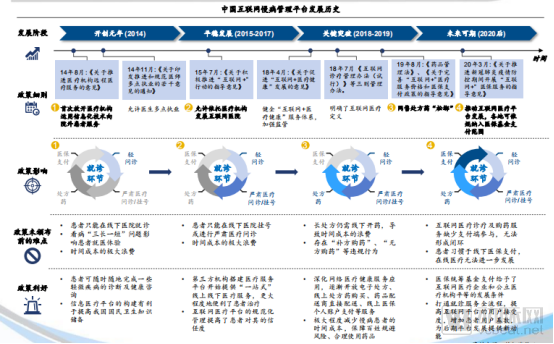
Source: "Blue Book on China's Internet Chronic Disease Management Industry"
There are numerous products and services in the internet-based chronic disease management market, which can be categorized into patient-facing and enterprise-facing segments due to different payers.Chronic disease-related products and services for hospitals and government entities. According to estimates in the Blue Book, the potential size of the internet-based chronic disease management market reaches RMB 300 billion.
According to the "Blue Book," the market size of the internet-based chronic disease management industry reached RMB 69.41 billion in 2019 and is projected to reach RMB 217.71 billion by 2024, representing a compound annual growth rate (CAGR) of 25.7% during the forecast period.
For patients, internet-based chronic disease management platforms provide online medical services and retail services for pharmaceuticals and medical devices. Regarding online medical services, patients pay per consultation or directly purchase a membership. For the retail of pharmaceuticals and medical devices, the platform charges patients based on product prices and service items.
The patient-side market can be divided into the online medical services market and the pharmaceutical and medical device retail market. The online medical services market is projected to reach RMB 11.23 billion in 2024, while the pharmaceutical and medical device retail market is expected to reach RMB 41.95 billion in 2024. The Blue Book estimates that the patient-side market will achieve a compound annual growth rate (CAGR) of 66.2% during the forecast period.
For enterprise clients, internet-based chronic disease management platforms provide marketing services to enterprises, medical services to employees, and distribution services to pharmaceutical and medical device companies. Relevant enterprises pay according to the value of the services provided. The Blue Book projects that the market size for chronic disease-related medical services will grow to RMB 8.55 billion in 2024, with a compound annual growth rate of 63.1% during the forecast period.
The internet-based chronic disease management platform for hospitals primarily provides them with an information technology platform, for which hospitals pay software licensing fees or annual SaaS subscription fees, ranging from tens of thousands to hundreds of thousands of RMB.
With the development of technologies such as the internet and big data, hospitals have seen a significant surge in demand for informatization upgrades and management. This growing need for digital transformation in hospitals will substantially drive the market for hospital-side chronic disease management solutions.
Government Sector: Internet-based chronic disease management platforms provide chronic disease diagnosis and treatment services to primary care institutions, with the government sector paying based on the number of services delivered. The Blue Book projects that the government-side market for chronic disease management will grow rapidly from RMB 220 million in 2019 to RMB 5.71 billion in 2024, representing a compound annual growth rate (CAGR) of 91.4% during the forecast period—the highest among all sub-segments.
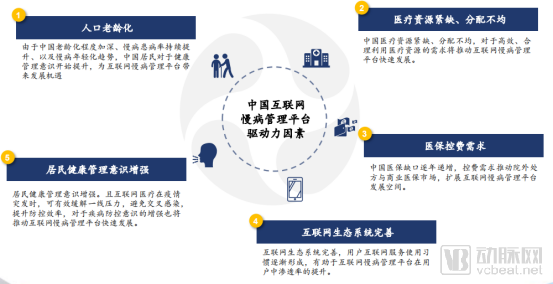
The deepening aging of the population, the need for decentralization of medical resources, the strong demand for health insurance cost containment, the increasingly mature internet ecosystem, and enhanced public awareness of health management—these five factors have become catalysts for the development of the internet-based chronic disease management industry.
Source: “Blue Book on China’s Internet-Based Chronic Disease Management Industry”
Deepening Population Aging
In 2019, the population aged 65 and above accounted for 12.6% of China's total population, and the aging trend is expected to continue intensifying, with this demographic projected to comprise 26% of the total population by 2050.
The prevalence of chronic diseases is higher among the elderly population. In 2019, 75.8% of China’s population aged 60 and above suffered from at least one chronic disease, with a subset of older adults affected by three or more chronic conditions.
Furthermore, due to contemporary unhealthy lifestyles, chronic diseases in China are increasingly affecting younger populations. For instance, the average age of diagnosed hypertension patients decreased from 37.5 years in 2013 to 36.7 years in 2017.
Internet-based chronic disease management can slow the progression of chronic conditions, reduce the incidence of complications, and safeguard residents’ healthy lives. Faced with high prevalence rates and heightened health management awareness among residents, internet-based chronic disease management is poised for significant growth opportunities.
Uneven Distribution of Medical Resources
The distribution of medical resources in China is uneven, with most tertiary hospitals concentrated in the eastern region. Consequently, patients in the western and rural areas face greater difficulties in accessing high-quality medical care, making cross-regional medical consultations a common phenomenon.
Moreover, China’s healthcare services exhibit an “inverted pyramid” structure, in which the fewest tertiary hospitals shoulder the bulk of medical services, leading to long waits for registration, consultation, and payment but brief consultation times; meanwhile, the more numerous primary care institutions handle only a small share of medical services, resulting in underutilization of healthcare resources.
Internet-based chronic disease management platforms can enhance diagnostic and treatment efficiency, optimize service workflows, promote the rational allocation of medical resources, and facilitate tiered diagnosis and treatment, playing a significant role in addressing the scarcity and uneven distribution of medical resources.
Strong Demand for Medical Insurance Cost Control
China's total healthcare expenditure is substantial, with its growth rate consistently exceeding that of GDP and per capita disposable income of residents. Controlling medical costs has become one of the key priorities of healthcare reform.
By the end of 2018, China’s social medical insurance coverage rate had reached 95%. However, per capita healthcare expenditure continued to rise, surpassing per capita social medical insurance contributions in 2018, resulting in a significant deficit in the social medical insurance fund. In early 2020, the substantial medical expenses incurred due to the COVID-19 pandemic, coupled with an overall economic downturn, further intensified the financial pressure on the medical insurance fund.
Internet-based chronic disease management can effectively reduce the prevalence of chronic diseases and their related complications, lower healthcare expenditures, and thereby decrease payouts from both social and commercial health insurance, achieving effective cost containment. The cost-control demands of governments and insurers will drive the rapid development of internet-based chronic disease management platforms.
The Internet Ecosystem Is Becoming Increasingly Mature
Healthcare & Aesthetics, Finance, Retail E-commerce, Transportation, Social Networking, Online Travel Services, Local Lifestyle Platforms… The increasing diversity and sophistication of internet software have perfected the online ecosystem, which has now permeated consumers’ daily lives and work scenarios.
The maturing internet ecosystem and the gradual formation of user habits in utilizing online services facilitate increased penetration of internet-based chronic disease management platforms among users.
In terms of internet users, the number of mobile internet users in China reached nearly 800 million in 2019, providing a vast potential user base for internet healthcare platforms. Regarding payments, the number of mobile payment users has continued to grow, and mobile payment technology has matured, laying the foundation for the development of online paid services on internet healthcare platforms.
Residents' Health Management Awareness on the Rise
Data from 2017 show that 82% of patients desired health intervention services to improve their unhealthy lifestyle habits, 93% believed that proactive health management plans were more important for health, and 93% held that health management should be conducted on a family basis.
This indicates that residents’ health management awareness has strengthened, which is more conducive to the development of internet-based chronic disease management. In addition, the COVID-19 outbreak in early 2020 further heightened residents’ health management awareness and fostered the habit of using internet healthcare platforms.
Compared with offline diagnosis and treatment, internet-based healthcare can increase the supply of medical resources during sudden outbreaks, effectively alleviate pressure on frontline services, prevent cross-infection, and enhance the efficiency of prevention and control measures. Meanwhile, internet healthcare platforms can disseminate medical knowledge online, thereby reducing panic among the general public and patients.
In summary, the internet-based chronic disease management industry will experience rapid development driven by multiple factors. Future trends in the industry include: accelerated adoption of online medical insurance payments, rapid growth in the out-of-hospital prescription market, gradual implementation of tiered diagnosis and treatment for chronic diseases, and a shift in user behavior from offline to online channels.
Source: Blue Book of China's Internet-based Chronic Disease Management Industry
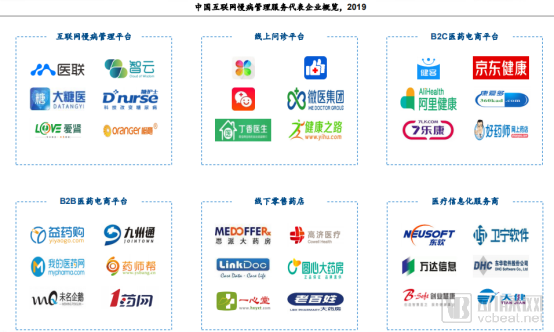
A wide variety of enterprises are participating in the internet-based chronic disease management industry, including internet chronic disease management platforms, online consultation platforms, pharmaceutical e-commerce companies, offline retail pharmacies, and healthcare IT service providers. Leveraging their respective entry points and competitive advantages, these companies are actively establishing their presence in the internet-based management ecosystem.
Source: “Blue Book on China’s Internet-Based Chronic Disease Management Industry”
Medlinker entered the market through the physician side, aggregating over 800,000 real-name verified doctors and more than 48,000 contracted physicians across China. By leveraging this network to establish stable doctor-patient relationships, the platform places patients at its core to improve the treatment, control, and efficacy rates for chronic diseases. It provides a one-stop health management solution for chronic disease patients, creating a closed-loop service covering the entire care journey.
Leveraging its physician community platform and partnership with pharmaceutical giant Gilead, Medlinker has adopted liver disease as the entry point for chronic disease management, gradually expanding into other chronic care sectors. Currently, Medlinker Internet Hospital specializes in chronic disease care, covering a wide range of conditions including liver disease, diabetes, HIV, oncology, chronic kidney disease, cardiovascular and cerebrovascular diseases, attention-deficit/hyperactivity disorder (ADHD) in children, mental health, and respiratory asthma. It has grown to become one of China’s largest physician platforms and chronic disease healthcare service providers.
Leveraging the resource support of Ping An Group, Ping An Good Doctor primarily develops businesses in online healthcare, consumer healthcare, health e-commerce, and advertising marketing. In 2019, Ping An Good Doctor launched its “Private Doctor Service,” marking its entry into the chronic disease management sector. With its proprietary team of physicians, Ping An Good Doctor provides membership-based health management services to individual and corporate clients. Currently, the chronic diseases primarily covered under its membership-based health management services include diabetes and respiratory diseases.
Jianke started as a pharmaceutical e-commerce platform and has gradually expanded into internet-based chronic disease management in recent years. Currently, its primary customer acquisition channel remains traffic diversion from online e-commerce platforms. Jianke mainly provides online pharmaceutical transactions to individual consumers, offering a wide range of products including health supplements, beauty and skincare items, weight loss products, maternal and infant supplies, adult products, and home care essentials.
WeDoctor entered the market by providing appointment registration services, thereby securing extensive hospital resources and acquiring patients through the resulting traffic, while gradually exploring internet-based chronic disease management. Currently, WeDoctor collaborates with over 100 hospitals across China to build medical consortia and has established a network of 19,000 healthcare service outlets, including WeDoctor General Practice clinics, community health service centers, and pharmacies.
Zhiyun Health leverages its hospital SaaS system as an entry point to deepen its presence in the diabetes sector. By establishing information platforms for hospitals, Zhiyun Health channels offline patients to its online platform. The company provides medical big data and mobile intelligent management platforms to physicians and diabetes care professionals, enabling them to manage patients more precisely and efficiently.
Haodf Online focuses primarily on online medical services, with nearly 80% of its physicians affiliated with Tier 3 Grade A hospitals. Leveraging this high-quality pool of medical professionals, the platform has attracted a substantial customer base. Currently, Haodf Online has made significant strides in multiple areas, including hospital and physician information inquiries, medical consultations, post-diagnosis disease management, family doctor services, and public health education.