

PinXin Bioengineering Files IPO Prospectus for AI-Powered Integrated Diagnostic System Combining Liquid-Based Cytology TBS and DNA Quantitative Analysis
Driving innovation and development in any field necessarily requires a solid foundation built by fundamental scientific and technological advances. More importantly, it calls for the emergence of visionary leaders or teams willing to shoulder responsibility at this critical juncture, stepping up to rapidly advance the application of artificial intelligence in medical pathology diagnosis. In recent years, two scholars from Hunan Province have been at the forefront of this era: Liu Jianfeng and Liang Yixiong.
In 2010, research on artificial intelligence and deep learning technologies in semantic recognition and image recognition gradually matured. Liu Jianfeng and Liang Yixiong, who had been engaged in automation and intelligent image recognition for many years, began to consider the industrialization of artificial intelligence technology. “We hope that artificial intelligence technology can truly solve practical problems, rather than just staying at the scientific research level.”
After conducting research, Liu Jianfeng believes that early cancer screening is a promising field for AI-driven entrepreneurship. On one hand, cancer has become a major threat to human health, and early screening can effectively reduce both the incidence and mortality rates of cancer, yielding significant social benefits for the Healthy China initiative. On the other hand, artificial intelligence holds substantial importance in the field of early cancer screening, offering new opportunities to improve the accuracy, efficiency, and coverage of cancer screening, thereby serving as a powerful measure to advance the level of cancer diagnosis.
Therefore, Liu Jianfeng and Liang Yixiong founded Pinxin Bioengineering Co., Ltd. in 2013, focusing on the application of artificial intelligence technology to the field of early cancer screening.
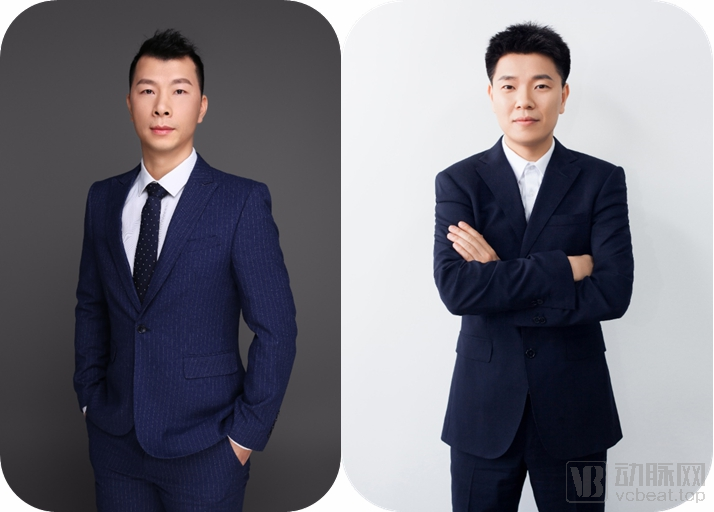
Left: Liu Jianfeng, Founder and General Manager
Right: Liang Yixiong, Founder and Chief Technology Officer
Liu Jianfeng, Founder and General Manager, is an Associate Professor at the School of Automation, Central South University, and a Visiting Scholar at Michigan State University in the United States.Extensive experience in the design, development, and project management of precision motion control systems for automated network control systems, optoelectronic measurement and control instruments, and intelligent hardware systems.
Liang Yixiong, Founder and Chief Technology Officer, is a postdoctoral fellow at the Institute of Automation, Chinese Academy of Sciences, an Associate Professor at the School of Computer Science and Engineering, Central South University, and a Visiting Scholar at the Robotics Institute, Carnegie Mellon University.He has led and completed research on multiple intelligent recognition algorithms, including facial image recognition, urine sediment analysis, and cytopathological image recognition.Extensive experience in multimodal medical imaging, image processing, bioinformatics, biological data analysis, artificial intelligence, machine vision, and data mining.
Leveraging the extensive experience and profound insights of its two founders in the fields of automation and artificial intelligence, Pinxin Bioengineering has developed a comprehensive AI-powered cervical cancer screening solution. Its product portfolio covers automated sample pre-processing, digital pathology slide scanning, intelligent and precise diagnosis, and big data cloud computing analysis, providing accurate, convenient, rapid, and high-throughput cervical cancer detection technologies and services.
Notably, Pinxin Bioengineering has successfully developedLiquid-Based Cytology TBS + DNA Dual Intelligent Diagnostic System: Slides for DNA quantitative analysis and liquid-based cytology testing can be scanned and analyzed on the same instrument, requiring only a single sample collection, which effectively improves screening detection rates and accuracy.
Cervical Cancer Early Screening Technology Has Matured; the Key Is to Reduce Reliance on Human Operators
The global incidence of cervical cancer remains concerning. According to WHO data, there were 569,800 new cases of cervical cancer worldwide in 2018. A report released by the National Cancer Center in 2019 indicated that the incidence rate of cervical cancer in China was 6.25 per 100,000 population in 2015.
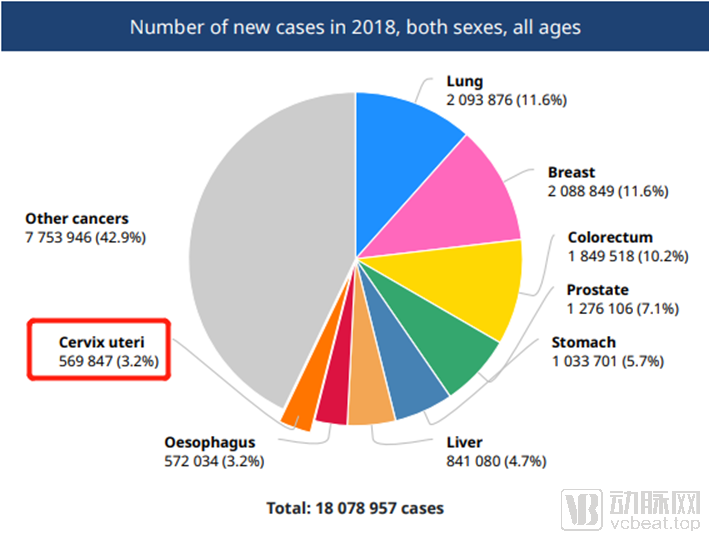
WHO Data: 56.98 Million New Cervical Cancer Cases Worldwide in 2018
Early screening is a crucial measure for reducing the incidence of cervical cancer, and China has been vigorously promoting cervical cancer screening for many years. In 2009, China launched the “Two Cancers” screening program for rural women. In August 2019, the National Health Commission officially incorporated the management of the “Two Cancers” screening program for rural women into the National Basic Public Health Services Program. The Healthy China Action (2019–2022) released in 2019 stated that by 2022, the coverage rate of “Two Cancers” screening for eligible rural women at the county/district level would exceed 80%.
Liquid-based cytology testing is the mainstream method for cervical cancer screening. It has become a mature technology with high detection and accuracy rates. However, despite favorable policy support and the maturity of screening technologies, China’s cervical cancer screening coverage rate remains far below the target level. Liu Jianfeng stated, “Currently, the prevalence of cervical cancer screening among eligible women in China is less than 20%.”
The primary reason for this is the significant shortage of pathologists in China.Liquid-based cytology testing involves multiple manual procedures, with slide preparation, staining, and microscopic examination all requiring operation by professional pathologists; in particular, slide interpretation necessitates review under a microscope by experienced pathologists.Due to the heavy workload of pathologists, manual slide review is highly subjective and prone to significant errors, leading to missed diagnoses and misdiagnoses. It is reported that China has fewer than 20,000 pathologists, with a shortage of up to 90,000, which is far from meeting the substantial demand for cervical cancer screening among women of eligible age.
Liu Jianfeng stated:“Overall, cervical cancer screening technology in China has matured. The key lies in leveraging new technologies to help pathologists improve efficiency and accuracy, thereby increasing the volume of cervical cancer screenings and expanding coverage.”
Artificial Intelligence Offers a Viable Path to Enhance Cervical Cancer Screening Coverage. AI can assist physicians in improving diagnostic accuracy and detection rates, enabling objective, standardized, reproducible, and fully automated results to facilitate large-scale sample testing.
Pinxin Bioengineering’s first cancer early screening project targets the niche segment of cervical cancer early detection. By developing a comprehensive AI-powered solution for cervical cancer screening, the company aims to reduce the workload of pathologists and improve diagnostic accuracy. The company has adopted recommendations made by experts in their article “Current Status and Limitations of Cervical Cytology Screening Implementation in Mainland China.”"Three-Tiered Stratified/Flow Screening Strategy for Cervical Cancer"become a reality, namely Phase I: large-scale primary screening using combined cell DNA ploidy analysis and automated TCT; Phase II: for individuals with abnormal results from Phase I screening, cytopathologists perform TBS review and diagnosis; Phase III: diagnostic evaluation through histopathological morphological examination of colposcopic cervical biopsy specimens.
The solution covers the entire process of cervical cancer screening, ensuring consistent results.
Liu Jianfeng stated that every step in cervical cancer screening can potentially affect the final accuracy of the test. For instance, variations may arise from using reagents and scanning instruments from different manufacturers, employing different slide preparation methods, differences in cellular preservation morphology, and the quality of acquired images, all of which can influence subsequent test results.
To ensure consistency in cervical cancer testing, Pinxin Bioengineering’s independently developed AI-based cervical cancer screening solution covers the entire testing process.
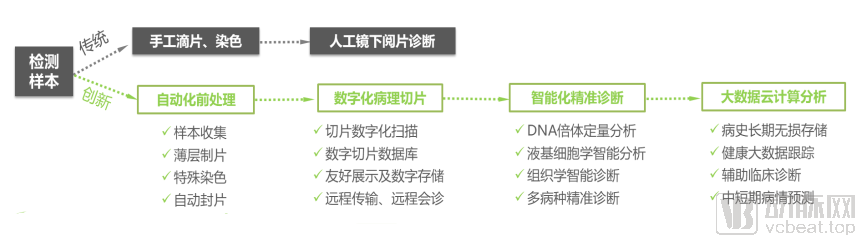
Pinxin Bioengineering atSample Pre-treatment ProcessAutomation reduces the workload of operators; inPathology Slide Preparation StageAchieve digitalization by implementing digital slide scanning and establishing a digital slide database to enable rapid information transmission and long-term storage; inImage Review SessionThrough DNA ploidy quantitative analysis, intelligent liquid-based cytology analysis, intelligent histological diagnosis, and precise multi-disease diagnosis, we ensure accurate, consistent, and reproducible results; inAnalysis Phase, enabling long-term lossless storage of medical history, health big data tracking, clinical diagnostic assistance, and short-to-medium-term disease progression prediction through a cloud-based big data analytics platform.
Developing a complete AI-powered cervical cancer screening solution also entails higher technical barriers, involves more disciplines, and places greater demands on R&D personnel. Pinxin Bioengineering, throughPrecision Control Technology for Multi-Degree-of-Freedom Micro-Displacement Stages, Machine Learning-Based Rapid Auto-Focusing Technology, Deep Learning-Based Feature Extraction Technology, and Intelligent Training Technology for High-Performance ClassifiersCore key technologies ensure the stability, accuracy, and high efficiency of detection.
It is worth mentioning that Pinxin Bioengineering has developedLiquid-Based Cytology TBS + DNA Dual Intelligent Diagnostic System—Jimina: With a single sample collection, slides for DNA quantitative analysis and slides for TCT liquid-based cytology analysis can be scanned and analyzed using the same instrument, thereby improving detection rates and accuracy.Liu Jianfeng stated, “The combined diagnosis using liquid-based cytology with the TBS system and quantitative DNA analysis of cells can not only improve the sensitivity of detection but also reflect the condition and developmental trends of lesions from multiple dimensions, thereby facilitating subsequent interventional treatment by physicians.”
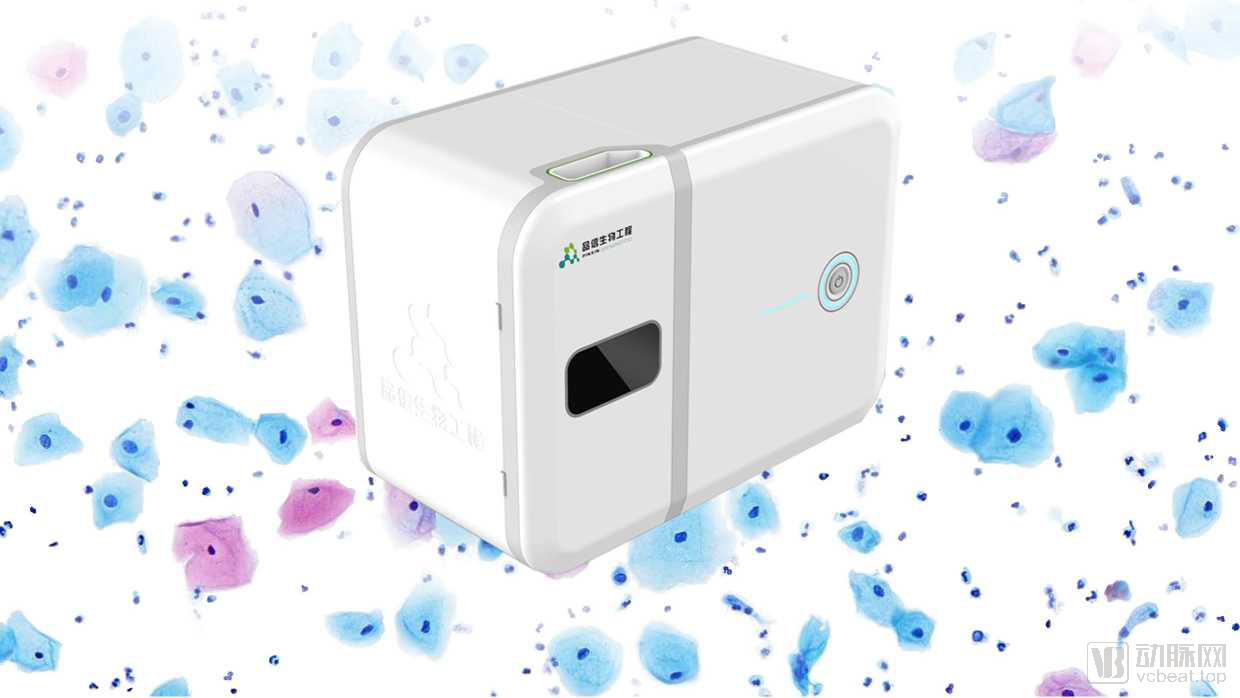
AI-Assisted Diagnostic System for Liquid-Based Cytology — Jimina
Hope the industry gives artificial intelligence technology ample time to mature.
After seven years of development, Pinxin Bioengineering has accumulated extensive experience in AI-assisted cervical cancer screening. Its R&D team boasts professional expertise spanning multiple disciplines, including bioengineering, basic medicine, clinical medicine, optics, informatics, and computer science. To date, the company has secured numerous intellectual property rights and product registration certificates, been recognized as a High-Tech Enterprise in Hunan Province, and completed two rounds of financing with investors including Meikang Biology.
In terms of business models, Pinxin Bioengineering has pioneered a variety of operational frameworks. The company'sInstruments and consumables have been sold to nearly 100 hospitals and third-party testing institutions across China.. The company has also established collaborations with multiple government agencies, maternal and child health hospitals, and third-party testing institutions,Jointly Establish a Cervical Cancer Screening and Diagnosis Center, providing instruments, consumables, and technical training services, as well as direct sample testing services. Meanwhile, the company collaborates with primary hospitals, medical consortia, and remote pathology service operation platforms.Co-established a Remote Pathology Diagnosis Center, provides a remote diagnosis platform that connects with expert resources to deliver remote diagnostic services.
Liu Jianfeng believes that AI-assisted cervical cancer screening is inevitably the future trend. Moving forward, Pinxin Bioengineering will continue to deepen its expertise in the field of early cervical cancer screening, conducting extensive testing on diverse sample types to continuously refine and enhance its AI-based cervical cancer screening solution. Additionally, the company will leverage intelligent analysis technology for microscopic medical images to detect various samples, such as urine, sputum, and pleural or ascitic fluid, thereby developing more disease detection solutions to assist physicians in diagnosis.
Meanwhile, Liu Jianfeng also pointed out the challenges facing AI-assisted cervical cancer screening. “First, industry product standards are inconsistent, leading to uneven quality. Second, it takes time for clinicians to accept new technologies. Additionally, there is currently a lack of specific approval guidelines and relevant policies for AI products, resulting in considerable disorder within the industry.” Liu Jianfeng expressed hope thatThe industry should neither excessively hype artificial intelligence nor dismiss it outright, but instead allow room for the growth of new technologies and instruments.