

Lenomed Medical Leverages Pandemic Experience to Accelerate Cloud-Based Chronic Disease Management Solutions

Kailian Medical
High-end Medical Device R&D, Production, and Sales Company
For the 180 million chronic disease patients in China, the pandemic has placed them at even greater risk. Data released by the National Health Commission shows that among the severe and fatal cases of COVID-19, the majority were patients aged 60 and above, most of whom suffered from underlying chronic conditions such as hypertension, cardiovascular diseases, and diabetes. Individuals with chronic diseases are more likely to develop severe symptoms or face a higher risk of death after contracting COVID-19. Meanwhile, preventive measures such as reducing outdoor activities and minimizing hospital visits have created a dilemma for chronic disease patients who require long-term medication.
How to Effectively Manage the Health of Patients with Chronic Diseases During the Pandemic? How to Further Elevate the Service Level of Chronic Disease Management in the Post-Pandemic Era?
“During the pandemic, new technologies such as the internet, big data, and AI highlighted significant opportunities in chronic disease management. Internet cloud platforms have empowered chronic disease management, ushering in a new model. This trend both accelerates and underscores the advent of the era of cloud services for chronic disease management devices. The next phase of chronic disease management devices will undoubtedly involve a tight integration of hardware and cloud services,” commented Li Yin, Co-founder of Kailian Medical.
“Back when I was choosing my major for the college entrance examination, my father, an aerospace engineer, told me that cross-industry development would definitely be a major trend in the future,” said Li Yin. Subsequently, Li Yin was admitted to Capital Medical University with top-tier grades and chose to major in Biomedical Engineering, becoming one of the first students in this program. During her eight years of study, Li Yin gained comprehensive knowledge in medicine, electronic technology, and computer technology. This not only equipped her with the expertise needed for her later involvement in the research and development of insulin pumps and hormone pumps but also taught her how to leverage cross-industry integration to drive innovation, laying the foundation for her two subsequent initiatives promoting innovation in chronic disease device services. After obtaining her master’s degree from Capital Medical University, Li Yin joined a foreign-owned hospital, where she was responsible for medical device procurement.
“This was an experience that profoundly influenced me. I realized that hospitals need not be defined solely by the scent of disinfectant and stern-faced doctors in white coats; they can be warm environments that provide patients with a comprehensive, positive healthcare experience. It was then that I first grasped a key concept: how to treat patients as human beings with emotions,” said Li Yin.
Around the year 2000, insulin pumps—a therapeutic product for diabetes—were just entering the Chinese market. An insulin pump is a device that continuously delivers insulin into the body via a tubing connected to the patient, and it is also known as an “artificial pancreas.” Insulin pumps can control insulin delivery with minute-by-minute precision, better mimicking physiological insulin secretion. The use of insulin pumps enables effective blood glucose control and grants greater freedom to individuals living with diabetes.
Li Yin explained that her decision to enter the diabetes field and focus on insulin pumps was initially driven by the fact that insulin pumps are therapeutic devices, and secondly, by the novelty of this technology in the market at the time. In 2002, Li Yin joined Medtronic’s diabetes business unit. “When I joined Medtronic, its diabetes division was just getting started. There were no existing models in the market to reference for building service and education systems. We had to start from the needs of physicians and patients, while learning from and drawing lessons from other service industries,” Li Yin stated. Starting from scratch, Li Yin, then Customer Service Manager for Greater China at Medtronic, single-handedly established the service and education system for Medtronic’s insulin pump and continuous glucose monitoring (CGM) product lines, a framework that remains in use to this day.
What sets this system apart is its tight integration of products and services, pioneering a patient-centric hotline service and regular follow-up for chronic disease management devices. “It’s not just about selling a high-quality insulin pump to patients, but adding service and care on top of the product.” This concept was proposed by Li Yin twenty years ago, making it a pioneer in the medical device industry at the time. Time has proven that this model has built a significant industry barrier for Medtronic in diabetes products.
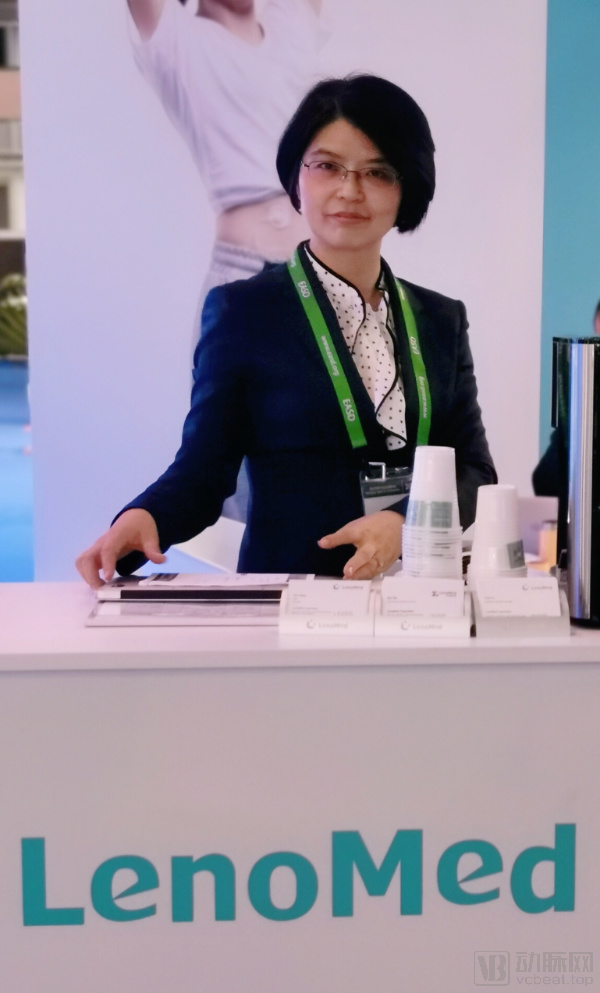
((Li Yin, Co-founder of Kailian Medical)
In 2010, Li Yin left Medtronic. With a background in medical science and over ten years of experience in the medical device industry, Li Yin had long aspired to develop an insulin pump that was affordable for Chinese consumers and offered performance superior to imported alternatives. In 2014, she co-founded Kailian Medical with Eric, focusing on the research, development, and production of innovative micro-drug infusion devices for patients with chronic diseases. That same year, the company secured angel-round financing from Legend Capital.
Kailian Medical’s team comprises experts from the fields of engineering and medicine, possessing core underlying technologies for chronic disease management devices. The founder, Dr. Huang Xiaomin, has a medical background, studied abroad, and previously worked at healthcare giants such as Johnson & Johnson, Medtronic, and Sanofi, while also being proficient in IT technology. Leveraging this outstanding team, Kailian Medical has successfully developed five core products within just a few years, including a new-generation insulin pump, the InnoPump hormone pump, the Xtratop smart medication box, the InnoPen electronic injection pen, and the Kailian Cloud management platform.
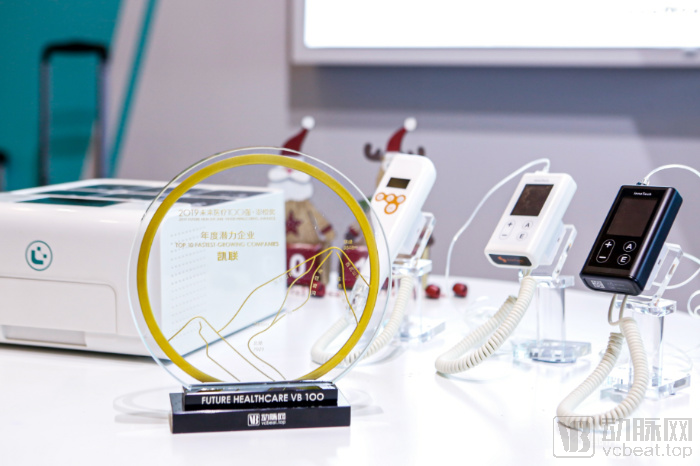
(Kailian Medical Series Products)
Among the five major products, the most highly anticipated are the new-generation insulin pump and the pituitary hormone pump. In September 2019, the hormone pump product, which can effectively treat hypothalamic-pituitary-gonadal axis disorders such as Kallmann syndrome (a rare disease), received approval from the National Medical Products Administration (NMPA) for market launch. In December of the same year, the independently developed new-generation insulin pump was granted a registration certificate by the NMPA.
Li Yin’s joining has facilitated innovation in Kailian Medical’s product philosophy, laying the groundwork for the company’s rapid ascent. With nearly two decades of accumulation in the diabetes industry and through in-depth product research, Li Yin believes that with the development of internet technologies and changes in patients’ product usage habits, micro-infusion devices such as insulin pumps should undergo greater service-oriented innovation.
The sudden outbreak of the pandemic brought many industries to a standstill, with numerous outpatient pharmacies closing their doors. “Difficulty in accessing medications” became a stark reality for patients with chronic diseases during this period. For diabetic patients relying on insulin pumps for treatment, as well as those with rare diseases who require regular check-ups and therapy in major metropolitan areas, disease management—normally conducted in an orderly manner—became exceedingly challenging due to restrictions on movement and the lack of adequate medical care conditions. Particularly for the smaller population of rare disease patients, accessing medications was even more difficult than for those with chronic conditions, and the availability of specialized experts was extremely limited.
To effectively address the needs of these two groups, Kailian Medical responded proactively during the pandemic by rapidly preparing for online services and conducting internal training. By leveraging the Bluetooth functionality of its devices to connect with Kailian’s cloud management service platform and mobile app, the company provided real-time customer services via the cloud.
“During the pandemic, we responded to user needs in real time. For instance, new users could complete warranty registration and upload training records online, ensuring a safe and efficient process. When customers accidentally bumped their devices while riding public buses and wondered if this would affect performance, our customer service team provided detailed answers online. Furthermore, device information was synchronized in real time, and users received timely reminders for issues such as battery replacement,” said Li Yin. This “device + cloud services” model not only covers online customer training, warranty services, and query resolution but also enables real-time data synchronization and transmission. Additionally, Kailian Medical has established a database to support disease management and patient care. The services for chronic disease management devices have evolved from the first to the second generation, shifting from traditional offline operations to online platforms, and advancing from mere device management to comprehensive disease course management. For customers, this approach is more efficient and intelligent.
Taking rare diseases as an example, regular follow-up visits are required during treatment. A care network can reduce the need for patients to travel long distances for follow-up appointments. Patients can complete routine follow-up examinations at local hospitals, and by synchronizing these test results in a timely manner, they can receive expert evaluations, enabling more efficient and convenient treatment.
“This has established a completely new service model for the medical terminals of traditional chronic disease management devices,” said Li Yin. He noted that this service philosophy is currently at the forefront of the industry in China. “In fact, this is closely related to our initial product vision. In 2014, when internet healthcare was experiencing a boom, we firmly believed that the internet must be deeply integrated with chronic disease management devices. Therefore, we incorporated Bluetooth design into our first-generation product. This design sets us entirely apart from similar chronic disease management infusion devices.” Li Yin pointed out that building on the foundation laid by Bluetooth technology and now complemented by a cloud-based management service platform, the powerful combination of technology and services has successfully established competitive barriers for Kailian Medical’s new generation of insulin pumps, widening the gap between them and their competitors.
“In the past, Kailian’s team treated Bluetooth technology and cloud services as value-added features, but today, they have become critical performance indicators. The pandemic did not merely press the pause button on everything; it also spurred new reflections across the industry. For instance, the explosive growth of internet healthcare during the outbreak signals that online platforms will emerge as a major new frontier in the future. Fortunately, Kailian Medical began laying the groundwork for cloud-based services several years ago. Now, we must ride this wave and stay the course,” said Li Yin.
During the pandemic, Kailian Medical optimized its cloud management service platform and conducted comprehensive training for all internal staff. Strategically, cloud capabilities will become an essential feature of its products, representing a key business focus for the foreseeable future. Additionally, in terms of international operations, an English version of the cloud service management platform will be launched to expand into overseas markets.
With a completely new structural and aesthetic design, featuring the first-ever color OLED screen and touch keys, built-in BLE Bluetooth, and integrated with a cloud-based chronic disease management system and app, the Kailian insulin pump will set the standard for the next generation of insulin pumps.
Striving for Greater Progress Amidst Challenges. In the wake of ongoing black swan events, Kailian Medical has developed its own strategic plan to transform this crisis into an opportunity for growth and to better serve patients in the post-pandemic era.
Li Yin pointed out that the course of chronic diseases may last a lifetime, and patients need more considerate and continuous health guidance and care during their time outside the hospital. Especially in the current context of the COVID-19 pandemic, chronic disease patients are a susceptible and high-risk group, making daily health management, disease prevention, and the improvement of personal health literacy particularly important.
In its product service strategic plan, Kailian Medical’s first step is to migrate services online to the greatest extent possible, including basic product-related services; the second step is synchronous monitoring of equipment operation; the third step is management of patients’ disease progression; and the fourth step aims to establish a care network for chronic and rare diseases.
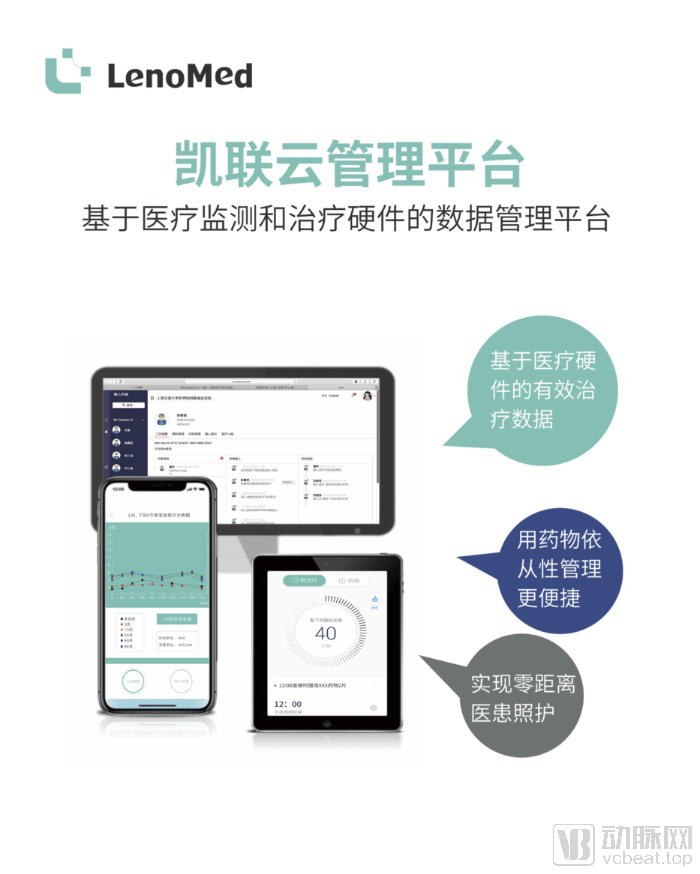
(Kailian Cloud Management Platform)
“The first three modules are now relatively mature, with internal technologies for disease course management fully refined; we are currently expanding patient enrollment. The fourth step represents our future goal: once our devices and cloud service platform achieve widespread adoption, we aim to help establish an out-of-hospital care network,” said Li Yin.
She explained that the fourth step aims to integrate medical resources at all levels, starting from patient needs, by connecting local primary care hospitals with tertiary Grade A hospitals in central cities through a data platform to form a care network. Taking patients with chronic and rare diseases as an example, those in remote areas can undergo basic examinations at local hospitals. When diagnostic and treatment opinions are needed at specific stages, they can consult with specialists at central hospitals. The results of prior basic examinations are recorded on a cloud management platform, creating a robust closed-loop system involving the patient, the cloud management platform, primary care hospitals, and tertiary Grade A hospitals.
“This concept means that we can integrate and fuse all patient data to generate reports, thereby better serving patients,” said Li Yin.
Finally, she told VCBeat that Kailian Medical has set sail to embrace the era of cloud services for chronic disease management devices. “We cannot change diseases, but we can improve patients’ lives,” she said. She stated that Kailian Medical’s ultimate mission is to provide effective and affordable treatment solutions for patients with chronic diseases, establish a trustworthy domestic brand for them, and create a better life for those living with chronic conditions.