

Can C-Side Services Become a New Growth Engine for the 270 Third-Party Medical Testing Labs Entering Individual Nucleic Acid Testing?
As the epidemic gradually subsides, and to ensure the safety of business resumption and production restart, as well as to meet the demand for personal health monitoring, provinces and municipalities across China have successively opened up COVID-19 nucleic acid testing services to individuals and social organizations since April. According to the lists published by various provincial and municipal authorities, medical institutions still occupy the majority position; however, a significant number of third-party medical testing laboratories have also been approved to provide nucleic acid testing services directly to the public.
So, in the post-pandemic era, what does the landscape of third-party medical testing look like, as revealed by lists published across various regions? Can third-party medical testing institutions that have accommodated consumer-side (C-end) testing demands continue to advance along the path of C-end services? Furthermore, what synergistic relationships can emerge between internet hospitals—which gained significant traction during the pandemic—and third-party medical testing providers? VCBeat has conducted an analysis of third-party medical testing in the context of nucleic acid testing.
Amid the resumption of work and school, different provinces have implemented varying management measures for nucleic acid testing for the novel coronavirus to further curb the spread of the epidemic. This has generated demand for COVID-19 testing among individuals, organizations, and schools.
VCBeat has compiled a list of third-party medical testing institutions across China that currently offer nucleic acid testing for the novel coronavirus, and compared them with public healthcare facilities and Centers for Disease Control and Prevention (CDCs). Based on the lists released by provincial-level administrative regions and some provincial capital cities, we can gain a basic understanding of the distribution of third-party medical testing providers in China.
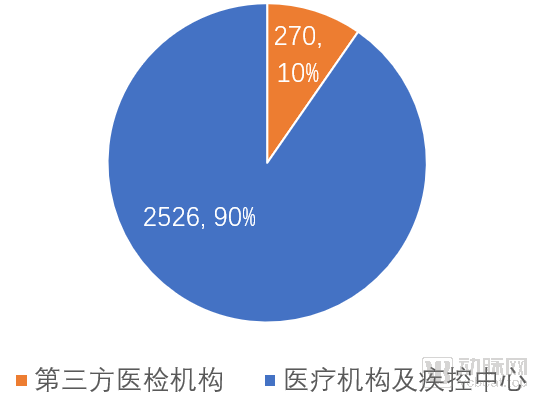
According to current statistics from VCBeat, among the various institutions across China’s provinces and municipalities currently offering individual COVID-19 nucleic acid testing services, third-party medical laboratory testing agencies account for only about 10%, with the remaining 90% comprising public hospitals, local Centers for Disease Control and Prevention (CDCs), and others. Compared with medical institutions, the number of third-party medical laboratory testing agencies remains relatively small. However, these third-party agencies possess stronger testing capabilities, with each facility able to process hundreds to thousands of tests per day at maximum capacity. In addition to providing nucleic acid testing services to the general public, they also handle medical testing demands referred by hospitals, serving as a vital force in conducting COVID-19 nucleic acid testing during this epidemic.
Based solely on the number of laboratories approved to provide individual nucleic acid testing services, third-party medical testing institutions are clearly divided into three tiers. Companies in the first tier have essentially completed their nationwide business coverage; those in the second tier have established an initial chain scale and exert a certain influence in selected provinces and cities; while those in the third tier operate only one or two laboratories, functioning primarily as single-site operations.
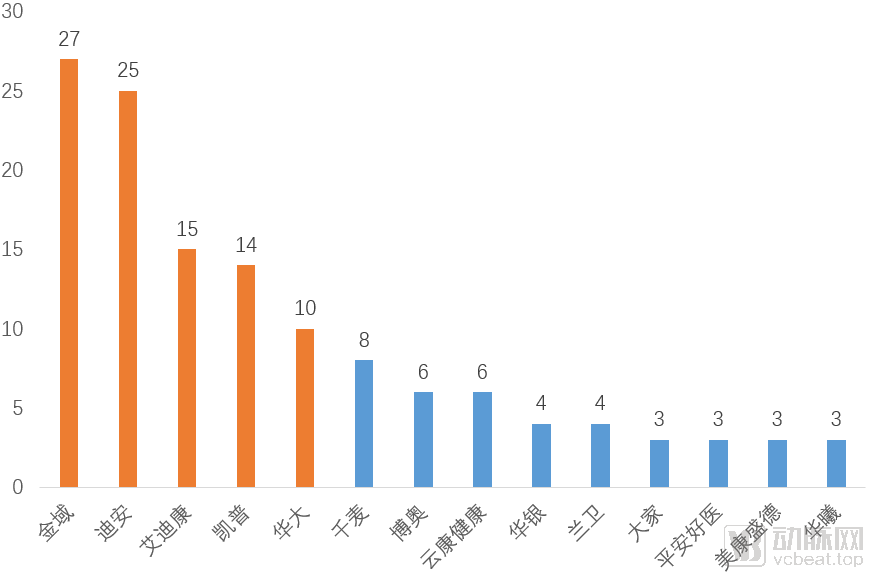
Historically, KingMed Diagnostics, Dian Diagnostics, Adicon, and Da An Gene have been collectively referred to as the “Big Four” leading enterprises in the third-party medical testing market.
KingMed Diagnostics, the leading enterprise in China’s third-party medical testing sector, continues to hold the top position, with coverage spanning nearly all provincial-level administrative regions across the country. Dian Diagnostics follows closely behind, achieving a coverage rate of over 80%. Adicon remains slightly behind the two industry leaders but still ranks within the first tier.
Da An Gene primarily operates in the market for medical testing reagents, consumables, and instrumentation. Its third-party diagnostic services are mainly concentrated in its subsidiary, Yunkang Health. In the second half of 2018, other shareholders of Yunkang Health entered into a "Concerted Action Agreement." Although Da An Gene remains the largest shareholder of Yunkang Health, it is no longer the controlling shareholder. Consequently, we do not have access to Yunkang Health’s operational performance over the past two years. However, based on the current statistical rankings, Yunkang Health falls within the second tier of the third-party medical testing services sector, lagging behind the first-tier players.
The first tier in this list also includes Hybribio’s medical diagnostics business, Hybribio Medical Laboratory, and BGI Genomics.
Hybribio Medical Laboratory achieved a revenue of RMB 80 million in 2019, representing a year-on-year increase of over 80% compared to 2018, which indicates a relatively rapid growth trajectory. The current epidemic has further acted as a catalyst for its development. In the first quarter of 2020 alone, Hybribio Medical Laboratory generated total revenue of approximately RMB 78.36 million, nearly matching its full-year revenue for 2019. Hybribio Biotech may emerge as the biggest winner among third-party medical laboratory enterprises during this epidemic.
BGI Genomics is the recognized leader in the specialized testing sector, particularly in genetic testing. During the current COVID-19 pandemic, BGI Genomics demonstrated robust regional coverage by providing related services through ten laboratories located across China.
In addition to Yunkang Health, the second tier includes Qianmai Medical, Huayin Health, Boao Laboratory, Dajia Laboratory, and Ping An Good Doctor (the testing business under Ping An Health (Testing) Center). In terms of coverage alone, although companies in the second tier still lag significantly behind those in the first tier, they have achieved chain-scale operations and expanded their presence across multiple provincial-level administrative regions.
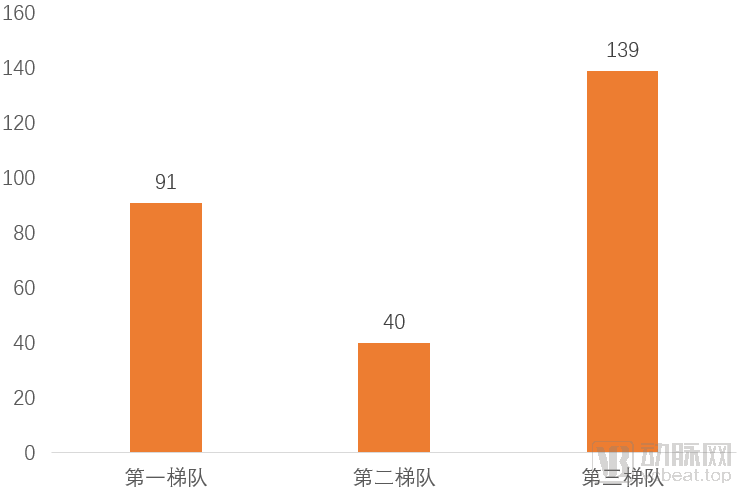
Beyond the second tier, there exists a large number of independently operated third-party medical testing institutions scattered across China. The total number of these regional third-party clinical laboratories even exceeds the combined total of those in the first and second tiers. Although resources continue to concentrate among the leading players, these dispersed third-party medical testing institutions still constitute the largest corporate group within the industry.
Although third-party medical testing laboratories helped public healthcare institutions meet the demand for nucleic acid testing during the pandemic, their revenue from routine test items shrank significantly as hospitals suspended a large volume of regular diagnostic and treatment services. Under these opposing forces, how did the third-party medical testing industry fare during the pandemic?
This can be examined through the financial performance of industry leaders. KingMed Diagnostics, which holds the largest market share, has disclosed its financial report for the first quarter of 2020. Its revenue in the first quarter remained largely unchanged year-on-year compared to 2019, and its profit margin also stayed relatively flat. Therefore, although we have seen isolated cases such as Hybribio Medical benefiting from the pandemic,The pandemic’s bidirectional impact on the revenues of third-party medical testing companies has nearly offset itself, leaving the industry’s revenue flat compared to previous years.
However, financial performance is only one aspect. Personal nucleic acid testing services have opened a new traffic channel for third-party medical laboratories, serving as an unexpected benefit during the pandemic. Previously, the primary clients of third-party medical laboratories were hospital clinical laboratory departments. These laboratories fulfilled hospitals’ testing demands, but hospitals remained the primary entities directly providing services to patients. During the COVID-19 pandemic, however, third-party medical testing institutions were approved to provide SARS-CoV-2 nucleic acid testing services directly to individuals or social groups, bypassing hospitals and effectively establishing a direct-to-consumer (C-end) traffic channel.
Could third-party medical laboratories seize this opportunity to continuously provide medical testing services to the public? We can analyze this issue from three dimensions: service continuity, fulfillment of user needs, and the degree of alignment in service delivery models.
From the perspective of service continuity, it is highly unlikely that nucleic acid testing for SARS-CoV-2 will become a normalized practice.Demand for this service will gradually decline as the pandemic subsides. For third-party medical testing providers to sustain long-term consumer-facing (C-end) operations, new service offerings are needed to replace SARS-CoV-2 nucleic acid testing. Are there suitable alternative services? This question involves analysis along two additional dimensions.
Can third-party medical testing laboratories meet the needs of consumer-end (C-end) users? While they can certainly fulfill basic testing demands, most medical tests sought by C-end users, who are primarily patients, are conducted under the guidance of physicians. Patients typically learn about the specific tests they need to undergo only through hospitals. Furthermore, the specimen types required for medical testing, such as blood or biopsy samples, are not suitable for self-collection by patients at home. This also makes patients more inclined to visit hospitals for medical testing. In other words,Third-party medical testing laboratories struggle to meet patients’ needs regarding test selection and sample collection. These services still require provision by healthcare institutions with appropriate medical qualifications.
The nucleic acid testing for the novel coronavirus in this instance possesses unique characteristics. From the perspective of personal health and safety, end-users (C-end) have generated a demand for COVID-19 testing. The lists of accredited institutions issued by various provinces and municipalities have guided end-users to third-party medical testing laboratories, thereby channeling individual clients to these facilities. Furthermore, as COVID-19 test results are binary—either negative or positive—end-users face minimal cognitive burden in interpreting them. This is also a key reason why regulatory authorities have felt confident in permitting individuals to undergo testing at third-party medical testing laboratories.
In terms of service delivery, the third-party medical testing model, with its central laboratory-centric service system, is not convenient for end-users.First, the distribution density of central laboratories is low, making them unsuitable for handling large-scale consumer-facing (C-end) businesses. Second, central laboratories are often located in peripheral urban areas with inconvenient transportation access. Third, central laboratories lack medical practice qualifications; they can only provide testing data and results, but cannot issue final medical diagnoses. Therefore, after receiving reports from third-party medical testing institutions, patients still need to consult professional medical institutions for definitive diagnostic and treatment recommendations.
Therefore, based on the above analysis,Third-party medical testing laboratories may still find it challenging to directly provide consumer-oriented (to-C) medical testing services, given the current landscape.
A senior practitioner in the third-party medical testing industry also expressed a lack of optimism in an interview with VCBeat. His perspective focused more on the regulatory level: “The COVID-19 pandemic was a severe public health emergency. Under such specific circumstances, it was acceptable for third-party medical testing providers to offer direct-to-consumer (toC) services to help achieve the goal of ‘testing all who wish to be tested.’ However, for this business model to sustain long-term development, there remain many issues related to regulation and industry self-discipline.”
First, during the COVID-19 pandemic, the Chinese government effectively gave third-party medical testing providers a green light under emergency conditions. However, there remains considerable uncertainty as to whether the government will continue to allow third-party clinical laboratories to provide more testing services directly to the public without the involvement of healthcare institutions in the post-pandemic era.
Another aspect is industry self-discipline. Although leading enterprises have achieved large-scale operations, it remains uncertain whether the numerous third-party medical testing institutions scattered across China can consistently regulate their conduct with a spirit of self-discipline, and whether industry misconduct such as “indiscriminate testing and exaggerated advertising” will emerge.
In fact, apart from the national acceptance inspections for third-party independent clinical laboratories, there are currently no other clear regulatory guidelines for third-party medical testing. The industry itself also lacks binding organizations and consensus. At present, third-party medical testing primarily serves hospitals. As professional healthcare practitioners, hospitals possess the expertise to evaluate third-party medical testing institutions professionally. However, end-users (C-side consumers) lack such judgment capabilities. Over time, the varying service quality among numerous lower-tier third-party medical testing providers may undermine public trust in the industry, thereby negatively impacting its development.
While it is challenging for professional medical laboratory testing services to expand into the consumer (C-end) market, third-party medical testing providers are still eager to enter this space. Consequently, these companies have already begun making their own attempts in the consumer sector.
The testing services provided by third-party medical laboratories are primarily categorized into two major types: routine tests and specialized tests. In the field of specialized testing, relatively mature business-to-consumer (B2C) models have been developed, such as personal genomic testing and cancer susceptibility gene testing. Some companies in this sector have also participated in the current COVID-19 nucleic acid testing, including Raybiotech and Renhe Future.
This category of consumer-facing (to-C) businesses typically collects samples that are easy for users to self-collect and store, such as saliva, feces, and urine. Companies also customize collection containers to ensure that samples maintain their biological activity and basic properties during long-distance transportation. As a result, these enterprises require only one or two central laboratories to process test specimens from across China.
However, as third-party clinical laboratories lack medical qualifications, the testing services they provide directly to users are currently limited to health management.
In the field of general testing, leading companies are also expanding their consumer-facing (B2C) businesses. Their chosen entry point is likewise health management. KingMed Diagnostics and Dian Diagnostics have made similar strategic choices by venturing into the health examination sector.
However, the two companies follow different logics in their specific business models. KingMed Diagnostics has chosen to collaborate with financial and insurance institutions to provide B2B2C home-based health examination services, while Dian Diagnostics established its own subsidiary, Dian Health Checkup, to directly launch consumer-oriented (B2C) health examination services.
Both companies launched their initiatives with great fanfare, yet the outcomes were far from optimistic. KingMed Diagnostics’ health checkup business generated only approximately RMB 36 million in revenue in 2019, representing a decline of over 50% compared to 2018. Dian Diagnostics’ health checkup segment performed slightly better, achieving revenue exceeding RMB 100 million in 2019, a year-on-year increase of 11.03% from 2018. However, its gross profit margin stood at merely 25.78%, and the number of checkup centers did not continue to expand, remaining at five locations within Zhejiang Province. These figures indicate that both leading third-party medical laboratory companies have strategically withdrawn from this sector after their initial forays into the health checkup market.
This situation may be related to the inherent complexities of the health checkup market. On the other hand, there may also be a certain degree of incompatibility between health checkups and third-party medical laboratory services. Health checkups do not demand high levels of technical expertise from testing institutions, yet they require substantial management costs. Consequently, the core advantages of third-party medical laboratories—namely, their strong professional capabilities and low testing costs—are difficult to fully realize in this sector.
To align with their core business strengths, third-party medical laboratories may need to seek opportunities in more specialized areas of clinical testing.
Hospitals are the primary clients of third-party medical testing laboratories, yet they also operate their own clinical laboratories to provide corresponding medical testing services. Direct-to-consumer models, on the other hand, cannot offer diagnostic and treatment services or detailed interpretation of test results. Is there, then, a scenario in which diagnostic and treatment services and result interpretation can be provided, but medical testing itself cannot?
This scenario appears to describe internet hospitals. The rapid development of internet hospitals may present an excellent opportunity for third-party medical testing services.
Since September 2018, internet healthcare has witnessed another surge, driven by the issuance of licenses for internet hospitals, the establishment of standards for online diagnosis and treatment, and the maturation of medical insurance payment systems. According to statistics from VCBeat, the number of internet hospitals established in February 2020 reached a historical high of 65. The progression of the pandemic accelerated the development of internet hospitals, which addressed diagnostic and treatment needs for consumers (C-end), such as follow-up visits for chronic diseases and consultations on pneumonia, during the outbreak.
Physical hospitals that have established internet hospitals are expanding their reach, enabling patients from different districts, cities, and provinces to conduct follow-up visits for chronic diseases via these online platforms. However, due to disparities in medical capabilities across regions, the quality of medical examinations performed locally by patients during follow-up varies significantly, which can substantially impact the accuracy of online physicians’ assessments. This situation creates an entry opportunity for third-party medical testing providers.
Nationwide third-party medical testing institutions can handle the medical testing needs generated during internet-based consultations, establish dedicated teams for home sample collection, and transport samples via cold-chain logistics to central laboratories for consolidated testing. The issued test reports are delivered to patients while being simultaneously transmitted directly to the attending physicians responsible for the consultations.
Such a business model fully leverages the advantages of third-party medical testing. Nationwide chain third-party medical testing institutions can achieve extensive coverage of testing services, which also implies that only leading enterprises have the opportunity to enter this market, while smaller third-party medical testing institutions will be automatically excluded due to their limited coverage. The quality control standards of top-tier companies are already quite mature, enabling them to provide high-quality test results. The cold-chain logistics system is also highly developed, ensuring the safety of specimens during transportation.
For other stakeholders, physicians can obtain clearer and more specific test reports with assured quality, facilitating accurate clinical judgments regarding patients’ conditions; patients can access comprehensive diagnostic and treatment services from home, truly enabling follow-up visits for chronic diseases without leaving their residences; with the integration of laboratory testing services, internet hospitals can also expand their user base, deliver more valuable diagnostic and therapeutic care, and enhance their overall influence.
Third-party medical laboratories have long struggled to break through their inherent business models. The authorization of internet healthcare is precisely the long-awaited opportunity they have been waiting for.