

Tianpeng Big Data Partners with Chongqing Liangjiang New Area to Build a Healthcare Big Data Platform, Empowering the Development of Southwest China's Health Industry
On May 15, Chongqing Liangjiang New Area, Guangzhou Institute of Respiratory Health, and Guangzhou Tianpeng Computer Technology Co., Ltd. (hereinafter referred to as “Tianpeng Big Data”) signed a tripartite agreement via video conference to jointly build the Tianpeng Healthcare Big Data and Artificial Intelligence Application Innovation Platform.
According to VCBeat (WeChat ID: Vcbeat), this project empowers the broader health industry through big data and intelligent technologies, providing robust support for the development of health and medical big data as well as public health management systems in Chongqing Municipality and even the entire Southwest region.
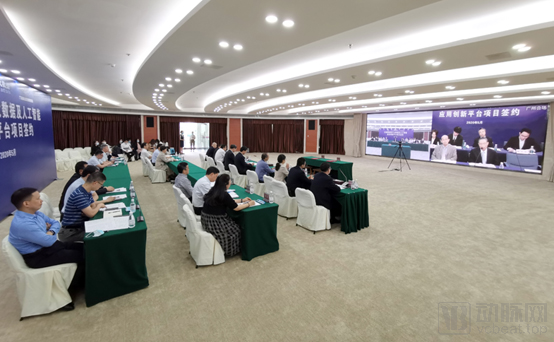
On-site Video Signing Ceremony
The video signing ceremony was held in two venues: Chongqing and Guangzhou. The Chongqing venue was moderated by Li Shun, a member of the Party Working Committee and Deputy Director of the Administrative Committee of Liangjiang New Area, Chongqing Municipality. Attendees included Lu Guanglin, Chairman of Guangzhou Tianpeng Computer Technology Co., Ltd., as well as heads of relevant departments from the Chongqing Municipal Development and Reform Commission, the Chongqing Municipal Commission of Economy and Information Technology, the Chongqing Municipal Big Data Development Bureau, the Chongqing Municipal Health Commission, and other related agencies in Liangjiang New Area.
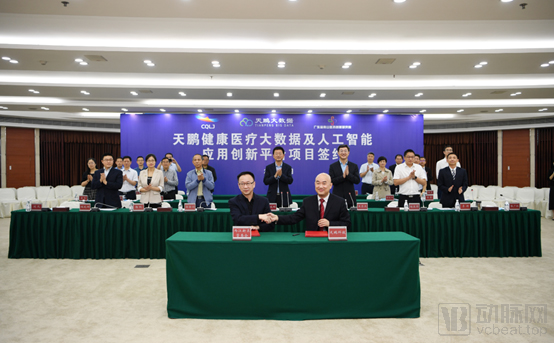
Chongqing Venue of the Signing Ceremony
Key attendees at the Guangzhou sub-venue included He Jianxing, Dean of the Guangzhou Institute of Respiratory Health and Deputy Director of the National Clinical Research Center for Respiratory Diseases; Li Shiyue, Deputy Dean of the Guangzhou Institute of Respiratory Health and Director of the Department of Respiratory Medicine at the First Affiliated Hospital of Guangzhou Medical University; Zheng Jinping, Deputy Dean of the Guangzhou Institute of Respiratory Health and Deputy Director of the National Clinical Research Center for Respiratory Diseases; Huang Qinghui, Party Secretary and Deputy Dean of the Guangzhou Institute of Respiratory Health; as well as relevant leaders from the Guangdong Nanshan Institute of Pharmaceutical Innovation and Tianpeng Big Data.

Signing Ceremony - Guangzhou Venue
Duan Chenggang, Member of the Standing Committee of the Chongqing Municipal Party Committee, Secretary of the Party Working Committee of Liangjiang New Area, and Director of the Administrative Committee, expressed his gratitude to Tianpeng Big Data and Academician Zhong Nanshan’s team for their support and trust in Chongqing and Liangjiang New Area during the event. He also expressed hope that, through joint efforts, the series of projects under the Tianpeng Health Medical Big Data and Artificial Intelligence Application Innovation Platform would be completed and yield results at an early date.
Wang Zhijie, Deputy Secretary of the Party Working Committee and Executive Deputy Director of the Administrative Committee of Liangjiang New Area, stated that Liangjiang New Area is vigorously developing the big health industry. The establishment of this project holds significant importance for the high-quality development of the big health industry in Chongqing and Liangjiang New Area, as well as for strengthening the public health system. Liangjiang New Area will make every effort to provide comprehensive service and support, accelerating the project’s progress to achieve tangible results at the earliest possible time.
According to VCBeat, this project will focus on the application of big data in the field of respiratory diseases. Due to their high incidence, substantial disease burden, and significant threat to population health, respiratory diseases have become a major global issue in healthcare and public health.
Pursuant to the agreement, the Tianpeng Health Medical Big Data and Artificial Intelligence Application Innovation Platform Project will establish the Nanshan Institute of Health Medical Big Data and Artificial Intelligence (hereinafter referred to as the “Institute”) in Liangjiang New Area.
Honorary Dean of the Institute is Zhong Nanshan, an academician of the Chinese Academy of Engineering and Director of the National Clinical Research Center for Respiratory Diseases. Relying on the Guangzhou Institute of Respiratory Health, the Institute has established a big data cloud platform for respiratory medicine through collaboration with top experts, covering major medical institutions in the region.
Over five years of exploratory collaboration, Academician Zhong Nanshan’s team and Tianpeng have established a highly mature partnership model and product framework based on respiratory big data. Meanwhile, the Guangzhou Institute of Respiratory Health possesses extensive expertise and specialist resources in the prevention, diagnosis, treatment, and rehabilitation of respiratory diseases. The participation of the Guangzhou Institute of Respiratory Health will further facilitate the sharing and exchange of technology, talent, and data among the three parties.
The research institute will also collaborate with Chongqing’s medical and health sector to promote innovative AI applications in clinical care, clinical research, disease prevention and control, public emergency response, and health services.
As the contractor for this platform, Tianpeng Big Data is a national high-tech enterprise dedicated to building cloud platforms for big data analysis and management in medical specialties, while providing intelligent medical data application services. Prior to this, Tianpeng Big Data had collaborated with the Guangzhou Institute of Respiratory Health for many years.
Currently, the construction experience and operational model of the nation’s first cross-provincial, national-level big data cloud platform for respiratory health specialties—jointly developed by Tianpeng Big Data and the Guangzhou Institute of Respiratory Health—can be rapidly deployed across diverse and complex application scenarios. Leveraging strategic collaborations with more than 50 provincial- and ministerial-level leading hospitals in 23 provinces and municipalities across China, a regional strategic layout has been initially established.
VCBeat believes that the implementation of this big data platform will significantly enhance Chongqing’s capacity for preventing and controlling major diseases and responding to public health emergencies, while further establishing and improving intelligent, real-time monitoring and coordinated dispatch mechanisms in key areas such as disaster prevention and mitigation, public health, and online public opinion.
Meanwhile, big data platforms will help shift the focus of public health from treatment to prevention. Zheng Jinping, Deputy Director of the Guangzhou Institute of Respiratory Health and Deputy Director of the National Clinical Research Center for Respiratory Diseases, shares this view. He believes that compared with late-stage treatment, early prevention is more effective and efficient, and it will be one of the key priorities for China’s healthcare sector in the future.
Taking chronic obstructive pulmonary disease (COPD) as an example, its pathogenesis begins with early-stage cough and sputum production, progressively worsens, and eventually evolves into respiratory failure, posing a life-threatening risk. Multiple factors contribute to this process; triggers such as weather changes and infections can induce disease onset and exacerbation.
With the integration of big data and artificial intelligence, along with the establishment of data models, big data platforms will be able to predict the progression of individual patients' conditions in the future, thereby encouraging patient compliance and making treatment more proactive and effective.
Furthermore, big data and artificial intelligence can help standardize physician behavior. Clinical practice guidelines provide clear specifications for the diagnosis, treatment, and medication of individual diseases. If a physician’s actual practice deviates from these guidelines, the platform will issue alerts to prompt the physician to review the diagnostic and treatment process, thereby reducing the occurrence of errors.
Lu Guanglin, Chairman of Tianpeng Big Data, also stated that this collaboration will leverage precision data-driven approaches to provide big data support services for industries including healthcare, pharmaceuticals, tourism, insurance, and scientific research, thereby offering robust support for the Liangjiang New Area in advancing the deep integration of big data, artificial intelligence, the internet, and the broader health industry.
VCBeat believes that the establishment of Tianpeng Health’s Big Data and AI Application Innovation Platform in Liangjiang New Area will not only facilitate local industrial clustering but also serve as an opportunity to attract and cultivate high-end talent for the western region’s broader health industry, thereby enhancing medical research capabilities and stimulating innovation.
In addition to Academician Zhong Nanshan’s team, the initiative has also introduced high-end medical resources—including multiple academicians, National Medical Centers, National Clinical Research Centers, and National Regional Medical Centers—as well as “national team” players in public health emergency response such as Chengan Technology. This “powerhouse alliance” will serve as a “shot in the arm” for the development of the biopharmaceutical industry in the New Area.
The project will also establish the Chongqing Health and Medical Big Data Laboratory, plan to introduce a group of outstanding talents from both domestic and international sources, and promote a series of collaborative projects, thereby integrating the innovation, industrial, and value chains across industry, academia, and research to stimulate vitality in innovation and creation.
Currently, Chongqing is making in-depth efforts to promote innovation in big data and artificial intelligence, concentrating resources on building itself into a “Smart Manufacturing Hub” and a “Smart City.” The digital economy is flourishing, and strategic emerging industries are growing stronger.
Liangjiang New Area is the first state-level new area for development and opening-up in inland China. Centered on Chongqing, it radiates to the vast central and western regions—including Yunnan, Guizhou, Sichuan, Shaanxi, and Hubei provinces—as well as the Yangtze River Basin, covering a population of approximately 300 million. Currently, the Chengdu-Chongqing Urban Agglomeration has been elevated to a national-level urban agglomeration, encompassing more than 10 cities.
As a national-level development and opening-up new area established just 10 years ago, Liangjiang New Area is demonstrating strong momentum, particularly boasting a solid foundation and comparative advantages in the development of the biopharmaceutical and general health industries.
In accordance with the unified arrangements of the Chongqing Municipal Committee and the Chongqing Municipal People’s Government, Liangjiang New Area will strive to build a smart city and an inland opening-up gateway for Chongqing, accelerate the enhancement of innovation, openness, industry, and service capabilities, and promote high-quality development and the creation of a high-quality life.
Currently, Liangjiang New Area has established a biopharmaceutical industrial cluster covering nearly 5,000 mu, with over 2,000 health-related enterprises. These companies span multiple sectors, including innovative drug R&D, high-end formulation manufacturing, industrialization of high-end medical devices and consumables, premium healthcare services, and pharmaceutical distribution.
By seizing the market opportunities spurred by the pandemic, Liangjiang New Area will accelerate the development of the big health industry through innovation, integration, and clustering, fostering new business models and formats that combine smart IoT with biopharmaceuticals.
One of the most significant highlights of this collaboration is leveraging big data to empower the broader healthcare industry. The Tianpeng Healthcare Big Data and Artificial Intelligence Application Innovation Platform project will build upon specialized big data platforms, fully capitalize on Tianpeng’s big data advantages, and utilize artificial intelligence technologies to analyze and process medical big data.
Building on this foundation, the big data platform will improve the healthcare environment and enhance medical standards and patient care capabilities across clinical practice, clinical research, public health and epidemic prevention, emergency response, and health services. It will explore the development of “online healthcare” service models and promote the expanded application of technologies such as big data and 5G in areas including monitoring and early warning, virus source tracing, new drug screening, and disease prevention and control.
As planned, the Liangjiang New Area will introduce a national-level big data center for respiratory diseases. Led by medical institutions and jointly established with Tianpeng Big Data, this initiative will develop respiratory disease data standards, quality control standards, and clinical diagnosis and treatment protocols tailored to regional characteristics. This will achieve interconnectivity of data among medical institutions within the region and gradually establish a Liangjiang New Area Respiratory Specialty Big Data Quality Control Center, a Pulmonary Function Big Data Center, and other major specialty medical big data cloud platforms.
On this basis, Chongqing Municipality will subsequently establish the Municipal Medical Big Data Cloud Platform for Respiratory Diseases, the Chongqing Intelligent Infectious Disease Prediction Platform, and the Chongqing Medical Emergency Rescue Platform.
In the future, the project will expand from its current focus on big data models for respiratory diseases, such as chronic obstructive pulmonary disease (COPD) and asthma, to other specialties including cardiovascular and cerebrovascular medicine, pediatrics, gastroenterology, orthopedics, and oncology. Furthermore, its scope will extend beyond disease prevention and control to encompass broader health management, covering disease screening, diagnosis and treatment, and rehabilitation. Additionally, its application scenarios will include medical insurance and drug research and development.
Furthermore, the project will leverage big data to integrate related industries across the city and the entire Southwest region, promoting the deep convergence of big data, artificial intelligence, the internet, and the general health industry. This will establish a source hub for the development of the health and medical big data industry, a cluster zone, and a new-format biopharmaceutical industrial cluster.