

VATHIN Launches AI- and NBI-Powered Disposable Bronchoscope for COVID-19 Pathogen Detection

Vathin
Sterile Endoscope Developer and Manufacturer
Endoscopes are widely used in clinical practice across various departments and for the treatment of diverse diseases. Having undergone four technological revolutions, endoscopes have evolved from the initial rigid endoscopes (1806–1932), semi-flexible endoscopes (1932–1957), and fiber-optic endoscopes (post-1957) to the current electronic endoscopes.
Due to the increasingly precise and complex structure of endoscopes, thorough disinfection after patient use is difficult, often leading to infections.
The American Journal of Infection Control reported that over 70% of endoscopes are not properly cleaned, and nearly three-quarters are contaminated with bacteria. In the United States, approximately 500,000 patients undergo procedures involving various types of endoscopes each year. According to the Association for Healthcare Research, between 2000 and 2015, peer-reviewed literature in the U.S. disclosed endoscope-related cross-infection cases affecting 147 individuals. The primary causes of these infections included damaged endoscopes, inadequate manual cleaning and disinfection, and failures of automated reprocessing equipment.
As the COVID-19 pandemic continued to escalate, hospitals became the primary battleground in the fight against the virus. The bronchoscopy room is undoubtedly at the forefront of this effort, where bronchoscopes are typically used to enter patients’ airways to collect mucus samples, which are then placed into test kits for diagnosis. Currently, reusable bronchoscopes are predominantly used in clinical practice; however, their reuse poses a risk of cross-infection.
“Vathin’s disposable bronchoscope can effectively address this hidden risk,” said Ma Xiaodong, Marketing and Sales Director at Vathin. He stated that AI- and narrow-band imaging (NBI)-enabled disposable bronchoscopes offer significant advantages in visually examining the inner surfaces of the trachea and bronchi to promptly diagnose whether a patient has contracted novel coronavirus pneumonia. This approach not only ensures precision but also prevents infection and substantially reduces the time required for diagnostic screening.
In 2018, Hunan Vathin Medical Instrument Co., Ltd. was established. Its headquarters is located in the Jiuhua High-Tech Industrial Development Zone in Xiangtan City, Hunan Province, covering a total area of 100 mu. The group has established a branch company in Shanghai, whose main business is the research and development, as well as sales, of medical endoscopes and related instruments or consumables.
Vathin was founded by Dr. Jack Zhou, a Ph.D. returnee from the UK. Its core team members each have over 10 years of experience in materials science, optics, electronics, structural engineering, software development, and manufacturing.The company has assembled a team of professionals from various countries around the world, including high-caliber talents such as an M.D. from the Icahn School of Medicine at Mount Sinai in New York, USA, a Ph.D. in Engineering from the University of California, USA, and R&D experts in laparoscopic, arthroscopic, and hysteroscopic products from Stryker Corporation in the USA.
In 2019, Vathin collaborated with Professor George Cheng from Duke University, a co-founder of Restor3D and an expert in interventional pulmonology, to advance the clinical application and technological development of bronchoscopy.
With its technologically advanced endoscopic products, Vathin has attracted high-quality clients from the United States, Spain, Germany, and other countries within less than a year of its establishment.
Ma Xiaodong, Marketing and Sales Director at Vathin, stated that the two most critical challenges facing disposable endoscopes are: first, achieving performance comparable to that of traditional endoscopes, and second, realizing effective cost control.
Currently, disposable endoscopes on the market generally struggle to meet the performance standards of traditional endoscopes. Taking disposable bronchoscopes as an example,Common issues include: insufficient image clarity that precludes accurate diagnosis of bronchial lesions; and substandard image quality that fails to meet the diagnostic requirements of healthcare professionals.
In terms of cost control, it is essential to ensure that the performance matches that of traditional endoscopes while achieving a low price point that meets the standards for single-use devices. Cost control remains a significant challenge facing many manufacturers of single-use endoscopes.
“Vathin’s disposable endoscopes have undergone a comprehensive upgrade in materials, minimizing the risk to patients caused by quality issues. The products hold multiple technical and design patents, offering greater ease of operation and enhanced safety,” said Ma Xiaodong, Marketing and Sales Director at Vathin.
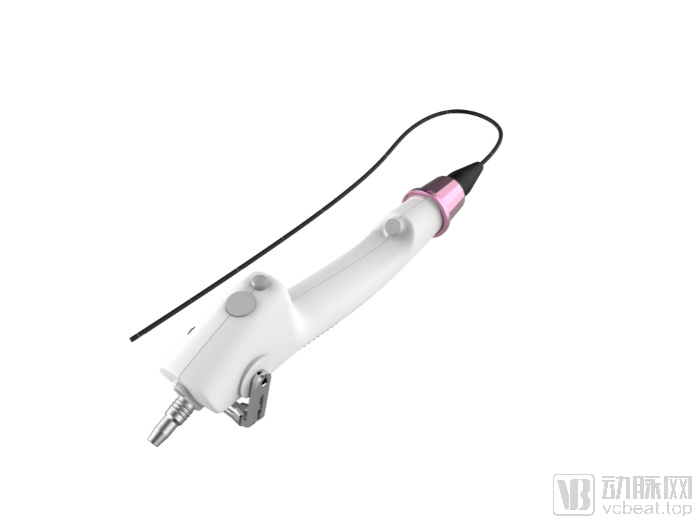
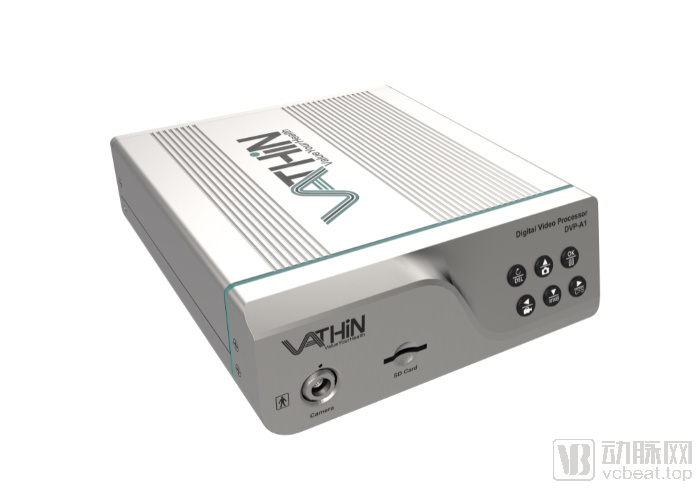
(Product Image)
Vathin Sterile Bronchoscope,Utilizes the world’s most advanced ultra-compact, high-pixel sensor and specially designed transmission cables to achieve long-distance image transmission, robust anti-interference capability, and ultra-high-definition imaging performance.;Disposable bronchoscopes based on AI and narrow-band imaging represent a new, effective, and precise technology for the accurate detection of pathogens causing novel coronavirus pneumonia.An illumination system that meets the requirements for human tissue imaging, combined with our proprietary CFS imaging technology, facilitates accurate diagnosis of lesions by operators. Magnetic isolation technology is employed in the image signal transmission path to ensure product safety and reliability. Laser cutting and riveting techniques enable a small bending radius and large bending angle at the distal end. Superior coaxiality compared to other products on the market, along with our unique self-locking mechanism, makes the product simple, convenient, and flexible to operate.
He pointed out,Vathin’s magnetic isolation technology, with a 400W power rating, delivers performance that is largely on par with and even slightly surpasses that of Olympus, the global leader. Compared to other similar products, Vathin’s offerings demonstrate clear advantages.
Currently,Vathin’s sterile bronchoscopes have already obtained U.S. FDA clearance and EU CE marking, with more than 120 related patents filed. The company expects to complete China’s NMPA certification and other approvals this year.
"Furthermore, weWe plan to launch our Pre-A financing round this year, with a target raise of RMB 30–60 million.,For product development and market expansion.“We hope to find institutions that can complement our resources,” said Ma Xiaodong, Marketing and Sales Director at Vathin.
In the future, Vathin will achieve full product coverage across departments including respiratory, gastroenterology, urology, and otolaryngology, establishing itself as the industry benchmark for disposable endoscopes.