

SoYoung's Chairman and CEO Jin Xing: Restructuring SoYoung — Strategic Shift from $1B to $10B Scale
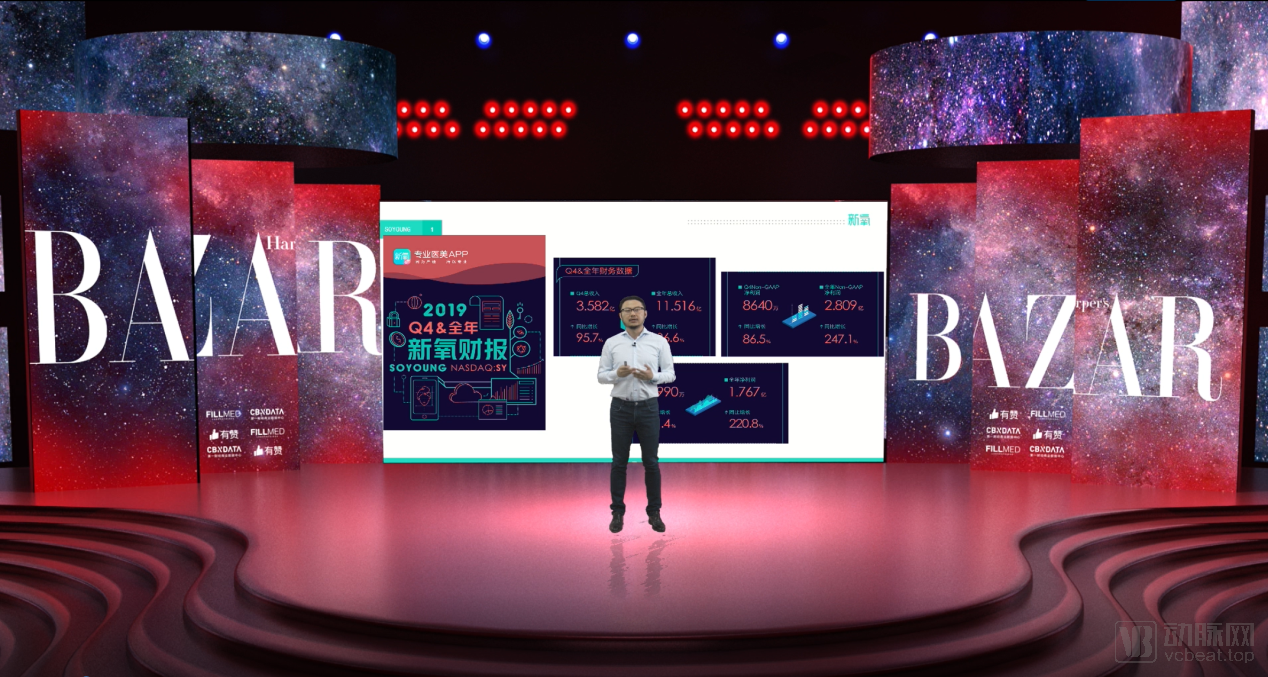
“During the first year since our IPO, we essentially rebuilt the company from the ground up,” stated Jin Xing, Chairman and CEO of New Oxygen Technology, at the Harper’s Bazaar “Better Future Summit.”
“The decision to drive this system upgrade stems from SoYoung’s critical growth phase as it scales from a $1 billion to a $10 billion enterprise,” said Jin Xing. The comprehensive system upgrade propelled an 86.6% year-on-year increase in SoYoung’s total revenue for 2019, achieving all-around progress in innovation, adaptability, and execution. SoYoung will continue to build a high-quality content community that is more diverse and engaging, thereby enhancing user stickiness and enabling users and clients to access richer, higher-quality information services.
According to a 2019 Frost & Sullivan survey, China recorded 16.29 million medical aesthetic procedures in 2017, second only to the United States’ 16.34 million. Moreover, China’s annual growth rate of 26.4% far exceeded the 3.9% in the United States. In 2019, China’s volume of medical aesthetic procedures is projected to surpass that of major markets such as the United States, Brazil, Japan, and South Korea, ranking first globally.
Amid surging consumer demand, a large number of medical aesthetics institutions have emerged in China. Currently, there are 12,000 compliant medical aesthetics institutions in the country, including 2,000–3,000 plastic surgery departments in public hospitals and 8,000–9,000 private medical aesthetics clinics. However, alongside this significant growth potential comes intense competition, particularly for small and medium-sized institutions, which struggle to break through market barriers and secure a foothold.
From Jin Xing’s perspective, the medical aesthetics industry also exhibits the “Matthew Effect” seen in e-commerce. The e-commerce model imposes high requirements on medical aesthetics institutions, necessitating a professional e-commerce team of a certain scale. However, few institutions currently meet these criteria, which significantly restricts the development of small and medium-sized medical aesthetics providers. Furthermore, small and medium-sized institutions that focus on technical expertise often struggle to allocate resources to e-commerce marketing, resulting in a prevalent scenario where institutions possess strong technical capabilities but weak marketing prowess.
Meanwhile, for consumers, medical aesthetics is not a consumer good; one should not simply choose a platform based on the lowest price. Jin Xing believes that consumers prioritize efficacy first and safety second, with price being only the third consideration. Therefore, it is essential to leverage an authentic and high-quality content ecosystem to provide medical aesthetic institutions with better channels to connect with consumers. This approach enables even small and medium-sized institutions to attract consumer attention, thereby enhancing user stickiness.
“In the early days, New Oxygen positioned itself as a social e-commerce platform for medical aesthetics, with ‘social’ serving as the modifier and ‘e-commerce’ as the core,” said Jin Xing. However, as New Oxygen’s understanding of the medical aesthetics industry deepened, it upgraded its positioning to a medical aesthetics content ecosystem. This shift from social e-commerce to a content ecosystem is far more than just a change in name; it represents a fundamental transformation of its entire business model.
In his keynote address, Jin Xing stated that a high-quality content ecosystem is defined by three key criteria. First, it must be open and diverse, enabling various content creators—including aesthetic medicine institutions, physicians, consultants, and influencers—to create and realize value within the ecosystem, while downstream manufacturers in the aesthetic medicine sector and specialized MCNs can also find their place. Second, it must be fair and efficient, ensuring that creators who contribute more high-quality content receive greater rewards. Third, it must be self-driven and proactive; a healthy content ecosystem is highly stimulating, fostering mutual inspiration and encouragement among creators, which leads to increased production of original content and promotes the overall enhancement of the platform’s content ecosystem.
To meet the demand for building a high-quality content ecosystem, New Oxygen has upgraded its business model by categorizing merchants into different types. E-commerce-oriented medical aesthetic providers can achieve a favorable return on investment (ROI) on the New Oxygen platform, while content-driven medical aesthetic providers can attract and acquire customers through traffic generation services such as articles, short videos, live streaming, and video consultations. Non-e-commerce and non-content-focused medical aesthetic providers can access New Oxygen’s merchant membership services to obtain consumer leads and facilitate customer conversion through measures such as outbound call invitations.
To facilitate the upgrade of its business model, New Oxygen has also upgraded its organization, brand, and products. In terms of organizational upgrade, New Oxygen transformed its original division-based business segments into an efficient network structure and adopted the OKR management method. Within just a few months, the company saw significant improvements in internal competitiveness, cohesion, and efficiency.
In terms of brand upgrading, New Oxygen achieved over 150 billion impressions in 2019, comprehensively enhancing its brand image. Regarding product upgrades, New Oxygen launched version V8.0, expanding from a sole focus on medical aesthetics to encompass appearance management, skin care, body contouring, and health management. Meanwhile, video consultations gained widespread popularity and experienced rapid growth during the pandemic. The new feature for reviewing treatment plans addressed two major consumer challenges—“what areas to treat” and “where to receive treatment”—leveraging high-quality services to help consumers make more precise and efficient “beauty” decisions.
Big data from New Oxygen shows that in 2019, the number of medical aesthetic doctors with an annual GMV exceeding one million yuan on the New Oxygen platform increased by 174 compared to 2018, reaching a total of 423. Each of these doctors generated an average annual revenue of 2.03 million yuan on New Oxygen, and over the past year, the average transaction value per customer rose by 31.53%. Industry insiders stated that the upgrading of New Oxygen’s business model, organization, brand, and products helps optimize internal platform management and strengthen the integration of external resources. By providing tailored solutions for merchants at different levels—head, mid-tier, and long-tail—the company reduces operational difficulties for medical aesthetic institutions and improves customer acquisition efficiency.
In recent years, the consumer base for medical aesthetics has gradually shifted from a niche market to the mainstream. In this process, Jin Xing has deeply perceived that the "integration of three beauty sectors" is an inevitable trend. Medical aesthetics, professional beauty services, and home-based beauty care are showing a trend of mutual integration and symbiosis, with diminishing differences among them. Consumers are increasingly opting for solutions that offer greater efficiency and cost-effectiveness.
Jin Xing believes that in the coming years, the most valuable entities within the broader beauty and aesthetics industry may not necessarily be plastic surgery hospitals or beauty salons. Instead, various companies specializing in downstream division of labor are likely to emerge, such as B2B operation firms, shared hospitals, equipment leasing companies, MCN communication agencies, or new models like DSOs, MHOs, and MSOs. The broader beauty and aesthetics industry may witness an explosion of “new species,” and these super new species will inevitably rely on new ecological platforms. Over the past year, So-Young’s system upgrades and product iterations have been aimed at providing such an ecosystem.
According to So-Young Technology’s fiscal year 2019 financial report, the company’s total revenue for 2019 reached RMB 1.1516 billion (approximately USD 165.4 million), representing a year-on-year increase of 86.6%. On a non-GAAP basis, the company’s net profit for 2019 was RMB 280.9 million (approximately USD 40.4 million), compared with RMB 80.9 million in the same period of the previous year. In May this year, So-Young’s traffic also achieved a 30% year-on-year growth. Comprehensive system upgrades and strategic adjustments have laid the foundation for So-Young’s leap from “10 to N” and for achieving healthy, sustainable growth.