

Dongding Lizhi Files IPO Prospectus to Tap into China's Trillion-Yuan Smart Elderly Care Market with Wearables and Integrated Platforms
The aging process in China is accelerating continuously.
According to population data released by the National Bureau of Statistics, China’s population aged 65 and above reached 167 million by the end of 2018, accounting for 11.9% of the total population. The World Bank projects that by 2050, the proportion of China’s population aged 65 and above will rise to 26%, meaning at least one in every five people will be an elderly person aged 65 or older.
The challenges this poses to China’s economy and society are self-evident: at the individual level, advances in medicine have increased average life expectancy, leading to a growing number of people living with chronic conditions and greater demand for assistance with activities of daily living in old age; at the family level, the rise in single-child families has intensified the caregiving burden on the younger generation; and at the government level, the healthcare objective of ensuring basic coverage for all has placed an increasingly heavy responsibility on public authorities.
Yet opportunities emerge alongside these challenges. According to projections by the research team of the National Social Science Fund project “Research on Elderly Consumption and the Development of the Elderly Care Industry,” China’s elderly market and elderly care industry are expected to grow from RMB 1.87 trillion and RMB 490 billion in 2015 to RMB 48.52 trillion and RMB 21.95 trillion, respectively, by 2050, representing annual growth rates of 9.74% and 11.48%.
The vast market opportunity has attracted a wide range of enterprises to compete for market share. From an industry perspective, there are companies involved in the production of devices and facilities at the upstream level, such as Yuwell, Xiaomi, and Shouhu Yun, as well as those providing information technology solutions, such as Yuntuo Technology, Winning Health, and Legrand; there are companies entering the midstream sector through home-based elderly care services, such as Ankangtong and Hushi Daojia, and those establishing community-based elderly care services, such as Xingfu Shijia and Chenghejing; and there are companies engaging in commercial insurance at the downstream level, such as Yi'an Insurance and ZhongAn Insurance.
Sichuan Dongding Lizhi Information Technology Co., Ltd. (hereinafter referred to as “Dongding Lizhi”) is a high-tech enterprise engaged in fields such as smart elderly care. The company holds more than twenty software copyrights, over ten utility model patents, and more than twenty invention patents, with over eighty additional invention patents pending. Its core business involves providing comprehensive informatization solutions to industry clients, including the research and development of application software for the Internet of Things (wearable devices and flexible exoskeleton robots) and smart elderly care, embedded software, and integrated technical services.
“How to better serve the aging population has always been our focus,” Chen Linrui, General Manager of Dongding Lizhi, told VCBeat. Before formally developing wearable devices, Dongding Lizhi had produced temperature patches and heart rate patches. “This laid a solid technical foundation for our development of wearable devices.”
Dongding LiZhi’s wearable devices integrate next-generation flexible sensors at key body sites to enable real-time, accurate monitoring of electrocardiogram (ECG), muscle activity, respiratory rate, and body temperature. Leveraging high-bandwidth communication modules, the devices transmit collected vital signs to servers via networks for real-time health monitoring and predictive analytics. They are suitable for scenarios requiring real-time personnel monitoring, such as team training, competitive sports, medical rehabilitation, underwater operations, aviation, and space stations.
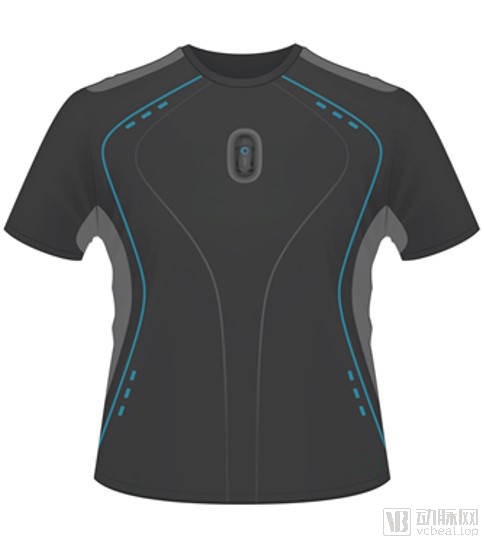
In fact, since Polar launched the first wearable heart rate monitor in 1981, wearable devices capable of wireless transmission have gradually attracted widespread attention and enthusiasm from consumers. Particularly over the past decade, the entry of tech giants such as Apple, Google, and Huawei has made wearable devices a focal point of media coverage and a favorite in capital markets.
Whether it was the early days when wearable devices were primarily used to monitor athletes’ heart rates, or the present era marked by a continuous influx of wearable bands and other products for health monitoring and entertainment, the variety of wearable devices has expanded significantly, with increasingly rapid iteration cycles. Consequently, wearable devices are now entrusted with broader missions, including health management, computing capabilities, leisure and entertainment, and serving as IoT endpoints. This evolution has also created greater market opportunities for industry practitioners. According to data released by IDC, global shipments of wearable devices reached 84.5 million units in Q3 2019, representing a year-on-year increase of 94.6%. Industry giants such as Apple, Xiaomi, Samsung, and Huawei have not only accelerated their strategic deployments in this sector but also maintain a leading position.
Amidst a landscape dominated by industry giants and numerous competitors, how can one build competitive barriers in the wearable device sector? Chen Linrui believes the key lies in delivering tangible value from the user’s perspective. Since the inception of its R&D efforts, Dongding Lizhi’s wearable devices have consistently prioritized technological innovation and user experience.
Specifically, Dongding Lizhi’s wearable devices primarily provide real-time monitoring of the wearer’s electromyography (EMG), electrocardiography (ECG) activity, and other physiological parameters. They achieve monitoring performance during normal walking that is comparable to the 24-hour Holter monitoring (ambulatory ECG) currently used in hospitals. Unlike most consumer-grade wearable products on the market, which are limited to data observation, Dongding Lizhi’s products comply with national and medical industry standards, thereby enabling their use for clinical guidance.
“Traditional Holter monitors (ambulatory ECGs) require the application of conductive gel and alcohol spray, making the process rather cumbersome. Moreover, these devices are made of conductive rubber, which often emits an unpleasant odor. Our approach integrates next-generation flexible sensors into wearable devices, allowing them to be worn as easily as regular clothing and to be washed normally.”
In addition to wearable devices, Dongding Lizhi has independently developed a smart elderly care platform that integrates institutional, community, and home-based care.
“Our platform is primarily designed for the comprehensive management of senior living communities and the integration of multifaceted data, including visualizations of resident occupancy, age distribution, activities of daily living (ADL) capabilities, and spatiotemporal analytics,” stated Chen Linrui. He added that through platform-based management, community administrators can gain real-time visibility into community conditions and rationally allocate nursing tasks, thereby ensuring the safety of elderly residents to the fullest extent.
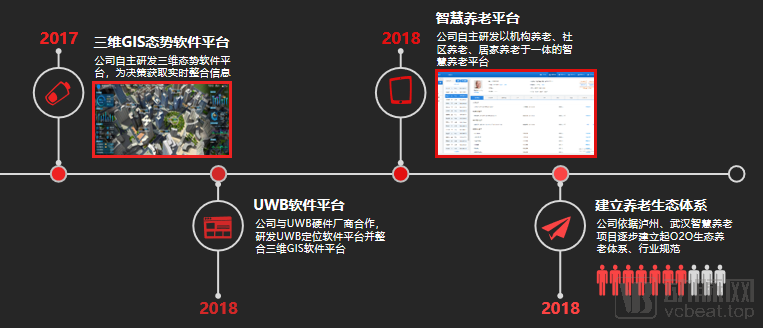
At the data level, the platform sources its information from terminal devices deployed with community authorization, as well as data monitored by wearable devices. This approach offers three key benefits: first, it enables family members of elderly individuals to stay informed about their condition in real time; second, it facilitates continuous health monitoring by community physicians; and third, it allows for the tracking of medication adherence and rehabilitation progress.
For a high-tech enterprise, team composition is a critical component. Currently, 80% of Dongdingli Zhi’s staff are R&D personnel. General Manager Chen Linrui is a member of the Sichuan Province Smart City Expert Group. Chief Architect Dr. Lü Yu is a visiting scholar under the “Light of the West” program for young and middle-aged high-level talents sponsored by the Organization Department of the CPC Central Committee, and serves as Deputy Chief Engineer at the Central Research Institute of Sichuan Jiuzhou Electric Group. Chief Expert Deng Xuangeng holds a Ph.D. in Medicine from Southern Medical University and serves as a committee member and Secretary-General of the Orthopedics Professional Committee of the Sichuan Geriatric Medical Association, a committee member of the Spinal Cord Injury Professional Committee of the Sichuan Rehabilitation Medical Association, a member of its Cervical Spine Study Group, and a committee member of the Orthopedics and Traumatology Professional Committee of the Sichuan Association of Traditional Chinese Medicine.
Regarding future development, Dongdingli Zhi’s plan was to establish in 2021 an integrated smart health service platform combining experience centers, community-based, home-based, and institutional care (“1+3” model), with operations in ten cities and a user base reaching the hundred-thousand level. By 2023, the company’s platform was operating in nineteen cities, with its effective user base reaching the million-level.
Dongding Lizhi is currently seeking Series A financing, with a target amount of approximately RMB 10 million. The funds raised will be primarily allocated to the further human-centric research and development of its smart elderly care platform, 3D situational awareness platform, and wearable devices, as well as to market promotion, talent recruitment, and raw material procurement.