

Berry Electronics Files IPO Prospectus Highlighting Its Wrist-Worn Bluetooth Sleep Monitoring Pulse Oximeter for Precise and Simple Sleep Assessment
Sleep Disorders Are Becoming a Growing Concern for an Increasing Number of People.
According to data from the Chinese Sleep Research Society, at least 35% of people in China suffer from varying degrees of sleep disorders, 17% experience relatively severe symptoms of insomnia, and the proportion of individuals whose sleep is confined to “light sleep” is as high as 77.3%. Coupled with various other factors, people’s overall sleep quality remains in a suboptimal health state.
The vast population has driven the booming development of the sleep health industry. According to statistics from China Industry Information Network, the market size of China's sleep industry has exceeded RMB 100 billion, and it is projected that by 2022, the overall market size of China's sleep industry will grow to RMB 531.7 billion.
The market is vast, with numerous competitors. According to a report by China Business News, companies specializing in sleep medical devices currently account for approximately 65% of the industry, while pharmaceutical companies make up about 16%, health supplement companies around 15%, and sleep service providers roughly 4%. Within the sleep medical device sector, monitoring equipment serves as the front end of the entire data chain and holds a significant position in the industrial value chain.
Shanghai Berry Electronic Tech Co., Ltd. (hereinafter referred to as “Berry Electronics”) is a company in this industry chain that specializes in the field of electronic medical monitoring. Its newly developed wrist-worn Bluetooth sleep-monitoring pulse oximeter can provide real-time monitoring for sleep apnea syndrome and offer users professional sleep assessment and advisory services, thereby achieving the effect of preventive healthcare.
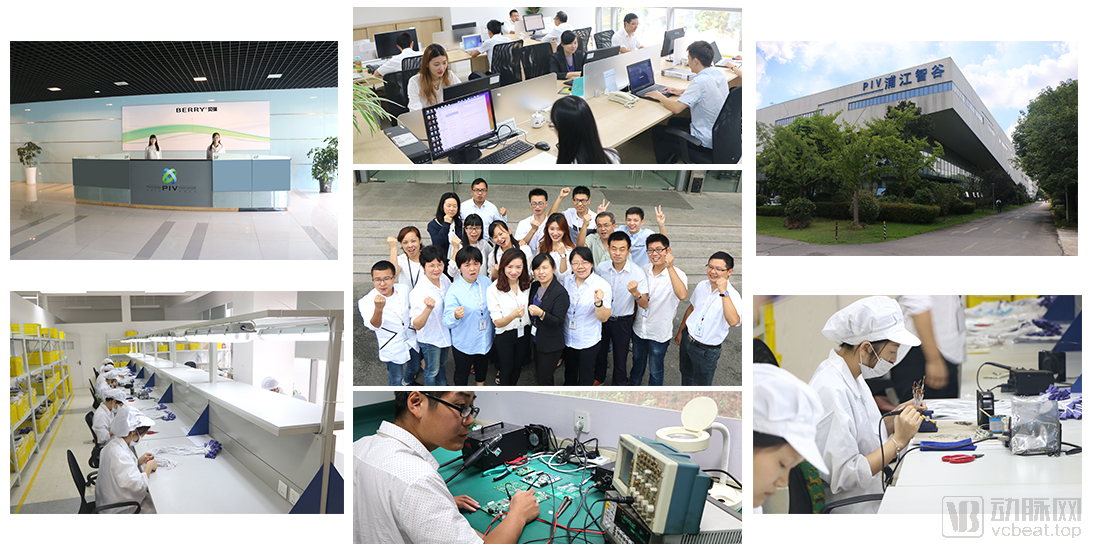
“Over the past two decades, Berry Electronic has developed new home-based medical mutual-aid products, enabling everyone around us to conveniently use electronic medical monitoring devices,” Yin Xuezhi, General Manager of Berry Electronic, told VCBeat. Berry Electronic’s product portfolio includes monitor accessories, OEM monitor modules, pulse oximeters, and non-invasive monitoring solutions.
As a newly developed wrist-worn Bluetooth sleep monitoring pulse oximeter, this product is primarily designed for sleep apnea syndrome. It can monitor users' heart rate, blood oxygen levels, respiration, and other data. Upon waking, users can review their sleep status and assessment, along with detailed metrics such as total sleep time, light sleep duration, number of turns, deep sleep duration, number of awakenings, and respiratory rate.
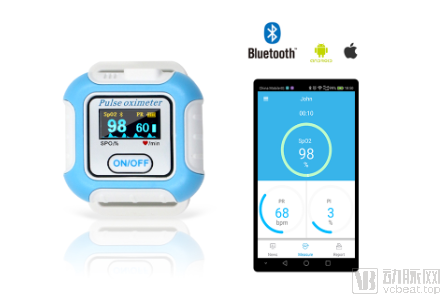
Technically, the product employs 100 Hz high-frequency data sampling technology. Comparative analysis against polysomnography (PSG) demonstrates that the Berry Sleep Initial Screening Monitor achieves an Apnea-Hypopnea Index (AHI) error rate of 9.25% and an apnea event count error rate of 12.97%, with a diagnostic accuracy of 95.65% for screening the severity of sleep apnea syndrome.
This product offers five key advantages. First, it enables initial screening tests that replicate real-world sleep conditions, eliminating complex wiring and the need for monitoring oral and nasal airflow. Second, it calculates the Apnea-Hypopnea Index (AHI) using pulse signals, thereby reducing the first-night effect and improving success rates. Third, the wristband design ensures natural sleep quality, yielding more meaningful data. Fourth, it facilitates home-based monitoring, removing the need for hospital visits and enhancing patient experience. Fifth, it allows for convenient multi-night monitoring, resulting in more authentic and reliable data.
“It takes a considerable amount of time for a product to go from research and development to commercialization. Even after its launch, continuous iteration is essential to deliver a superior user experience. Therefore, we will continue to optimize our products based on market feedback, providing more users with reliable devices for sleep management,” said Yin Xuezhi. The team at Berry Electronics has been consistently optimizing and iterating on product performance. The wrist-worn Bluetooth sleep monitoring pulse oximeter has undergone significant transformations, evolving from the initial 1.0 version, which could only record data such as heart rate, blood oxygen saturation, and respiration, to its current capability of capturing multidimensional data. Moving forward, the team plans to incorporate additional metrics, including electroencephalogram (EEG) monitoring, into the wrist-worn Bluetooth sleep monitoring pulse oximeter, thereby enabling a more comprehensive assessment of users’ sleep patterns.
Berry Electronics’ sustained momentum in the field of sleep monitoring stems from its accumulated technological expertise and product R&D capabilities, built through years of exploration in pulse oximeters and patient monitors. “The clinical significance of pulse oximetry lies in indirectly assessing patients’ partial pressure of oxygen (PO2) levels to evaluate tissue oxygen supply,” stated Yin Xuezhi. He noted that pulse oximetry devices are suitable for patients with vascular diseases and individuals aged 60 and above, and can be used for clinical monitoring in departments such as internal medicine, surgery, anesthesiology, pediatrics, and emergency care, as well as in scenarios including oxygen bars, community healthcare, home care, sports wellness, and outdoor activities.
Currently, Berry Electronics offers a range of pulse oximeters, including the BM1000A Palm-Style Bluetooth Pulse Oximeter, BM2000 Wrist-Worn Bluetooth Pulse Oximeter, BM1000D Fingertip Pulse Oximeter, BM1000B Fingertip Bluetooth Pulse Oximeter, BM2000A Wrist-Worn Bluetooth Pulse Oximeter, and the BM1000 New Fingertip Bluetooth Pulse Oximeter.
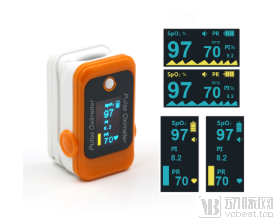
“Our pulse oximeters have seen annual sales growth of over 20%.” According to Yin Xuezhi, this success is attributable to the superior product experience offered by these devices, which feature the following seven characteristics.
First, the compact design ensures a comfortable wearing experience on the patient’s wrist and features simple one-button operation. Second, its small size and light weight make it highly portable. Third, powered by two AAA batteries, the device can operate continuously for 24 hours, offering extended battery life. Fourth, thoughtful detail settings include a flashing low-battery icon at the top of the screen to alert users when power is insufficient, which may affect normal operation. Fifth, it demonstrates strong resistance to environmental interference and low perfusion conditions. Sixth, no daily maintenance or calibration is required. Seventh, via wireless Bluetooth connectivity, data can be displayed on a PC or on smartphones running iOS or Android systems. Eighth, the device automatically powers off after 8 seconds if no signal is detected.
In addition to independent R&D, Berry Electronics is also actively collaborating with enterprises and universities. “We partnered with a Canadian company on a project that integrates our products with their software, which can accurately measure individuals’ physiological age. This solution has been marketed in North America for several years and has received very positive customer feedback.” In China, Berry Electronics engages in collaborations with several universities in areas such as teaching, research, and development.
As an enterprise with strong R&D capabilities, Berry Electronics places great emphasis on technological accumulation. In 2009, it obtained the Manufacturing License and Product Registration Certificate issued by the Shanghai Food and Drug Administration. In 2014, it received the EN ISO 13485 Quality Management System Certificate and CE Certification for its products from TÜV SÜD. In 2015, it obtained U.S. FDA 510(k) clearance. At the team level, Berry Electronics currently has approximately 100 employees, with technical R&D personnel accounting for 30% and over 50% holding bachelor’s degrees or higher.
Looking ahead, Berry Electronics has outlined a two-pronged strategy: first, to continue focusing on R&D and manufacture more precise portable medical devices; second, to build a medical big data platform dedicated to the storage, management, and analysis of personal health data.