

Sorrento's '100% Effective' Antibody and China's Viral Breakthrough: A Surge in COVID-19 Therapeutic Antibody Development
In recent times, several studies on antibody drugs for the novel coronavirus have successively drawn public attention. First, Sorrento Therapeutics, an innovative pharmaceutical company founded by Chinese entrepreneurs, announced that it had identified an antibody capable of blocking the binding of the novel coronavirus to cells, which was proven 100% effective in laboratory settings. Subsequently, Henlius, Tri-antibody Biotherapeutics, and Zhejiang DiAn Diagnostics reached a collaboration agreement to jointly develop fully human antibody drugs targeting the novel coronavirus. Then, just yesterday on May 18, the headline “Chinese Team Discovers Antibody That Can Block Novel Coronavirus Infection” topped Baidu’s trending search list.
Although sporadic cases are the only remaining manifestations of the COVID-19 epidemic in China, the global situation remains grim. Nearly 100,000 new cases are reported worldwide each day, and the cumulative number of confirmed cases continues to rise sharply. More than 2.5 million active COVID-19 patients are urgently awaiting the development of a specific therapeutic drug.
Can antibody drugs ultimately become the “terminator” of COVID-19? Have any of the products announced in recent days emerged as the long-awaited miracle cure? VCBeat has compiled an overview.
Sorrento’s sudden announcement certainly grabbed attention.
Sorrento stated that it had screened billions of antibodies to identify a dozen candidates capable of blocking the interaction between the SARS-CoV-2 spike (S) protein and ACE2, and conducted in vitro testing on these antibodies. Among them, STI-1499 stood out by completely neutralizing viral infectivity at low concentrations. Sorrento plans to develop STI-1499 as a monotherapy and also use it as the primary antibody in an antibody cocktail therapy for the treatment of COVID-19.
The positive news released by Sorrento successfully drove up its stock price. On May 15, the stock opened with a strong surge, dispelling months of gloom. It rose from $2.62 the previous day to $4.41 at the open, and continued to gain momentum throughout the session. The share price peaked at $9 before closing at $6.76, representing a 158% increase from the prior day.
Sorrento was founded in 2006, with Dr. Hongjun Ji, of Chinese descent, as one of its founders and serving as Chief Scientist at the time of establishment. Another founder, Antonius Schuh, served as the company’s Chairman and CEO. In 2011, Antonius Schuh departed from Sorrento, and Hongjun Ji, as a co-founder, succeeded him to become the company’s Chief Executive Officer.
Before founding Sorrento, Ji Hongjun had spent many years moving among startup pharmaceutical companies. A biochemistry graduate of Fudan University, Ji came to the United States in the 1980s to pursue a Ph.D. in animal physiology at the University of Minnesota. He then embarked on his career in biopharmaceuticals. The company he co-founded, Stratagene Corporation, was acquired by Agilent Technologies in 2001. Prior to establishing Sorrento, Ji served as Vice President at CombiMatrix and as President at BioVintage, though neither tenure lasted long. Ultimately, Ji returned to the entrepreneurial path. He has now persisted in this current venture for 14 years.
Sorrento’s key technology lies in the G-MAB antibody library invented by Ji Hongjun.
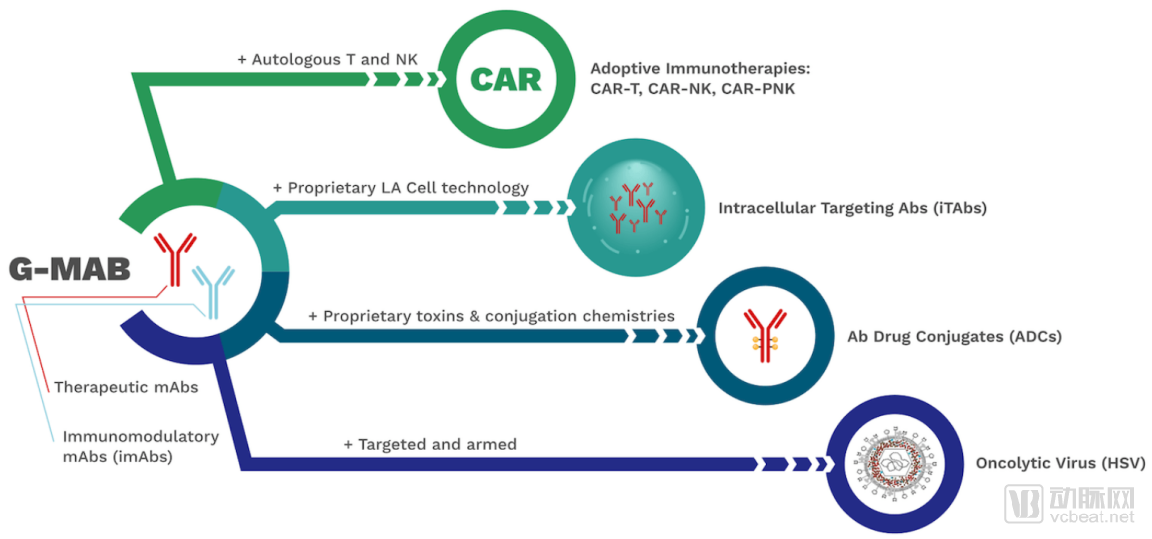
In-depth analysis of deep sequencing DNA data indicates that the G-MAB library contains 1,016 unique antibody sequences, making it one of the largest human antibody libraries in the biopharmaceutical industry. G-MAB can be used to design fully human monoclonal antibodies, thereby ensuring that recombinant antibodies are free from animal-derived sequences.
Built on an extensive data foundation, G-MAB enables faster and more cost-effective in vitro screening of large antibody libraries. This screening approach can target any antigen of interest and does not rely on inducing an immune response in a host organism. Using G-MAB, Sorrento has successfully identified potent antibodies against more than 100 targets strongly associated with cancer, including PD-1, PD-L1, CD38, CD123, CD47, CTLA-4, c-MET, VEGFR2, CCR2, and CD137. The newly announced anti-SARS-CoV-2 antibody therapeutic, STI-1499, was also selected from billions of candidate sequences thanks to the powerful capabilities of G-MAB.
More impressively, antibodies selected through G-MAB screening can be utilized for in-depth processing and research, serving as components for novel therapies such as antibody-drug conjugates (ADCs), bispecific antibodies, CAR-T cell therapy, and oncolytic viruses, thereby offering extensive applications.
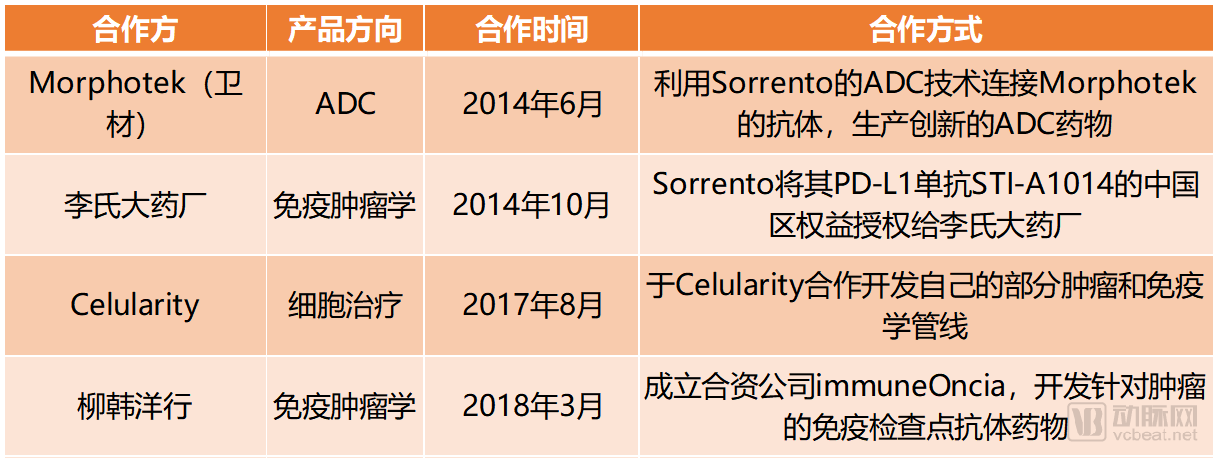
Such a technological foundation inevitably relies on external collaborations. Likely due to its Chinese founders, Sorrento’s partnerships have been predominantly focused on the Asian region. In 2014, Sorrento entered into collaborations with Morphotek, a subsidiary of Eisai, and China’s Lee’s Pharmaceutical. Following these agreements, Sorrento’s stock price climbed steadily, reaching a historical high of $26.80 in July 2015. However, the stock subsequently entered a prolonged period of stagnation, hitting a record low of $1.45 by the end of 2019. In January 2020, Sorrento rejected an acquisition offer from a private equity firm. In hindsight, this appears to have been a prudent decision.
Following the announcement by Sorrento, as its stock price continued to climb, so did the growing skepticism from outside observers. Many believe that the information released by Sorrento lacks credibility and is merely an attempt to hype up its stock price. This concern is understandable; while it is reasonable that the underlying screening technology constitutes a trade secret and is therefore difficult to disclose in detail, the press release failed to clearly specify the experimental methods used for testing. Furthermore, expressions such as “more than ten types” and “low concentration” in the description of the experimental results are highly ambiguous. The only precise figure provided was the “100% efficacy rate” of STI-1499, which indeed appears somewhat implausible. However, it is also possible that Sorrento is actively organizing its data in preparation for publication, and thus temporarily keeping certain data confidential may be understandable.
Moreover, STI-1499 has currently only been proven effective in in vitro experiments. As for how STI-1499 will perform in further animal studies and even clinical trials, we may have to wait patiently for Sorrento’s next round of disclosures.
Another piece of news that made it to Baidu’s trending search list was far richer in information. On May 18, Science magazine published online a paper titled “A Pair of Non-Competing Human Neutralizing Antibodies Block the Binding of the COVID-19 Virus to Its Receptor ACE2.” The study was conducted jointly by several institutions, including Capital Medical University, the Institute of Microbiology of the Chinese Academy of Sciences, the Tianjin Institute of Industrial Biotechnology of the Chinese Academy of Sciences, and Shenzhen Third People’s Hospital. As soon as the news broke, the headline “Chinese Team Discovers Antibodies That Can Block COVID-19” quickly rose to second place on Baidu’s trending search list that afternoon, even briefly reaching the top spot.
In this study, researchers used the SARS-CoV-2 receptor-binding domain (RBD) protein as bait to isolate single memory B cells from peripheral blood mononuclear cells (PBMCs) of COVID-19 patients. The variable regions encoding the antibody light and heavy chains were amplified from each memory B cell, expressed in vitro, and assembled into antibodies. Subsequently, the binding affinity of these antibodies to the RBD protein was assessed, leading to the selection of four candidate antibodies (B5, B38, H2, and H4) for further experimentation.
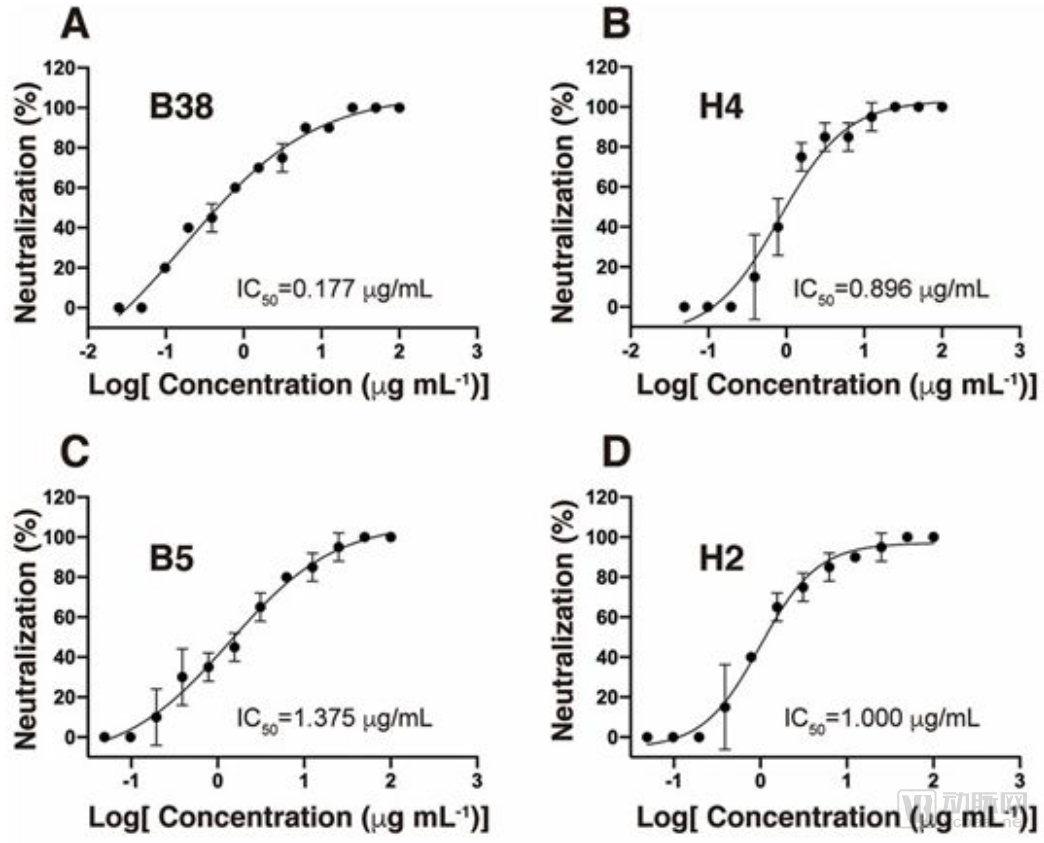
All four antibodies demonstrated neutralizing activity against SARS-CoV-2 in subsequent neutralization assays. Among them, B38 and H4 exhibited more potent neutralizing capacity, achieving effective neutralization at lower concentrations. Subsequent blocking assays further revealed that B38 and H4 completely competed with ACE2 for binding to the RBD, indicating their potential as anti-SARS-CoV-2 agents.
Finally, the researchers conducted a brief mouse experiment. hACE2 transgenic mice were injected with equal doses of PBS (control), B38, and H4, respectively, 12 hours after SARS-CoV-2 infection. Mice in the B38 group recovered three days post-infection, with no lesions observed in lung sections; mild bronchitis was observed in lung sections from the H4 group; whereas the control group exhibited severe bronchopneumonia and interstitial pneumonia, along with edema.
The entire article, through experiments using various in vitro and in vivo methods, ultimately reached the same conclusion: antibodies assembled from antibody sequences isolated from patients’ monocytes can block the binding between SARS-CoV-2 and ACE2, thereby controlling the progression of COVID-19 in patients. This also corroborates the scientific rationale underlying the convalescent plasma therapy for COVID-19 that has been implemented to date.
Convalescent Plasma Therapy for COVID-19: A Special Countermeasure Adopted by China in the Absence of Specific Antiviral Drugs
Plasma therapy is, in essence, an antibody-based treatment regimen. Recovery from COVID-19 primarily relies on the patient’s own immune response to the SARS-CoV-2 virus. This immunity is mainly derived from specific antibodies produced by the patient against SARS-CoV-2. These antibodies are present in the patient’s plasma and are particularly abundant in the plasma of individuals who have recently recovered. Therefore, after undergoing processes such as inactivation, plasma from these recovered patients can be processed into hyperimmune plasma suitable for clinical treatment.
In the Wuhan area, more than 20 medical personnel who had recovered from novel coronavirus infection became the first donors of hyperimmune plasma ten days after their recovery. Following processing, the first critically ill patient received plasma therapy at the First People’s Hospital of Jiangxia District in Wuhan on February 9, and ten additional patients underwent treatment over the subsequent week. Within 24 hours after receiving the therapy, patients experienced significant alleviation of various symptoms. By February 18, one patient had been discharged, another was able to walk, and the remaining patients had all entered the recovery phase.
Based on its remarkable efficacy, plasma therapy was included in the Diagnosis and Treatment Protocol for Novel Coronavirus Pneumonia (Trial Version 6), issued on February 18, becoming one of the treatment options for severe and critically ill patients. This approach has also been promoted from China to other countries, saving more patients worldwide. On ClinicalTrials.gov, there are already 78 clinical trials using convalescent plasma for the treatment of COVID-19.
In addition to endorsing plasma therapy, the more significant contribution of this study by Chinese researchers published in Science lies in providing a method for screening highly effective antibody drugs. Plasma therapy requires cooperation from recovered patients to obtain plasma, and even when processed using the same methods, the quality of the final hyperimmune plasma products varies significantly among different donors. In contrast, antibodies discovered through this new approach, such as B38, can be rapidly mass-produced via industrialized methods, thereby increasing supply scale and product consistency to support efforts in combating the epidemic.
Since the outbreak of the COVID-19 pandemic, active drug development and clinical trials have been launched worldwide.
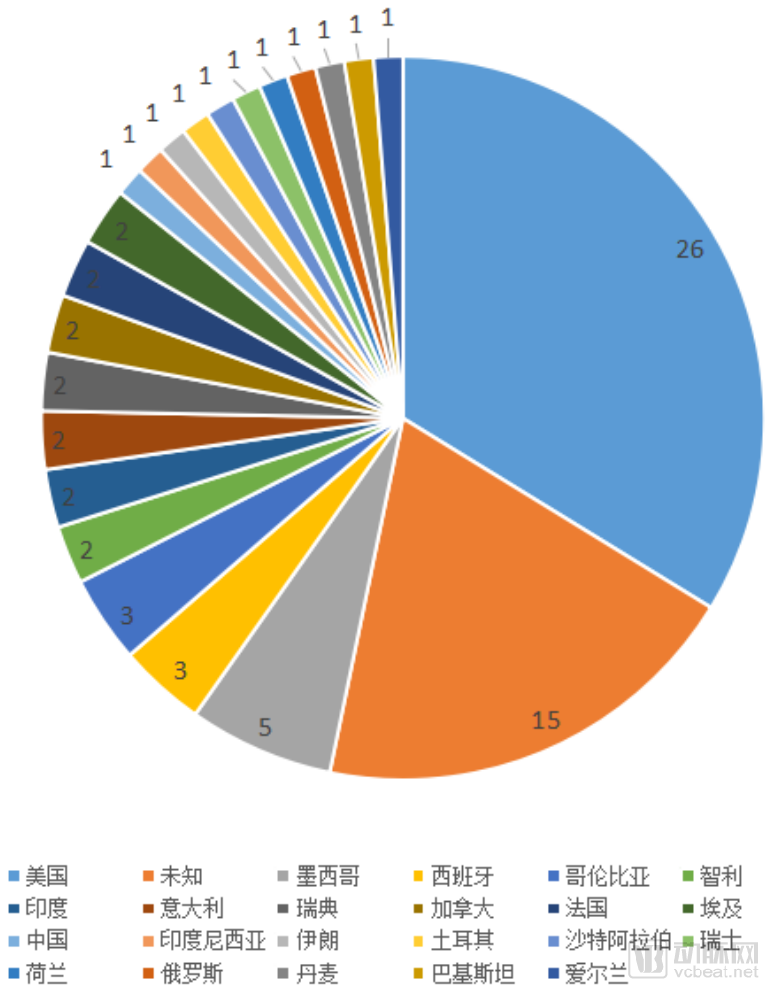
Clinical trials on therapeutic plasma have been conducted worldwide. A total of 78 clinical trials are registered on ClinicalTrials.gov, among which 15 do not specify clear trial locations. Of the remaining trials, 26 are being conducted in the United States, making it the region with the highest concentration of related clinical research globally. Mexico, the southern neighbor of the United States, ranks second with 5 clinical trials. Several European countries, including Spain, Italy, France, the United Kingdom, and Sweden, have also launched relevant clinical trials.
In addition to North America and Europe, relevant clinical trials are being conducted in countries and regions such as India and Pakistan in South Asia; Indonesia in Southeast Asia; Israel, Turkey, and Saudi Arabia in the Middle East; Egypt in Africa; and Chile and Colombia in South America. A near-global consensus has been reached on the use of convalescent plasma therapy for treating COVID-19.
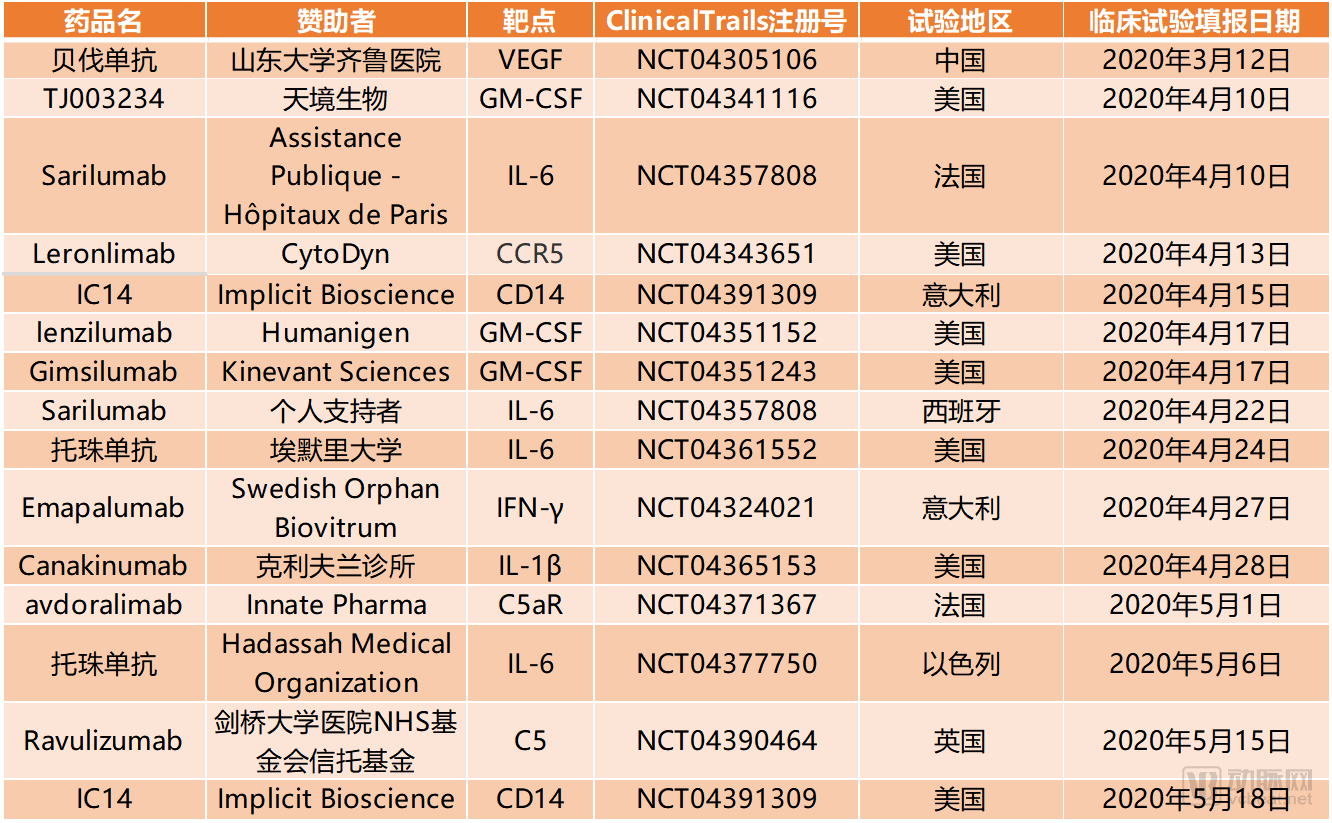
In terms of antibody drugs, ClinicalTrials.gov has registered 15 clinical trials on the use of antibody therapies for COVID-19, involving 13 different antibody drugs and conducted in China, the United States, and Europe. Due to China’s rapid containment of the epidemic, only one relevant clinical trial from China is listed on ClinicalTrials.gov.
Most of the targets of these antibody drugs are related to immune responses. Among them, IL-6 and GM-CSF are the two most closely watched targets.
Patients with COVID-19 often develop cytokine storms due to prolonged exposure to the SARS-CoV-2 virus. A cytokine storm is an excessive immune response triggered by a sharp increase in pro-inflammatory cytokines. Major cytokine families include colony-stimulating factors (CSFs), interleukins (ILs), and interferons (IFNs). Therefore, monoclonal antibodies targeting these cytokines can inhibit their functions, thereby helping to control cytokine storms.
However, this class of monoclonal antibodies is not a specific targeted therapy for SARS-CoV-2; it can only help control the patient's condition.
Many companies have also begun developing specific antibodies targeting SARS-CoV-2 or ACE2. For instance, Regeneron has announced that it has identified antibody candidates and plans to submit an investigational new drug application for clinical trials next month. The SARS-CoV-2 neutralizing antibody jointly developed by Junshi Biosciences and the Institute of Microbiology, Chinese Academy of Sciences, has been licensed to Eli Lilly and Company for commercial rights outside Greater China. Additionally, there are the collaborations mentioned at the beginning of this article involving Henlius, Trianni Biotech, and Zhijiang Biology, as well as STI-1499, recently discovered by Sorrento. These candidates all hold promise as potential specific therapeutics for COVID-19.
However, no specific antibody for COVID-19 has yet entered clinical trials. Despite a steady stream of positive developments, the path to developing a specific therapeutic drug for COVID-19 remains long and arduous.