

PKUcare Brain Health Launches 'HiXiaoBao' for Autism Intervention, Building a Smart Platform in Pediatric Rehabilitation
“We handle the professional and complex aspects, leaving a simple and user-friendly experience for parents, institutions, and the industry,” emphasized Ms. Wang Lei, General Manager of PKUCare Brain Health, repeatedly during the interview.
As a smart platform focused on pediatric rehabilitation, PKUCare Brain Health leverages its advantages in healthcare, education, technology, and management to provide integrated rehabilitation knowledge, technologies, and services across multiple scenarios. It is committed to promoting the professionalization, standardization, and digitalization of the industry over the long term.
Entry: Tackling the Most Challenging Form of Autism to Enter the Field of Pediatric Rehabilitation
When asked why he chose pediatric rehabilitation, Wang Lei, a career executive who has long worked in the healthcare sector, candidly shared that before entering the industry, he leveraged the abundant resources of Peking University Healthcare Industry Group to evaluate many fields and identified numerous opportunities. Ultimately, his decision to focus on pediatric rehabilitation was based primarily on the following considerations:
“First, it is based on our outlook for the rehabilitation industry; second, we leverage Peking University’s leading disciplines and expert resources in pediatric rehabilitation; furthermore, as a choice reflecting the social value of university-enterprise collaboration, PKUCare Brain Health aims to undertake initiatives that improve people’s livelihoods, building an enterprise that closely integrates commercial strength with social value,” said Wang Lei.
Having identified its target, PKUCare Brain Health chose to begin with the most challenging area: rehabilitation for children with autism spectrum disorder (ASD). Due to the complex clinical manifestations of ASD and significant individual variability, rehabilitation is extremely difficult and demands rigorous professional standards. Therefore, Wang Lei believes that if PKUCare Brain Health can deliver high-quality rehabilitation services to children with autism, it will be even better equipped to address other childhood developmental disorders.
From its inception, PKUCare Brain Health stood out as distinctive. Established in 2014 by Peking University Medical Industry Group with the support of Peking University Health Science Center and Peking University Sixth Hospital, it is a typical industry-academia-research platform dedicated to translating and implementing cutting-edge scientific achievements in the field of pediatric rehabilitation in China.
However, the development of pediatric rehabilitation in China remains inadequate, lagging significantly behind both international standards and other rehabilitation sectors. Taking autism rehabilitation as an example, data from the 2017 National Basic Database on Persons with Disabilities estimates that there are over 10 million individuals with autism in China, including more than 3 million children under the age of 14. In stark contrast, there are fewer than 500 child psychiatrists nationwide, and only 21,043 certified rehabilitation therapists currently employed, resulting in a disproportionate ratio of one therapist for every 143 children with autism. This severe supply-demand imbalance, coupled with the highly inelastic nature of service demand, has led to a sense of urgency within the industry in recent years, where rehabilitation services are being rolled out prematurely despite an immature foundational infrastructure.
In response, Wang Lei stated, “Neither healthcare nor education is a field where haste yields results. These two industries do not thrive on business models, subsidies, or so-called traffic volume; rather, they succeed through disciplinary expertise, talent, management, and, most importantly, achieving effective rehabilitation outcomes for children. The DNA of Peking University Healthcare (PKU Healthcare) over the past two decades has been defined by professionalism and rigor. Therefore, during its six years of operation, PKUCare Brain Health has prioritized how to better serve parents, how to optimize children’s rehabilitation outcomes, and how to address the shortage of medical and educational resources in this field. Looking back on these six years, we have confirmed that we have stayed on the right track, culminating in the development of an intelligent platform.”
This is also reflected in PKUCare Brain Health’s business model and operational layout.
“PKUCare Brain Health has integrated the ‘top minds,’ research achievements, and professional expertise from the fields of healthcare, rehabilitation, and education. Through rigorous validation and practical testing, it has delivered a localized pediatric rehabilitation solution centered on rehabilitation technologies,” Wang Lei told VCBeat. “This is both a competitive barrier and an olive branch.”
It is reported that PKUCare Brain Health has expanded its business into multiple areas of child developmental disorders, including autism, ADHD, and speech development disorders. It has established a complete service chain integrating “education, training, and research” for families, therapists, and the industry, serving both consumer (C-end) and business (B-end) clients.
Taking consumer-facing services as an example, the sub-brand “Child Development Center” is a key component of PKUCare Brain Health’s efforts in the consumer-side institutional rehabilitation sector. As a physical rehabilitation center, it focuses on early childhood development, serving pediatric patients and their families by providing full-cycle rehabilitation services ranging from assessment and diagnosis to rehabilitation intervention and inclusive education. Currently, PKUCare Brain Health has established four Child Development Centers, serving over 10,000 families and helping thousands of children enter schools and reintegrate into society.
To extend professional, high-quality rehabilitation services to more families, PKUCare Brain Health has expanded its service scenarios into the home setting, with a focus on developing remote online rehabilitation. It offers home-based intervention courses that combine practical knowledge—such as pediatric speech therapy, sensory integration, and management of problematic behaviors—with home environment strategies for parents of preschool children, and provides services such as child mental health counseling for parents of school-age children.
At this point, PKUCare Brain Health’s OMO (online-merge-offline, i.e., deep integration of online and offline services) rehabilitation model has taken initial shape, but this is only the beginning.
In April 2020, “Hi Xiaobao,” a smart home-based intervention tool designed to enhance the developmental capabilities of children with autism, was launched. It is China’s first intelligent home intervention tool for childhood autism.
Regarding the original intention behind the R&D, Wang Lei stated that it was simply to alleviate the burden on parents. Through HaiXiaoBao, Wang Lei aims to connect families with professional resources, leveraging technology to bridge interpersonal services and enable institutional intervention expertise to be “brought into” the home setting.
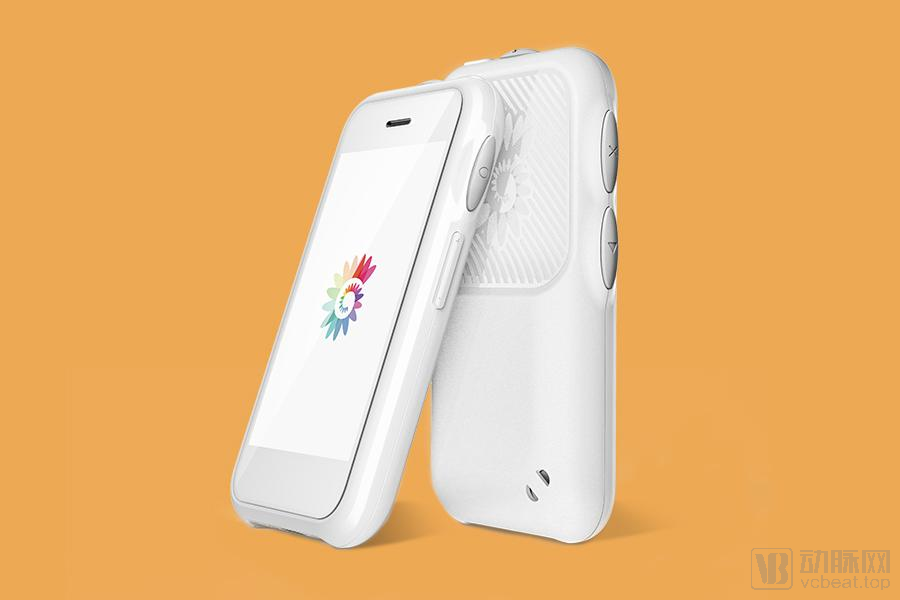
Hi Xiaobao Schematic Diagram
As a home-based intervention aid for children, Hi Xiaobao is grounded in Applied Behavior Analysis (ABA) theory and offers a one-stop, closed-loop service encompassing ability assessment, intervention implementation, data recording, and outcome monitoring. Based on the developmental norms of typically developing children aged 0–7 and tailored to each child’s individual circumstances, the product identifies appropriate training goals and delivers customized home intervention plans.
In terms of content, Hi Xiaobao covers nine major domains: life safety, self-care skills, emotional and psychological well-being, observation and imitation, conceptual logic, habits and routines, social communication, play-based interaction, and academic skills. It also features tiered competency levels within each domain, enabling parents to select appropriate training materials tailored to their child’s needs, thereby maximizing strengths and addressing weaknesses. Currently, Hi Xiaobao is available for limited pre-sale on the Taobao platform.
Evidently, prior to the launch of Hi Xiaobao, PKUCare Brain Health had already established the overarching framework for home-school co-education.
The launch of "Hi Xiaobao" represents, on one hand, the comprehensive integration of PKUCare Brain Health’s online and offline commercial ecosystems, showcasing its multi-platform, cross-scenario operational capabilities; on the other hand, it reflects the continuous expansion, integration, and systematic evolution of PKUCare Brain Health within the home-school landscape.
Regarding plans for the next phase, Wang Lei stated that in 2019, PKUCare Brain Health, in collaboration with Peking University Health Science Center and Peking University Sixth Hospital, jointly established China’s first rehabilitation therapist training system, “A-PKU.” This initiative defined the standards for professional rehabilitation therapists and cultivated outstanding rehabilitation talent for a number of rehabilitation institutions. In 2020, PKUCare Brain Health will continue to drive “industry empowerment,” further partnering with universities to foster high-caliber talent for the sector, assist institutions in improving management efficiency, enrich rehabilitation product offerings, and ensure healthier and more scientific operational workflows for these institutions.
“Over the six years since the establishment of PKUCare Brain Health, we have carefully reviewed every step we took,” Wang Lei concluded. “Have we provided products or services that deliver tangible benefits to our clients? Are these products or services easily accessible to them? Is the pricing acceptable to them? By excelling in these three areas, we believe PKUCare Brain Health will achieve more sustainable and stable growth.”