

Latest Radiotherapy Industry Survey Released: China's Radiotherapy Market Still Requires Deep Cultivation
Recently, the “Survey on the Basic Status of Radiotherapy Personnel and Equipment in Mainland China in 2019” was published in the journal *China Oncology*. This survey constitutes the ninth nationwide industry survey conducted by the Chinese Society of Clinical Oncology (CSCO) Radiation Oncology Branch, and has received support from multiple institutions, including the National Cancer Center, the National Clinical Research Center for Cancer, the Cancer Hospital of the Chinese Academy of Medical Sciences and Peking Union Medical College, the Institute of Cancer and Basic Medicine of the Chinese Academy of Sciences, Sichuan Cancer Hospital, Zhejiang Cancer Hospital, Peking University Third Hospital, and Beijing Quanyu Medical Technology Group Co., Ltd.
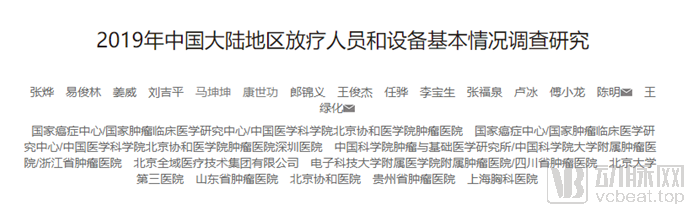
Participating Institutions and Experts in This Survey
A survey revealed that in 2018, a total of 1,463 institutions in mainland China provided radiotherapy services, employing 29,096 staff members. The ratio of radiation oncologists to medical physicists continued to decline, reaching 3.51:1, while the annual number of treated patients increased by 37%. Although the number of radiotherapy equipment units continued to grow, the national availability of 1.5 units per million population remained below the World Health Organization’s recommendation of 2–4 units, and significantly lower than the 6–12 units per million population observed in developed countries and regions.
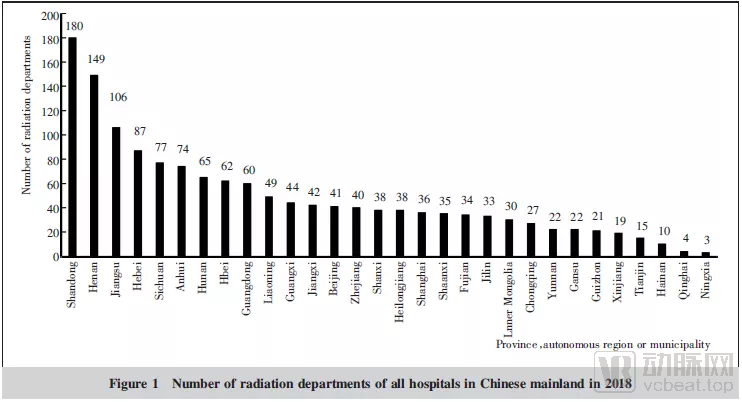
Distribution of Radiotherapy Facilities in Mainland China
From the perspective of radiotherapy technologies, mainstream techniques such as 3D conformal radiotherapy (3D-CRT) and static intensity-modulated radiotherapy (IMRT) have gradually become widespread. Newer radiotherapy technologies, including volumetric modulated arc therapy (VMAT), stereotactic body radiotherapy (SBRT), and TomoTherapy (TOMO), have shown a steady increase compared to previous surveys. Currently, five institutions have either implemented or are preparing to implement proton and heavy ion therapy.
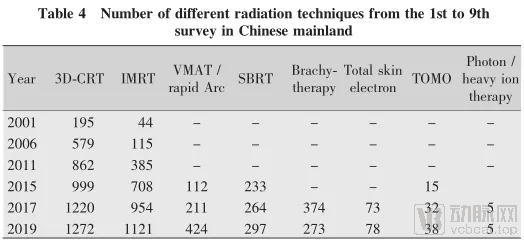
Application of Radiotherapy Technologies
It is understood that radiotherapy centers capable of delivering advanced radiation therapy techniques are predominantly concentrated in tertiary Grade A hospitals and specialized oncology hospitals. Most prefecture-level and county-level hospitals either lack radiotherapy centers or operate with outdated technologies. Due to multiple factors—including uneven distribution of high-quality radiotherapy resources, shortages of radiotherapy equipment, and lagging technological capabilities—nearly 60% of cancer patients in China who should receive radiation therapy fail to obtain timely and effective treatment. This directly impacts the overall five-year survival rate of cancer patients in the country.
Currently, malignant tumors (cancer) have become one of the major public health issues seriously threatening the health of the Chinese population. Over the past decade, the incidence rate of malignant tumors has maintained an annual increase of approximately 3.9%, while the mortality rate has risen by 2.5% annually. In contrast, there remains significant room for growth in the number of radiotherapy facilities, radiotherapy equipment, radiotherapy professionals, and the level of radiotherapy technology; thus, the radiotherapy market still requires in-depth development.
The survey also highlights the need to address disparities among provinces and cities within China, optimize the allocation of radiotherapy resources more rationally, narrow regional gaps in radiotherapy access across the country, and effectively enhance both the accessibility of radiotherapy and its role in cancer treatment, thereby supporting the Healthy China strategy.