

Abov Medical Advances on STAR Market Amid Growing Opportunities for Import Substitution in China's Ophthalmic Market
On May 22, 2020, the 26th review meeting of the Science and Technology Innovation Board (STAR Market) Listing Committee in 2020 was convened to deliberate on the initial public offering (IPO) application of Aierbode (Beijing) Medical Technology Co., Ltd. Behind Aierbode’s successful listing on the STAR Market lies the story of import substitution in China’s ophthalmic surgical market, evolving from nothing to something, and from mid-range to high-end products.
Aierbode’s main products cover two major fields: ophthalmic surgery and optometry. The company primarily targets cataracts and refractive errors, the two major categories of eye diseases that cause blindness and visual impairment. Its core product in the surgical field is intraocular lenses (IOLs), while its core product in the optometry field is orthokeratology lenses, along with a series of supporting products developed and produced around these two core offerings. Among them, sales of intraocular lenses account for more than 90% of the company’s revenue.
Aierbode founder Dr. Jiangbing Xie, who holds a Ph.D. in Science from the University of California, Davis, is a senior engineer with professor-level credentials and previously worked at a world-renowned ophthalmic medical device company. In 2010, Jie Jiangping returned to China to establish Aierbode.
In an interview, Xie Jiangping highlighted the primary reason for founding Aierbode: China is a country with a high prevalence of cataracts, yet at that time, 30% of cataract surgeries in China still relied on outdated rigid intraocular lenses that had been phased out abroad, while all soft foldable intraocular lenses were entirely dependent on imports. Only by achieving domestic production of high-end intraocular lenses could prices be reduced, enabling more people to access high-quality products.
In the early days of its founding, Aierbo Nuode was not large in scale. Dr. Wang Zhao, a core R&D member, mentioned in an interview that when she chose to join Aierbo Nuode to develop intraocular lenses, the company had fewer than six employees, including the cleaning staff.
Over the past decade, Aierbode has broken the import monopoly on high-end industry products by leveraging intraocular lenses (IOLs) as a breakthrough point, and has established two major product lines: surgical and optometric. It has become the first domestic manufacturer of high-end refractive intraocular lenses. In 2019, Aierbode’s revenue reached RMB 190 million, with a net profit of RMB 65.75722428 million.
As an investor in Aierbo Nide’s Series D+ financing round, Jin Xuekun, Vice Chairman and Founding Partner of Mingfeng Capital, stated: “As a leading upstream company in the ophthalmology sector, Aierbo Nide possesses exceptional research and product development capabilities in the field of biomaterials, which can be applied not only to ophthalmology but also to medical aesthetics. Internationally, many ophthalmic giants offer medical aesthetic products, such as Johnson & Johnson. Meanwhile, numerous upstream medical aesthetics companies also maintain ophthalmic product lines; for instance, Allergan, a well-known leader in medical aesthetics recently acquired by AbbVie for over $60 billion, also has ophthalmic products. Mingfeng Capital’s investment in Aierbo Nide is driven by the promising prospects of applying its biomaterials R&D capabilities to the medical aesthetics sector, marking a strategic step in Mingfeng’s layout within the medical aesthetics industry.”
The ophthalmic medical device market, in which Aierbode operates, is the fifth-largest segment of the global medical device industry. According to the report "EvaluateMedTech® World Preview 2018, Outlook to 2024," the global market size reached $27.7 billion in 2017, with a compound annual growth rate (CAGR) of 6.2% from 2017 to 2024.
According to the prospectus of Aierbode, ophthalmology comprises two major sectors: ocular surgery and vision care. The ocular surgery sector includes products, consumables, and equipment for various ophthalmic surgical procedures (such as cataract surgery, vitreoretinal surgery, glaucoma surgery, and refractive surgery). The vision care sector encompasses contact lenses and various types of eye drops.
In 2017, the ophthalmic surgery market was valued at approximately $9 billion, with a projected compound annual growth rate (CAGR) of 4% from 2018 to 2023. Within this segment, implantable products, consumables, and equipment/other categories were sized at roughly $3 billion, $4 billion, and $2 billion, respectively. In the same year, the vision care market was valued at approximately $14 billion, also expected to grow at a CAGR of 4% from 2018 to 2023, with contact lenses and eye health products accounting for about $8 billion and $6 billion, respectively.
Among the subsectors, implantable products (such as intraocular lenses and glaucoma surgical devices) are projected to grow at a rate of 6%, making them the fastest-growing segment.
In terms of the specific product distribution in ophthalmic surgery, intraocular lenses (IOLs) constitute the primary segment within implantable products, with monofocal IOLs currently holding the largest market share at over 50%. Among consumables, cataract surgery consumables account for the largest proportion, followed by retinal surgery consumables, and finally refractive surgery consumables. In the equipment and other categories, diagnostic imaging devices hold the largest share, followed by cataract surgery equipment, retinal surgery equipment, and refractive surgery equipment.
In terms of the competitive landscape, the top four companies in the global ophthalmic surgery market are Alcon (United States), Johnson & Johnson Vision (United States), Zeiss (Germany), and Bausch + Lomb (United States).
High-value ophthalmic consumables constitute a high-barrier industry characterized by significant entry thresholds and a relatively high degree of market concentration. Currently, the three global giants in ophthalmology—Alcon (Novartis), Abbott Medical Optics, and Bausch & Lomb (B&L)—monopolize 80% of the global market share for intraocular lenses.
In China’s ophthalmic surgery market, the proportion of the aging population (aged >65) reached 10.8% in 2016, and the number of people aged over 60 in China is projected to exceed 400 million by 2050. The elderly are a high-risk group for cataracts; among those aged 60 to 89, the incidence rate of cataracts is 80%, while it exceeds 90% in individuals aged 90 and above. The number of cataract patients was estimated based on an average prevalence rate of 80% among the population aged 65 and older. Although China has a large base of cataract patients, the cataract surgical rate remains low, indicating substantial potential for growth in cataract surgery.
According to data from the China Blindness Prevention and Treatment Network, the number of cataract surgeries performed in China increased from 1.4 million in 2012 to 3.62 million in 2018. In terms of treatment approaches, cataract surgery is increasingly shifting from vision-restorative procedures to refractive procedures. The use of mid-to-high-end intraocular lenses (IOLs), which can improve visual quality, is growing; however, these products involve higher out-of-pocket costs for patients, face more restrictions under medical insurance coverage, and thus have a relatively smaller user base.
Although the market is growing rapidly, a major issue in China’s ophthalmic market is that domestically produced intraocular lenses (IOLs) remain at the low end of the industry value chain. These products have low added value and exhibit limited substitutability for high-end imported alternatives.
In 2014, Aierbo Nuode launched a foldable intraocular lens with high-end refractive capabilities and independent intellectual property rights, breaking the monopoly of imported products in the technology and market for high-end intraocular lenses. Aierbo Nuode is the first domestic manufacturer of high-end refractive intraocular lenses and one of the leading manufacturers of foldable intraocular lenses in China.
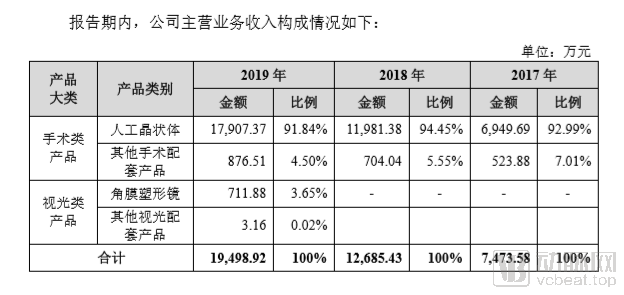
According to Aierbode's prospectus, its primary revenue sources are surgical intraocular lenses and orthokeratology lenses for optometric use.
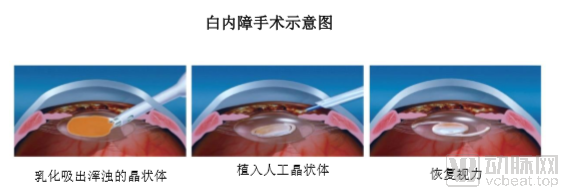
Intraocular lenses are artificial lenses implanted into the eye to replace the natural crystalline lens, thereby correcting or improving vision. Used primarily in the treatment of cataracts, intraocular lenses are the most widely used artificial organs and implantable medical devices worldwide.
Current applications of intraocular lenses (IOLs) mainly fall into three categories: one type is used to replace the cloudy natural lens in cataract patients, targeting those undergoing cataract surgery; another type refers to orthokeratology lenses for controlling and correcting myopia; and the third type comprises Implantable Collamer Lenses (ICLs) for myopia treatment, serving patients seeking refractive surgery. Aibote’s mid-range and high-end intraocular lenses are primarily used for surgical treatment of cataracts.
Source: Aierbode Prospectus
According to sales data, Aierbo Nuode intraocular lenses accounted for over 90% of the company's total revenue, with a sales volume of 676,911 units.
Currently, Aierbo Nuode’s highest-selling products remain its mid-range offerings, while the pace of import substitution for high-end products is accelerating. From 2017 to 2019, the product types with the highest shares in both revenue and sales volume were the mid-range models A1-UV/A2-UV/ALD; in 2017–2018, their revenue share exceeded 85%, and their unit sales share surpassed 90%.
Aibonuo’s mid-range A2-UV intraocular lens (IOL) product, primarily used in low-cost poverty-alleviation cataract surgeries, recorded sales volumes of 86,500 units, 162,500 units, and 175,100 units in 2017, 2018, and 2019, respectively, accounting for 49.02%, 52.86%, and 42.52% of the company’s total IOL sales during those years. In its prospectus, Aibonuo also noted that since the second half of 2018, the growth rate of low-end cataract surgeries has experienced a phased slowdown due to the transitional adjustments resulting from the national integration of urban resident basic medical insurance and the new rural cooperative medical scheme, as well as optimizations in healthcare expenditure structures implemented by certain provinces and regions.
After 2018, Aierbo Nuode launched high-end intraocular lens (IOL) products, leading to increased product diversification. Although the revenue and sales volume shares of its mid-range products (A1-UV/A2-UV/ALD) declined relatively, they each remained above 70%, continuing to be the core products and maintaining a growth trend compared to the previous year.
After the high-end AQBH/AQBHL products were launched in 2018, they quickly gained market recognition, with revenue and sales volume maintaining approximately fourfold growth in 2019. In 2019, the sales volume of the high-end AQBH/AQBHL products reached 58,720 units, accounting for 13.02% of the company’s intraocular lens sales.
Another high-end product line, Toric, is designed for astigmatism correction. Due to the relatively complex surgical procedure and the high skill requirements for surgeons, its sales volume grew slowly after its market launch in 2017. However, as it accounts for a small proportion of total revenue, its impact on the company’s overall revenue fluctuations is minimal.
Aibonuo’s primary product in the field of optometry is rigid gas-permeable contact lenses for orthokeratology (hereinafter referred to as “orthokeratology lenses,” commonly known as OK lenses, i.e., Orthokeratology Lenses). Orthokeratology lenses are one of the myopia correction devices currently available on the market; they not only correct vision but also help control the progression of refractive error. Extensive clinical data demonstrate that orthokeratology lenses have a proven efficacy in controlling axial myopia progression in children and adolescents, with the target user population primarily consisting of children and teenagers.
Previously, VCBeat conducted an in-depth analysis of the orthokeratology lens market in China; for details, please seeOrthokeratology Lenses: Rapid Growth in the Chinese Market with Scale Potentially Reaching RMB 20 Billion, Yet Three Major Challenges Remain。
Aierbo Nuode and Oupu Kangshi are currently the only two companies in mainland China that hold registration certificates for orthokeratology lenses. In 2019, Aierbo Nuode's independently developed Pnuotong orthokeratology lens was approved for market launch.
According to the prospectus data, Aierbode's orthokeratology lenses were launched in 2019, with a production volume of 85,927 units and sales volume of 23,237 units.
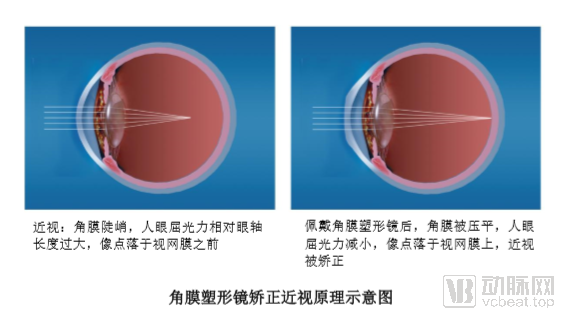
Image source: Aierbode's prospectus
Aibonode has also achieved innovative breakthroughs in its orthokeratology lens products. Compared with similar products, the main difference lies in the use of high-oxygen-permeability materials, allowing the eyes to receive ample oxygen while wearing the orthokeratology lenses.
Aierbode has achieved breakthroughs in multiple high-end products in the field of ophthalmic surgical medical devices. These achievements are inseparable from the dedication of its R&D personnel and continuous investment in research and development. Aierbode's R&D expenditure as a percentage of revenue was 21.87%, 15.51%, and 14.68% in 2017, 2018, and 2019, respectively.
From the perspective of current market share, Aierbo Medical has not yet reached the market ceiling. In the future, Aierbo Medical will also exert efforts in the upstream industrial chain of intraocular lenses.
According to the STAR Market application materials submitted by Aierbode (EyeBond) to the Shanghai Stock Exchange, the company previously sourced its orthokeratology lens materials primarily from Contamac but initiated in-house material development in 2017. Comparative testing against externally purchased materials demonstrated that the self-developed materials better meet the consistency evaluation standards. The company has currently obtained approval from the drug regulatory authorities to use its self-developed raw materials for the production of orthokeratology lenses.
Meanwhile, since 2017, Aierbode has been expanding into overseas markets, with its A1UL/AQUX/AQBXL product series gradually gaining recognition from international customers. Both revenue scale and sales volume have maintained growth rates exceeding 100%. Currently, Aierbode’s overseas market presence covers countries including Germany, Greece, Luxembourg, Pakistan, and Thailand.
The company’s medium- to long-term development goal is to develop a comprehensive portfolio of ophthalmic medical products, including implantable ophthalmic consumables, surgical instruments, surgical equipment, vision care products, and ophthalmic pharmaceuticals. Covering a wide range of indications such as cataracts, refractive errors, glaucoma, and fundus diseases, the company aims to become an innovative leading enterprise in China’s ophthalmic healthcare sector.
Dr. Wang Zhen, Partner at Mingfeng Capital, stated: “China’s ophthalmology market holds immense potential. According to incomplete statistics, the current market size has exceeded RMB 80 billion, with an annual growth rate of approximately 10%. Cataract treatment and myopia management in adolescents are core segments within the ophthalmology sector.”
Aierbode initially started with intraocular lenses (IOLs) and, within just ten years since its establishment, rapidly built a product portfolio that includes surgical products such as IOLs, IOL implantation systems, and ophthalmic viscosurgical devices (OVDs), as well as vision care products including orthokeratology lenses. Notably, Aierbode’s soft IOL is the first high-end domestic brand in China to receive regulatory approval. Amid the ongoing trend of domestic products replacing imports and soft IOLs supplanting rigid IOLs, Aierbode’s IOLs hold substantial market potential. Meanwhile, its independently developed orthokeratology lens (Punuo Tong) is the second domestically produced orthokeratology lens approved in China, after OK Vision, indicating promising market prospects.
In addition to products with genuine core competitiveness and a rich product portfolio, Aierbode leverages the commonalities among its products in materials, optical design, and manufacturing processes, while sharing sales channels, to effectively increase revenue and reduce overall costs.
About Mingfeng Capital
Mingfeng Capital primarily focuses on investments in consumer healthcare, particularly targeting high-value enterprises in upstream novel dermal fillers and consumables within the medical aesthetics sector, as well as midstream service providers. The firm has successfully invested in a portfolio of high-quality companies, including Aierbo Nuode (Aibor Medical) and Chengdu Badachu Plastic Surgery Hospital.
Reference: Where Is the Path Forward for the Intraocular Lens Industry, Monopolized by Foreign Brands? — Yi Tou
Rapid Growth in China’s Orthokeratology Lens Market, with Scale Potentially Reaching RMB 20 Billion, Still Faces Three Major Challenges – VCBeat
Aierbo Nuode Prospectus