

Wuhan Institute of Advanced Technology Submits IPO Prospectus Highlighting 'Jingjie' Nano Anti-Fog Spray Developed During Pandemic
The surface of a material is not only the part most frequently subjected to physical contact in our daily lives, but it also determines the material’s properties to a certain extent. Therefore, research and improvement of material surfaces can enable materials to serve our lives in a healthier and more convenient manner. In recent years, through research on processes such as etching, modification, and coating of material surfaces, several novel surface materials have been gradually developed. These materials can enhance the performance of the substrate in multiple aspects, including wettability, chemical stability, mechanical wear resistance, and biocompatibility.
Wuhan Institute of Advanced Technology, Chinese Academy of Sciences (hereinafter referred to as “Wuhan IAT”) was jointly established by the Shenzhen Institutes of Advanced Technology, Chinese Academy of Sciences, the Wuhan Municipal People’s Government, and the Wuhan Economic and Technological Development Zone. It is the first corporate legal entity-type novel R&D institution established in Wuhan by a research institute under the Chinese Academy of Sciences.
The Center for Metasurface Materials and Equipment (SMEC, hereinafter referred to as the “Metasurface Center”) at Wuhan Advanced Institute is dedicated to tackling key technical challenges and advancing the engineering implementation of materials and equipment for surface coatings and etching. In recent years, the novel thin-film or coating materials and their supporting equipment developed by the Metasurface Center have endowed ordinary material surfaces with superior wettability, optical properties, and microbial disinfection capabilities.
Nano Anti-Fog Spray
During the pandemic, factors such as the poor breathability of protective suits and cold weather made it extremely easy for goggles and eyeglasses to fog up on fully geared healthcare workers, significantly impairing medical procedures. To prevent lens fogging, some doctors applied dish soap or povidone-iodine, while others used anti-fog sprays designed for glass; however, most of these methods proved ineffective. Consequently, medical staff had to treat patients with blurred vision, with some reporting that they “could not even clearly see blood vessels when administering injections.”
Upon learning of this situation, the Metasurface Center at Wuhan Institute of Advanced Technology leveraged its inherent strengths, with its technical team launching an urgent effort to overcome key technological challenges.Within just one week, the “Nano Anti-Fog Spray” was successfully developed, and pilot-scale production, assembly of the filling production line, and establishment of relevant enterprise standards were completed.
This novel anti-fog coating functions by constructing a specialized molecular structure of nonionic surfactants, which adsorb water molecules from the air and reduce their surface tension. This process decreases the contact angle of water on the glass surface, allowing water molecules to spread across the glass and form an ultra-thin, transparent water film. By preventing light scattering, this mechanism effectively provides anti-fog protection.
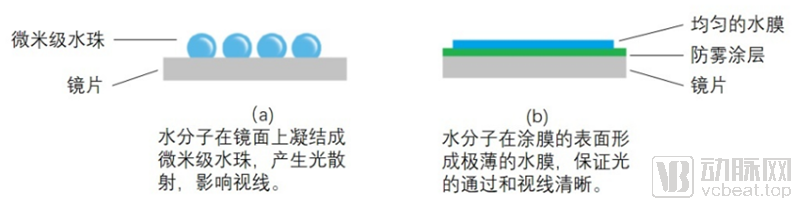
Nano Anti-Fog Coating
(Image source: Official website of Wuhan Institute of Advanced Technology)
Compared with similar products,The "Nano Anti-Fog Spray" developed and manufactured by Wuhan Advanced Institute not only ensures at least 6 hours of fog-free performance under the rigorous working conditions in hospitals, but is also suitable for various lens surfaces, including resin, glass, and plastic., ensuring that healthcare workers are not affected by fogging when wearing protective equipment, allowing them to engage more focusedly and safely in the fight against the virus.
Following the commencement of mass production, Wuhan Institute of Advanced Technology donated over 10,000 bottles of anti-fog spray to nearly one hundred hospitals on the front lines of epidemic prevention and control, including Wuhan No. 1 Hospital and Wuhan Fangcang Hospital, receiving highly positive feedback.
Currently, this anti-fog technology has been successfully implemented in various product forms, including wipes, lens cloths, and sprays. This broader availability enables people to more effectively address safety, hygiene, and convenience issues caused by fogging on car windows, bathroom glass, eyeglasses, and other surfaces.
Antiviral Coating
In addition to the “nano anti-fog spray,” a novel antiviral coating based on smart microcapsule technology, developed by the Metasurface Center of Wuhan Institute of Advanced Technology, also demonstrated its efficacy during this epidemic.
Microcapsules are particles of micron or even nanometer scale, fabricated by encapsulating specific solid, liquid, or gaseous core materials within an organic or inorganic shell. Microcapsulation preserves the original chemical properties of the target core material entirely; it subsequently allows the functionality of the target material to be externally manifested again through gradual release triggered by certain external stimuli or via controlled-release mechanisms, or alternatively, leverages the shielding effect of the capsule wall to protect the core material.
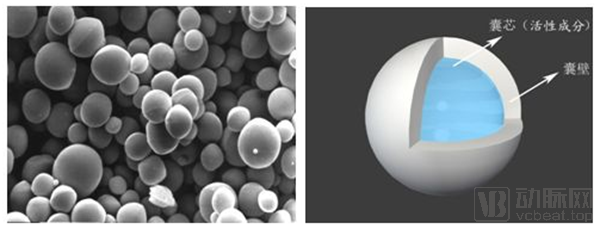
Intelligent Microcapsules
(Image source: Official website of Wuhan Institute of Advanced Technology)
In fact, whether during a pandemic or not, the primary role of antiviral coatings is to safeguard public health and prevent the occurrence of infectious diseases. The disinfecting efficacy of traditional disinfectants diminishes as their active ingredients volatilize or become inactive. In contrast, this novel antiviral coating, which utilizes smart microencapsulation technology, differs from traditional disinfectants.After a single application, it can continuously maintain rapid disinfection of specific microorganisms on the material surface, with effective concentrations lasting for several days or even up to one month.。
The Metasurface Center’s ability to achieve multiple technological and product breakthroughs in a short period after its establishment, and to rapidly complete R&D and production during the pandemic, is attributable to the research team’s outstanding R&D capabilities and resilient professional ethos, as well as the R&D project management model implemented by the Wuhan Institute of Advanced Technology.
The R&D projects at the Wuhan Advanced Institute are divided into two phases: technological R&D and product R&D. For an industrial technology research institute focused on translating achievements into practical applications, the significance of advanced technologies cannot be fully realized unless they result in products with practical value. In an interview with VCBeat, Dr. Yang, Director of the Metasurface Center at the Wuhan Advanced Institute, stated that technological R&D and product R&D have distinct focuses, and team members each possess their own areas of expertise. Scientific project management is essential to enhance R&D efficiency.
Generally, Wuhan Advanced Institute implements R&D project management tailored to the distinct characteristics of technological research and product development.
Technical R&D focuses on breakthroughs in core technologies, is not confined to any single product form, adopts more flexible management approaches, grants researchers sufficient autonomy, and stimulates their creativity. Product R&D emphasizes the application of core technologies and the enhancement of user experience, with clear objectives and detailed R&D and product roadmaps.
Technology R&D provides the underlying core technical support for product R&D, while product R&D feeds back market demands to technology R&D; the organic integration of the two forms a comprehensive management system.Furthermore, by conducting comprehensive market research, rigorous data analysis, and precise project feasibility studies, we strictly select the most viable projects to ensure the success rate of R&D initiatives from the outset.
Currently,The Metasurface Research Center at the Wuhan Institute of Advanced Technology has five products in production, three of which are undergoing a new round of technological iteration.。
In addition to the Metasurface Research Center, Wuhan Advanced Institute comprises three other research centers: the Biomaterials Research Center (BMC), the Electronic Information Materials Research Center (EMC), and the Prospective Materials Research Center (PMC). Each center conducts its own specialized R&D projects and possesses unique technologies, including gene therapy vectors, basalt fiber, two-dimensional materials, and plasma technology and equipment. Synergies among these distinct technologies, as well as between technologies and equipment, foster mutual advancement and drive the development of new technologies and products, representing a major advantage of the Wuhan Advanced Institute.
Currently, the Metasurface Center at Wuhan Institute of Advanced Technology is investigating how to integrate wettability and antiviral properties. In an interview, Dr. Yang noted that viruses can only survive under moist conditions; therefore, combining waterproofing and antiviral technologies for synergistic effects would yield better outcomes. Furthermore, the Metasurface Center is focusing its technical efforts on enhancing coating materials to achieve superior anti-fogging and waterproofing performance, thereby improving usability and extending durability.
In an interview with VCBeat, Dr. Kang Yihong, General Manager of Wuhan Advanced Institute, stated that their next step is to further expand the market by establishing project collaborations with enterprises. Meanwhile, the Metasurface Research Center is in the process of registering its own brand, “Jingjie Technology.” It is anticipated that a variety of products under this brand will soon enter the market, enabling the broader application of the center’s R&D achievements in various aspects of daily life.