

Hangzhou Neoantigen Biotech Announces First-in-Class Pan-Cancer Clinical Data of iNeo-Vac-P01 in Clinical Cancer Research
VCBeat (WeChat ID: vcbeat) has learned that on May 21, 2020, Hangzhou NeoAntigen Biotechnology Co., Ltd. and the Department of Medical Oncology at Sir Run Run Shaw Hospital, Zhejiang University School of Medicine, jointly published the world’s first clinical trial of personalized neoantigen peptide vaccine monotherapy for patients with advanced solid tumors across various cancer types. This milestone was achieved after several years of clinical collaboration. The drug, iNeo-Vac-P01, was independently developed by the team. Clinical trial results demonstrated a high disease control rate and significantly prolonged patient survival. The related findings have been published in the prestigious international clinical medical journal *Clinical Cancer Research*, under the title “A pan-cancer clinical study of personalized neoantigen vaccine monotherapy in treating patients with various types of advanced solid tumors.”
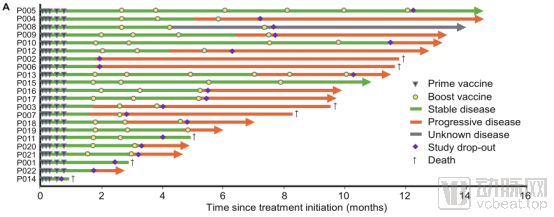
This clinical study enrolled 22 patients with advanced pan-cancer solid tumors who had failed standard therapy. Based on high-throughput sequencing data, the iNeo artificial intelligence vaccine design platform, along with a personalized peptide drug manufacturing and quality control system, was utilized to customize the individualized peptide vaccine iNeo-Vac-P01 for each patient. Comprehensive follow-up monitoring was provided through technical platforms for immune response assessment and tumor burden monitoring after multiple subcutaneous injections.
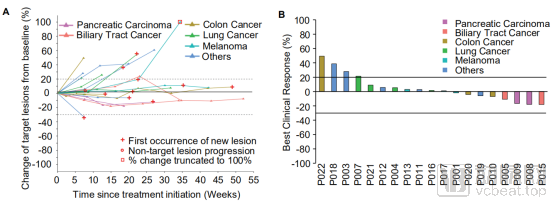
90.9% of the subjects experienced no serious adverse reactions; 38.1% of the subjects showed a reduction in lesion size during treatment with the neoantigen peptide vaccine, with a maximum reduction rate of 16.7%; this demonstrates the safety and efficacy of the personalized vaccine.
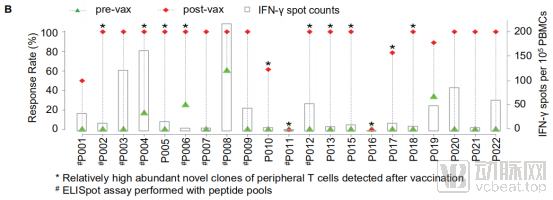
ELISpot assays of peripheral blood immune cells from patients after treatment demonstrated that 80% of the iNeo-Vac-P01 peptide vaccines elicited antigen-specific immune responses, thereby validating the accuracy of the iNeo AI platform in neoantigen screening and the efficacy of its vaccine design.
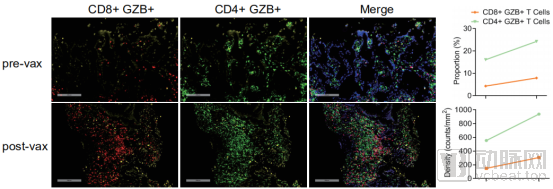
Furthermore, pan-immunohistochemical analysis of patient samples before and after treatment revealed a substantial increase in the number and proportion of tumor-infiltrating lymphocytes, particularly activated CD8+ T cells and CD4+ T cells. This demonstrates that the iNeo-Vac-P01 peptide vaccine significantly improved the tumor immune microenvironment, converting cold tumors into hot tumors.
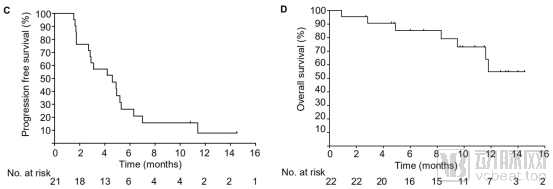
Clinical study results demonstrated that monotherapy with iNeo-Vac-P01 achieved a disease control rate (DCR) of 71.4% (15/21), with a median progression-free survival (PFS) of 4.6 months (95% CI, 2.5–5.2). The median overall survival (OS) has not yet been reached, and the 12-month OS rate was 55.1% (95% CI, 25.9%–76.9%). Furthermore, potential biomarkers predictive of therapeutic efficacy were identified through TCR sequencing, T-cell subset analysis, and cytokine profiling.
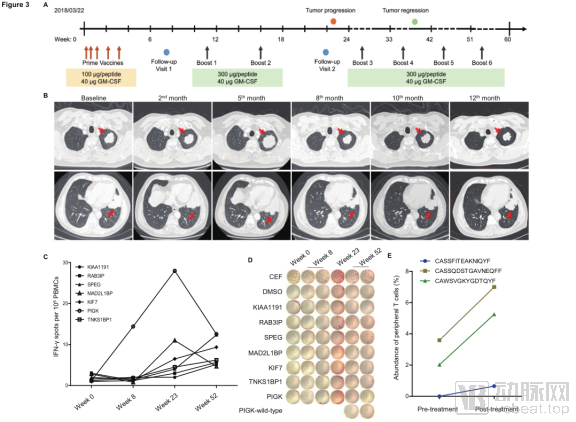
Case Report 1: Patient 005, male, 63 years old, with advanced cholangiocarcinoma.
First diagnosed with intrahepatic cholangiocarcinoma in 2013;
Surgical resection was performed in June 2013;
Postoperative chemotherapy in April 2014;
April 2017: Follow-up CT confirmed tumor recurrence and metastasis;
Targeted therapy with apatinib from May to November 2017;
Since November 2017, participated in the PD-1 clinical trial (IBI308), received 6 cycles of PD-1 therapy, and withdrew from the clinical trial due to disease progression;
In late March 2018, the patient was enrolled at Sir Run Run Shaw Hospital, Zhejiang University School of Medicine, to receive the personalized neoantigen peptide vaccine iNeo-Vac-P01; a total of 11 injections were administered by May 2019.
In August 2018, a follow-up CT scan revealed that the maximum diameter of the target lesion was 122.9 mm, representing a significant increase compared to the baseline measurement (89.1 mm);
In January 2019, a follow-up CT scan revealed that the maximum diameter of the target lesion was 75.4 mm, representing a 38.6% reduction in tumor size compared with progressive disease (PD) measured at 122.9 mm. During treatment with the personalized neoantigen peptide vaccine iNeo-Vac-P01, the patient experienced a typical case of pseudoprogression associated with immunotherapy. Throughout the treatment course, an immunology-related therapeutic response was observed; compared with baseline levels, interferon-gamma (IFN-γ) secretion in peripheral blood significantly increased post-treatment, while the infiltration of activated CD8+ T cells and activated CD4+ T cells around the tumor tissue increased by 11.9-fold and 7.3-fold, respectively.
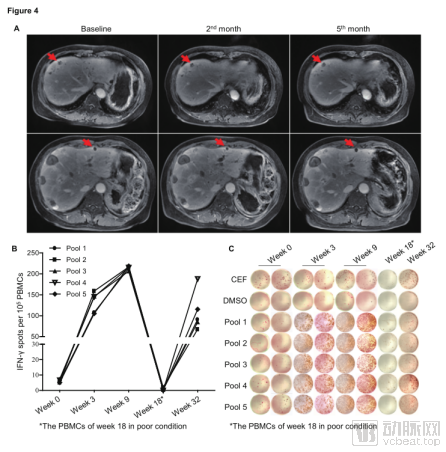
Case Report 2: Patient 008, Female, 65 Years Old, with Advanced Pancreatic Cancer.
Pancreatic cancer was first diagnosed on July 19, 2016;
On July 25, 2016, the patient underwent "distal pancreatectomy and splenectomy," with postoperative pathology revealing "moderately to poorly differentiated adenocarcinoma of the pancreatic body and tail." Postoperatively, the patient completed six cycles of single-agent gemcitabine chemotherapy.
On June 28, 2017, a follow-up contrast-enhanced magnetic resonance imaging (MRI) scan of the upper abdomen revealed recurrence of liver metastases;
On July 6, 2017, underwent chemotherapy and radiofrequency ablation (RFA) for liver metastases;
Received the first injection of the personalized neoantigen peptide vaccine iNeo-Vac-P01 on April 6, 2018;
Imaging assessments at 2 and 4 months post-treatment demonstrated a significant reduction in liver metastases compared to baseline. Peripheral blood IFN-γ secretion was significantly increased in the patient after treatment. In vitro ELISpot assays revealed specific IFN-γ secretion in the patient’s peripheral blood prior to treatment, suggesting that previous radiofrequency ablation may have led to the release of tumor neoantigens. Following treatment, there was a significant increase in activated CD8+ and CD4+ T cells infiltrating the tissue surrounding the tumor, with increases of 54.6% and 66.4%, respectively.
This study represents the world’s first clinical trial of a neoantigen peptide vaccine for patients with advanced solid tumors who have failed standard pan-cancer therapies. Unlike international clinical protocols that combine such vaccines with PD-1 inhibitors, this trial demonstrated the efficacy and safety of iNeo-Vac-P01, a neoantigen peptide vaccine independently developed by our team, as a monotherapy. These findings will accelerate research into neoantigen-based precision immunotherapy and propel the field into the customized 2.0 era of immunotherapy.