Ten Key Healthcare Directions Highlighted in 2020 Two Sessions Proposals: Insights from 50 Medical and Health-Related Submissions
The 2020 “Two Sessions,” postponed due to the impact of the COVID-19 pandemic, finally convened—on May 21 and 22, the Third Session of the 13th National Committee of the Chinese People’s Political Consultative Conference (CPPCC) and the Third Session of the 13th National People’s Congress (NPC) opened successively in Beijing.
Due to the impact of the pandemic, this year’s “Two Sessions” underwent several adjustments, such as a shortened session duration, no invitation for foreign journalists to come to Beijing for on-site reporting, and the adoption of non-contact methods—including online platforms, video conferences, and written materials—for interviews and press releases.
As such, this year’s “Two Sessions” rank among the most distinctive in history, drawing particular attention. Which aspects of healthcare captured the interest of the attending deputies and committee members? And which healthcare subsectors are entrepreneurs focusing on? VCBeat (WeChat ID: Vcbeat) has compiled the following summary of the motions, recommendations, and proposals submitted by the participating deputies and committee members.
According to VCBeat’s review of public media reports, as of 10:00 p.m. on May 22, 2020, there were 50 proposals and motions related to healthcare submitted during the Two Sessions (one of which was jointly submitted). The deputies and committee members who put forward these proposals and motions came from various sectors, including enterprises (25), medical institutions (11), government agencies (9), health organizations (3), and academic institutions (3).
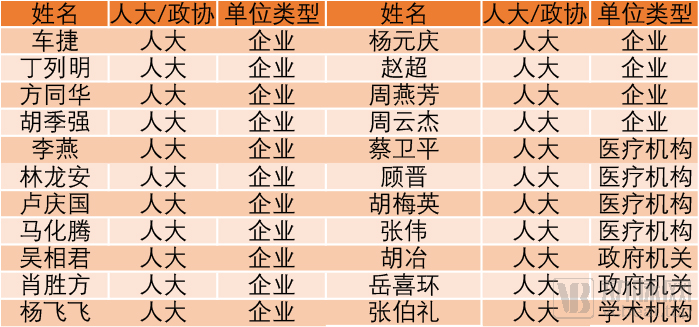
NPC Deputies Who Proposed Healthcare-Related Motions and Suggestions in Public Media Reports (Listed in No Particular Order)
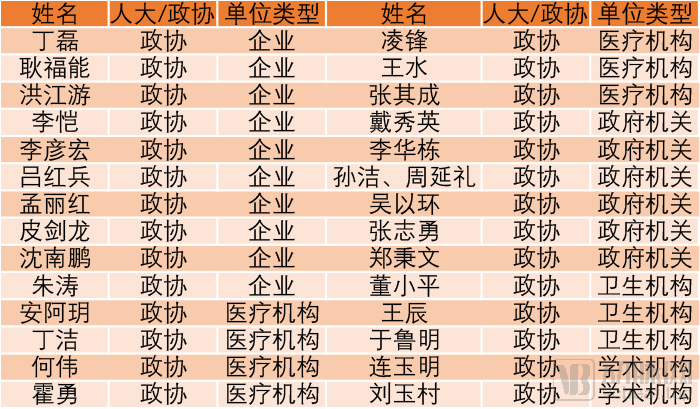
CPPCC Members Who Proposed Healthcare-Related Motions in Public Media Reports (Listed in No Particular Order)
Through systematic organization, we have further categorized the fields addressed by the motions, suggestions, and proposals submitted by the delegates.
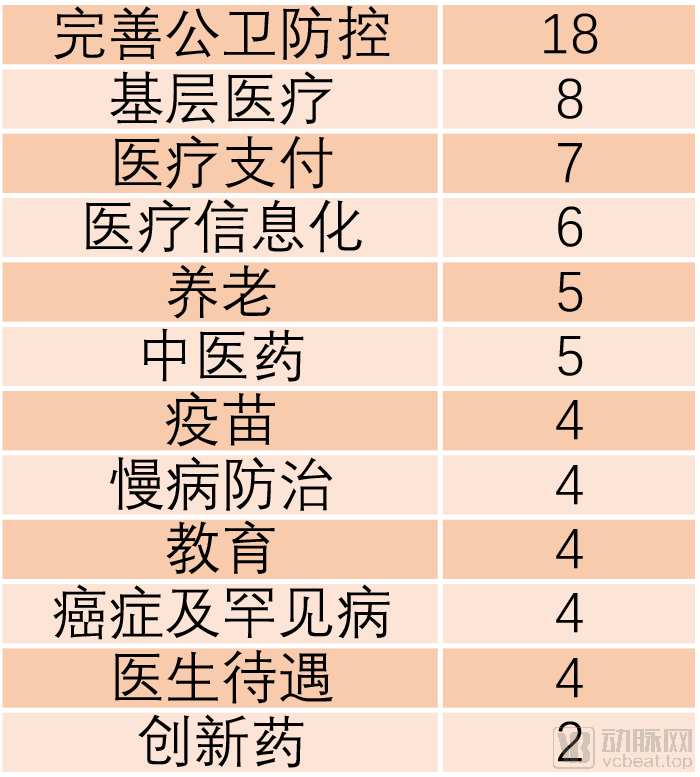
Among these, improving the public health emergency management system was the issue of greatest concern to deputies and committee members, with this area mentioned 15 times. In other words, among the currently disclosed 50 proposals and suggestions related to healthcare, more than one-third pertain to enhancing the public health emergency management system.
We have organized these topics and summarized ten key areas of interest in the healthcare sector:
Improve legislation on major public health emergencies;
Establish a comprehensive epidemic prevention information network and a dual-use prevention and control system for both peacetime and wartime;
Enhance the emergency response capabilities of local governments and medical institutions at all levels;
Accelerate vaccine R&D and ensure vaccine safety;
Empowering healthcare informatization by introducing new technologies in conjunction with “New Infrastructure”;
Strengthen information security and personal privacy protection;
Enhance the standards of medical education and research;
Promote new drug R&D;
Promote the revitalization and development of traditional Chinese medicine, and enhance healthcare security.
1Improving Legislation on Major Public Health Emergencies
China’s “Regulations on Emergency Response to Public Health Emergencies” were promulgated by the State Council on May 9, 2003, and took effect on the same day. However, this administrative regulation has deficiencies in its alignment and implementation with the higher-level law, the “Emergency Response Law.”
In a non-vertical management system, information transmission along the vertical hierarchy is subject to decision-making constraints or restrictions by governments at various levels, making it prone to distortion. Even recommendations and opinions from higher-level health administrative departments may be overlooked, resulting in delays in the implementation of related deployments.
Xiao Shengfang, a deputy to the National People's Congress and President of the Guangdong Lawyers Association, has proposed that deficiencies in the current Regulations on Emergency Response to Public Health Emergencies be amended as soon as possible to provide a legal framework for normalized epidemic prevention and control.
Currently, China has initiated the legislative process in relevant fields. On May 21, Zhang Yesui, spokesperson for the Third Session of the 13th National People’s Congress, stated at a press conference that to improve and strengthen the legal framework for public health, the Standing Committee of the National People’s Congress plans to enact or amend 17 laws and appropriately revise 13 other laws over the current and next year.
2Establish a Comprehensive Epidemic Prevention Information Network and an Integrated Peacetime-Wartime Prevention and Control System
As the sole member of the National Committee of the Chinese People’s Political Consultative Conference (CPPCC) from China’s venture capital industry, Shen Nanpeng, Global Executive Partner of Sequoia Capital, submitted five proposals to the “Two Sessions,” most of which pertained to the healthcare sector, including the establishment of multi-faceted prevention and control mechanisms for infectious diseases, reform of the R&D and approval systems for innovative drugs, and the advancement of medical informatization and intelligent healthcare.
Shen Nanpeng’s proposal argues that China’s national infectious disease emergency response system currently faces four major bottlenecks that urgently need to be addressed: insufficient investment in human, financial, and material resources for infectious disease departments coupled with severe brain drain; inadequate preparedness for hospital-acquired infection prevention and control along with weak technical capabilities; insufficient medical and public health emergency reserves and weak capacity for transitioning between routine and emergency operations; and inadequate dissemination of epidemic prevention and control information.
He recommended repositioning the Department of Infectious Diseases at a strategic level within the healthcare system to comprehensively enhance prevention and emergency response capabilities; actively leveraging technological means to improve hospital-acquired infection prevention; establishing a rigorous, pragmatic, and resilient mechanism for transitioning infectious disease services between routine and emergency modes; and utilizing big data technology to build a distributed data-sharing network for infectious disease reporting based on hospitals and Centers for Disease Control and Prevention.
Ling Feng, a member of the National Committee of the Chinese People’s Political Consultative Conference and professor at Xuanwu Hospital of Capital Medical University, proposed establishing a comprehensive epidemic prevention and control system that is “all-encompassing from top to bottom and side to side,” as well as a health care system featuring “three transformations.”
“Reaching up to the top” refers to establishing an information reporting mechanism that allows for direct reporting of epidemic situations to national leaders; “extending across to the edges” means covering all aspects from port health quarantine to community health and epidemic prevention; “reaching down to the bottom” entails building a six-tier public health system comprising national, provincial, municipal, county, township, and village levels. The “three transformations” in the healthcare system specifically refer to the transitions between routine operations and epidemic response, routine operations and wartime emergency, and routine operations and disaster relief.
Addressing the issue that the role of Centers for Disease Control and Prevention (CDCs) was hindered by institutional mechanisms during the epidemic, Dong Xiaoping, a member of the National Committee of the Chinese People's Political Consultative Conference and Director of the Center for Global Public Health at the Chinese Center for Disease Control and Prevention, suggested that higher-level CDC authorities be temporarily granted certain administrative powers to allocate resources when appropriate. Meanwhile, it is also essential to establish seamless information connectivity between CDCs and hospitals through institutional and systemic reforms.
On May 20, the National Development and Reform Commission (NDRC) released the “Plan for Strengthening Public Health Prevention, Control, and Treatment Capabilities” (hereinafter referred to as the “Plan”), which explicitly emphasizes the principle of “integrating peacetime and emergency operations.” The Plan aims to meet the needs for rapid response, centralized treatment, and supply assurance during emergencies (“wartime”), while fully considering routine responsibilities and operational costs during normal periods (“peacetime”), thereby promoting the reform and development of the public health and disease prevention and control systems.
3Enhance the Emergency Response Capabilities of Local Governments and Medical Institutions at All Levels
As early as during the pandemic, Cai Weiping, a deputy to the National People’s Congress and director of the Department of Infectious Diseases at Guangzhou Eighth People’s Hospital, submitted a proposal calling for the expansion of infectious disease hospitals, the allocation of sufficient medical staff, and the implementation of an “integrated peacetime and emergency response” model.
The background of this proposal is the shortage of beds in infectious disease hospitals in China—according to the standard of one bed per 10,000 people for infectious disease hospitals, the vast majority of Chinese cities fail to meet this requirement.
Cai Weiping believes that, compared with treating infectious diseases in the infectious disease departments of general hospitals, expanding the scale of specialized infectious disease hospitals to provide centralized treatment can maximize the conservation of medical resources while minimizing the disruption to normal medical services at other hospitals.
It is essential for regions to consolidate medical resources related to infectious diseases and expand the scale of specialized infectious disease hospitals. Wards in infectious disease zones should be constructed with separate sections for severe cases, confirmed mild cases, and suspected cases, each equipped with appropriate facilities and devices. Furthermore, advanced technologies such as remote monitoring systems and robots should be extensively deployed to minimize opportunities for close contact.
During the COVID-19 pandemic prevention and control efforts, grassroots organizations, particularly primary healthcare institutions, shouldered a substantial burden of防控 tasks. However, deficiencies in both the quantity and quality of medical and nursing staff at these institutions have emerged as a weak link in the public health system.
Yue Xihuan, a deputy to the National People’s Congress and Party General Branch Secretary of Huayuanjing Community in Sichen Town, Si County, Anhui Province, proposed strengthening the development of grassroots public health personnel to address weaknesses in the public health system.
Meanwhile, An Ayue, a member of the National Committee of the Chinese People’s Political Consultative Conference and a representative of Wangjing Hospital of the China Academy of Chinese Medical Sciences, also recommended safeguarding the authorized staffing quotas of public hospitals to ensure that their public-welfare nature remains unchanged.
He argues that relevant authorities should adjust the staffing quotas of public hospitals based on regional disparities, scale differences, and the capacity to deliver health services, thereby aligning staffing levels with social development, promoting stability among healthcare professionals, and transforming public hospital teams into a “medical iron army” that can be summoned at a moment’s notice and is fully capable in action.
Li Huadong, a Standing Committee Member of the National Committee of the Chinese People's Political Consultative Conference (CPPCC) and Vice Chairman of the Jiangxi Provincial Committee of the CPPCC, submitted a similar proposal. He proposed establishing an emergency medical supplies reserve mechanism dominated by provincial-level reserves, supplemented by reserves at municipal and county levels. The regional layout should be optimized based on actual needs, with comprehensive emergency medical supply reserve warehouses established at the provincial, municipal, and county levels according to geographic distribution and population size, enabling unified allocation and dispatch.
Ding Lieming, a deputy to the National People’s Congress and Chairman and CEO of Betta Pharmaceuticals Co., Ltd., approached the issue from another aspect of the emergency rescue system, proposing the establishment of a National Cancer Prevention and Control Work Committee under the leadership of the State Council to strengthen overall coordination and comprehensive guidance, ensuring the implementation of various measures.
In particular, a selection of targeted anticancer drugs and other therapeutic agents with proven efficacy and urgent patient demand should be incorporated into the national emergency supply guarantee system. In the event of a major public health emergency, these medications can be integrated alongside disaster relief supplies into the unified emergency response framework, ensuring that cancer patients receive timely treatment.
4Accelerating Vaccine R&D and Ensuring Vaccine Safety
Vaccines can be used for active immunization in populations at high risk of exposure in epidemic areas, preventing SARS-CoV-2 infection and diseases caused by the virus, while providing long-term protection. As a potential means to completely resolve the pandemic, the global progress in COVID-19 vaccine development has garnered significant attention.
Zhang Boli, a deputy to the National People’s Congress, an academician of the Chinese Academy of Engineering, and president of Tianjin University of Traditional Chinese Medicine, has recommended that China should promptly initiate Phase III clinical trials for relevant vaccines, optimize trial protocols, and strive to achieve an orderly integration of trial research with epidemic prevention and control.
Zhou Yunjie, a deputy to the National People's Congress and President of Haier Group, proposed leveraging Internet of Things (IoT) technology to ensure vaccine administration safety. By addressing weaknesses in various stages—including vaccine transportation, process traceability, and safe administration—through IoT solutions, it is possible to prevent errors in vaccine selection and delivery, achieve full-process visibility and traceability, and provide consumers with their preferred vaccine brands, thereby enabling the public to receive vaccinations with confidence and security.
5Empowering Healthcare Informatics by Introducing New Technologies Through "New Infrastructure"
Pony Ma, Deputy to the National People’s Congress and Chairman and CEO of Tencent, submitted seven written proposals. Among them, those related to healthcare addressed key issues such as industrial internet, medical services, and physicians’ sense of professional fulfillment.
Ma Huateng has recommended that China strengthen top-level design and formulate a national strategy to systematically advance the development of the Industrial Internet. Priority should be given to promoting new infrastructure, digital transformation across various sectors including healthcare, smart cities, scientific research and innovation, and cybersecurity. Measures should include accelerating the deployment of new infrastructure such as cloud computing, with the construction of “data middle platforms” serving as a key focus and breakthrough point, thereby further advancing data openness and sharing.
He also proposed accelerating the development of smart hospitals to help healthcare professionals achieve "technological burden reduction." Meanwhile, refined management of patient relationships should be implemented, leveraging technology to adapt healthcare models to the aging trend and bridge the urban-rural gap.
Yang Yuanqing, Chairman and CEO of Lenovo Group and a deputy to the National People’s Congress, put forward several suggestions on the development of medical informatization. First, China should strengthen the top-level design and overall coordination of next-generation internet healthcare platforms, include their construction in the 14th Five-Year Plan for the healthcare sector, clarify the overarching strategy, and prioritize their development and implementation.
Secondly, China should accelerate the development of a “Digital Family Doctor” platform, build home-based medical Internet of Medical Things (IoMT) solutions, expedite the establishment of smart community healthcare grid platforms, and advance the deployment of tiered diagnosis and treatment as well as emergency medical management.
Shen Nanpeng, a member of the National Committee of the Chinese People’s Political Consultative Conference and Global Executive Partner at Sequoia Capital, recommended that healthcare institutions prioritize the application of big data and artificial intelligence. He advocated for a balanced approach to medical resource investment—strengthening both “hard” infrastructure and “soft” capabilities—and leveraging digitalization and informatization to enhance the overall supply capacity of China’s healthcare system.
In response to the shortcomings and deficiencies exposed during the battle against the epidemic, Ding Lei, a member of the National Committee of the Chinese People's Political Consultative Conference and CEO of NetEase, has proposed that China should fully leverage digital technologies to enhance its capacity for monitoring and analyzing major epidemics.
By establishing a unified “National Patient Big Data Analytics Center” and leveraging digital technologies such as big data, artificial intelligence, and cloud computing, key information—including biochemical data and medical imaging—can be dynamically analyzed to identify emerging issues, thereby establishing mechanisms for early detection, early warning, and early intervention.
6Strengthening Information Security and Personal Privacy Protection
During the COVID-19 pandemic, big data-driven epidemiological investigations and management of close contacts played an indelible role in epidemic control. To ensure the smooth resumption of work and classes, technical measures such as health codes were gradually introduced.
However, this has also brought to light issues of personal data breaches. As early as the initial stage of the COVID-19 outbreak, the personal information of many individuals who returned to their hometowns from Wuhan was leaked, severely disrupting their daily lives. Meanwhile, incidents involving the privacy breaches of COVID-19 patients’ personal information occurred frequently across various regions during the pandemic.
In this regard, Li Yanhong, Chairman of Baidu and a member of the National Committee of the Chinese People's Political Consultative Conference, has proposed establishing an exit mechanism for personal information collected during the COVID-19 pandemic, strengthening standardized management of already-collected data, and researching and formulating standards and norms for the collection, storage, and use of citizens' personal information during special periods.
Che Jie, a deputy to the National People's Congress and Vice President of the Jiangsu Lawyers Association, also recommended that the collection and use of personal information should adhere to the principle of "minimum necessary." On the basis of meeting the needs for post-pandemic monitoring and early warning as well as protecting existing data, personal information should be deleted or cleared as necessary, or at least de-identified, to prevent misuse unrelated to epidemic prevention and control. After the pandemic ends, personal information collected through health codes in various regions should be deleted promptly.
Lian Yuming, a member of the National Committee of the Chinese People’s Political Consultative Conference and Dean of the Beijing International City Development Institute, proposed in his proposal to accelerate the formulation and release of the Guidelines for the Protection and Management of Personal Information in Emergency Response to Public Health Emergencies Caused by Major Infectious Disease Outbreaks. The guidelines should clearly designate the command and executive bodies authorized to collect and use relevant personal information, and specify the conditions for initiating related work as well as standardized operational procedures.
For the rapid sharing of biospecimen data during public health surveillance, clinical research, and infectious disease outbreaks, relevant institutions should establish stringent access mechanisms and develop robust data processing plans for the post-epidemic phase. Meanwhile, efforts should be accelerated to establish a specialized regulatory body for personal information protection, and the protection of personal information rights should be incorporated into the scope of public interest litigation pursued by procuratorial organs.
On May 14, a representative from the relevant departments of the Legislative Affairs Commission of the Standing Committee of the National People’s Congress stated that, since 2018, the Legislative Affairs Commission, in collaboration with the Cyberspace Administration of China, has undertaken the research and drafting of the Personal Information Protection Law. This work has been conducted on the basis of carefully summarizing implementation experience of laws such as the Cybersecurity Law, conducting in-depth research into prominent issues surrounding the use and protection of personal information, and drawing on legal frameworks from relevant countries and regions.
Currently, the Personal Information Protection Law is under research and drafting. A draft has been prepared and will be further refined based on feedback from various stakeholders. In accordance with the legislative work plan, efforts will be made to submit it for deliberation at the earliest possible opportunity.
7Enhancing the Standards of Medical Education and Research
Wang Chen, Standing Committee Member of the National Committee of the Chinese People’s Political Consultative Conference, Vice President of the Chinese Academy of Engineering, and President of the Chinese Academy of Medical Sciences, believes that in the aftermath of this epidemic, China needs to further strengthen medical education, truly attract outstanding talents to pursue careers in medicine, and establish a sound educational system to train these individuals.
Furthermore, medical research should be strengthened to further build a scientific system for medical innovation. It is essential to establish national-level medical research institutions capable of leading and coordinating the overall landscape of medical research across the country, while simultaneously setting up national-level funds for medicine, health, and science.
8Promoting New Drug Development
In recent years, China’s pharmaceutical industry has generally developed well, with the market launch of new drugs—particularly life-saving medications—accelerating significantly. However, there remains substantial room for improvement in the translation of new drug R&D into clinical applications and in patient accessibility. Shen Nanpeng, a member of the National Committee of the Chinese People’s Political Consultative Conference and Global Executive Partner at Sequoia Capital, believes that new drug development in China is currently constrained by several key factors.
First, the efficiency of new drug approval remains constrained by insufficient staffing and limited experience, while budgetary pressures undermine team stability and professional development. Second, health insurance provides inadequate incentives for pharmaceutical innovation. Although centralized volume-based procurement under the national health insurance scheme has driven significant drug price reductions—benefiting patients in the short term—the long-term impact on the R&D enthusiasm of innovative pharmaceutical companies must be considered. The mechanism of “rewarding quality innovation with commensurate returns” still requires improvement.
Shen Nanpeng put forward two suggestions on how to stimulate the vitality of drug innovation and increase the accessibility of innovative drugs: first, to provide investment guarantees for improving the professional capabilities of review, and to introduce expert resources to support the training of drug review personnel; second, to optimize the rules of bidding and procurement, reasonably determine the price of medical insurance negotiations, including reasonable planning of drug price reductions.
9Promoting the Revitalization and Development of Traditional Chinese Medicine
During the COVID-19 pandemic, the role played by Traditional Chinese Medicine (TCM) has been widely recognized. Extensive data have demonstrated the significant efficacy of TCM in primary prevention, preventing disease progression, reducing post-recovery recurrence, and treating critical cases. Several TCM therapies have also been incorporated into the Diagnosis and Treatment Protocol for Novel Coronavirus Pneumonia. The Government Work Report specifically highlighted the need to promote the revitalization and development of TCM. Consequently, related proposals have garnered considerable attention.
Dong Rui, a member of the National Committee of the Chinese People’s Political Consultative Conference and President of Beijing Kangyide Hospital of Integrated Traditional Chinese and Western Medicine for Pulmonary Diseases, has proposed incorporating Traditional Chinese Medicine (TCM) into the national public health system. For instance, major epidemic response units specializing in TCM should be established within tertiary public TCM hospitals at all levels to enhance TCM’s capacity for treatment and emergency care. These units would provide routine TCM medical services during non-epidemic periods and be immediately activated upon the outbreak of an epidemic, ensuring the timely deployment of TCM interventions.
At the same time, traditional Chinese medicine (TCM) services should be extended to the grassroots level, strengthening TCM service capacity in communities and townships, so that TCM can be promptly applied to susceptible populations for preventive care during disease outbreaks.
Furthermore, teams of TCM epidemic prevention experts should be established at provincial, municipal, and county-level medical institutions to strengthen training, develop epidemic prevention protocols, and establish reserves of traditional Chinese medicines for epidemic prevention. The policy of placing equal emphasis on traditional Chinese medicine (TCM) and Western medicine must be implemented, the integrated TCM-Western medicine treatment system improved, and capabilities enhanced for the management of severe and critical cases as well as the prevention and control of major epidemics.
Wu Xiangjun, General Manager of Yiling Pharmaceutical and a deputy to the National People’s Congress, believes that integrating traditional Chinese medicine (TCM) at different stages of chronic disease progression can yield diverse benefits, such as preventing disease before it occurs and preventing deterioration after onset, thereby saving substantial medical resources and costs. Therefore, Wu Xiangjun recommends selecting a batch of modern TCM products whose efficacy in treating chronic diseases has been confirmed by evidence-based medical research, and designating them as essential medicines and first-line treatments for corresponding conditions in medical institutions at all levels.
10Enhancing Healthcare Coverage
Ensuring and improving people's livelihoods has always been a key focus of public concern. The Government Work Report stated that China will enhance the level of basic medical services, increase the per capita fiscal subsidy for resident basic medical insurance by 30 yuan, and launch pilot programs for direct cross-provincial settlement of outpatient expenses. Support will be provided to medical institutions affected by the pandemic.
Professor Ding Jie from Peking University First Hospital, a member of the National Committee of the Chinese People's Political Consultative Conference (CPPCC), together with several other CPPCC members, submitted the proposal “Suggestions on Establishing a ‘1+4’ Multi-party Payment Mechanism for Rare Disease Medical Security in China,” aiming to gradually advance the implementation of a multi-party payment mechanism for rare disease medical security.
The so-called “1” refers to the gradual inclusion of drugs related to the 121 rare diseases listed in the first batch of the National Rare Disease Catalogue into the medical security system, either by adding them to the National Essential Medicine List for basic medical insurance or, where policy permits, incorporating them into the provincial-level pooled funding scope.
“4” refers to four payment channels, including the establishment of special assistance programs for rare diseases, the coordinated integration of charitable funds into the rare disease payment mechanism, the encouragement of commercial insurance to participate in the medical payment mechanism for rare diseases, and the requirement that patients with rare diseases bear medical expenses commensurate with their financial capacity.
Online mutual aid is a form of mutual assistance program that has emerged on the internet in recent years, where users agree through contracts to share each other’s risk losses. Typical platforms include Shuidi Mutual Aid and Qingsong Chou, among others. By the end of 2019, the number of members enrolled in dozens of online mutual aid platforms in China had reached 150 million.
In 2019, these mutual aid platforms assisted nearly 40,000 individuals, with total mutual aid amounts exceeding RMB 5 billion, serving as an important supplement to China’s multi-tiered healthcare security system alongside national basic medical insurance and commercial health insurance. In February 2020, the Central Committee of the Communist Party of China and the State Council issued the “Opinions on Deepening the Reform of the Healthcare Security System,” formally incorporating medical mutual aid into the multi-tiered healthcare security system.
However, as the platform companies launching online mutual aid plans are not licensed insurance institutions and do not assume rigid liability for claims, while such plans exhibit insurance-like characteristics, online mutual aid has long remained in a regulatory gray area. A significant number of platforms have been dissolved due to the accumulation of high-risk users and the inability to fulfill claim obligations.
Zheng Bingwen, a member of the National Committee of the Chinese People’s Political Consultative Conference and Director of the World Social Security Research Center at the Chinese Academy of Social Sciences, put forward proposals regarding the online medical and health mutual aid market, which has experienced rapid growth yet remains in a regulatory vacuum. His proposal pointed out that online mutual aid entails financial, operational, and information-related risks. He recommended leveraging fintech to reconstruct assurance processes, bringing online mutual aid under the regulatory framework of the China Banking and Insurance Regulatory Commission (CBIRC) as soon as possible, and establishing tailored innovative regulatory approaches suited to its unique characteristics to avoid repeating the pitfalls seen in the P2P online lending sector.
With the advancement of urbanization and the aging population in China, the proportion of left-behind elderly individuals living alone in rural areas will gradually increase. Although transportation and communication infrastructure in rural areas have improved significantly, older adults remain constrained by various limitations in their capabilities and thus must rely on local basic medical and public health services. However, it is well known that there are still many areas requiring improvement in China’s rural healthcare system.
Zhang Zhiyong, a member of the National Committee of the Chinese People's Political Consultative Conference (CPPCC), President of the China International Taxation Research Institute, and former Deputy Director of the State Administration of Taxation, believes that medical security for elderly individuals in rural areas who are alone and childless should be given higher priority. He recommends incorporating healthcare services for these elderly individuals into the primary tasks of township health centers and village clinics, assigning dedicated personnel with specific responsibilities to ensure implementation, and conducting feedback surveys and performance evaluations.
Affected by the pandemic, proposals and suggestions related to healthcare informatization, COVID-19 vaccines, public medical reserves, and primary healthcare infrastructure became the focus of attention during China’s 2020 “Two Sessions.” VCBeat has compiled these relevant proposals and suggestions, and the Pro section will provide real-time updates!