

From Obscurity to Industry Darling: Burning Rock Diagnostics Files for Nasdaq IPO

Burning Rock
Genetic Sequencing Product Provider
VCBeat (WeChat ID: vcbeat) has learned that Burning Rock Biotech, a leading company in tumor genetic testing, has publicly filed its prospectus with the U.S. Securities and Exchange Commission (SEC), applying for listing on the NASDAQ Stock Market. It is poised to become the first Chinese NGS-based companion diagnostics company specializing in oncology to list in the United States.
At a time when the global pandemic has yet to subside, Burning Rock Biotech’s decision to pursue an initial public offering in the United States once again demonstrates its exceptional boldness. The data disclosed in its prospectus serves as the foundation underpinning this confidence.
People always seem to harbor certain misconceptions about leading companies in a given field, especially those like Burning Rock Biotech that rarely grant exclusive media interviews. Many assume that Burning Rock Biotech is an oncology genetic testing company driven by aggressive sales and heavy operations, and that Han Yusheng comes from a sales background.
Han Yusheng felt quite helpless: “Actually, I’ve never done a single day of sales.”
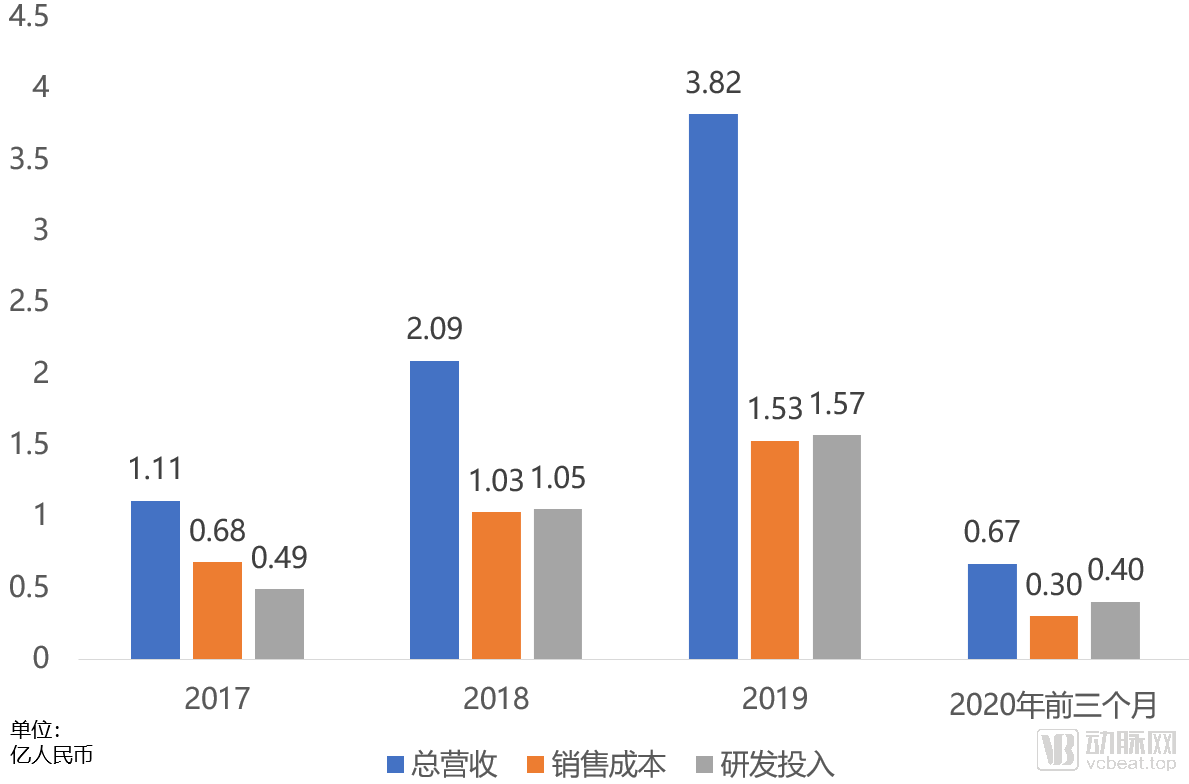
In 2019, Burning Rock Biotech reported total revenue of RMB 382 million, gross profit of RMB 273 million, and a gross margin of 71.5%. Marketing expenses amounted to only RMB 153 million, accounting for 40% of sales. In contrast, R&D expenditures exceeded marketing costs by RMB 157 million, representing 41.1% of revenue. These figures also demonstrate Burning Rock Biotech’s substantial investment in research and development.
Han Yusheng holds a Master’s degree in Cell Biology from Peking Union Medical College and an MBA from Columbia University. After completing his MBA, Han joined the venture capital firm Northern Light Venture Capital, where he focused on investments in the medical sector.
During the "Northern Lights" period, Han Yusheng primarily focused on two sectors: innovative drugs and next-generation sequencing (NGS). However, after extensive screening, he was unable to identify any oncology genetic testing companies compelling enough to warrant his investment. At that time, several leading NGS firms were preoccupied with competing for the first approval for non-invasive prenatal testing (NIPT) and launching their initial public offerings (IPOs), leaving them with little bandwidth to address the high-potential sector of oncology genetic testing.
Rather than let a prime opportunity slip by, it is better to dare to be the first. What now seems like a logical entrepreneurial move was, in fact, quite risky for Han Yusheng at the time.
During the first round of financing, Hanyusheng engaged with more than 30 institutions over a period of six months, yet none provided a positive response. Most believed that the so-called NGS oncology market did not exist, while the few who deemed it feasible questioned, “Why should Hanyusheng be the one to succeed?”
Ultimately, it was Legend Star and Aurora Venture Capital, the former employer of Han Yusheng, that extended an olive branch to him.
At the same time, Lu Gang also recognized the team’s technical shortcomings at that time. He told Han Yusheng, “You need to recruit a leading expert in biology to sustain the entire business.”
Han Yusheng candidly admitted that, in his search for a Chief Technology Officer (CTO), he interviewed no fewer than 30 candidates over an extended period but failed to find a suitable fit. It was ultimately through a friend’s introduction that he met Chuai Shaokun.
At that time, Chai Shaokun was already in charge of the bioinformatics platform and translational medicine platform for early-stage targeted drug development at Novartis’s R&D center in China. However, for her, then 35 years old, the career path in a multinational corporation was too clearly defined: “In fact, I was more than capable of handling my current projects, but I still had many ideas left unfulfilled.”
Her work at Novartis provided her with ample opportunities to engage with genomics and bioinformatics analysis, making her feel that the application of NGS in oncology treatment is becoming increasingly imminent. “I am eager for such an opportunity to translate my lifelong learning into a product.”
Thus, in May 2014, Shao-Kun Chai officially joined Burning Rock Biotech.
That year, Burning Rock’s first product was rapidly finalized, subsequently spearheading another wave of trends in the field of oncology genetic testing.
Whether by luck or Han Yusheng’s knack for recognizing and leveraging talent, Burning Rock Biotech seems to have consistently found the right people at the right time. After Chai Shaokun was promoted to COO, Zhang Zhihong joined the company as CTO, and Liu Hao, the CMO, also joined Burning Rock in 2015.
Zhang Zhihong completed his Ph.D. at Duke University and, after finishing his postdoctoral fellowship at the University of Washington, has been engaged in biochemical research at Illumina. There, he led his team in tackling multiple projects; he jokingly referred to the I5 and I7 indices as ideas that were “pulled out of thin air,” yet they have remained in use to this day.
Zhang Zhihong’s expertise lies in experimental operations, while Chuai Shaokun specializes in data analysis; their skills are thus perfectly complementary. Consequently, Chuai Shaokun invited Zhang Zhihong to join his team twice, but Zhang did not make a final decision until he met Han Yusheng.
Han Yusheng told Zhang Zhihong that China has an advantage over the United States in terms of clinical samples. Zhang Zhihong admitted that this was the most attractive aspect for him, as clinical research requires samples, and obtaining them in the U.S. demands significant financial and material resources.
CMO Liu Hao’s arrival was even more timely: “When I joined the company, the product prototype had already been developed. At that stage, without medical expertise being integrated, the overall development of the product would have been constrained.”
“As our products penetrate deeper into lower-tier markets, our regional medical teams need to engage in academic promotion. Given the varying levels of acceptance among physicians and the disparate cognitive baselines of users, promotional strategies must be tailored accordingly, even requiring the development of personalized plans. This effort demands not only bioinformatics expertise but also medical knowledge; indeed, more than half of our team is dedicated to this work,” he continued.
Another key responsibility of the medical team is conducting scientific research and providing services to pharmaceutical companies. The team has played an instrumental role in establishing collaborations with more than 20 domestic and international pharmaceutical manufacturers, including AstraZeneca.
Based on the above, Burning Rock is akin to a battleship equipped with comprehensive offensive and defensive capabilities spanning operations and sales, bioinformatics, experimental design, and clinical implementation. It has rapidly emerged as the industry leader.
Burning Rock Biotech’s milestones have always stayed ahead of the industry curve.
In 2017, a wave of enthusiasm for genetic testing swept through the investment community. According to statistics from VCBeat, global financing and investment in the genetic testing sector totaled $2.79 billion in 2017, representing an increase of over 200% compared to 2016. Meanwhile, Burning Rock Biotech had already completed its RMB 300 million Series B financing round by the end of 2016.
From late 2017 to early 2018, the Center for Medical Device Evaluation (CMDE) began to gradually accept applications for tumor NGS companion diagnostic kits. The competition for the “first approval of tumor NGS” became increasingly intense. Beneath the surface, a new wave was slowly brewing.
It was Burning Rock Biotech that broke this tranquility. In July 2018, Burning Rock Biotech’s “Combined Detection Kit for Human EGFR/ALK/BRAF/KRAS Gene Mutations (Reversible Terminator Sequencing Method)” became the first to obtain registration approval as a Class III medical device. Once again, Burning Rock Biotech took the lead in the entire industry.
Burning Rock’s first product was finalized in 2014, yet it did not receive NMPA approval until July 2018, arriving later than initially expected. Shao Kun Chuai believes that the greatest challenge lay in finalizing the product design.
NGS remains a technology with room for improvement, as product algorithms and parameters are continuously updated. “However, NMPA registration requires product finalization.” Algorithms and parameters can no longer be modified, which represents the most significant contradiction between regulatory requirements and product development.
“We need to find such a balance point that complies with existing regulations and meets the requirements for clinical safety and accuracy,” she continued. They needed to communicate with regulatory authorities to clearly present the data, which was also an important role undertaken by Chuai Shaokun. Chuai Shaokun recalled, “To my great surprise, the regulatory authorities were also very eager to communicate with us, hoping that we would work together to generate the validation data.”
After thorough communication, the Burning Rock team reached an internal consensus: Move fast! At that time, no NGS-based oncology diagnostic product in China had yet entered the clinical approval process. Both Burning Rock and the entire industry were eagerly awaiting this breakthrough. “We will strive to align with regulatory requirements without compromising the core essence of our product, while subsequent products will place greater emphasis on quality and more comprehensive coverage,” she added. “Priorities differ across different stages.”
Under the leadership of Shao-Kun Chai, Burning Rock’s first product became the first in its class to enter the green approval channel in September 2016, and was the first to obtain regulatory certification in July 2018.
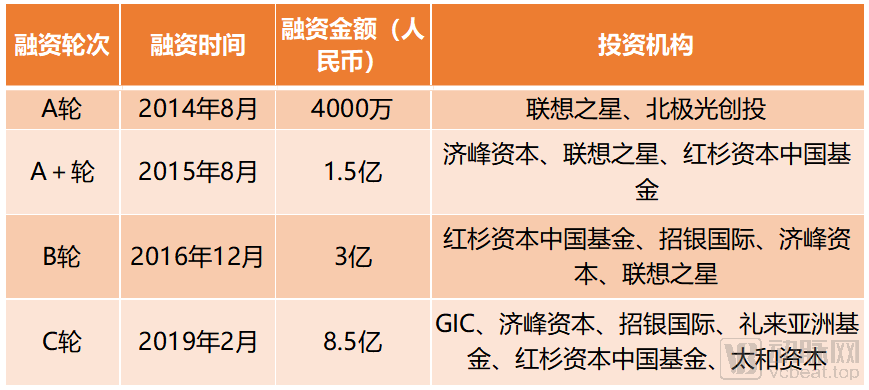
Burning Rock Biotech’s Financing History
By the beginning of 2019, Burning Rock Biotech once again led the trend of large-scale financing. In February 2019, Burning Rock Biotech announced the completion of its Series C financing round, raising RMB 850 million.
“Burning Rock is a company that doesn’t require investors to worry.” When asked for his assessment of Han Yusheng, Lu Gang remarked, “At first glance, you might find him rather flamboyant, but over time, you’ll discover that Han Yusheng is someone who strikes a perfect balance between assertiveness and restraint.”
During its development and breakthroughs, Burning Rock Biotech has dared to take risks. However, when it comes to product development and regulatory approval, the company adopts a completely different approach, treating every experiment and data point with rigor and caution to ensure steady and solid progress.
Perhaps influenced by these two mindsets, Burning Rock’s team also exhibits a polarized style. The front-end marketing and sales teams are both methodical and passionate; if you have the opportunity to attend exhibitions related to oncology testing, the Burning Rock team will undoubtedly be the most proactive in promoting the company’s philosophy and diagnostic products. Han Yusheng is confident that they have the most proactive sales team in the industry.
Meanwhile, the back-end teams specializing in bioinformatics, medicine, regulatory affairs, and R&D remain remarkably steady. Han Yusheng revealed that he maintains a clear distinction between the front and back ends, never allowing front-end competition to disrupt back-end R&D, thereby ensuring rationality amidst competitive pressures.
Alongside six years of development, Burning Rock Biotech has seen its testing sample volume grow steadily, its testing efficiency improve continuously, its test results become increasingly accurate, and its business model mature progressively.
Since its inception, Burning Rock Biotech has conducted 185,000 tests. Through continuous accumulation of experience, the median turnaround time for its testing has been reduced to 6 days.
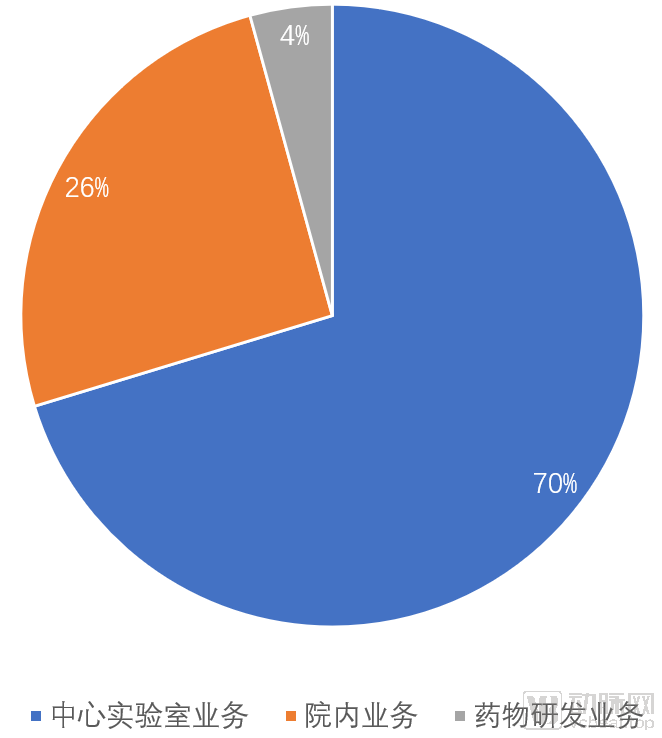
To address the diverse needs of different hospitals, Burning Rock Biotech has pioneered a dual-pronged business model leveraging both its central laboratory and hospital-based laboratories. This strategy corresponds to two core offerings: central laboratory testing services and NGS test kits, thereby maximizing market penetration and establishing higher entry barriers.
The central laboratory processes tissue and liquid biopsy samples from cancer patients provided by hospitals across China and issues test reports. Burning Rock Biotech has established connections with 4,162 physicians from 602 hospitals in China, becoming one of the largest suppliers of tumor NGS companion diagnostics in the country. Meanwhile, Burning Rock Biotech’s central laboratory also supports its collaborations with pharmaceutical companies. To date, revenue from the central laboratory model accounts for the vast majority of Burning Rock Biotech’s total revenue and has maintained rapid growth over the past few years.
The in-hospital model is another solution offered by Burning Rock Biotech to meet the needs of large hospitals. Many hospitals in China prefer to conduct laboratory testing on-site. Therefore, Burning Rock Biotech assists partner hospitals in establishing in-house laboratories, installing laboratory equipment and systems, and providing ongoing training and support. In turn, these hospital laboratories continuously purchase reagent kits from Burning Rock Biotech. Although this segment currently accounts for a relatively small proportion of revenue, it holds substantial market potential in the future.
Through continuous data accumulation from ongoing testing, Burning Rock Biotech has established OncoDB, one of the largest cancer genomic information databases in China. As testing volume continues to grow, OncoDB will further expand, thereby continuously enhancing the effectiveness of the treatment recommendations provided by Burning Rock Biotech.
Based on OncoDB, Burning Rock Biotech launched LAVA, a cloud-based cancer genomics data ecosystem, in 2019. By enabling real-time visual analysis of data, LAVA facilitates data exchange within the industry, particularly among physicians. To date, more than 420 physicians from 120 hospitals have joined LAVA.
Furthermore, leveraging the LAVA system, Burning Rock Biotech can further assist pharmaceutical companies in researching and developing new drugs, as well as enabling precise patient recruitment in clinical trials, thereby helping them develop cancer therapies and immunotherapies.
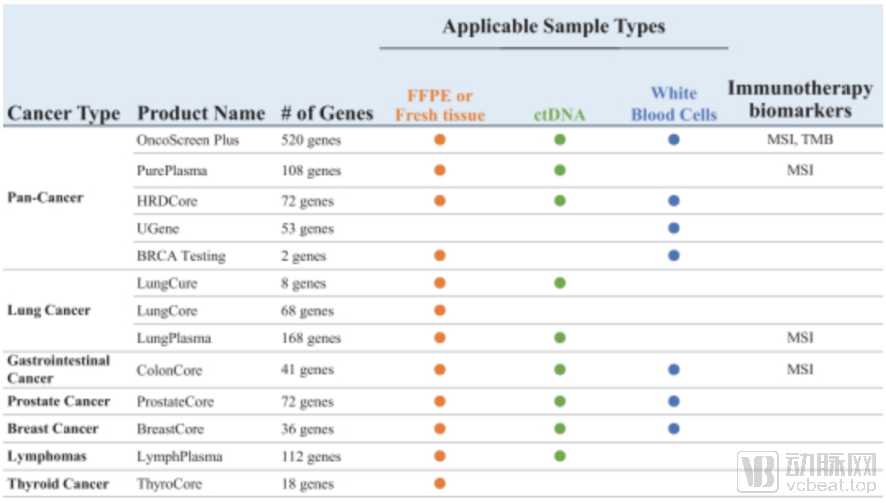
In the broader field of oncology genetic testing, Burning Rock Biotech has never ceased its advancements.
Burning Rock Biotech’s products already provide NGS-based companion diagnostics for 13 different tumor types, enabling the analysis of genes associated with various cancer types.
The largest panel-based pan-cancer testing product, OncoScreen Plus, was upgraded from the original OncoScreen in 2015. It analyzes 520 genes associated with most solid tumors and includes assays for tumor mutational burden (TMB), microsatellite instability (MSI), and other biomarkers, providing critical evidence for treatment decision-making.
The design and performance of OncoScreen Plus have been validated in 19 clinical trials and studies. Janssen Pharmaceuticals, a subsidiary of Johnson & Johnson, utilized this Burning Rock Biotech product in a clinical trial to analyze blood samples collected from patients with various advanced solid tumors. Chinese innovative pharmaceutical companies, including CStone Pharmaceuticals and BeiGene, have also selected OncoScreen Plus for their own clinical trials.
In the field of liquid biopsy, Burning Rock Biotech has successively launched studies targeting different cancer types, including LungPlasma, ColonCore, and HRDCore, achieving outstanding results. For non-small cell lung cancer, LungPlasma demonstrated a specificity exceeding 99%; ColonCore achieved a specificity of 100% and a sensitivity of 97.9%; and HRDCore has been utilized by AstraZeneca in Phase III clinical trials for a candidate drug.
In 2016, Burning Rock Biotech initiated its research on DNA methylation-based early cancer screening and has established its proprietary methylated library preparation technology, BrELSA, along with the statistical algorithm brMERMAID. These research achievements have been frequently presented at the annual meetings of the American Association for Cancer Research (AACR) in the past two years. Furthermore, at the upcoming AACR Virtual Annual Meeting II, Burning Rock Biotech will present data on early screening for ovarian cancer in the form of a poster.
In addition, on May 7, 2020, Burning Rock Biotech announced the launch of the “PREDICT” (Pan-CanceR Early DetectIon ProjeCT) study, which is expected to enroll 14,000 participants to further validate its DNA methylation-based early cancer screening model, ELSA-seq, in a broader population.
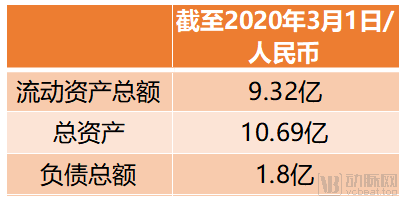
In terms of asset management, Burning Rock Biotech has consistently maintained a rational approach. Financial reports indicate that as of March 1, 2020, the company’s total current assets reached RMB 932 million, with total assets amounting to RMB 1.069 billion, while total liabilities stood at only RMB 180 million, reflecting a very low debt-to-asset ratio. In other words, Burning Rock Biotech’s IPO was not a last-ditch effort driven by depleted cash reserves, but rather another strategic advance built on long-accumulated strength.
Should the IPO be successful, Burning Rock Biotech will continue to channel funds into R&D. The proceeds from the listing will be primarily allocated to the development of early cancer screening technologies and regulatory filings for other products.
In March 2019, during an interview with VCBeat, when asked about the difficulties and challenges of the past five years, Han Yusheng smiled and said, “You might feel heartbroken even if your pet sheds a few hairs, but for wild animals, facing danger and injury is commonplace. For Burning Rock, no difficulty is insurmountable.”
"Long and perilous is the path; the brave prevail."