

Yikang Damei Challenges the Myth That Users Won't Pay for Health Services: A Pioneer in Online Obesity Management with a Proven C-end Monetization Model
The rise of mobile health in 2014, fueled by capital investment, led to the establishment of hundreds of diabetes management companies and the rapid emergence of over 700 diabetes management apps, a phenomenon once dubbed the “Hundred Sugar War” by the media. However, as the tide of capital receded, most of these companies vanished, while the few survivors have been struggling to find their footing. The core reason lies in the difficulty of monetizing online customer acquisition from individual consumers. This has led to a common conclusion: end-users are unwilling to pay for services.
Diabetes management was once considered the niche sector within internet healthcare most likely to achieve a viable business model. However, despite heavy capital investment, it has suffered a resounding failure, casting a long shadow over the development of the health management industry, particularly internet-based health management.
Against this backdrop, Yikang Damei was established in 2016, specializing in internet-based weight management services. Through online guidance, the company helps individuals with obesity control their weight, aiming to prevent and manage obesity-related metabolic disorders such as diabetes, hypertension, hyperlipidemia, and polycystic ovary syndrome (PCOS).
Weight management has long been regarded worldwide as an extremely challenging endeavor. A study by University College London, based on weight data from 300,000 individuals, revealed that the probability of obese individuals successfully losing weight, returning to a normal weight range, and maintaining it is only 0.5%, equivalent to just one in every 200 people achieving success. This underscores the arduous path chosen by Yikang Damei.
Yikang Damei’s confidence in venturing into the challenging field of weight management is grounded in its robust team structure. The company’s core team comprises multidisciplinary experts, including medical university professors, psychologists, clinicians, exercise specialists, and registered dietitians, providing strong support for project implementation from both theoretical and practical perspectives.
At the outset of its venture, Yikang Damei first shed its ideological baggage. Wang Huanran, CEO of Yikang Damei, stated that the notion that “users are unwilling to pay for services” is an unfounded prejudice. “Such a bias is not only futile but, more alarmingly, lulls entrepreneurs into complacency. As Mencius said, ‘When you fail to achieve your goal, look inward for the cause.’ We need to examine ourselves: Is what we provide truly a service? Is it genuinely worth users’ money?”
Leaving shadows behind and shedding prejudices, Yikang Damei set sail against this backdrop.
The academic backgrounds of the core team have naturally positioned Yikang Damei as an academically oriented institution with a scientific spirit, one that values data and R&D.
Yikang Damei embodies a scientific spirit that “excels at questioning.” In public perception, “watch your mouth and move your legs” is undoubtedly the go-to strategy for weight loss. Yet, as the mantra of “eat less, exercise more” has been hailed as an infallible rule while yielding limited long-term results, Yikang Damei raises a critical question: “Is this truly correct?”
The National Health Commission, the Ministry of Science and Technology, and the National Bureau of Statistics jointly release the "Report on the Nutrition and Health Status of Chinese Residents" every ten years, which is the most authoritative large-sample national survey report. This series of reports presents data that directly contradicts the "eat less, move more" school of thought: in 1982, the prevalence of overweight and obesity among Chinese adults was 7.1%; by 2012, this proportion had risen to 42%, six times the 1982 level. In 1982, the average daily energy intake per capita in China was 2,491.30 kcal; it then gradually declined, reaching 2,172 kcal in 2012, a decrease of 319.3 kcal compared with 1982.
Over the past three decades, as energy intake has gradually declined, the prevalence of overweight and obesity has surged dramatically. This trend fundamentally undermines the theoretical basis of the “eat less, move more” approach and the concept of negative energy balance. Furthermore, numerous authoritative institutions both domestically and internationally have reached similar conclusions in their relevant studies.
Yikang Damei established a strategy of enhancing capabilities and promoting development through R&D from its inception, and has successively carried out relevant research collaborations with numerous renowned medical institutions, including Peking Union Medical College Hospital, the 301 Hospital (PLA General Hospital), Peking University First Hospital, Beijing Obstetrics and Gynecology Hospital of Capital Medical University, Tianjin Medical University General Hospital, and Tianjin First Central Hospital.
In its research, Yikang Damei adhered to the requirements of the latest domestic and international guidelines, conducted a detailed survey of the relevant obese population, and obtained data that were highly consistent with the findings reported in the Report on the Nutrition and Health Status of Chinese Residents.
Song Wenhua, Technical Director of Yikang Damei and a nationally registered dietitian, stated, “In the series of studies we have participated in, we have rarely encountered obese individuals who genuinely consume excessive amounts of food. Contrary to popular perception, obese individuals commonly engage in dietary restriction, resulting in severe deficiencies in energy and nutrient intake. This leads to malnutrition, which significantly adversely affects their physical and mental health.”
Song Wenhua further stated, “Contrary to the common misconception that ‘all obese individuals are lazy,’ the vast majority of these malnourished obese individuals are actually striving to engage in more physical activity. However, such exercise often exceeds their body’s tolerance, causing serious harm to their health. Some plausible but fallacious theories and methods have been misleading the public, not only failing to achieve the desired outcomes but also posing greater risks—far exceeding those of obesity itself—and even potentially life-threatening.”
Furthermore, Yikang Damei conducted multidisciplinary and multi-perspective investigations in its participating research projects and developed the “Chunfeng Weifu” scientific research support platform. Leveraging this platform, it collected relevant data across medicine, biology, psychology, behavioral science, sociology, nutrition, and exercise science, while also performing a comprehensive search of existing domestic and international literature.
Regarding the definition of obesity, Wang Huanran, CEO of Yikang Damei, stated: “Body weight, like body temperature, is an external manifestation of an individual’s physical and mental state. A fever indicates that a person’s physical and mental well-being is compromised; similarly, weight gain serves as a comparable indicator. Obesity is an outward sign of suboptimal physical and mental health.”
Having established a new conceptual framework for obesity and discerned its underlying essence beyond superficial manifestations, Yikang Damei embarked on an exploration to truly address the problem of obesity.
Having clarified the essence of obesity, addressing it becomes a clear and systematic process. Traditional thinking holds that one must first “restore normal weight” in order to “achieve health.” In contrast, the Yikang Damei concept reverses this logic: only by first enabling individuals to “achieve health” in both body and mind can their weight “return to normal.”
Health management, particularly internet-based health management, has long been plagued by a persistent challenge in the healthcare industry. Some analysts argue that diabetes management suffers from inherent shortcomings: patients’ low willingness to change and poor adherence directly result in end users’ reluctance to pay. Not to mention active participation in diabetes management programs; statistics show that only about 30% of patients adhere to their prescribed medication regimens. To break this deadlock, it is essential to address the issue of patient adherence.
Whenever health management is mentioned, it is invariably associated with the concept of being “counter to human nature.” It seems that health management must involve strict supervision and rigorous requirements, preventing individuals from continuing to live as they please. Such a process is certainly not enjoyable; users are likely to avoid it at all costs. After all, who would want to pay to suffer?
However, based on a thorough understanding of users with obesity, the core proposition of Yikang Damei is precisely to “align with human nature.” Wang Huanran stated, “Throughout 40 million years of evolutionary history, humans have spent the vast majority of time in states of food scarcity. To survive, we developed the instinct to ‘seek palatable food and conserve energy.’ It is precisely due to the protective role of this instinct that humanity has endured to this day. This instinct should not be denied, nor should it be stigmatized. For effective health management, we must align with human nature.”
Yikang Damei’s human-centric approach is implemented in two areas: comprehensive nutritional improvement and peripheral environment development.
Comprehensive Nutritional Improvement
Addressing the widespread issue of malnutrition among individuals with obesity, the Yikang Damei Weight Management Program emphasizes a dietary principle of “eating until full and well, achieving true satisfaction.” This approach aims to provide comprehensive nutritional supplementation to improve users’ physical health, while adequate nutrient intake also helps alleviate negative emotions, thereby reducing the occurrence of unhealthy behaviors.
The core of Yikang Damei’s dietary management is not to reduce caloric intake, but to replace obesity-inducing foods with highly nutritious alternatives. Therefore, users do not need to count calories; they simply need to adhere to dietary principles tailored to their individual circumstances. This process does not involve dieting, and many individuals with long-term obesity and a history of weight regain have achieved success through this approach.
Peripheral Environment Construction
Everyone’s decisions are influenced by a variety of factors; each individual is a product of their surrounding environment. Elements such as clothing styles, housing, basic daily routines, dietary habits, and cultural values are all outcomes of environmental influences.
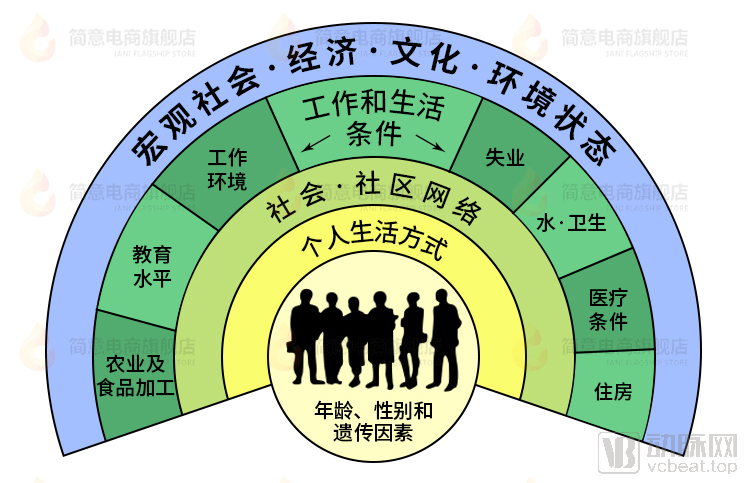
Yikang Damei prioritizes the construction of users’ peripheral environments, tailoring them to individual circumstances to foster improvements in physical and mental well-being. The company strives to ensure that users receive emotional support from their families and social networks. This approach enhances users’ sense of well-being, provides greater motivation for self-improvement, and thereby facilitates progress in their overall health.
The behaviors of individuals with obesity are profoundly influenced by their psychological state, life attitudes, living background, cultural background, and even their outlook on life and worldview. Inappropriate behaviors are difficult to change, and the following barriers to change are commonly observed: (1) difficulty in altering established habits; (2) negative perceptions of treatment regimens; (3) social pressure and psychological barriers; (4) lack of knowledge and understanding; and (5) insufficient motivation to change. These barriers constitute the core reasons for poor adherence, manifesting as reckless, unconstrained behavior regardless of consequences.
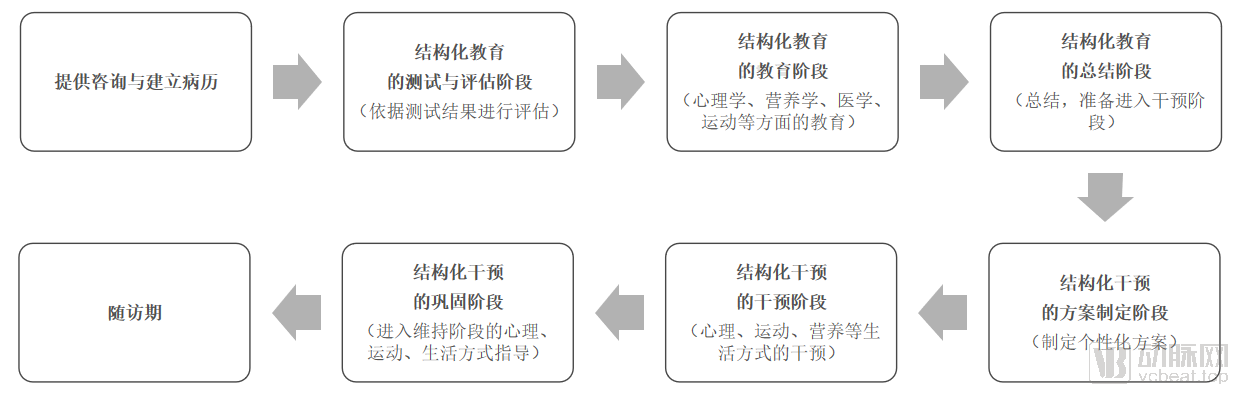
To overcome barriers to behavior change, Yikang Damei has developed the "Multidisciplinary Structured Education Program for Patients with Obesity." Centered on cognitive behavioral therapy (CBT), this program integrates expertise from medicine, psychology, exercise science, and nutrition. It combines cognitive education with behavioral training, and expert-led instruction with daily interventions by health coaches, thereby addressing patients’ barriers to change and improving adherence.
Meanwhile, Yikang Damei also places great emphasis on humanistic care, continuously encouraging and helping users build confidence, thereby promoting improvements in their physical and mental well-being.
Effect
According to statistics, among users who benefited from Yikang Damei's weight management,Men lose an average of 6–8 kg per month, while women lose an average of 4–5 kg per month. Blood glucose levels in 40% of users fall below the diagnostic threshold for type 2 diabetes, and over 70% of users experience significant improvements in blood pressure.
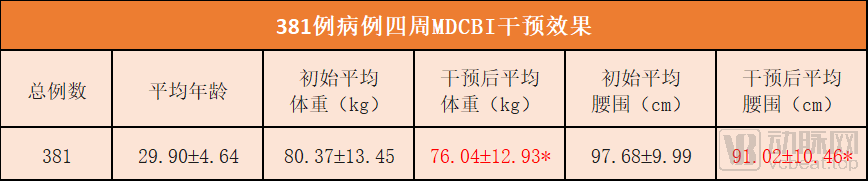
Data from the multicenter study titled “Impact of Precision Weight Management on Metabolic Risk and Fertility in Patients with Polycystic Ovary Syndrome,” initiated and organized by Peking Union Medical College Hospital, show that across China, individuals benefiting from Yikang Damei’s weight managementAmong 381 patients, the mean weight loss was 4.33 kg and the mean reduction in waist circumference was 6.66 cm over four weeks. The number of patients with regular menstruation increased from 69 at baseline to 186; of these, 57 achieved natural conception, accounting for more than 15% of the total intervention cohort.
Benefits
Yikang Damei’s weight management services have gained recognition from end users for their advanced concepts and human-centered approach.60% of target customers can be converted into paying users; the user renewal rate exceeds 80%; the average payment duration per user is 4.7 months; and the average revenue per user exceeds RMB 10,000.
Over the past four-plus years since its founding, Yikang Damei has focused on two key initiatives: first, strengthening R&D and building core internal capabilities; and second, addressing consumer-side payment to establish a viable business model.
However, the outbreak of the pandemic in early 2020 dealt a significant blow to Yikang Damei. To survive, the company swiftly adjusted its strategy by streamlining operations while retaining its high-end, specialized services, and launched more cost-effective weight management services that gained market recognition. At the height of the pandemic, Yikang Damei managed to survive.
After addressing the urgent needs, Yikang Damei re-evaluated the market and formulated a new future plan:
1. Expansion of the high-end user market: non-banking services for private banking clients and insurance coverage expansion for individuals with pre-existing conditions;
2. Against the backdrop of normalized epidemic prevention and control, leverage cutting-edge artificial intelligence technologies to enable contactless patient acquisition in healthcare settings;
3. Internet customer acquisition through new media formats.
After establishing its B2C revenue model, Yikang Damei initially seeks to collaborate with institutions that possess traffic resources and technological capabilities to jointly expand the market. This partnership aims to leverage technology-driven empowerment to reduce costs and accommodate a larger user base. Additionally, Yikang Damei welcomes capital investment to support this growth process.