

Dipath Secures Over RMB 100 Million in Series B Funding to Accelerate AI and Digital Pathology Solutions

Dipath
AI-Assisted Diagnostic Tool Developer
VCBeat has learned that Hangzhou Dipath Technology, a provider of digital and intelligent pathology solutions, has recently completed its Series B financing. The round was led by CICC Fengtai Fund, under CICC Capital, with participation from Legend Capital and Jiangmen Ventures, bringing the total investment to over RMB 100 million. Both Legend Capital and Jiangmen Ventures were existing investors in previous rounds. Sanjiang Capital served as the exclusive financial advisor for this financing round. The proceeds will be primarily used to increase R&D investment and accelerate the comprehensive implementation of AI-driven, digital, and intelligent pathology services.
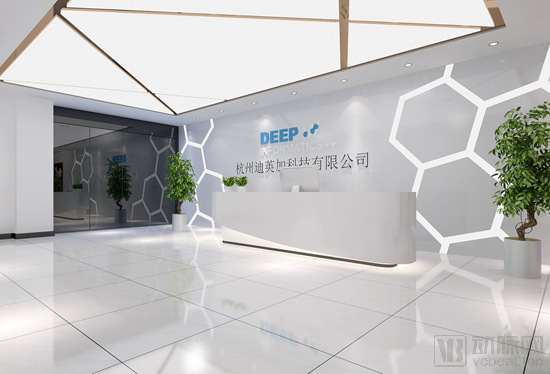
Since its establishment in 2017, Dipath has remained committed to deepening its expertise in AI-enabled pathology. By leveraging fully self-developed AI algorithms to build core competitiveness, the company has created multi-module AI-assisted diagnostic tools. Building on this foundation, Dipath has expanded its business portfolio to include cloud-based pathology storage, pathology information management, and remote pathology consultation/diagnosis, thereby comprehensively addressing all aspects of digital and intelligent pathology department construction. The company is dedicated to providing industry professionals with a comprehensive, packaged solution for informatics, digitalization, and intelligence in smart pathology departments. Since its founding in January 2017, Dipath has successfully completed three rounds of financing—Seed, Series A, and Series B—accumulating over RMB 200 million in investment. Its investors include prominent firms such as CICC Capital, Legend Capital, IDG Capital, Jiangmen Ventures, Jinhe Capital, and Brunswick Group.
(Image source: Dipath)
Liu Shulin, Managing Director at CICC Capital, stated, “There is enormous demand for cancer screening and diagnosis in China, yet there is a severe shortage of registered pathologists, resulting in a pronounced supply-demand imbalance. In the second half of 2019, Dipath took the lead by launching its intelligent pathology diagnosis product at a pathology conference. By leveraging artificial intelligence to assist pathologists in slide interpretation, this solution significantly enhances the efficiency and accuracy of pathological diagnoses, while also facilitating broader adoption. We have strong confidence in the entire Dipath management team led by Dr. Yang Lin, and we are honored to support Dipath in utilizing AI technology to serve a wide patient population and create substantial social value.”
Du Feng, Founding Partner of Jiangmen Ventures, stated, “Jiangmen Ventures has invested in Dipath since its angel round. Over this journey, Dipath has grown from a founding team of three into a leading enterprise in the field of AI-driven digital pathology. As a cornerstone of precision medicine, particularly in the post-pandemic era, the market potential for AI-assisted pathological diagnosis is immense. Pathological diagnosis is the ‘gold standard’ for cancer treatment; however, China faces a 90% shortage of pathologists. Therefore, leveraging AI technology to assist pathologists serves as a crucial and necessary supplement.”
Furthermore, Legend Capital’s continued investment as an existing shareholder in a leading enterprise within the capital-intensive sector underscores its further recognition of Hangzhou Dipath Technology’s position as a leader in digital pathology and artificial intelligence, as well as its optimism regarding the company’s sustainable future development.
In recent years, despite continuous innovations in diagnostic and therapeutic technologies across various fields, over 70% of clinical medical diagnoses—such as those for tumors and most diseases with clear organic lesions—still rely on traditional pathological diagnosis. As the gold standard in clinical diagnosis, pathological diagnosis places pathologists, often referred to as "the doctors' doctor," at the forefront of fulfilling a critical mission in clinical medical practice.
Pathology AI leverages artificial intelligence algorithms to diagnose digitized pathology slides. By employing manual or automatic feature extraction methods, it extracts image features and constructs corresponding detection and analysis algorithms to classify and grade cells, thereby fulfilling diagnostic tasks. As pathology AI continues to be promoted in clinical practice, it not only helps alleviate the shortage of pathologists to some extent but also assists them in making pathological diagnoses, thereby improving diagnostic efficiency.
Data shows that in 2018, there were approximately 9,600 licensed pathologists nationwide in China. This figure stands in stark contrast to the nearly 100,000 pathologists required by the National Health Commission’s standard of 1–2 pathologists per 100 hospital beds, indicating a severe imbalance. As pathological diagnosis often serves as the definitive basis for guiding clinical treatment, pathologists bear significant responsibility and face a heavy workload. Statistics indicate that the pathology department of a Grade A tertiary hospital generates approximately 2,000 unprocessed pathology slides daily. Pathologists must devote substantial time and mental effort, relying on their experience to identify and assess diseased tissues under the microscope, roughly estimate cell counts, and evaluate patients’ cancer risk and grade.
Pathology AI can automatically detect lesion areas in digital slides and quantitatively assess various indicators, assisting pathologists in making rapid, accurate, and highly reproducible pathological diagnoses. Currently, pathology AI has been applied to the analysis of diseases such as breast cancer, glioma, prostate cancer, and cervical cancer. Its applications primarily include the detection of nuclear features, diagnosis of benign versus malignant conditions, cancer grading and subtyping, stain analysis, early screening, as well as the detection and analysis of blood smears, sputum smears, and urine sediments.
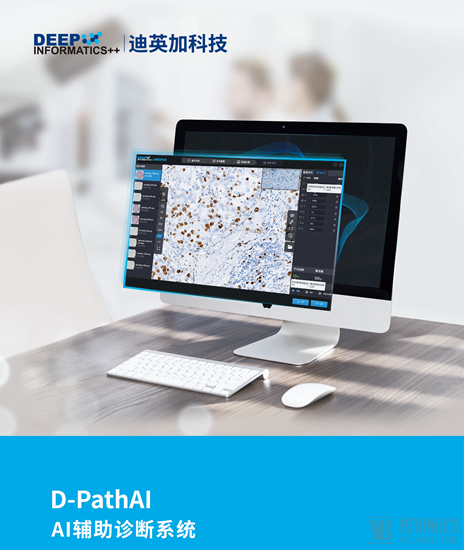
Dr. Yang Lin, CEO of Dipath, told VCBeat that the company’s most distinguishing feature is its provision of an integrated intelligent solution tailored to the digitalization needs of pathology departments. Its built-in AI-powered pathology analysis system incorporates nearly 30 analytical modules covering various areas, including histopathology (immunohistochemistry and H&E staining), cytopathology, and molecular pathology. Dipath is currently the digital pathology company in China with the most comprehensive disease coverage. At present, the comprehensiveness and versatility of Dipath’s AI and digital pathology product portfolio surpass those of its U.S. counterparts, PathAI and Paige.AI.
The high complexity and diverse nature of pathological diagnoses have significantly increased the difficulty of developing and innovating AI technologies in pathology, leading few technology companies to focus intensively on product development in this vertical sector. The two founders of Dipath, Dr. Yang Lin and Dr. Li Kang, are representative overseas-returnee interdisciplinary professors and doctoral supervisors who have conducted research in computer vision, deep learning, and digital pathology for over 15 years. More than one-third of the R&D team members hold doctoral degrees from overseas institutions. Since its establishment in 2017, Dipath has gradually grown into a leading company in China that leverages AI technology to provide comprehensive digital and intelligent solutions for pathology departments.
According to Dr. Yang Lin, Dipath has continuously achieved breakthroughs in various specialized application areas by aligning with clinical practice needs. The company’s independently developed hardware and software products, including intelligent microscopes, various models of scanners, pathology diagnostic image processing software, pathology department information systems, and remote consultation systems, were successively approved for market launch in 2019. These products have gained recognition from more than 300 Grade A tertiary hospitals and professional third-party testing companies in China. Meanwhile, Dipath is actively pursuing the registration of Class III medical device certification for AI-based pathology diagnostics. Dr. Yang Lin predicts that Class III medical device products for AI-based pathology diagnostics will be approved in China within the next one to two years.
(Image source: Dipath)
Leveraging its extensive auxiliary diagnostic modules and robust capabilities in developing pathological AI technologies, Dipath has established comprehensive partnerships with numerous globally renowned pharmaceutical companies, leading third-party medical testing centers in China, and top-tier global digital pathology brands with FDA certification. Currently, various large corporations and hospitals are utilizing Dipath’s diverse range of digitalized and intelligent pathological AI products.
Despite the overall severe economic situation and financing environment, Dipath still secured over RMB 100 million in its Series B round with subscription exceeding expectations. Following this round of financing, Dipath will continue to delve deeply into the pain points of the pathology industry, always adhering to the mission of wholeheartedly serving pathology professionals, striving to optimize products, promote industry development, provide better services to pathologists, and strengthen the company’s product matrix and related applications in digital pathology and artificial intelligence.