

Hepu Testing: Building a Full Clinical Mass Spectrometry Product Portfolio and Achieving End-to-End Automation to Advance the Clinical MS Field
In the 19th century, British physicist Joseph John Thomson developed the world’s first simple mass spectrometer, pioneering the field of mass spectrometry and laying a significant foundation for the global development of mass spectrometric analysis.
Initially, mass spectrometry was primarily utilized in research institutions; it has since been progressively adopted in pharmaceuticals, environmental science, food testing, and clinical practice. Compared with conventional detection methods, mass spectrometry offers advantages such as high sensitivity, high specificity, high accuracy, a wide linear range, high efficiency, high throughput, low cost, and the ability to simultaneously detect multiple analytes. Consequently, it can effectively complement or even partially replace traditional methodologies based on biochemistry, immunology, microbiology, and molecular biology.
As a major driving force behind the advancement of precision medicine, mass spectrometry testing is garnering increasing clinical attention and is hailed as the next multi-billion-dollar blue-ocean market in clinical diagnostics.
Currently, the level of clinical mass spectrometry testing in China is in its early stages of development.Compared with developed countries, both the number of mass spectrometry testing items and market share are very low. The potential application of mass spectrometry technology in clinical settings has not been fully exploited, and there are still pain points such as a shortage of mass spectrometry professionals, high homogeneity of mass spectrometry products, and low levels of automation.
Founded in June 2019 by a consortium of leading domestic and international mass spectrometry scientists and seasoned industry entrepreneurs, Zhejiang Hepu Testing Technology Co., Ltd. (Hepu Testing) was established based on profound insights into China’s mass spectrometry testing sector. The company brings together top-tier mass spectrometry talent from renowned institutions such as the Illinois Institute of Technology (USA), the University of Alberta (Canada), the University of Science and Technology of China, and Tianjin University. Committed to leveraging industry-leading innovative R&D capabilities in mass spectrometry products, Hepu Testing aims to build an international, full-chain platform for clinical mass spectrometry.
HePu Testing’s Three Core Business Segments: 1) A mass spectrometry-based clinical service platform centered on third-party medical testing laboratories; 2) A mass spectrometry IVD kit manufacturing platform focused on the R&D of mass spectrometry reagent kits; 3) An advanced medical device manufacturing platform dedicated to the R&D of automated sample pretreatment equipment and mass spectrometry instruments.
Within less than a year of its establishment,HePu Testing has obtained 28 Class I certificates, becoming the company in China with the most comprehensive portfolio of clinical mass spectrometry IVD reagents, and has completed the development of automated sample pretreatment equipment for mass spectrometry.The company’s third-party laboratory has completed all renovation, instrument calibration, and licensing acceptance procedures, and has officially commenced specimen testing services.
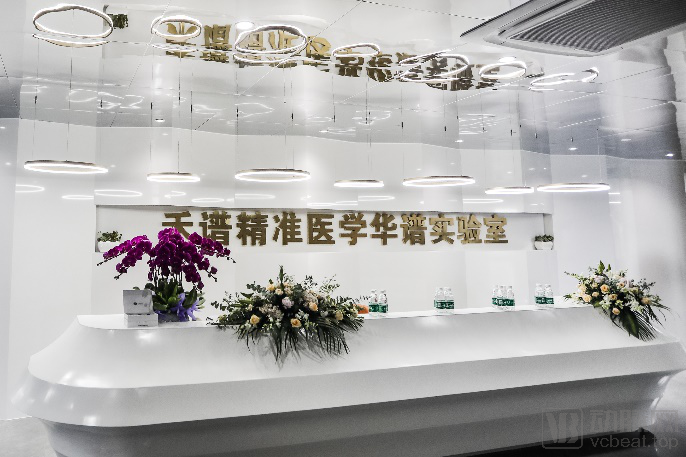
Hepu Testing has essentially completed its strategic layout in the field of mass spectrometry testing and is poised to enter a phase of rapid growth. On May 24, 2020, the company held a grand opening ceremony, attended by renowned domestic experts and scholars, clinical department directors, and entrepreneurs. The event commenced with opening remarks from Mr. Liang Ming, CEO of Hepu Testing; Professor Huang, Chief Scientist; and Mr. Ou Tieming, Head of Tecan’s Asia-Pacific region. This was followed by the signing ceremony for the exclusive strategic partnership between Hepu Testing and Tecan, as well as the official inauguration ceremony for Hepu Testing. Attendees were given a tour of the laboratory, where the visiting experts, scholars, and entrepreneurs spoke highly of the professional infrastructure of Hepu’s laboratories and the fully automated mass spectrometry sample processing system jointly developed by Hepu and Tecan.
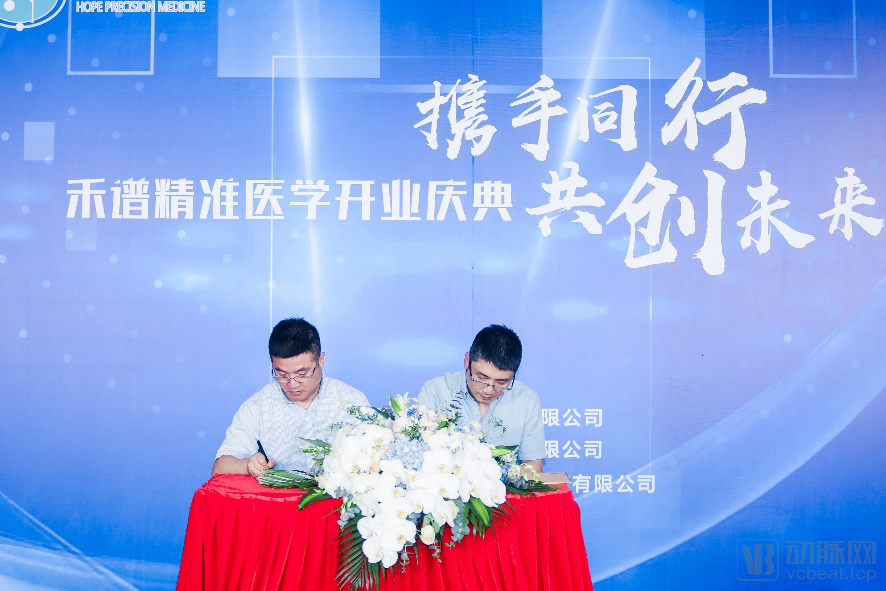
Signing Ceremony for the Exclusive Strategic Partnership Between Hupu Testing and Tican; Ou Tieming, Head of Tican Asia-Pacific (left), and Liang Ming, Founder of Hupu Testing (right)
Talent scarcity is a common pain point in emerging industries, and the field of mass spectrometry testing is no exception. Professionals in mass spectrometry require extensive and profound knowledge of principles such as mass spectrometry theory and application scenarios, along with many years of relevant experience. This means that cultivating talent in mass spectrometry entails significant costs.
According to Professor Huang, a mass spectrometry expert at Hupu Testing, there are currently very few universities in China offering majors related to mass spectrometry. This has led to an acute shortage of specialized professionals in the field. Moreover, graduates from mass spectrometry-related programs typically seek employment aligned with their specific areas of study; for instance, those majoring in pharmaceutical analysis often enter the drug analysis industry, while very few pursue careers in clinical mass spectrometry testing.
Furthermore, most companies in China’s mass spectrometry testing sector have transitioned from biochemical, immunological, or molecular diagnostics backgrounds, lacking specialized expertise in mass spectrometry. The founding team of Hepu Testing believes that mass spectrometry presents high technical barriers; companies entering this field without a dedicated foundation often possess insufficient professional grounding and relatively weak corporate culture.Unlocking the true value of mass spectrometry and achieving “excess returns” hinges on having specialized mass spectrometry talent and teams.
The core team of HEPu Testing is composed of multiple experts with extensive professional expertise in the field of mass spectrometry testing,Founder and CEO Liang Ming has over 20 years of sales experience in pharmaceuticals and medical diagnostic reagents, as well as extensive experience in the commercial operation and promotion of medical mass spectrometry., has founded multiple biotechnology companies;Chief Scientist Professor Huang has over 10 years of R&D and work experience in mass spectrometry., having led the team to establish over 100 mass spectrometry testing items. Leveraging the core team’s extensive experience in the field of mass spectrometry testing, Hepu Testing has gained the capability to rapidly advance company projects.
High homogeneity of mass spectrometry products is a major pain point in China’s mass spectrometry testing sector. Most domestic companies focus their testing offerings on tandem mass spectrometry platforms, concentrating primarily on newborn genetic screening, vitamin testing, and therapeutic drug monitoring, resulting in severe product homogenization.
HePu Diagnostics has exclusively developed multiple innovative mass spectrometry products, such asAlzheimer's Disease Testing, Hyperhomocysteinemia Testing, Prostate Cancer Testing, Lysosomal Storage Disorder Testingetc.
Meanwhile, the company has iterated and upgraded its existing product lines across multiple markets, including vitamin testing panels, therapeutic drug monitoring, and screening for inherited metabolic disorders.
For example, domestic vitamin testing mostly focuses on vitamins A, D, and E. Although a few companies have introduced full-spectrum vitamin testing, the number of tested items is generally around 10. Hepu TestingTop 17 Vitamin Testing Panels, which will be expanded to more than 20 items in the future, truly achieving full-spectrum vitamin testing.Therapeutic drug monitoring (TDM) services in the market are primarily focused on psychiatric medications, and Hepu Testing has completedComprehensive Medication Coverage Across All Departments, including immunosuppressants, antineoplastic agents, and drugs for the cardiovascular and respiratory systems.
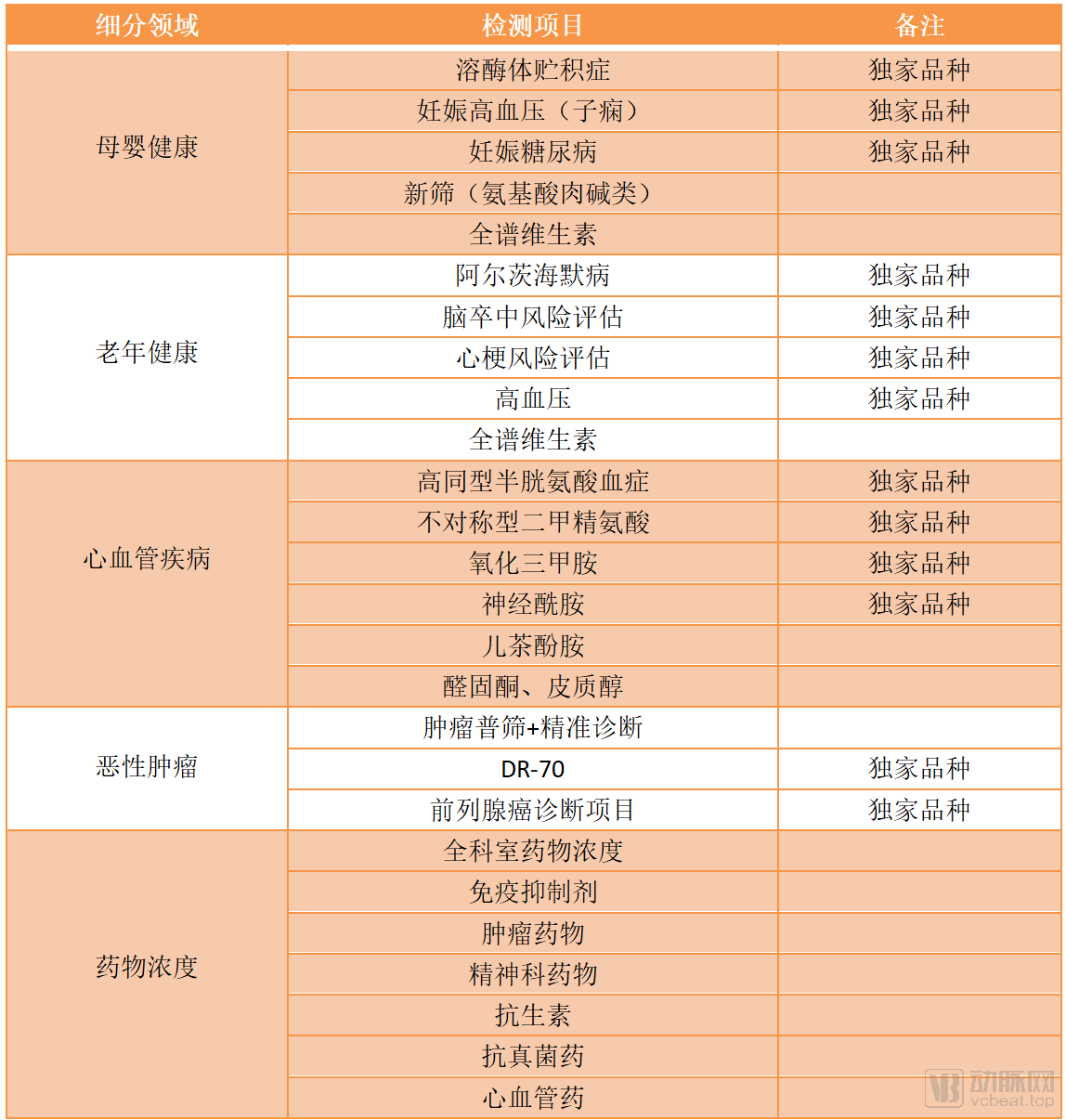
HePu Testing Product Line Layout
Professor Huang stated that clinical mass spectrometry testing is currently facing a particularly thorny challenge. “While the concept of clinical mass spectrometry is highly popular, its actual application scenarios are not as extensive as imagined. The primary reasons include high technical barriers, a scarcity of mass spectrometry professionals, complex sample pre-treatment processes, low levels of automation, and heavy reliance on manual operations.” Currently, sample pre-treatment in clinical mass spectrometry relies entirely on manual handling. The operational workflow is complex and requires specialized mass spectrometry personnel, with manual processing times ranging from 1 to 4 hours. This approach also poses issues such as the risk of manual errors affecting test results and biosafety hazards.
Low levels of automation have become one of the major factors hindering the widespread adoption of clinical mass spectrometry,Addressing the pain points in sample pre-processing, Hepu Diagnostics has entered into an exclusive partnership with Tecan, a global top-tier manufacturer of automated laboratory instruments and solutions, to jointly develop an automated pre-processing platform for mass spectrometry. As of press time, the fully automated mass spectrometry pre-processing platform co-developed by Hepu and Tecan has been put into production.
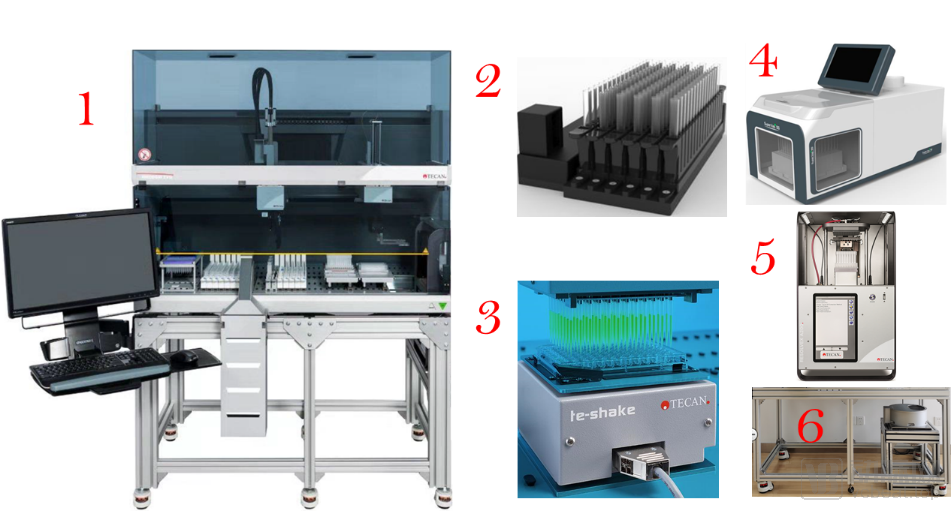
The mass spectrometry automated sample preparation equipment developed by Hepu Testing is based on the Freedom Evo high-precision automated liquid handling platform (1), and includes a push-in barcode scanner (2), a high-performance oscillating mixer (3), an automated nitrogen evaporation module (4), an automated SPE module (5), and an automated centrifuge (6).
Notably, hospitals and third-party testing laboratories using Hepu Testing’s automated sample preparation equipment no longer need to recruit and train a large number of mass spectrometry specialists.With just one click, the entire process from specimen scanning to sample loading is completed without manual intervention, significantly enhancing the automation level of pre-mass spectrometry processing, as well as the quality of sample handling and test results.
Meanwhile, Professor Huang stated that Hepu Testing will continue to deepen its collaboration with Tecan Switzerland to upgrade the company’s automated sample preparation systems for mass spectrometry, enabling the equipmentOnline, Miniaturized, Intelligent, Micro。
Hepu Testing is committed to its mission of advancing precision medicine, serving society, creating value, promoting shared healthcare, and benefiting the public; upholds its core values of breaking down barriers, rising to challenges, innovating products, and addressing critical pain points; and fosters a corporate culture centered on professionalism, efficiency, scientific rigor, and innovation, striving to become a world-class leader in clinical mass spectrometry.
Currently, Hepu Testing is undergoing its Series A financing round. The proceeds will be primarily allocated to the following areas: 1) constructing standardized production facilities for in vitro diagnostic (IVD) reagents and medical devices; 2) expanding production capacity for mass spectrometry kits, fully automated sample processing systems for mass spectrometry, and other related reagents and instruments; 3) increasing investment in marketing, sales, and promotion; 4) enhancing research and development of new clinical mass spectrometry products; and 5) increasing submissions for Class II and Class III medical device registrations for clinical mass spectrometry products.