

Handheld Ultrasound Emerges as Doctors’ 'Third Eye' During Global COVID-19 Pandemic
As the epidemic raged across China, the large-scale outbreak of infectious diseases transformed the traditional working environment for physicians. Routine preliminary diagnostic methods, which involved extensive patient contact, left doctors fully exposed to the virus, particularly those in non-frontline departments with limited awareness of protective measures. This explains why infection rates were higher among healthcare workers in non-infectious disease departments. During the peak of the epidemic, even when wearing protective suits, medical staff faced closed and hazardous working conditions, necessitating diagnostic equipment better adapted to these special scenarios.
VCBeat has learned that in the fight against the epidemic,Pocket ultrasound, a nascent product, has played a significant role in emergency care systems due to its portability. Fitting conveniently into a physician’s pocket, it enables clinicians to respond effectively to various emergencies. Point-of-care ultrasound demonstrated unique advantages in the diagnosis and treatment of COVID-19.
First, in the emergency department, handheld ultrasound can be used for initial disease screening to briefly identify the cause of patients’ symptoms, thereby providing physicians with rapid access to more in-depth information.
During dynamic monitoring of patient conditions and management of critically ill patients, since this novel coronavirus infection can involve vital organs such as the heart, liver, and kidneys, physicians can use handheld ultrasound to screen for involvement of other functional organs at any time and anywhere. For critically ill patients, ultrasound can assist in clinical judgment; lung ultrasound enables dynamic and continuous assessment, real-time monitoring of disease progression, and evaluation of therapeutic efficacy.
Especially in isolation wards and emergency departments with limited resources, handheld ultrasound devices are easier to disinfect and more portable, playing a significant role in disease diagnosis, condition assessment, and dynamic monitoring for patients.
In reality, the process of delivering handheld ultrasound devices to physicians was far from easy. Companies had to overcome transportation shutdowns and city-wide lockdowns, meet the demands of special application scenarios, and enable many non-ultrasound specialists on the front lines in Wuhan to utilize ultrasound technology—all within a critical window of just a few days or even hours.
However, from another perspective, the pandemic will further widen the development gap among medical AI companies. How these challenges are addressed reflects a company’s deep-seated R&D capabilities, execution strength, and organizational competence.
When all healthcare workers are required to wear protective suits, the traditional clinical methods of “inspection, palpation, percussion, and auscultation” become impractical. Consequently, physicians rely more heavily on imaging and auxiliary tests for disease diagnosis and condition monitoring. For patients, especially those with infectious diseases, mobility is limited, making bedside diagnostics challenging. Ultrasound diagnosis offers advantages such as repeatability, absence of radiation, and high safety. Handheld ultrasound devices, characterized by their compact size, wireless connectivity, and ease of disinfection, are well-suited for monitoring and assessing patients in emergency and critical care settings. Furthermore, handheld ultrasound enables real-time remote consultations via cloud platforms, effectively reducing the risk of cross-infection among healthcare workers.
In mid-January, as the epidemic began to spread, Shanghai Shenzhi Information Technology Co., Ltd. joined forces with Chengdu Stork Healthcare Co., Ltd. to donate handheld ultrasound devices to the Sichuan Provincial Hospital of Traditional Chinese Medicine and the 363 Hospital of Southwest Medical University Affiliated in Chengdu.
In late January, the daily demand for medical supplies required by the epidemic was not high, but after the outbreak, the demand surged, resulting in a relatively passive situation in the early stage. News of shortages of supplies in Wuhan hospitals flooded social media. Zhang Zhuo, CEO of Deepwise Technology, stated: “We learned from Shanghai’s first batch of medical teams aiding Hubei that flexible handheld ultrasound devices are also needed under the harsh conditions on the front lines.”
“In extreme environments, many devices are simply unusable. However, our ultrasound equipment can still perform imaging and diagnosis even with three layers of protective covers. Thanks to its wireless design, the handheld ultrasound device allows for simpler disinfection. Physicians outside the isolation zone can conduct remote consultations via communication systems, thereby reducing the risk of cross-infection among healthcare workers.”
From the outset, our handheld ultrasound device was designed for emergency and field surgical applications, proving invaluable in this incident.
At that time, Wuhan was under lockdown. Chengdu Stork Healthcare Co., Ltd. and Shenzhi Technology endured significant hardships to deliver the first batch of handheld ultrasound devices to frontline healthcare workers. When donating a second batch of supplies to Wuhan, the teams from Stork Healthcare and Shenzhi Technology devised a strategy: they arranged for the equipment to be transported on the special charter flight carrying Shanghai’s second medical aid team to Hubei, thereby “airdropping” the devices into the province.
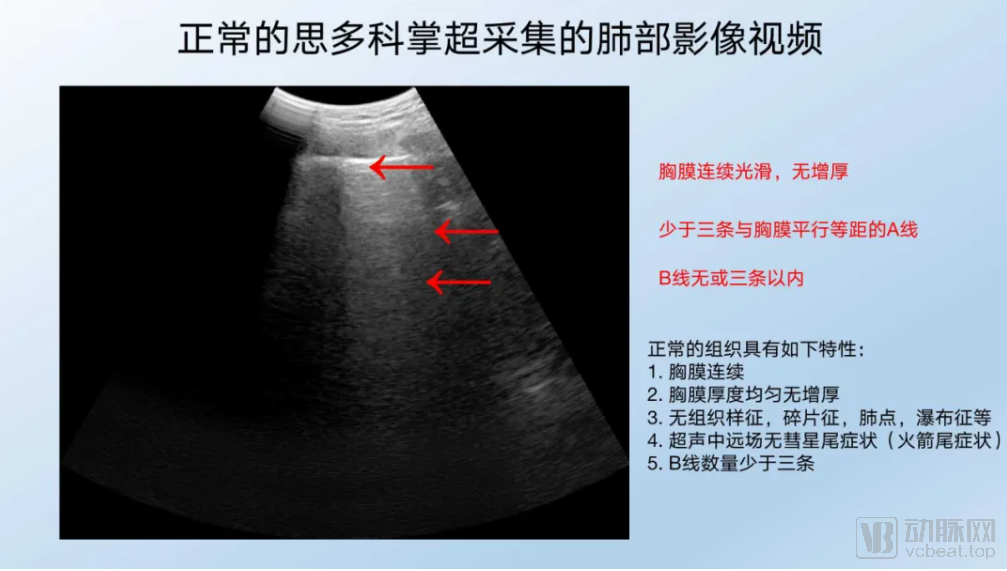
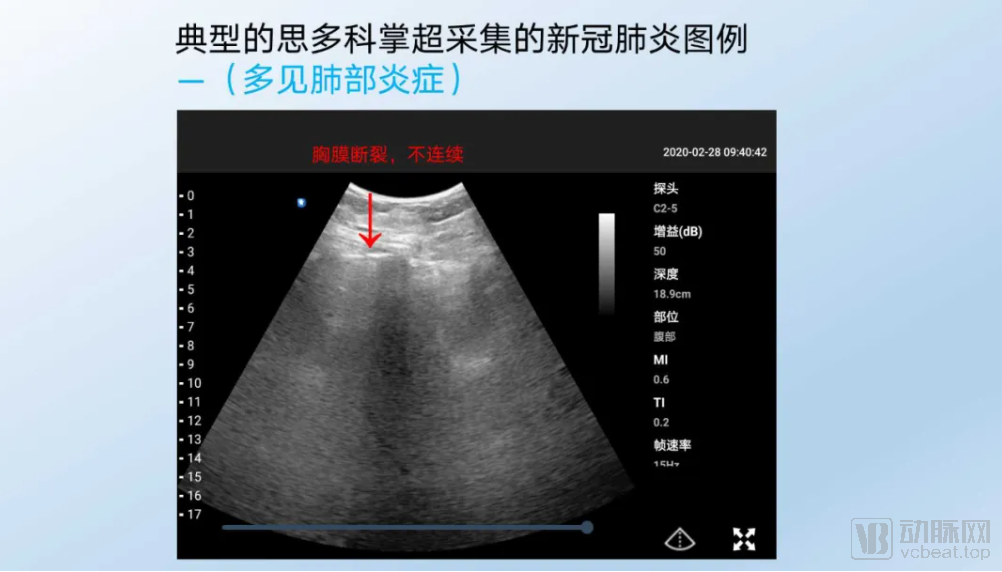
Figure excerpted from Stork’s Clinical Comparative Analysis of COVID-19 Using Handheld Ultrasound
After delivering the supplies to Wuhan, Zhang Zhuo had thought he could finally take a breather, but the real challenges still lay ahead.
Initially, following its deployment on the front lines of the epidemic area, more medical teams expressed interest in acquiring handheld ultrasound devices. Subsequently, Chengdu Stork Healthcare Co., Ltd. and DeepSight Technology delivered the devices to the Zhejiang Provincial Medical Team and the Jiangsu Provincial Medical Team supporting Hubei Province.
Another challenge lies in optimally adapting to physicians’ needs within the unique usage scenarios presented during the pandemic. As doctors’ understanding of the virus deepened, their operational requirements in these special environments continued to grow. Chengdu Stork Healthcare Co., Ltd. and Shenzhi Technology aim to minimize physicians’ burden by providing optimal solutions through continuous optimization.
Zhang Zhuo stated, “To respond promptly to frontline needs, our engineering team is available 24/7 to communicate with physicians regarding their requirements. For instance, during use, some doctors reported that tagging and data entry were cumbersome in specific operational scenarios. In response, we rapidly integrated iFlytek’s speech recognition system into the device, enabling rapid data input.”
In addition to promptly addressing the unique needs of the epidemic environment by adding specific modules, the greatest challenge lies in the fact that most physicians working in Wuhan are not specialized sonographers and are unfamiliar with ultrasound. Therefore, it is essential to shorten their learning curve within a short period of time.
“We encountered a case where frontline cardiologists in Wuhan faced numerous challenges in managing critically ill patients. As they are not specialized sonographers, they desired ultrasound systems with capabilities for rapid diagnosis, automated measurements, and preliminary assessment. We integrated our previously developed artificial intelligence module into the system and deployed the functionality within a single day. This enables frontline physicians to directly obtain clinical parameters such as ejection fraction, end-diastolic volume, and end-systolic volume during use.”
As all doctors in Wuhan work on a 24-hour rotating shift schedule, Chengdu Stork Healthcare Co., Ltd. and Shenzhi Technology have also opted to provide 24/7 online support to meet physicians’ needs.
Timely response to the needs of epidemic areas is not merely a matter of adding modules and features; it also requires optimization of clinical workflows. The tight development timeline has made everything even more challenging.
However, Zhang Zhuo stated that this is actually a positive development, as the challenges of rapid development have tested the team’s execution and R&D capabilities. The rapid iteration and application of products have provided engineers with an intensive period of focused problem-solving.
To enable rapid iteration and advancement, in addition to long-term R&D investment, a core competency of Shenzhen Zhizhi Technology lies in the seamless hardware-software integration between Chengdu Stork Healthcare Co., Ltd. and Shenzhen Zhizhi Technology. This synergy constitutes a natural competitive barrier for both companies. Chengdu Stork Healthcare specializes in hardware, while Shenzhen Zhizhi Technology provides the software solutions that ensure our timely responsiveness.
“The combination of the two actually achieves a synergistic effect where 1+1>2. In fact, this real-world application also demonstrates that for handheld ultrasound to be effectively implemented in clinical practice, hardware alone is insufficient to truly resolve the challenges.”
Outside Wuhan, during the first phase of the pandemic, hospitals across China were overwhelmed by the tense atmosphere brought on by COVID-19. Chengdu Stork Healthcare Co., Ltd. and Shenzhen Deepwise Technology also delivered their products to departments in other regions.
At the Affiliated Hospital of Chengdu University of Traditional Chinese Medicine, Dr. Nie Qian from the Department of Cardiology stated, “We used to joke that our department was the cleanest in the hospital because we had no infectious diseases. However, during the COVID-19 pandemic, even non-frontline departments faced immense pressure. It was a significant challenge for us to provide orderly patient care and manage transfers during the outbreak. Handheld ultrasound has greatly facilitated our precise diagnosis.”
He cited an example in which, during the pandemic, the emergency department received a patient with dyspnea who required consultation from the Department of Cardiology.
The patient presented with dyspnea but without typical chest pain. During that particular period, this posed a significant challenge for physicians. They needed to determine whether the dyspnea was of cardiac or pulmonary origin. Given the high transmissibility of the novel coronavirus during that special time, prompt diagnosis was essential to minimize the risk of infection.
“At that time, the patient’s symptoms were unusual; he was in his sixties. The emergency electrocardiogram (ECG) showed no significant abnormalities, while the complete blood count revealed mild abnormalities, with elevated neutrophil levels. We were unable to accurately assess his condition through observation alone. If he had been a typical heart failure patient, lying flat would have exacerbated his dyspnea; however, this patient was able to lie flat without difficulty. If it had been a pulmonary condition, he would have presented with symptoms such as coughing, which were absent. Moreover, transporting the patient for a chest CT scan at that point would have posed risks to his safety.”
How to Confirm Patients' Conditions Under Limited Conditions, Dr. Nie and His Colleagues Decided to Use Handheld Ultrasound.
“Handheld ultrasound was used to rule out cardiogenic causes in the patient. Color Doppler imaging revealed paradoxical motion in the anterior wall, indicating hyperacute myocardial ischemia.”
The Affiliated Hospital of Chengdu University of Traditional Chinese Medicine is a national-level Heart Failure Center and an accredited institution for Heart Failure Center construction under the Chinese Medical Association. In clinical practice, the Department of Cardiology where Dr. Nie works has consistently utilized ultrasound to assist in diagnosis and treatment. The Second Department of Cardiovascular Diseases, where he is based, is the only department within the national traditional Chinese medicine community that operates its own color Doppler ultrasound room. Physicians at the Affiliated Hospital are proficient in using ultrasound for diagnostic purposes in their daily clinical work. Dr. Nie stated that handheld ultrasound devices also play a significant role in routine clinical diagnosis and treatment.
“In routine diagnostics, if we encounter an emergency patient, we need to determine whether they are suffering from acute aortic dissection or acute myocardial infarction. The treatment approaches for these two conditions are opposite, and improper management can lead to devastating consequences for the patient. Previously, our approach to diagnosing acute myocardial infarction involved physicians moving ultrasound equipment weighing dozens of kilograms to examine patients. Handheld ultrasound devices, which can fit directly into a pocket, allow physicians to obtain deeper clinical insights beyond what can be gathered through physical examination and auscultation alone. This reduces the misdiagnosis rate and also lowers the workload for physicians.”
From a long-term perspective, under normal development conditions, the clinical promotion of handheld ultrasound still needs to overcome challenges in user education and expansion into various clinical departments. However, sudden emergencies have significantly altered physicians’ behavioral patterns, broken down existing barriers, and uncovered greater demand.
In the post-pandemic era, the digitalization and intelligent transformation of healthcare will accelerate, bringing artificial intelligence back into the spotlight. However, this pandemic will undoubtedly widen the gap among AI healthcare companies. Those that survive this critical period and reap the benefits of growth will be AI enterprises with mature products that are truly applicable in clinical practice.