

Golden Leaf Med Tec: A Novel Renal Denervation System Offering New Hope for China's 300 Million Hypertension Patients

Brattea
Developer of Interventional Devices for Hypertension
Clinically and in daily life, there is no shortage of patients with resistant hypertension whose blood pressure remains uncontrolled despite the rational use of full doses of three or more antihypertensive medications; consequently, non-pharmacological interventions for hypertension have become a focus of scientific exploration.
In 1930, the international medical community discovered that surgical resection of renal sympathetic ganglia could lower blood pressure, offering a new approach to hypertension treatment. The advent of minimally invasive radiofrequency ablation catheters in 2009 ushered in the era of minimally invasive therapy for hypertension. Global cumulative R&D investment in renal denervation (RDN) technology has exceeded $5 billion, with innovative Chinese medical companies playing a significant role; among them, Shanghai BRATTEA stands out as a leader.
However, the results of the SYMPLICITY-HTN-3 trial released by Medtronic in 2014 “cooled down” RDN research. Although this global, multicenter clinical trial evaluating the efficacy of RDN for treating resistant hypertension showed a 14 mmHg reduction in blood pressure in the treatment group, there was no significant difference in blood pressure reduction compared to the sham-operation control group, and the trial failed to meet expectations. Following these results, many researchers became confused and hesitant, with some even deterred from further investigation.
Consequently, in 2015, Medtronic adjusted its trial design on a new four-electrode ablation technology platform and subsequently launched the SPYRAL HTN-ON MED and SPYRAL HTN-OFF MED trials. After several years of industry downturn, Medtronic announced positive results from its hypertension (HTN) studies in 2018, with the treatment groups demonstrating blood pressure reductions exceeding 9 mmHg. In 2019, the three-year follow-up data from the previously “unsuccessful” HTN-3 trial revealed sustained long-term blood pressure-lowering effects in high-risk subgroups, such as patients with comorbid diabetes or chronic kidney disease. This undoubtedly provided a significant boost to the field of radiofrequency ablation for the treatment of hypertension!
As widely anticipated, the field of renal denervation (RDN) research has recently welcomed significant good news: At the 69th Annual Scientific Session of the American College of Cardiology (ACC) held this March, Professor Michael Böhm from Saarland University in Germany announced the latest results from the SPYRAL HTN-OFF MED study. The efficacy analysis showed that within three months, blood pressure changes were statistically significant (P<0.001). Office systolic blood pressure decreased by 9.2 mmHg (compared to a 2.5 mmHg decrease in the sham procedure group), and office diastolic blood pressure decreased by 5.1 mmHg (compared to a 1.0 mmHg decrease in the sham procedure group). These data demonstrate that multi-electrode radiofrequency renal denervation (RDN), when used alone without reliance on antihypertensive medications, can significantly lower patients' blood pressure. Moreover, this blood pressure-lowering effect is effective 24 hours a day, particularly during the midnight-to-early-morning period when cardiovascular and cerebrovascular events are most prevalent. This approach avoids the limitations of slow drug onset and fluctuations in plasma drug concentrations (peak-and-trough effects), signaling a new chapter in the RDN treatment of hypertension.
Innovative Private Enterprises Soar Against the Wind, Forge Ahead, and Keep Pace with International Standards
BRATTEA President Bao Haiyun recalled, “Following Medtronic’s setback, many multinational corporations conducting RDN research suspended their studies at the time. However, BRATTEA remained firmly convinced that the efficacy of RDN in treating hypertension is beyond doubt. The fact that Medtronic’s study results failed to meet expectations does not mean that this field has reached a dead end!”
Medical experts conducted an in-depth analysis of the Medtronic trial and identified several significant influencing factors, such as catheter-tissue contact and ablation efficiency with single-electrode ablation catheters, lack of uniformity in medication protocols across the trial, dispersion of clinical centers, variability in procedural workflows and operator experience among physicians, and differential sensitivity to diuretics in certain ethnic subgroups within the control arm.
“We foresaw as early as 2014 that the next-generation product should be a multi-electrode, high-efficiency, intelligent, and user-friendly RDN system. The product design was finalized and underwent type testing in 2015, and in 2017, we pressed on despite significant pressure to initiate the first registrational clinical trial.” It is understood that during the industry’s downturn, investors’ sentiments also shifted, and BRATTEA endured a harsh winter marked by a broken capital chain.
“But the founders and core team at the time persevered through the challenges. With the resurgence of renal denervation (RDN) in 2018, our clinical trials progressed very smoothly. It has proven that our steadfast persistence was correct; whether it is the latest results released by the American College of Cardiology (ACC) in March or our clinical feedback, both demonstrate that RDN is an effective treatment for hypertension, and our prospects are bright.”
According to Bao Haiyun, BRATTEA has drawn on the lessons learned from HTN-3 and implemented numerous improvements and innovations in design philosophy, product structure, trial design, and operational procedures. Its core technologies include an intelligent radiofrequency generator with wall-apposition feedback and ablation endpoint feedback, as well as a unique basket-shaped six-electrode radiofrequency ablation catheter.
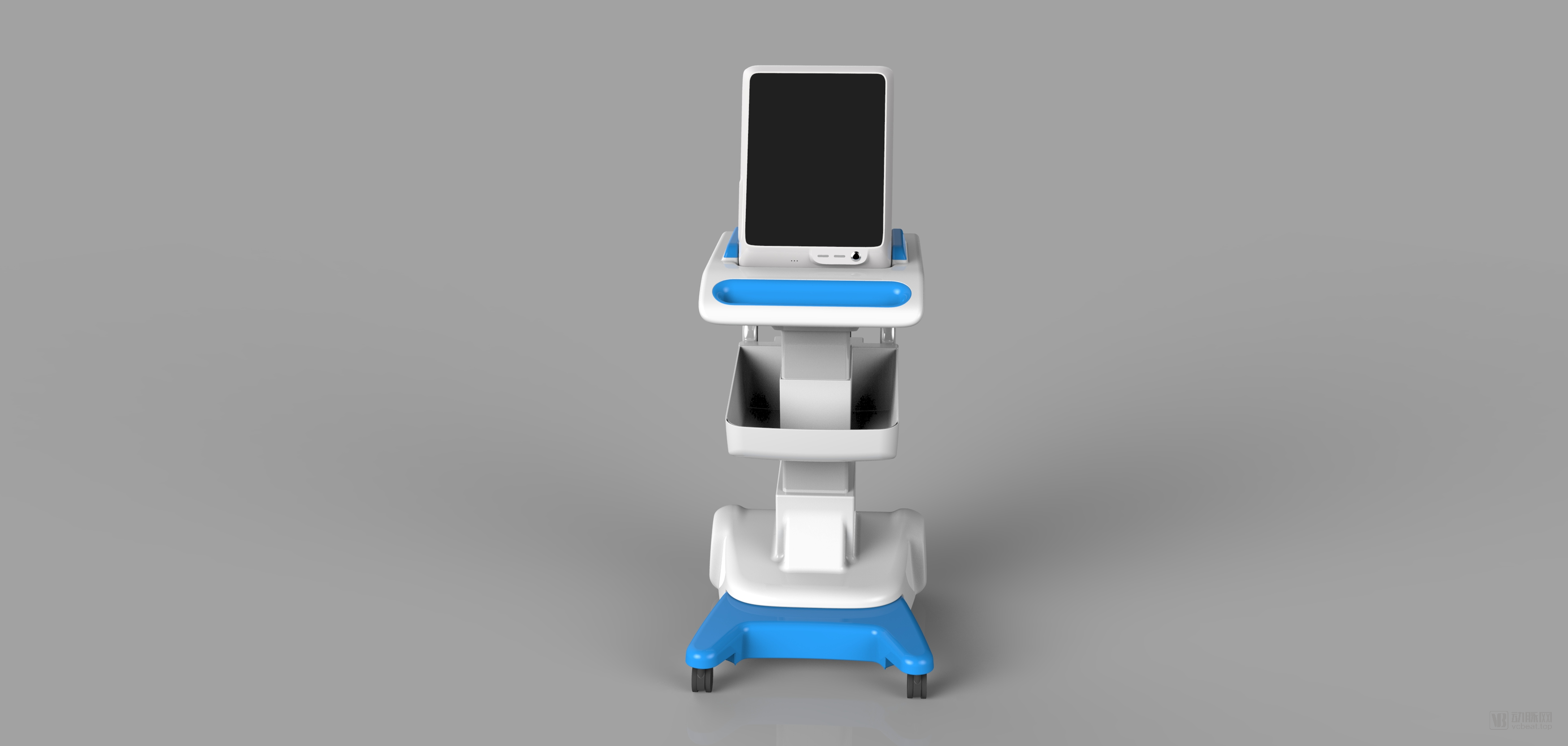
Currently, BRATTEA is conducting a prospective, multicenter, randomized, parallel-controlled clinical trial across more than 10 Grade A tertiary hospitals in China to evaluate the safety and efficacy of its renal denervation (RDN) radiofrequency ablation system for the treatment of primary hypertension. To date, over 80 patients have received treatment with the RDN system, yielding positive feedback.
High-imitation Models Struggle to Sustain Long-term Vitality, While Independent Innovation Highlights the Core Strength of Private Enterprises
Among existing global companies in the field of renal denervation (RDN), BRATTEA has highlighted the independent innovation capabilities of leading Chinese enterprises in this sector. “Although the company holds multiple authorized patents in both the United States and China for spiral and leaflet-shaped designs, we chose to develop a proprietary 6-electrode basket-style ablation catheter based on physicians’ surgical preferences.” The basket-shaped tip, with a variable diameter ranging from 3 mm to 12 mm, ensures excellent wall apposition across vessels of varying calibers. Its intelligent operating system simultaneously monitors temperature, impedance, and power, guiding the operator to achieve rapid and effective ablation.
“Our product also overcomes the challenge of renal artery flow occlusion associated with balloon expansion chosen by other brands. For physicians qualified to perform interventional procedures, there is virtually no learning curve. We firmly believe that technology is the core competitive advantage, and we are capable of rapidly promoting our solution in catheterization laboratories at primary healthcare institutions!” said Bao Haiyun confidently.
RDN is Emerging as a Hotspot for New Technologies in Cardiology, with Promising Prospects for Non-Pharmacological Treatment of Hypertension
May 17 is World Hypertension Day. According to the latest statistics, the prevalence of hypertension among adults in China is 23.2%, meaning that one in every four adults suffers from high blood pressure. For every 10 mmHg increase in blood pressure, the risk of stroke and fatal myocardial infarction rises by 53% and 31%, respectively. In China, the effective control rate of hypertension stands at only 16.7%. The disability and mortality associated with hypertensive complications impose a heavy burden on families and society. With nearly 300 million individuals affected by hypertension in China, the situation regarding rational prevention and blood pressure control remains grim.
“The emergence of renal denervation (RDN) technology has provided a new therapeutic avenue for patients with refractory hypertension despite multiple antihypertensive medications, and also offered a new option for younger patients who are reluctant to take medications or find them burdensome,” said experts at the RDN roundtable discussion during the Oriental Congress on May 28.
Bao Haiyun introduced that there are currently no more than 10 companies in China conducting research on renal denervation (RDN). The positive signals recently released by multinational corporations represent both pressure and opportunity for private enterprises. “This is a field of concern to patients, doctors, and the government alike, addressing an essential need for patients. The market is sufficiently large with significant growth potential. BRATTEA is willing to play an active role, demonstrating value through innovation and highlighting the advantages of private enterprises with reasonable pricing. Healthy China 2020 calls for Chinese core technologies and Chinese-made solutions!”
The Founder Has Successfully Launched Multiple Ventures, and the Executive Team Is Favored by Investors
BRATTEA, established in August 2013, specializes in the research and development, manufacturing, and sales of high-end medical devices. The company holds multiple globally leading, independently owned patented technologies in the field of minimally invasive interventional procedures and maintains close collaborative relationships with renowned medical experts, universities, and hospitals worldwide.
BRATTEA is one of the few companies in China dedicated to the research and development of radiofrequency ablation technology for nerves. While neuro-radiofrequency ablation products are already available on the European market, this technology and its associated products remain absent in China, with no related products having received regulatory approval to date. BRATTEA has dared to become one of the first domestic enterprises to develop neuro-radiofrequency ablation technology, drawing its confidence from an experienced team of R&D professionals and senior executives.
Cao Hongguang, founder and chairman of BRATTEA, graduated with a master’s degree in stereotactic radiosurgery from Southeast University in 1989. He previously served as Deputy Director of the Neurosurgery Department and concurrently as Director of the Neurosurgery Research Institute at a Grade A tertiary hospital, possessing profound expertise in neurosurgery and radiofrequency ablation technology. As both an accomplished neurosurgeon and a senior electronic engineer, he has led his engineering team to develop numerous high-end medical devices based on a deep understanding of clinical needs, including digital subtraction angiography (DSA) systems and interventional radiology robots.
In 2009, Cao Hongguang co-founded TCL Medical Systems with TCL Group. In 2010, he established Shanghai Yirui Imaging Technology Co., Ltd. and invested in Shanghai Yirui Optoelectronics Technology Co., Ltd., successfully developing China’s first amorphous silicon flat-panel detector. This product not only entered the international market but also broke the monopoly held by foreign companies. In 2013, he was honored as one of the “Top Ten News Figures in Chinese Science and Technology.” The founding of BRATTEA, which specializes in radiofrequency nerve ablation technology, has allowed him to fully leverage his adept cross-disciplinary technical expertise.
Another co-founder of BRATTEA, Dong Yonghua, holds a postdoctoral degree in medicine and is a member of the Chinese Medical Association, the Society of Interventional Radiology (SIR), and the American Heart Association (AHA). He has numerous research achievements and patented works to his name. In 1993, Dr. Dong received the “Young Investigator Award” from the Society of Cardiovascular and Interventional Radiology, becoming the first non-U.S. citizen to receive this honor.
Dr. Yonghua Dong previously served as a Senior Fellow in the Department of Radiology and Neurointerventional Radiology at the Cleveland Clinic, as well as the Director of the Interventional Research Laboratory. His primary areas of focus included research in vascular and neurointerventional radiology, along with the development and clinical evaluation of endovascular devices. As one of the founders of BRATTEA, Dr. Dong collaborated with the R&D team to develop the company’s core products and has been granted multiple invention patents.
In April 2019, Bao Haiyun resigned from his executive position at a multinational corporation to join BRATTEA as President. With 21 years of extensive experience in China’s medical device industry, including 15 years at Johnson & Johnson Medical Services and 5 years at Abbott Medical Services, Mr. Bao has personally witnessed and participated in the robust growth of this sector. He possesses a solid industry foundation and comprehensive management expertise in general surgery, cardiovascular coronary interventions, and electrophysiology.
The company’s investors expressed strong confidence in the appointment of Bao Haiyun, stating, “As our products mature, BRATTEA is in greater need of a seasoned leader who can steer market direction, excel in management and operations, and guide team development to translate technological achievements into sustained productivity.” Currently, clinical trials and regulatory submissions for the company’s products are proceeding in an orderly manner, with market entry imminent.
The senior management team’s extensive entrepreneurial experience and impressive track records have also made BRATTEA a favored choice among numerous investors. The company completed its RMB 10 million angel round in 2013, led by Northern Light Venture Capital; secured RMB 25 million in Series A financing in 2016, with participation from DaoTong Capital and Yuanyi Capital, among others; and closed a RMB 70 million Series B round in 2019. The Series B+ financing round is currently underway.