

Bluepha Secures Tens of Millions in Series A+ Funding, Signaling Rapid Growth in the Synthetic Biology Industry
VCBeat has learned that Bluepha, a biotechnology company focused on applying synthetic biology technologies to molecular and material innovation, has recently completed its Series A+ financing round. It is understood that Bluepha raised tens of millions of yuan in this round, exclusively led by Sinopharm Capital (Songhe Capital). The funds will be primarily used for the full-process digitalization of microbial design, build, and test cycles, as well as the industrial commercialization of its existing product pipeline. Probe Capital continued to serve as the exclusive financial advisor.
With this, Bluepha has completed its fourth round of financing since its establishment in late 2016. Founded by a group of young scholars who were among the first in China to engage in synthetic biology research, the company, which originated from Tsinghua University and Peking University, has gained increasing recognition from both the industry and the capital market as its technology commercialization continues to mature.
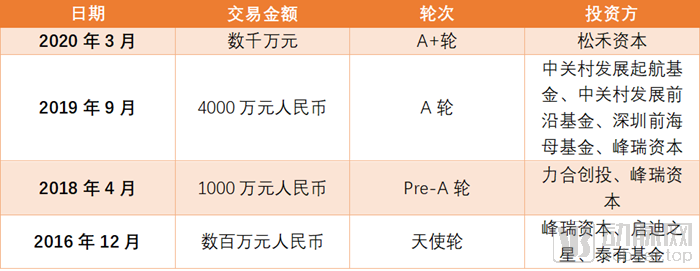
Shenzhen-based Songhe Capital, a leading investment firm that has joined this round, specializes in investing in high-growth innovative enterprises. Since its establishment in 2007, the firm has raised nearly 20 funds, with total assets under management exceeding RMB 8 billion, and has achieved IPO exits for more than 20 portfolio companies. In the healthcare sector, Songhe Capital’s star investments include BGI Genomics, Boya Editome, Genetron Health, Kunyuan Gene, and Kintor Pharmaceutical.
Luo Fei, Founding Partner of Songhe Capital, stated: “The founding team of Bluepha Microbiology comprises some of the earliest PhDs in synthetic biology in China and pioneers in the synthetic biology industry. As Zhang Haoqian and Li Teng are among the most outstanding technical talents and entrepreneurs in this field in China, we highly value their technological and first-mover advantages in the industry. Synthetic biology represents a critical technological high ground for China in future great-power competition, and we are optimistic that Bluepha Microbiology will play a leading role in this arena.”
Dr. Zhang Haoqian, Co-founder and CEO of Bluepha, stated, “As the costs of gene sequencing and DNA synthesis have dropped by several orders of magnitude over the past decade, people have gained access to an unprecedented wealth of biological data and genetic tools. Biotechnology has evolved from experience-dependent trial-and-error approaches to data-driven rational design. Bluepha aims to capitalize on this trend by tackling the most commercially promising challenges in biotechnology, striving to grow into a world-class biotech enterprise that deeply understands and actively shapes the future. We appreciate Sinovc Capital’s recognition of this vision.”
Dr. Li Teng, Co-founder and President of Bluepha, stated, “We are grateful for the trust placed in us by Sinovest Capital, which enabled us to complete a new round of financing that was both rapid and smooth. The current prosperity in the field of synthetic biology is beyond what we could have imagined at the outset of our venture, particularly given the numerous new opportunities arising from its integration with China’s robust industrial base. Throughout our journey, Bluepha has experienced rapid growth and evolution, and we are fortunate to work alongside many visionary partners and investors.”
Feng Lihui, Deputy Director at Probe Capital, stated, “Generally, industrial innovation in biotechnology has been focused solely on pharmaceuticals, but Bluepha Microbiology represents a fascinating exception. As traditional chemical processes approach their technological limits, synthetic biology technologies that leverage engineered biological cells as work platforms are poised to usher in a new revolution in molecular and material innovation. This field holds immense potential across areas such as fine chemicals, disease diagnosis and treatment, agricultural improvement, and drug development.”
Synthetic biology, also known as engineering biology, is a discipline that integrates biological sciences with engineering to design and construct living cells—and even more complex biological systems—with novel biological functions. It holds promise for addressing challenges faced by modern society in areas such as energy, materials, health, and sustainable development. To date, synthetic biology has branched into multiple research directions. Among these, cell factories—engineered to synthesize specific compounds through constructed metabolic pathways—have the most direct industrial applications.
Dr. Zhang Haoqian told VCBeat that the research and development of cell factories is mainly divided into three stages: design, construction, and testing. Typically, results obtained from the testing stage are fed back to the design stage for optimization and adjustment. After multiple rounds of iteration, an ideal cell factory can be achieved.
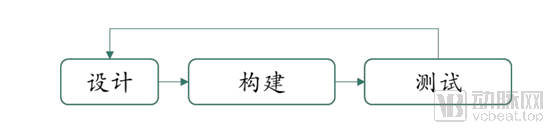
Cell Factory R&D Process (Source: Probe Capital)
Here, design refers to the rational design of genetic pathways based on the target product, utilizing endogenous or exogenously supplemented substrates within the cell to synthesize the target compound—that is, the process by which raw materials are converted into the target product under the action of multiple enzymes. Construction involves synthesizing the corresponding DNA fragments according to the designed gene sequences and ensuring that the genetic pathway functions as expected in living cells. Testing entails evaluating multiple indicators, such as cell status, intermediate metabolite concentrations, and final product concentrations, after the cell factory has been established. Subsequently, the design is optimized and iterated based on feedback from the test results, ultimately yielding a cell factory capable of producing the target product.
From the laboratory to the factory, synthetic microbes are addressing not only the cost of compound synthesis but also surpassing traditional chemical processes by creating entirely new molecules and materials. Dr. Li Teng pointed out, “Just as integrated circuits transformed the way information is processed, synthetic microbes will change how people obtain new molecules and new materials in the future.”
The industrialization of synthetic biology first took hold abroad, with startups such as Ginkgo Bioworks, Lodo Therapeutics, Zymergen, Synlogic, and Indigo Agriculture emerging as star players in the field. Among them, Zymergen, which combines synthetic biology with artificial intelligence for the development of new materials for the electronics industry, has experienced particularly rapid growth.
In 2013, Jed Dean and Zach Serber founded Zymergen in Emeryville, California. Prior to this, they had been developing renewable energy technologies at the synthetic biology company Amyris. While attempting to engineer microorganisms for biofuel production, the two founders found that traditional R&D approaches were prohibitively slow—testing ten design variants took a full month. They sought to leverage automation to accelerate experimental workflows, an vision they ultimately realized through Zymergen.
Zymergen integrates artificial intelligence and automation technologies into the entire workflow of design, build, and test, while leveraging vast amounts of omics data to exponentially enhance the efficiency of microbial engineering. These capabilities are applied to the development of novel electronic industrial materials, such as flexible organic light-emitting semiconductors (flexible OLEDs). According to Crunchbase, Zymergen has completed four rounds of financing totaling over $500 million in the nearly seven years since its founding.

In October 2019, Bluepha signed a strategic cooperation agreement with Sinochem International (600500.SH), a chemical giant under central state-owned enterprises, at Tsinghua University. The two parties will jointly promote the industrialization of bio-based biodegradable material PHA, marking a significant milestone in the industrial application of synthetic biology technology in China.
Due to the complexity of biological systems, designing genetic pathways within living cells is an extremely challenging task. The gene pathway design and development capabilities of Bluepha’s R&D team are at the forefront globally, while its advisory team comprises early pioneers who established a series of technical standards and theories in the field of synthetic biology. Dr. Zhang Haoqian, with an interdisciplinary academic background in biology and physics, designed and synthesized a genetic pathway comprising more than 50 genetic elements five years ago—a level of complexity that remains unmatched to this day. Dr. Li Teng was recognized in 2019 as one of MIT Technology Review’s “35 Innovators Under 35” in China and as one of Fortune China’s “40 Under 40” business leaders, owing to his achievements in applying synthetic biology technologies to industrial microbiology. Currently, Bluepha has established a genetic pathway design platform unique to the industry both domestically and internationally. This platform addresses molecular and material innovation needs in the healthcare, environmental protection, and consumer sectors, positioning it to capture a share of the global market valued at hundreds of billions of dollars.
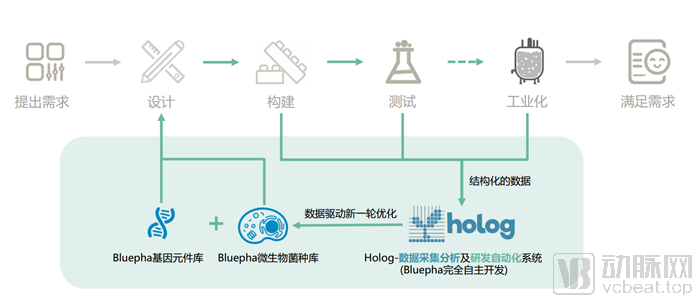
Bluepha Microbiology Workflow (Source: Bluepha Microbiology)
According to Dr. Zhang Haoqian, there are two main factors hindering the further development of synthetic biology:
First, the cost of DNA synthesis per base pair limits the scale of biological systems that synthetic biology technologies can handle. Although the cost of DNA synthesis has decreased by 1,000-fold over the past two decades, at least another order-of-magnitude reduction is required to enable genome-scale engineering in any biological cell.
Second, the level of automation in biological experiments determines the speed of iterative cycles for design, construction, and testing. High-throughput, well-integrated automated experimentation will significantly accelerate data acquisition, broaden the dimensions of data recording and analysis, and enhance the reproducibility of biological R&D outcomes.
Bluepha is building an automated R&D pipeline for cell factories, gradually leveraging artificial intelligence to replace traditional manual tasks such as interpreting experimental data, generating hypotheses, and designing experiments. The company’s self-developed Holog system is capable of storing and analyzing all experimental process data. Dr. Li Teng stated, “At this stage, our automation platform focuses on the testing phase, which is critical for Bluepha to achieve high-efficiency custom microbial development.”