

SuiAn Biotech Completes Angel Round Funding with Proprietary CTC Liquid Biopsy Nanotechnology Achieving Over 96% Sensitivity and Specificity
VCBeat (WeChat ID: vcbeat) has learned that Shanghai Suian Biotechnology Co., Ltd. (hereinafter referred to as “Suian Bio”) recently completed its angel financing round of several million yuan, which was funded by individual investors.
Sui’an Bio has long attracted the interest and attention of numerous investment institutions due to its development of a unique nanotechnology-based circulating tumor cell (CTC) detection platform. By leveraging the distinct metabolic characteristics of cancer cells and their resulting special biophysical properties, this technology achieves broad-spectrum coverage, high efficiency, high sensitivity, and high specificity in CTC detection, thereby addressing the longstanding bottlenecks that have constrained the development of the CTC industry.
SuiAn Bio was officially registered and established in April 2019, while its R&D on nanotechnology for CTC detection began as early as 2012, taking initial shape in the laboratory by 2016. Since its incorporation, SuiAn Bio has attracted continuous interest from investors seeking to inject capital. However, Dr. Chen Bingdi, the founder of SuiAn Bio, stated that he has specific criteria for capital infusion. He aims to partner with more professional investment institutions that not only provide financial support but also align with the company’s development philosophy and facilitate access to relevant resources to promote its growth.
Sui'an Bio has recently launched its pre-A round of financing, aiming to raise RMB 15 million. The funds will be primarily used for the development of automated CTC (Circulating Tumor Cell) instruments and further enhancement of its technical team.
Dr. Chen Bingdi graduated from Zhejiang University with a solid engineering background, studying under the renowned semiconductor experts, Academician Que Duanlin and Academician Yang Deren.
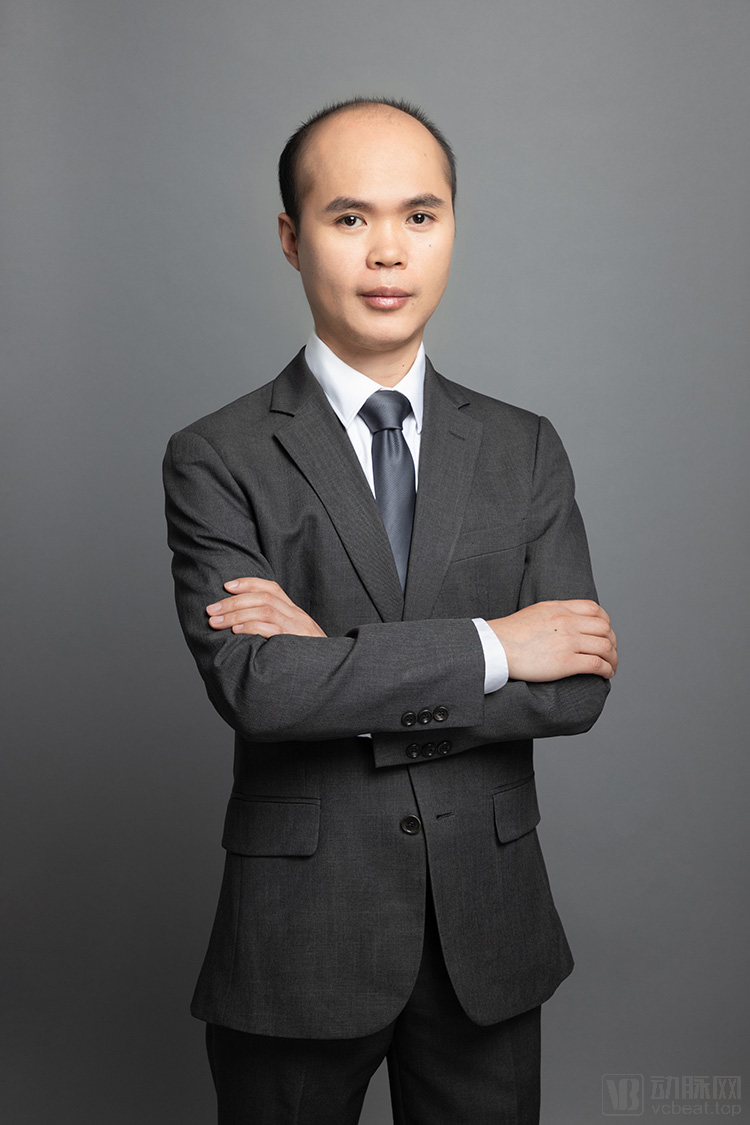
Dr. Chen Bingdi, Founder of Sui'an Bio
After completing his Ph.D. at Zhejiang University, Chen Bingdi successfully secured a postdoctoral position in Canada, aligning with the traditional career path for most doctoral graduates (pursuing postdoctoral research abroad). However, Chen hesitated. He stated, “I graduated with my doctorate in 2010. From the perspective of China’s overall development trends, I believed that future opportunities within the country would far exceed those abroad. Additionally, I had been engaged in nanomedicine research throughout my doctoral studies, and Tongji University had just established its Institute of Nanomedicine. The field of interventional medicine has always been my passion, so I followed my heart and joined Tongji University.”
Currently, Chen Bingdi is an Associate Professor and Doctoral Supervisor at the School of Medicine, Tongji University. He remarked, “Looking back now, I believe that whether it was pursuing graduate studies at Zhejiang University and transitioning into nanomedicine research, or forgoing a postdoctoral position to join Tongji University, these were all very correct choices. I have gained access to excellent resources, and this accumulation of experience has been immensely helpful for my subsequent entrepreneurial endeavors.”
“Previously, I applied nanotechnology to address energy issues, which was also Dr. Chen Bingdi’s career plan during his doctoral studies. However, an opportunity in 2007 changed this trajectory. ‘It was somewhat serendipitous. While pursuing my PhD at Zhejiang University, a National High-Tech Research and Development Program (863 Program) project sought to design targeted imaging probes for pancreatic cancer. My supervisor approached me, and since I had harbored a desire to study medicine since childhood, I seized the opportunity and followed my supervisor’s guidance to participate in the project. This marked my transition from the energy sector to the medical field. At its core, the essence remained unchanged: applying nanotechnology to solve problems in different domains,’ Chen Bingdi told VCBeat.”
Since entering the field of interventional medicine in 2007, Dr. Chen Bingdi has been deeply engaged in nanotranslational medicine. In 2012, he ventured into the field of liquid biopsy and commenced research on circulating tumor cell (CTC) detection. After four years of laboratory research, preliminary validations conducted by Dr. Chen’s lab in 2016 yielded highly promising results, prompting the initiative to translate these scientific achievements into practical applications. “Advanced technologies should truly benefit cancer patients.” The predecessor of SuiAn Bio was the laboratory research team led by Dr. Chen Bingdi.
In recent years, liquid biopsy for cancer has emerged as a highly prominent field. Owing to its advantages of being rapid, simple, painless, and non-invasive, it was named one of the 10 Breakthrough Technologies in 2015 by MIT Technology Review.
Liquid biopsy can be segmented into multiple subfields, including the upstream market for capture technologies, gene amplification, reagents, and instruments; the midstream market for testing services; and the downstream data market. Many international pharmaceutical giants and venture capitalists have long targeted this hot sector, such as Johnson & Johnson’s subsidiary Veridex acquiring Immunicon’s CTC business, and Roche acquiring the German oncology translation and genomics company Signature Diagnostics.
In the upstream capture of tumor cells, both primary tumors and metastatic lesions release circulating tumor cells (CTCs) into the peripheral blood circulation. These cells carry a wealth of tumor-related information, holding immense research and application value; however, their extremely low abundance makes them difficult to capture. Isolating these rare cancer cells from whole blood and performing quantitative detection represents a significant challenge in CTC-based liquid biopsy.
Capturing circulating tumor cells (CTCs) in peripheral blood fundamentally requires separating cancer cells from normal cells, based on the differences between them. For both basic research and industrial applications, current CTC isolation methods mainly fall into two categories: physical methods and biological methods.
“Currently, the mainstream approaches involve leveraging differences in surface antigens between tumor cells and normal cells to capture tumor cells via antigen-antibody binding, or physically separating and capturing them based on differences in cell size,” Dr. Chen Bingdi told VCBeat.Sui’an Bio has adopted a fundamentally different innovative approach—leveraging the differences in glucose metabolism between tumor cells and normal cells for CTC capture. Compared with existing separation technologies, this method achieves higher capture efficiency, as well as high sensitivity and specificity.”
Based on clinical data from Sui’an Biotech, among 238 blood samples from cancer patients, 229 tested positive for circulating tumor cells (CTCs), yielding a sensitivity of over 96%; among 241 blood samples from healthy individuals, 232 tested negative for CTCs, resulting in a specificity of over 96%. In terms of capture efficiency, Sui’an Biotech can isolate an average of more than 100 viable CTCs from 1 mL of peripheral blood (from patients with solid tumors), with a maximum capture exceeding 2,000 viable CTCs.
Dr. Chen Bingdi stated that the current efficiency of CTC capture has not yet reached its true limit. Since the actual total number of CTCs in peripheral blood cannot be determined, it is correspondingly difficult to calculate the true percentage based on the number of CTCs captured by the instrument. However, Sui’an Bio’s CTC technology captures cells based on differences in glucose metabolism between cancer cells and normal cells. By capturing blast cells in leukemia and then estimating the total number of genuine cancer cells through microscopic clinical examination, the true CTC capture efficiency in clinical blood samples can be derived.
According to research data from Sui'an Biotech, there is still significant room for improvement in cell capture efficiency within the industry. The number of circulating tumor cells (CTCs) currently captured may be far lower than the actual total CTC count. Overcoming this challenge heavily relies on technological innovations in upstream CTC detection.
Sui’an Biotechnology adheres to the principle that slow and steady work yields fine results. Since initiating its layout for CTC nano-detection in the laboratory in 2012, the company has preliminarily refined its kit products and obtained regulatory approval. The kits were initially designed to enable users to perform manual operations using conventional equipment such as laboratory instruments. However, recognizing that manual handling introduces operational errors and limits throughput—thereby hindering product promotion—Sui’an Biotechnology has launched the production of automated instrumentation.
Currently, Sui’an Biotech’s primary offerings remain focused on CTC technical services. Upon completion of the development of its automated instruments, the company will provide the market with an integrated “reagents + instruments” product solution.