

Sinogene Biotechnology Advances Autism Research with World's First SHANK3-Edited Canine Model and Secures National Key Scientific Project
On the recently observed World Autism Awareness Day 2020, Beijing Sinogene Biotechnology Co., Ltd. released an experimental video featuring its canine model of autism. Previously, in March 2018, Sinogene Biotechnology had successfully produced the world’s first gene-edited canine model of autism.
In the video, wild-type Beagles actively interact with humans and respond when strangers call their names, whereas the Shank3 (postsynaptic density scaffold protein gene) edited canine autism model exhibits no eye contact or social interaction with humans, prefers solitude, and occasionally engages in frantic circling.
Zhao Jianping, Deputy General Manager of Sinogene Biotechnology, told VCBeat that the behavioral abnormalities and repetitive stereotyped behaviors observed in Shank3 gene-edited dogs are core clinical symptoms of autism. “As an animal model, to simulate the pathogenesis and clinical features of patients, it is not only necessary to knock out the SHANK3 gene, but more importantly, the behavioral patterns and social interactions must align with those of patients.” This marks the first time humans have used canine gene-editing and cloning technologies to construct mutants with mutations in genes related to social behavior and emotion, thereby revealing the biological basis of social interaction and emotion.
It is reported that in December 2019, Beijing Sinogene Biotechnology Co., Ltd., in collaboration with the Institute of Genetics and Developmental Biology, Chinese Academy of Sciences; the Institute of Biophysics, Chinese Academy of Sciences; the Kunming Institute of Zoology, Chinese Academy of Sciences; and Peking University—five institutions in total—successfully passed the defense for their joint application to the Ministry of Science and Technology’s National Key R&D Program. The application was under the “Key Scientific Issues in Transformative Technologies” initiative, specifically the special project titled “Biological Basis and Translational Research on Social Behavior and Emotions.” With this approval, comprehensive research activities for the project have been launched.
Dogs are among the earliest animals domesticated by humans, with the earliest evidence of dog domestication dating back to the Neolithic period more than 10,000 years ago. Using domestic dogs as model organisms in research on social behavior, emotion, and cognitive function can better elucidate the genetic and neurobiological mechanisms underlying human social and emotional processes, potentially leading to breakthroughs in the development of therapeutics for cognitive and psychiatric disorders in the future.
Since autism was first diagnosed in 1943, scientists have been dedicated to uncovering the deeper pathogenic mechanisms of this disorder. Through genetic testing of large samples of individuals with autism, researchers have found a significant association between SHANK3 and autism.
SHANK3 is one of the most extensively studied autism-causing genes. Autism spectrum disorder caused by SHANK3 mutations is primarily characterized by hypotonia, developmental delay, absence or lag in language development, social impairments, and even intellectual disability. Through whole-genome sequence analysis of domestic dogs, researchers found that the structure of the Shank3 gene in dogs is similar to that in humans. Consequently, Beijing Sinogene Biotechnology Co., Ltd. conducted gene editing on domestic dogs. Mr. Zhao Jianping told VCBeat that the company currently possesses F0 generations with deletions of exon 21 of the Shank3 gene and large-fragment deletions of exons 5–21, as well as a substantial number of heterozygous F1 generations with various genotypes. Phenotypic analysis revealed that the mutant dogs exhibited varying degrees of autism-like clinical symptoms, including abnormal motor function, repetitive and stereotyped behaviors, impaired dog-dog and dog-human social interactions, and cognitive deficits.
Beijing Sinogene Biotechnology Co., Ltd. was founded in 2012 and is a national high-tech enterprise located in the Changping Science Park in Beijing. As a domestic company engaged in the commercialization of animal gene technology, Sinogene has established two major technical platforms for animal gene editing and somatic cell cloning. It conducts cloning across multiple species, including dogs, cats, horses, pigs, and cattle, pioneering the new global field of gene-edited canine disease models and developing next-generation model animals.
Beijing Sinogene Biotechnology Co., Ltd. has successively developed the world’s first gene-edited canine model of atherosclerosis (“Apple”), the world’s first gene-edited cloned dog (“Longlong”), the world’s first canine model of autism, the world’s first canine model of GCK diabetes with point mutations, the world’s first canine model of Leber congenital amaurosis (LCA), China’s first cloned police dog (“Kunxun”), and China’s first cloned cat (“Dasuan”). With support from Tus-Holdings and CCB International, the company is promoting the industrialization of its scientific and technological achievements and gradually advancing their commercial application.
In fact, dogs have a long history of being used as test animals in drug development. They are internationally recognized as standard laboratory animals and have contributed to multiple Nobel Prizes in Physiology or Medicine. Mr. Zhao Jianping pointed out that during the long period of coexistence with humans, domestic dogs have developed many characteristics similar to those of humans due to shared living environments, dietary structures, and long-term convergent evolution. They tend to be more docile and exhibit higher compliance in experiments. “Beagles are the most commonly used domestic dogs in experiments. They share similarities with humans in histology, anatomy, and structural biology, playing a significant role in drug metabolism and toxicology research.”
Since its inception, Sinogene Biotechnology has been dedicated to developing a series of gene-edited canine disease models that simulate human clinical conditions. The company has established model animals covering multiple fields, including brain science, cardiovascular and cerebrovascular diseases, metabolic disorders, and rare diseases, with breeding extended up to the F2 generation. These models provide critical support to numerous research institutions, medical centers, and biopharmaceutical enterprises in China for studying disease pathogenesis, evaluating drug efficacy, conducting new drug development experiments, and assessing the effectiveness of non-pharmacological treatments.

Compared with other types of model animals, such as mice and non-human primates, domestic dogs possess rich social and emotional capacities, particularly in cross-species interactions with humans. They exhibit high compliance, rapid reproduction, and are amenable to genetic manipulation. Furthermore, as common companion animals, dogs benefit from a relatively comprehensive veterinary healthcare system. Diagnostic modalities, including medical imaging, ultrasonography, and biochemical assays, provide robust medical support for the research and application of canine models, making them ideal model organisms for studying various common human diseases. Genetically edited canine disease models are established by employing genetic engineering techniques to edit the canine genome. These models exhibit primary disease symptoms, long-lasting phenotypes, and heritability, thereby enabling a more comprehensive and authentic simulation of human diseases.
According to Mr. Zhao Jianping, Beijing Sinogene Biotechnology Co., Ltd. (Sinogene) currently delivers model animals primarily through two channels: sales of established models and commissioned custom development. For relatively mature model animals, such as systemic atherosclerosis canine models and autism canine models, the company mainly adopts an order-based sales approach to provide products directly to users. For new research directions requiring further development of model animals, Sinogene fulfills delivery through custom development services. Additionally, recognizing that many research teams lack experimental platforms and facilities for large animals, the company offers large-animal experimental services based on its model animals. Through years of operation, Sinogene has accumulated extensive experience and research capabilities, establishing stable collaborative relationships with numerous domestic and international universities, research institutes, and pharmaceutical companies.
In the field of life sciences research, experimental studies require four basic elements: laboratory animals, equipment, information, and reagents. Laboratory animals, also known as model organisms, are indispensable vehicles for life sciences research. According to statistics, approximately 86% of all papers published in Nature Medicine in 2008 utilized laboratory animals. With the rapid development of gene editing technologies, researchers have begun to employ genetic modification techniques to generate various laboratory animals with gene knockouts and gene knock-ins.
Currently, the rapid development of scientific research and the translation of achievements in China’s life sciences sector has driven a surge in demand for the model animal industry, which serves as a critical support and service sector. The industry is experiencing an annual growth rate exceeding 20%. In particular, the rapid advancement of gene technology has led to an explosive release of demand for gene-edited model animals that can more accurately simulate human genetic disorders.
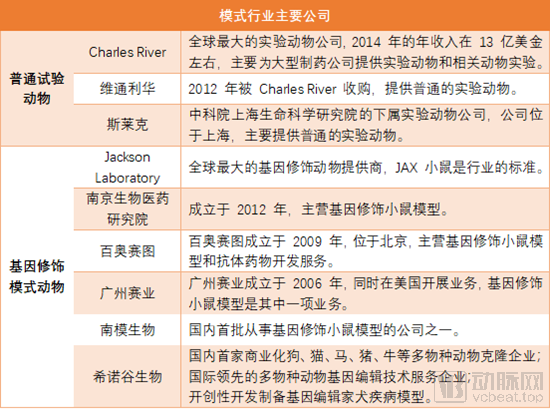
As the global life sciences industry continues to expand rapidly, the model organism sector has evolved from a mere subsector of life sciences into a primary driving force for biotechnology, medicine, pharmaceuticals, and related industries. In recent years, research institutions and scientific teams worldwide have invested substantial funds in life sciences research.
Taking the U.S. National Institutes of Health (NIH), one of the largest life sciences research entities in the United States, as an example, its research funding budget from the U.S. federal government amounted to $32.3 billion in fiscal year 2016, an increase of approximately $2 billion over fiscal year 2015, representing a 6% growth. According to NIH data, the average daily inventory of laboratory animals at the top 25 institutions funded by the U.S. federal government increased significantly over the past 15 years, rising from approximately 74,600 during the period from 1997 to 2003 to approximately 128,900 during the period from 2008 to 2012, a 73% increase.
In China, both the Outline of the 13th Five-Year Plan for National Economic and Social Development and the Decision of the State Council on Accelerating the Cultivation and Development of Strategic Emerging Industries have designated the life sciences industry as one of the strategic emerging industries. In recent years, investment in life sciences research has continued to increase. The New England Journal of Medicine (NEJM) has pointed out that in the field of biomedicine alone, China’s research investment grew from approximately $2 billion in 2007 to about $8.4 billion in 2012, representing an average annual growth rate of 33%. This surge has spurred substantial demand for model animals and animal experiments conducted using these models.
Gene editing technology is currently the most prominent and rapidly advancing application area in biotechnology, representing one of the most direct and effective methods for studying gene function in the genomics era. As a standard model organism in biomedical research, dogs serve as ideal large-animal models for investigating human brain science, cardiovascular diseases, metabolic disorders, rare diseases, and oncology through genetically edited disease models. Mr. Zhao Jianping stated that, as a new generation of model animals, genetically edited canine models are poised to open up new research directions and drive industrial development in both basic life sciences and translational applied research. These models will provide robust support and efficient assistance in enhancing drug discovery efficiency, as well as facilitating drug screening, drug metabolism studies, and efficacy evaluations.