

Fu Ren Shu Fan Advances into Digital Therapeutics, Serving 2,000 Schools and 240 Institutions with Mental Health Solutions
This marks VCBeat’s second interview with Beijing Furen Shufan Software Technology Co., Ltd. (hereinafter referred to as “Furen Shufan”) after a two-year interval.
When asked about the changes at the company over the past two years, Lou Ji, founder of Beijing Furen Shufan Software Technology Co., Ltd., summarized its development during this period with the phrase: “Stay true to our original aspiration, embrace change.”
Upholding its original aspiration, Furen Shufan has continuously exerted effort and achieved breakthroughs in the integration of industry, academia, and research, steadily transforming into a comprehensive ecosystem service provider for mental health in China. Leveraging its affiliation with Beijing Normal University, Furen Shufan boasts profound academic foundations and robust R&D capabilities, having secured 6 invention patents and over 40 software copyrights. In addition to providing comprehensive mental health solutions for schools and third-party youth development educational institutions, Furen Shufan has been establishing offline youth growth centers outside the school system. To date, Furen Shufan has served 2,000 schools and 240 institutions, covering 19 provinces and more than 50 cities, and has accumulated a big data repository of over 30 million records on the psychological well-being of Chinese adolescents.
"Adapting to Change" refers to the emergence of new pain points and challenges in the market that companies must address as they deepen their development. "When establishing offline youth development centers outside of schools, two significant difficulties gradually came to light," Lou Ji told VCBeat. As these centers were set up to alleviate the shortage of school-based psychological counselors, the first issue encountered was whether parents or schools should pay for the services. Given the large number of students, schools are unable to sustain broad and long-term payment coverage. This leads to the second issue on the parental side: due to a certain gap in awareness regarding the prevention and treatment of mental health conditions, parents’ willingness to pay is not strong, indicating that the market still requires further education.
How to Identify More Efficient Business Models? What Perspective Should Be Adopted When Evaluating Current Commercial Ventures in the Mental Health Sector? What Additional Elements Are Required to Build Competitive Barriers? In Response to These Challenges Encountered During Rapid Corporate Growth, Beijing Furen Shufan Software Technology Co., Ltd. Is Providing Its Own Solutions.

Beijing Furen Shufan Software Technology Co., Ltd. is among the first batch of national-level high-tech enterprises in China. Leveraging the academic resources of Beijing Normal University, the company has successively developed a range of psychological software and hardware products, accumulating substantial academic expertise and R&D experience.
As the field of mental health continues to expand, Lou Ji has been considering which pain points concern parents the most. “Attention may be one of them. When you tell parents that their child has a mental disorder, they often find it difficult to accept, leading to an inherent psychological resistance,” said Lou Ji. He noted that because attention affects an individual’s ability to acquire information, it directly impacts children’s academic performance, thereby becoming a mental health issue that parents highly prioritize.
According to survey statistics from the China Association for Maternal and Child Health Studies, approximately 75% of children in China exhibit varying degrees of attention deficits. Furthermore, UNESCO has identified attention problems as the primary factor contributing to learning disabilities among children worldwide.
Leveraging the aforementioned market pain points, profound academic heritage, and robust R&D capabilities, Beijing Furen Shufan Software Technology Co., Ltd. has developed the DS3 Attention Assessment and Training System, designed for attention assessment and training in adolescents aged 5 to 12. Developed by a team of authoritative psychology experts from Beijing Normal University, this system represents the latest application of scientific research outcomes. Grounded in the theory of attention and its four fundamental qualities, the system features five key characteristics.
First, scientific assessment. The system evaluates the attention span of children aged 5–12 years across four dimensions—breadth, stability, distribution, and shifting—and provides corresponding training.
Second, develop personalized 1-on-1 systematic training plans. Based on the results of systematic assessments, adaptive training programs are tailored for each adolescent. Attention training includes games such as "Quick Reflexes," "Visual Acuity Challenge," "Treasure Hunt," "Number Matrix," "Target Search," and "Top Detective." The curriculum comprises behavioral training, software-based training, level-based progressive training, and parent education sessions.
Third, generate an integrated training report by combining EEG biofeedback. The system continuously monitors EEG-based feedback parameters for “relaxation and concentration” during student training sessions, regulates internal physiological activities, and captures non-conscious physiological responses. By integrating machine-assisted training with EEG biofeedback, it produces comprehensive and scientifically grounded training reports. Trainers then adjust their supportive interventions based on these reports and student performance to ensure optimal training outcomes.
4. A tripartite auxiliary training model integrating home, school, and student. Beijing Furen Shufan Software Technology Co., Ltd. provides convenient home-based training programs that combine off-campus and home-based auxiliary training methods. With seamless integration of online and offline components, real-time monitoring of effectiveness is achieved. Children are required to complete video check-ins 2–3 times per week, with each session lasting 5–10 minutes, to help them establish good attention habits.
5. Reassess the effectiveness of training. Staff members will conduct follow-up attention assessments for children every three months. Through this iterative cycle of assessment, training, and reassessment, we aim to better help children improve their attention levels, stimulate their initiative and autonomous development, and assist students in overcoming learning difficulties.
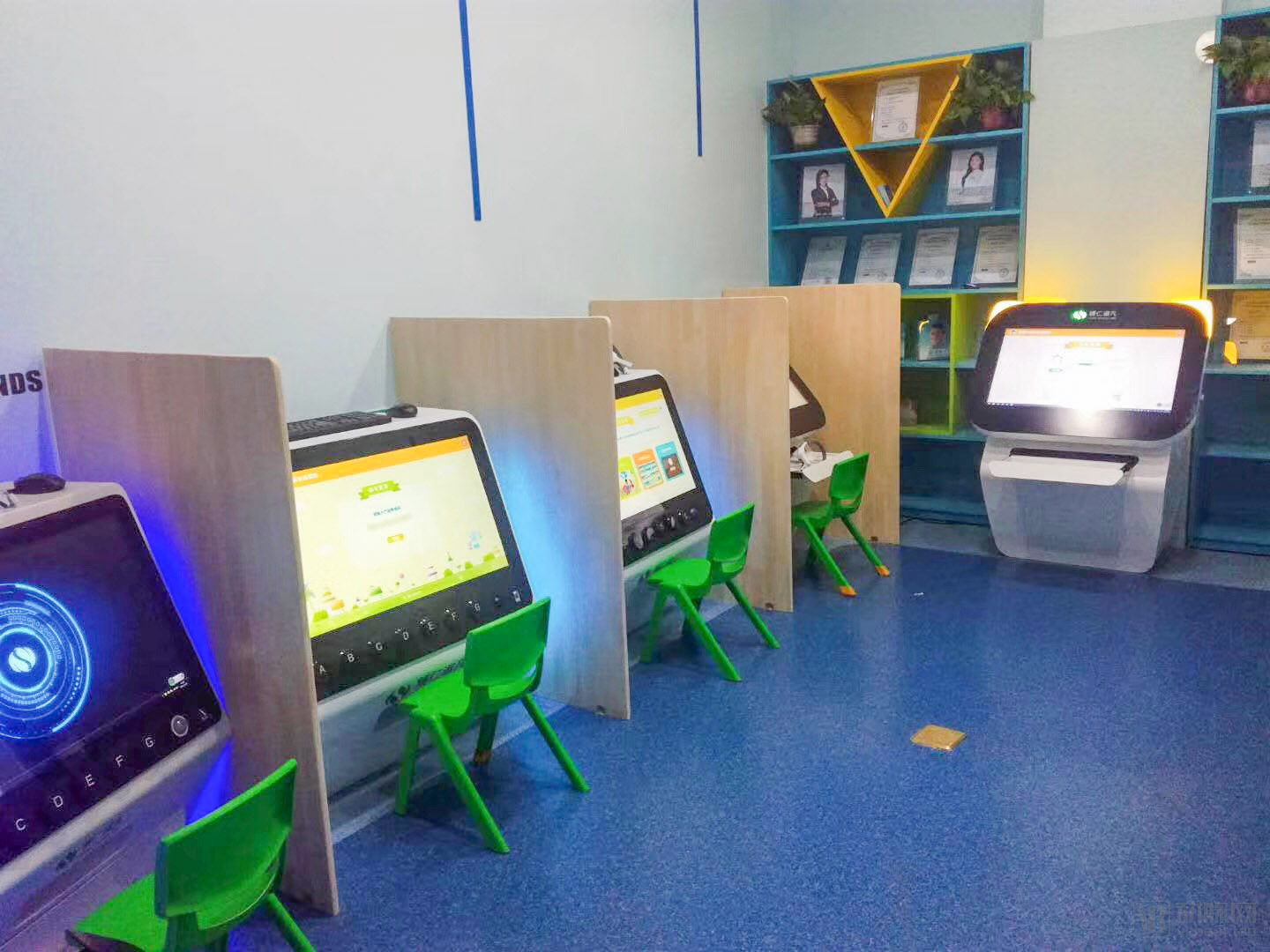
To date, the Attention Assessment and Training System has been deployed in dozens of primary and secondary schools, with over 200 educational institutions joining the DS3 Attention Assessment and Training System. The system has served and trained more than 2,000 children, achieving an 86.67% standard efficacy rate in attention improvement.
At the school level, the Attention Assessment and Training System adopts a bundled service model comprising hardware, user accounts, assessment and training cards, and quarterly subscriptions. The all-in-one attention assessment and training unit (large device) is typically installed in the school’s psychology exhibition room, allowing teachers and students to participate jointly in assessments and training. Smaller attention assessment and training devices can be flexibly deployed in individual classrooms according to the needs of classes and teachers. The assessment and training cards are used to conduct professional evaluations of the four dimensions of attention for all students in the school. This process helps identify a small number of students with severe attention deficits who require improvement through specialized training interventions. Targeted training plans are then developed for these students to scientifically enhance their attention capabilities, thereby comprehensively improving academic performance.
During the COVID-19 pandemic this year, most regions implemented isolation and social distancing measures to combat the virus, which has significantly impacted patients with chronic diseases and those with mental health conditions.
In response, digital therapeutics (DTx), as a novel solution, have been placed on the agenda in the United States. The U.S. Department of Health and Human Services (HHS) and the Food and Drug Administration (FDA) recently jointly issued the “Enforcement Policy for Digital Health Devices for Treating Psychiatric Disorders During the Coronavirus Disease 2019 Pandemic.” VCBeat provided an in-depth analysis of this development in its recent article, “Will Digital Therapeutics Become the Next Blue Ocean? FDA Approves Seven New Applications in Six Months, While China Sees New Progress.”
Digital therapeutics have demonstrated significant efficacy in improving attention. In a randomized clinical trial conducted by the U.S. company Akili Interactive Labs for pediatric attention-deficit/hyperactivity disorder (ADHD), 348 children participated. The data indicated that video game-based digital therapeutics offered statistically significant advantages in alleviating ADHD symptoms in children.
Similarly, Beijing Furen Shufan Software Technology Co., Ltd.’s attention training program also operates in this field. “Our research and services target non-clinical children with attention difficulties,” stated Lou Ji. Over years of development, the company has accumulated a psychological big data repository comprising over 30 million records from more than 2 million Chinese adolescents. Currently, with over 2,000 non-clinical children and more than 100 children with clinical ADHD undergoing training, the company continues to expand its assessment and training datasets for non-clinical children with attention difficulties, thereby establishing a robust foundation of data resources.
In addition to possessing extensive data resources, Beijing Furen Shufan Software Technology Co., Ltd. (Furen Shufan) is continuously advancing deeper academic collaborations. Last November, Furen Shufan signed a cooperation and co-construction agreement with the Institute of Science Education at Beijing Normal University. The signing of this agreement marks the entry into substantive operational stages for the establishment of an industry-academia-research platform in science education, involving universities, enterprises, and government entities. For Furen Shufan, this development will lead to greater achievements in areas such as science education for Chinese adolescents, cultivation of core competencies, promotion of industry standardization, and data application.

At the signing ceremony, President Zheng Yonghe (fourth from left) poses for a group photo with representatives of the co-building organizations, including Lou Ji, CEO of Furen Shufan (third from right).
With its solid academic foundation and robust data infrastructure, Beijing Furen Shufan Software Technology Co., Ltd. possesses the advantages necessary to further advance in the field of digital therapeutics. The company’s next objective is to initiate clinical research projects in collaboration with relevant hospitals, ultimately aiming to obtain regulatory approval. “We hope that, through several years of effort, we can effectively improve the condition of children with ADHD, freeing them from the burdens of the disorder. Additionally, we aim to establish rehabilitation institutions, providing children in China with attention deficits access to dedicated facilities for rehabilitation and treatment.”
Regarding future development, Lou Ji stated that Beijing Furen Shufan Software Technology Co., Ltd. will continue to deepen its presence in the mental health sector and continuously optimize and iterate its related products and services. In terms of funding, the company has recent financing plans, with an expected raise of RMB 30 million to 50 million. The raised funds will be used primarily for market expansion and store network growth, as well as to further advance research and development in ADHD treatment.