

Naxions Secures Tens of Millions in USD Funding, Leading Pharma's New Marketing Era with Data Middleware and Grassroots Doctor Assistant
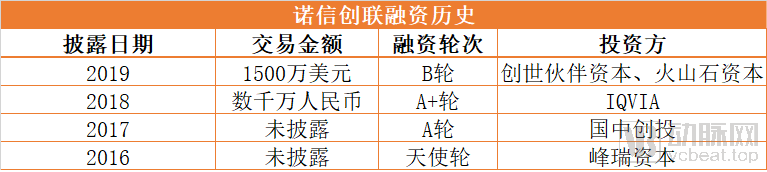
VCBeat (WeChat ID: vcbeat) has learned that Naxions Co., Ltd., a provider of digital marketing solutions for pharmaceutical companies, has completed a new round of financing amounting to USD 20 million. This round was led by Zhichun Capital, Matrix Partners China, and Morningside Venture Capital, with existing investors CCB International Capital, Volcanic Stone Capital, and Fengrui Capital (the angel-round investor) continuing to participate. Having secured funding last November, Naxions closed this new round within just a few months. Repeated recognition from prominent domestic investment firms underscores the growing momentum in the field of innovative pharmaceutical marketing and highlights the leading position of Naxions’ two core solutions: the pharmaceutical enterprise data middle platform and the grassroots physician assistant.
Naxions Co.,Ltd. specializes in providing customized digital marketing solutions for pharmaceutical enterprises. Its marketing product and service ecosystem leverages advanced technologies and algorithms, including Natural Language Processing (NLP), big data analytics, and Convolutional Neural Networks (CNNs), to integrate medical data from various regions. This process constructs a physician-centric knowledge graph of medical data, encompassing pharmaceuticals, diagnosis and treatment, materials, and surgical procedures. This enables healthcare companies to achieve more efficient market coverage and helps primary care physicians efficiently access the same professional expertise as core specialists. Within pharmaceutical companies, Naxions Co.,Ltd. builds data middle platforms that serve the overall marketing system, driving pharmaceutical enterprises toward a genuine transformation to digital marketing.
Currently, Naxions’ pharmaceutical clients include more than 20 top-tier companies such as Pfizer, Bayer, Takeda, Xi’an Janssen, and Novo Nordisk. In terms of physician services, Naxions covers over 120,000 primary-care physicians across more than 20,000 medical institutions in major provinces and municipalities throughout China (excluding Tibet). The company has received widespread acclaim from its clients, achieving a 100% renewal rate in 2019, a 250% upsell rate per drug, and a 500% year-on-year growth rate in its core business.
Company founder Ruan Wei stated that this round of financing will be primarily used for business expansion, technological investment, and product optimization.
The pharmaceutical marketing sector is enduring the growing pains of reform. What new solutions can Naxions Co., Ltd. bring to the industry? And how is this company redefining modern pharmaceutical marketing? VCBeat interviewed Ruan Wei, founder of Naxions Co., Ltd., on the occasion of the company’s financing round.
Since 2016, the pharmaceutical industry, long characterized by high gross margins, high sales expenses, and rapid growth, has faced continuous uncertainties. A series of intensively introduced policies—including the consistency evaluation of generic drugs, the two-invoice system, and the normalization of volume-based procurement—have caused sustained turbulence in the sector. It is foreseeable that as long as the national healthcare insurance remains the primary payer, its unwavering direction and determination to reduce expenditure and improve diagnostic and treatment efficiency will lead to more long-term policies and measures aimed at addressing the issue of excessively high sales expenses in the pharmaceutical industry.
In essence, whether it is volume-based procurement or medical insurance cost containment, and regardless of whether the drugs are new or old, the greatest challenge facing pharmaceutical companies is the declining profitability across the entire drug market. The marketing system bears the brunt of this profit erosion. The current profit margins can no longer sustain the extensive sales model previously prevalent in the pharmaceutical industry, necessitating a shift toward compliance, precision, and efficiency in pharmaceutical marketing.
The shift toward refined and efficient pharmaceutical marketing is driven not only by policy but also by intensifying competition for individual drug products across the entire pharmaceutical industry.
The decline in the number of medical representatives is the most direct manifestation of the severe impact on the pharmaceutical marketing system. In the long run, this reduction will be an irreversible trend. As the core of the traditional pharmaceutical marketing system, the decreasing number of medical representatives signifies that the established marketing framework is under pressure. The old order is disintegrating, while a new system is gradually being established, with a digitalized marketing framework taking shape.
The drivers of the aforementioned changes in pharmaceutical marketing primarily stem from external policies and competitive pressures. In fact, within multinational pharmaceutical companies, the underutilization of vast amounts of data has become an internal driver for the digital transformation of pharmaceutical marketing.
The pharmaceutical industry is relatively traditional, and the utilization of data within the sector remains low. Although multinational pharmaceutical companies sit on a goldmine of big data, they have yet to extract any tangible value from it.
The relatively low level of data utilization in the pharmaceutical industry is primarily attributable to the sector’s inherent characteristics. Unlike industries such as finance and e-commerce, where all business activities can be conducted online—thus necessitating a high degree of data utilization—the pharmaceutical industry conducts all key processes, including R&D and sales, offline. Consequently, the global pharmaceutical industry has historically placed limited emphasis on data. Compounded by the lengthy decision-making chains of multinational pharmaceutical companies, few firms have truly prioritized internal data mining.
As the internet wave swept across industries worldwide, China and the United States were the first to recognize the immense potential of data. Particularly in China, under policy pressure, pharmaceutical companies have been compelled to improve efficiency and explore how to leverage data for this purpose, leading to numerous domestic initiatives aimed at unlocking the potential of internal data within pharmaceutical enterprises.
Ruan Wei stated, “China is actually ahead of Europe and the United States in its efforts to leverage pharmaceutical company data. Many multinational pharmaceutical companies collaborating with Naxions Co., Ltd. have even brought headquarters personnel to tour our solutions.”
VCBeat Chart
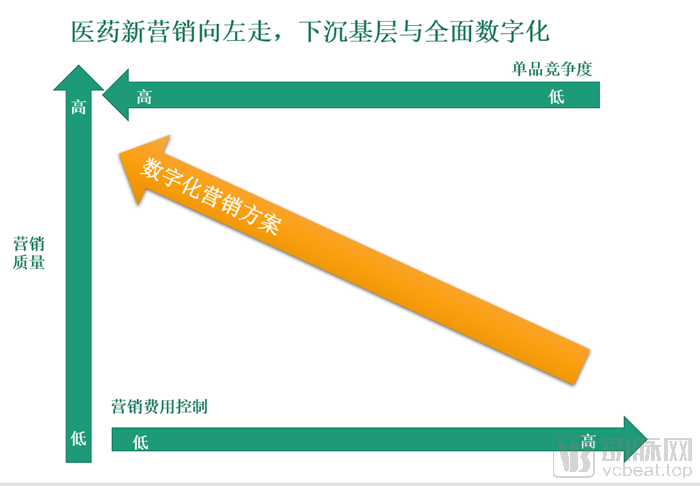
Amid declining profits and intense regulatory pressure, two major trends have emerged in pharmaceutical marketing: expansion into grassroots markets and digital transformation. To survive this industry consolidation phase, pharmaceutical companies must adapt to these shifts and identify new models for sustainable growth amidst structural changes.
In their efforts to penetrate the grassroots market, multinational pharmaceutical companies have historically struggled to effectively cover county- and district-level primary healthcare sectors. This challenge stemmed from high labor costs, low prescription volumes, relatively underdeveloped primary care capabilities, high price sensitivity among grassroots patients, as well as the small scale, wide dispersion, and remote locations of primary healthcare institutions.
However, in recent years, a series of favorable national policies have benefited the grassroots market, making it a lucrative segment that multinational pharmaceutical companies can no longer ignore.
In an interview, Ruan Wei cited a set of data indicating that the total annual sales of pharmaceuticals in China currently amount to approximately RMB 2 trillion. The annual pharmaceutical sales volume in the grassroots market (county-level districts and below) is around RMB 500–600 billion, with a growth rate of approximately 9%. In contrast, the growth rate in core markets, such as major hospitals in Beijing, Shanghai, Guangzhou, and Shenzhen, is only about 4%. This demonstrates that the grassroots market at the county level and below accounts for one-quarter to one-third of the entire pharmaceutical sales market, with a growth rate twice that of the core markets.
In the fragmented and complex primary care medication market, traditional labor-intensive solutions are costly and inefficient. Multinational pharmaceutical companies need to invest more human and financial resources in educating the primary healthcare medication market. How to find efficient and precisely targeted marketing methods has become a current challenge.
Reexamining the Primary Care Medication Market in the Context of New Pharmaceutical Marketing: In real-world clinical settings, primary care physicians face significant patient heterogeneity, resulting in relatively personalized needs and a diverse range of challenges to address. The strategies for effectively penetrating the primary care market differ from those used for tier-3 tertiary hospitals.
Ruan Wei stated, “The uniqueness of the primary care market is a characteristic feature of China. In the United States and Europe, there is little difference between primary care physicians and those in major cities; for instance, the gap between a doctor in Dallas and one in New York is not significant. However, in China, there is a substantial disparity in professional competency between primary care physicians and their counterparts in first-tier cities such as Beijing, Shanghai, Guangzhou, and Shenzhen. Primary care physicians are less concerned with complex issues, such as the pathogenesis of Alzheimer’s disease, and more focused on delivering effective solutions for patients within the constraints of limited pharmaceutical and professional resources.”
In addition to the “rural encircling cities” strategy, digital solutions for pharmaceutical marketing have also encountered development bottlenecks and challenges. The Pharmaceutical New Marketing 1.0 phase was primarily characterized by digitization and informatization, a period that saw the emergence of companies such as Veeva. Seizing the opportunity presented by the transition from traditional on-premise architectures to cloud-based systems, Veeva focused vertically on the life sciences industry and grew into a company with a market capitalization exceeding $20 billion.
Veeva’s marketing solutions achieve cost reduction—i.e., “cost containment”—by optimizing cost structures and improving efficiency. However, as market competition intensifies, the need to drive revenue growth has become increasingly urgent. In response to this demand, next-generation high-tech marketing products will inevitably evolve in two directions: one is multi-scenario information flow matching powered by end-to-end data integration and artificial intelligence, such as Salesforce’s Einstein AI platform; the other is to serve and connect a broader range of marketing touchpoints, extending beyond just sales representatives.
In simple terms, CRM’s form-based solutions are largely standalone products, primarily serving the marketing departments of pharmaceutical companies and their medical representatives. However, for Chinese pharmaceutical firms, two challenges arise: first, there is no established habit among Chinese enterprises of paying for single-point products; second, it is difficult for such isolated solutions to demonstrate the market value they bring to pharmaceutical sales.
In other words, for pharmaceutical companies to truly realize a digital-driven transformation in pharmaceutical marketing, digital solutions must not only serve sales representatives but also extend to multiple departments. In the new era of Pharmaceutical Marketing 2.0, digital solutions must go beyond improving efficiency and optimizing processes to focus on optimizing outcomes.
Faced with the uneven distribution of medical service resources in China and the advent of an aging society, how to enable more people to access high-quality medical resources and pharmaceutical services has become a significant challenge. This is particularly critical in primary healthcare, which serves a vast population. Naxions aims to address this issue from technological and networking perspectives. In addition to improving the marketing efficiency of pharmaceutical companies, Naxions provides primary care physicians with advanced pharmaceutical information services comparable to those available at core hospitals, thereby contributing to the enhancement of China’s medical service capabilities.
However, physicians have individualized needs, and addressing their diverse requirements through technology presents a significant challenge. This necessitates that digital marketing solutions leverage products to resolve physicians’ clinical challenges while gaining in-depth insights into their prescribing behaviors and preferences.
Over years of trial and error, Naxions Co.,Ltd. has gradually developed a technology-driven grassroots pharmaceutical marketing solution, achieving high-quality coverage of the grassroots pharmaceutical market at low cost.
Ruan Wei believes that pharmaceutical companies and physicians need to establish a two-way dialogue mechanism based on more advanced technologies and platforms. This approach would not only achieve precise alignment of mutual value but also rapidly address the diverse needs of primary-care physicians. Technology and algorithms are key to solving these challenges, as they can more efficiently help physicians gain a comprehensive understanding of pharmaceutical products, thereby enhancing their clinical capabilities and improving patient care.
Naxions’ marketing product service system leverages advanced technologies and algorithms, including Natural Language Processing (NLP), big data analytics, and Convolutional Neural Networks (CNNs), to integrate medical data from various regions. This forms a physician-centric medical knowledge graph encompassing pharmaceuticals, diagnosis and treatment, medical materials, and surgical procedures. The system helps healthcare enterprises achieve more efficient market coverage, facilitates more effective transmission of professional information between new drugs and key opinion leaders (KOLs), and enables primary care physicians to access the same specialized knowledge as core specialists more efficiently. By leveraging advanced technologies such as knowledge graphs, it more effectively addresses information asymmetry.
Currently, in terms of product form, doctors can use the tool provided by Naxions Co., Ltd.—Naxion Academy (Mini Program)—to ask questions independently and obtain comprehensive information on prescription drugs, including details on medications, diseases, diagnosis, treatment, and rational drug use, thereby meeting their daily prescribing needs.
In solutions tailored for internal use by pharmaceutical companies, Naxions Co., Ltd. offers a data middle platform that supports multiple marketing departments within these enterprises. By leveraging big data analytics to examine physician behaviors, interaction records, and prescription preferences, Naxions helps pharmaceutical companies effectively disseminate academic information. The underlying data sources are primarily obtained from the company’s internal heterogeneous CRM systems through data import procedures.
After data collection, Naxions stores the structured data, computes metrics across various dimensions based on business requirements to generate summary statistics that reflect business performance, and then employs machine learning modeling to predict future development trends.
Naxions’ data middle platform, built on the vast amount of internal data within pharmaceutical companies, not only empowers medical representatives but also supports business-related departments such as Marketing and Medical Affairs. While there are numerous medical representatives and many pharmaceutical companies currently focus on empowering them, leveraging technological means to empower various business-related departments, including Marketing and Medical Affairs, will yield greater synergy.
Zhang Bo, Partner at Zhichun Capital, stated that China’s ongoing healthcare reforms in recent years have introduced significant variables and opportunities to the industry. We continuously seek investment targets that align with the trends of the new healthcare reform and feature innovative business models capable of leveraging new tools to substantially enhance industry efficiency. We believe that Naxions’ model will play a pivotal role in the industry. Naxions’ core team comprises high-caliber professionals with hybrid backgrounds in both internet technology and pharmaceuticals, enabling them to continuously iterate the company’s business model based on profound industry insights. This makes them an exceptional team, rarely seen in this field.
Xiong Fei, Partner at Matrix Partners China, stated that novel pharmaceutical marketing represents a major future trend. By leveraging advanced and comprehensive digital tools to build high-stickiness relationships with primary-care physicians, Naxions Co., Ltd. efficiently promotes its pharmaceutical products across the vast grassroots market—a model we view very favorably. Furthermore, given the team’s rich background in both healthcare and technology and its ability to rapidly upgrade and iterate, we are confident that under the leadership of founder Ruan Wei, the company will emerge as a leader in the new generation of pharmaceutical marketing.
Jing Xutian, Vice President of Morningside Venture Capital, stated:In recent years, we have clearly observed that the joint drive of data and technology has led to improved industry efficiency and even changes in industry patterns across various sectors. However, due to the complexity of the pharmaceutical industry, communication and collaboration between pharmaceutical companies and doctors are still conducted in a relatively traditional manner. Under the broader context of national healthcare reform, this traditional model is no longer sustainable in the long term, and digitalization and intelligence are inevitably the future trends. Naxions Co., Ltd.'s capabilities in data accumulation, data application, and commercialization progress give us strong confidence that this industry can be transformed by them, significantly improving the accessibility of medical products through more efficient and cost-effective means.
Zhou Wei, Founding Managing Partner of CCV Capital, stated that as an increasing number of new drugs continue to enter the market and diseases become more complex, physicians need to continuously enhance their diagnostic capabilities and prescribing proficiency. This is particularly critical for primary care physicians who, unlike their counterparts in major cities, primarily serve fixed patient populations; improving their professional competence remains a long-term challenge. Under the traditional model, pharmaceutical companies typically relied on self-built, high-quality medical promotion teams to assist physicians through one-on-one interactions, medical conferences, and training programs. However, due to the high costs associated with this approach, primary care physicians have largely been overlooked and unable to access quality medical promotion services. Therefore, leveraging compliant methods to reach physicians represents a promising investment direction. After conducting in-depth industry research, we chose to invest in Naxions Co., Ltd. First, Naxions has positioned digital marketing powered by artificial intelligence (AI) and big data at the forefront of industry development. The replacement of manual labor by AI is inevitable. The company’s system utilizes AI and big data to engage target physicians through various digital scenarios, making full use of fragmented time slots, significantly enhancing user experience and the efficiency of medical promotion, and effectively addressing the challenge of reaching primary care physicians. Second, the company’s products and services, driven by AI intelligence and data analytics, have greatly improved operational efficiency. Having gained recognition from numerous multinational pharmaceutical companies, Naxions has emerged as an industry leader and entered a phase of rapid business growth.