

Weimai Featured Doctor | Tao Deyou: Internet Healthcare Enables Me to Be a Lifelong 'Friend' to My Patients

Weimai
Digital Health Service Platform Provider
“I graduated from the School of Medicine at Zhejiang University in 2000. Full of youthful vigor and ambition, I was determined to return home to serve my hometown, and I have been doing so for the past 20 years.” Tao Deyou, a physician in the Department of Breast and Thyroid Surgery at Taizhou Enze Hospital, is a native of Taizhou. Located along the central coast of Zhejiang Province, this region has a high incidence of thyroid cancer and gastric cancer. “At that time, the perception that a cancer diagnosis was tantamount to a death sentence was deeply entrenched here.”
“Treatment options for malignant tumors are indeed limited, making it all the more imperative for medical professionals to tackle these challenges.” Full of ambition upon graduation, Tao Deyou chose the challenging field of surgical oncology and gradually specialized in the diagnosis and treatment of gastrointestinal cancers as well as breast and thyroid malignancies. Two decades have flown by, and on the photo wall outside the wards, Tao Deyou, Chief Physician of Surgical Oncology, now prominently ranks among the forefront.
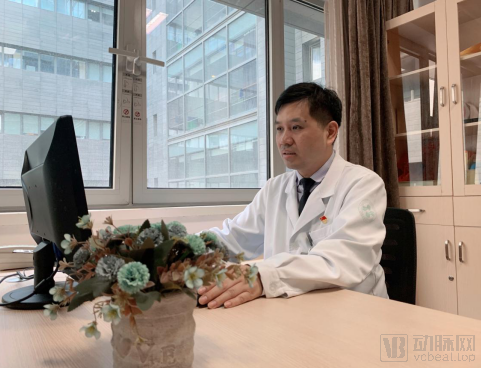 Dr. Tao Deyou at work
In the oncology surgery ward of Taizhou Enze Hospital, silence occupies much of the time for patients and their families. Unlike patients in other departments, those diagnosed with malignant tumors often face life-and-death dilemmas from the moment they step into the consultation room.
What Dr. Tao Deyou finds most unforgettable is the young lives that could have been saved but lost the optimal window for treatment due to delayed care. A few years ago, a young woman from Taizhou suddenly developed a lump in her breast. Lacking proper knowledge about tumors, she did not seek professional medical help at a hospital; instead, she went to a beauty salon for massage therapy in an attempt to dissipate the lump. “Three months later, the lump had grown rapidly. Only then, driven by fear, did she come to the hospital for examination. By that time, however, the tumor had already metastasized to the axillary and supraclavicular lymph nodes, progressing to locally advanced breast cancer and forfeiting the chance for curative surgery.” Recalling this case, Dr. Tao Deyou wore an expression of regret and sighed deeply.
He thought at the time that if medical science popularization could stay ahead of the “public’s blind spots,” these tragedies might have been prevented. “In recent years, we have placed greater emphasis on the early detection and early treatment of tumors, devoting significant effort to the dissemination of scientific knowledge,” said Dr. Tao Deyou. He, together with his wife and like-minded colleagues, launched a WeChat official account, hoping to help more people gain access to scientific and accurate information about tumors.
Around 2014, the spring breeze of internet healthcare blew into Tao Deyou’s work. As a science graduate, Tao has always been keen on new digital technologies. He pioneered “multi-site practice” online among his peers, hoping to help and educate patients through more diverse channels.
However, on national internet healthcare platforms, the majority of consultations come from patients across China. The treatment model, which is confined to online services and cannot provide offline assistance, sometimes leaves Tao Deyou with a sense of disappointment. “In the past, patients from other regions frequently sought my consultation in person, but what I can do online is relatively limited. For cancer patients, face-to-face diagnosis and treatment are also very important.”
In 2017, Weimai entered the Taizhou region. Unlike other internet healthcare platforms, Weimai adopted a localized operational model, dedicated to building a one-stop service that integrates online consultations with offline medical resources. This ensures that patients can find their doctors at local hospitals after completing online consultations, or maintain continuous online communication with the same doctor following offline visits. After two years of observation, Dr. Tao Deyou officially joined the Weimai platform at the end of 2019. In less than six months, his physician profile showed nearly 8,000 consultations, with a patient satisfaction rate as high as 100%.
“The best doctor I have ever seen, who carefully attends to patients’ conditions,” “Truly excellent, providing thorough explanations without any impatience, and demonstrating great care and patience”... These are just a few of the numerous patient reviews received by Tao Deyou on the Weimai platform.
This successful hybrid online-offline diagnostic and treatment model has also been a tremendous source of encouragement for Tao Deyou. “Currently, the four hospitals under the Enze Medical Group—Taizhou Hospital, Luqiao Hospital, Enze Hospital, and Enze Maternity Hospital in Zhejiang—are all integrated on the Weimai platform. When patients from Taizhou consult us, I can access their medical records across these four hospitals, which helps me make more accurate clinical judgments. For healthcare, integrating online and offline services is truly vital.”
Amid the sudden outbreak of the epidemic in 2020, this model was further proven to be effective. As designated hospitals for the treatment of COVID-19 patients, hospitals under Enze Medical Center (Group) faced significant pressure in patient reception, while the high-density interactions between medical staff and patients within the hospitals posed a high risk of cross-infection. Leveraging years of deep collaboration and the characteristics of internet healthcare—such as timeliness, interactivity, and remote controllability—Enze Medical Center promptly partnered with Weimai to establish a closed-loop model combining free online consultations (via text, phone, or video) with offline medical resources. This approach enabled preliminary online screening of COVID-19 cases while minimizing unnecessary direct contact between patients and healthcare providers, rapidly constructing the first line of internet-based defense against the epidemic. During the initial outbreak of the epidemic in China, the innovative practice of the “Taizhou Experience” was listed as the top recommendation in Professor Li Ling’s “Seven Specific Recommendations to the Wuhan Municipal Party Committee and Municipal Government.” Professor Li is a professor at Peking University and an expert consultant on national healthcare reform.
In recent years, with the advancement of modern medical technology, cancer has been reclassified as a chronic disease. For instance, early-stage breast cancer is curable, while patients with intermediate or advanced stages can achieve long-term survival with the tumor under standardized treatment. However, this requires lifelong management and an open, trusting partnership with their physicians.
In the past, however, it was difficult for patients to reach their doctors after discharge. In his daily practice, Dr. Tao Deyou primarily conducted specialist outpatient consultations and performed surgeries, meaning that the brief time available for conversations or ward rounds was clearly insufficient for patients. Nowadays, many patients connect with him through the Weimai app, sharing their concerns and thoughts. This allows Dr. Tao to better tailor treatment plans to address each patient’s specific worries.
Tao Deyou deeply understands that for cancer patients, psychological anxiety and torment are often more unbearable than physical suffering. Therefore, he frequently advises his students, “Medicine cannot cure all diseases or every patient. Doctors must often use compassion to help their patients. Comforting is a responsibility of medicine; it is imbued with deep emotion and must never be done perfunctorily. Learning how to comfort patients and consistently providing such comfort is a significant challenge that truly tests a physician’s skill.”
Most breast cancer patients require chemotherapy after surgery. The general public often harbors a deep fear of chemotherapy, aware of its side effects such as hair loss, nausea, vomiting, and loss of appetite. In such cases, Tao Deyou always engages in proactive psychological counseling with patients to help them complete their chemotherapy regimen on schedule, thereby achieving optimal therapeutic outcomes.
Furthermore, Tao Deyou places great emphasis on lifelong patient management. “I currently manage hundreds of patients on the Weimai platform. From disease onset through long-term care, we never abandon our patients unless they choose to disengage.” After many years in clinical practice, Dr. Tao has become friends with numerous patients.
From online consultations to specialized disease management services, Tao Deyou categorizes patients requiring long-term follow-up on the Weimai platform and maintains regular contact with them. “Within these services, Weimai staff act as comprehensive practice managers for us physicians, assisting with follow-up and patient management.” On the Weimai platform, Tao Deyou has launched multiple health management services, including surgical care for thyroid nodules, comprehensive management of breast cancer, and surgical care for breast nodules.
From offline to online, from in-hospital to out-of-hospital, from one-off visits to cyclical care, and from random encounters to personalized services, Weimai’s new “Internet+” healthcare model is transforming the traditional medical landscape, which has long been limited to providing patients with single, ad-hoc diagnostic and treatment services. The full-lifecycle, precision disease management services delivered by dedicated teams are significantly enhancing patients’ sense of gain and satisfaction with their healthcare experience.
“As life expectancy increases, the number of cancer patients is likely to grow, and I believe the application of internet-based healthcare in surgical oncology will become increasingly widespread.” With the passage of time, Tao Deyou has become increasingly convinced that internet-based healthcare plays a significant role in advancing surgical oncology. In the post-pandemic era, patients from across China have once again appeared on his consultation list. “It’s not just in Taizhou; I hope cancer patients throughout China can benefit from the convenience brought by ‘Internet + Healthcare.’”