

Legend Biotech, China's First CAR-T Company, Soars 60.87% on Nasdaq Debut
Legend Biotech
Tumor Cell Immunotherapy Developer
VCBeat learned that on June 5, 2020 (U.S. time), Legend Biotech was listed on the Nasdaq. The company priced its initial public offering at $23 per share, issuing a total of 18.425 million shares and raising approximately $423.8 million.
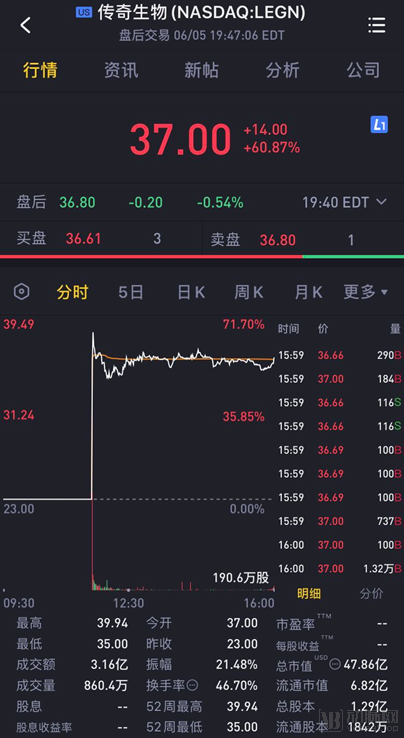
Image from Laohu Finance
Legend Biotech’s stock opened at $37, surging 60.87%. After the opening, the share price remained volatile at high levels, reaching a peak of $39.94 and never dipping below $35.
At today’s market close, Legend Biotech’s share price remained at its opening level of $37. Its total market capitalization also reached a new high of $4.786 billion, representing an increase of nearly 1.5 times compared to the $1.95 billion valuation disclosed during its financing round in March 2020.
This successful listing also signifies that Legend Biotech has once again emerged as a leader in China’s CAR-T therapy industry, following its milestones of being the first to file an investigational new drug application and the first to obtain approval for clinical trials.
As the controlling shareholder of Legend Biotech, GenScript’s stock price has plunged twice due to sharp declines in Legend Biotech’s valuation. Now that Legend Biotech has been independently spun off and listed, GenScript may well feel akin to a parent watching its child come of age.
Legend Biotech was founded in 2014, precisely during the heyday of cell therapy.
In 2014, Kite Pharma and Juno Therapeutics successively completed substantial financing rounds and subsequently went public. The rapid growth of these two industry leaders suddenly propelled the field of immune cell therapy from obscurity into the spotlight.
As a leading domestic provider of scientific research and R&D services, GenScript keenly recognized this rapidly emerging field and established Nanjing Legend Biotech in 2014, leveraging its years of accumulation in B2B services to pivot toward product development.
Thus, Legend Biotech entered the field of CAR-T therapy and, within a few years, transformed itself into a legend in China’s immune cell therapy sector.
In GenScript’s 2019 annual report, Zhang Fangliang, Chairman of GenScript, described Legend Biotech as “a successful bet.” Indeed, choosing to enter this field at a time when all its products were still in clinical trials was indeed a bold move by GenScript.
It has proven that GenScript made the right bet.
In December 2017, Legend Biotech (Nanjing), after three years of quiet development, made a strategic move by submitting the first CAR-T clinical trial application in China and was immediately included in the priority review list. Just three months later, on March 12, 2018, Legend Biotech’s LCAR-B38M received clinical trial approval from the National Medical Products Administration (NMPA), becoming the first CAR-T therapy product approved for clinical trials in China.
At the same time as the clinical trial application was accepted, Janssen Pharmaceuticals, a subsidiary of Johnson & Johnson, also took notice of the rapidly rising Legend Biotech and quickly entered into a global collaboration agreement with Legend Biotech to jointly develop, manufacture, and market LCAR-B38M, with an upfront payment of up to $350 million.
Subsequently, Janssen Pharmaceuticals spared no effort in supporting Legend Biotech. It first retrofitted a U.S. manufacturing facility for the production of LCAR-B38M. Later, when Legend Biotech’s CAR-T therapy faced external skepticism and Genscript became a target of short-selling, Xi’an Janssen consistently stood alongside Genscript to refute these doubts.
On September 27, 2018, a Hong Kong-based short-selling institution released a short report targeting GenScript. As the report circulated, GenScript’s stock price plunged during trading hours, with a maximum decline of over 40%. The content of this short report directly targeted Legend Biotech.
The short-selling report focuses primarily on three points: questioning the origins of Legend Biotech’s CAR-T technology; challenging the production capacity support capabilities of Legend Biotech’s manufacturing facilities; and raising concerns about the clinical data presented by Legend Biotech at ASCO.
In response to the skepticism, Genscript swiftly issued a rebuttal on the 28th. First, regarding patents, Legend Biotech’s patent strategy comprises a portfolio of patents; in addition to those already granted or published, there is a series of patent applications that have not yet reached the publication stage, indicating that the short seller’s information was incomplete. The slow progress in clinical trials was indeed attributable to manufacturing facility issues, but primarily because Janssen (Xi’an Janssen) imposed quality standards and validation procedures more stringent than those required by the FDA, thereby extending the construction timeline beyond initial expectations. Furthermore, the challenges to the clinical data are baseless; the clinical trial approvals already obtained serve as the strongest testament to the validity of the clinical data.
At this time, Janssen (Xi’an) also voiced strong support for GenScript and Legend Biotech, stating that it had conducted a thorough evaluation of LCAR-B38M, successfully manufactured the product in the United States, obtained approval for its first clinical trial in the U.S., and treated the first patient.
Following the strong rebuttals from GenScript and Janssen Xi’an, GenScript’s stock price closed up 11.47% the next day, returning to HK$13.22.
Since then, Legend Biotech’s continued development has not disappointed GenScript or Janssen Pharmaceuticals, with clinical trials yielding a string of positive results. By the time of its market launch, Legend Biotech had achieved four milestones stipulated in its agreement with Johnson & Johnson, subsequently receiving $110 million in milestone payments.
On the eve of its IPO, in March 2020, Legend Biotech completed a $150 million strategic financing round, with Johnson & Johnson once again becoming one of its investors. The other participating institutions are all renowned names in the biopharmaceutical sector, including Lilly Asia Ventures, Vivo Capital, Hudson Bay Capital, and RA Capital Management. According to relevant reports, Legend Biotech’s post-money valuation reached $1.95 billion, successfully earning it unicorn status.
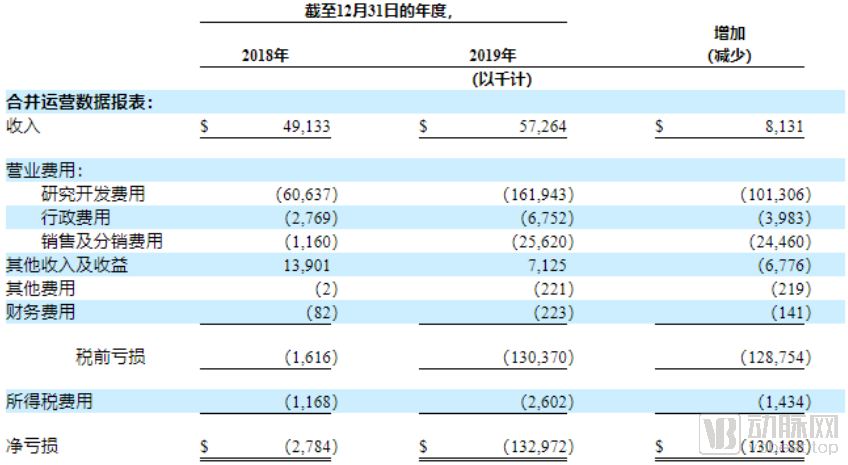
For GenScript, spinning off Legend Biotech may not have been an easy decision. Successfully driving CAR-T products to market independently would significantly enhance GenScript’s brand and future potential. However, current trends indicate that Legend Biotech’s R&D costs are rising rapidly. R&D expenditure stood at approximately $60 million in 2018, but surged to over $160 million in 2019.
Due to Legend Biotech’s substantial R&D expenditures, GenScript’s total R&D spending reached $186 million in 2019, significantly exceeding its net profit for the year. The company reported a net loss of approximately $117 million for that year.
News that Legend Biotech had filed for a U.S. listing caused GenScript’s share price to drop, hitting a low of HK$10.6 within two weeks. Following Legend Biotech’s spin-off and independent listing, GenScript remained its largest shareholder, retaining a 66.1% equity stake and maintaining controlling interest. Over the past two months, GenScript’s share price has gradually climbed back, returning to its normal level of around HK$18.
Legend Biotech’s technological foundation is primarily derived from GenScript’s years of accumulated expertise in antibody design.
Legend Biotech believes that although two CAR-T therapy products have already been approved for market launch, many challenges still exist in the research and development of CAR-T therapies.
Selecting Appropriate Tumor Antigen Targets.The antigen targets recognized by CAR-T cells are cell surface proteins on the cell membrane. The selected targets should be minimally expressed in normal tissues, abundantly expressed in tumors, and should not undergo shedding or internalization.
Design of the CAR Structure.The affinity and flexibility of the antigen-binding domain are crucial for enhancing tumor-specific recognition, while also modulating T cell metabolism, survival, and function through co-stimulatory signaling during CAR-T cell activation. Excessive T cell activation can lead to cytokine release syndrome (CRS), thereby raising safety concerns. Therefore, the design of the CAR structure must strike an optimal balance between efficacy and safety.
Limitations of Animal Models.Current animal models still fail to fully recapitulate the human immune system, tumor microenvironment, and normal tissue distribution of target antigens. Although several animal models have been employed in prior CAR-T studies, most do not reflect the barriers to achieving clinical efficacy nor predict potentially life-threatening toxicities.
The Complexity of Process Development.CAR-T products require the use of patients’ own T cells for engineering. Due to the specificity of each patient’s cells, controlling the stability of the final product is highly challenging.
Based on these unresolved challenges, Legend Biotech has built its own technological framework upon the technical foundation accumulated by GenScript, focusing primarily on two areas.
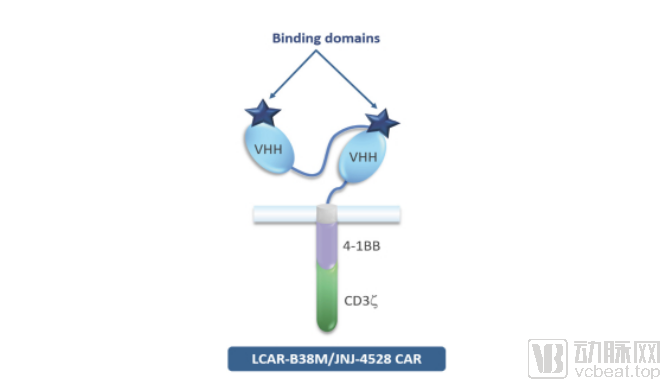
One is the screening capability for antibodies and chimeric antigen receptors (CAR).Legend Biotech has developed a high-throughput screening technology to identify antibody fragments with optimal characteristics, enabling the company to optimize antigen-binding domains and linkers for specific CAR constructs. This allows Legend Biotech to prioritize CAR constructs with high potential for targeting tumor cells while sparing normal cells.
Second, an antibody development platform utilizing llama animal models.Camels produce highly diverse antibodies, including a unique class of single-domain antibodies. Compared with conventional antibodies composed of light and heavy chains, these antibodies exhibit higher antigen-binding affinity, and their smaller size facilitates access to antigenic sites located closer to the cell membrane. The antigen-binding domain of Legend Biotech’s current lead candidate, LCAR-B38M/JNJ-4528, is derived from antibodies isolated from llamas.
In addition, Legend Biotech has assembled a clinical, process development, and manufacturing team with extensive experience in CAR-T process development, as well as a commercial team with rich commercialization expertise. Both teams include members who have directly participated in the research and development or commercial launch of CAR-T products.
Legend Biotech possesses manufacturing facilities in both the United States and China that comply with Good Manufacturing Practices (GMP) or current Good Manufacturing Practices (cGMP), ensuring a continuous supply of products for its ongoing clinical trials. The company is currently selecting sites and facilities in Europe to support future clinical trials to be conducted in the region.
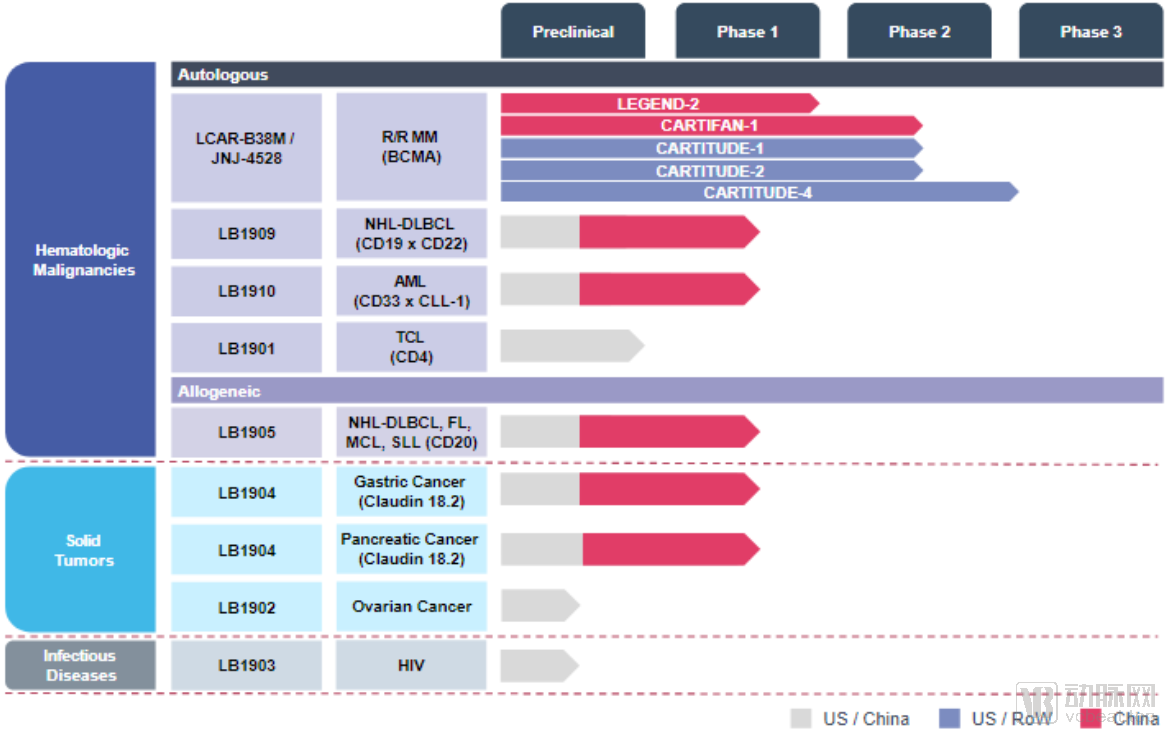
LCAR-B38M is Legend Biotech’s flagship product pipeline. As LCAR-B38M progresses into late-stage clinical trials, Legend Biotech has begun expanding along the direction of immune cell therapy into other indication areas, currently covering hematologic malignancies, solid tumors, and HIV/AIDS.
LCAR-B38M is a CAR-T therapy targeting B-cell maturation antigen (BCMA).
BCMA is typically expressed only on the surface of mature B cells and serves as an important B-cell biomarker. In multiple myeloma (MM) cells, BCMA expression levels are significantly higher than those in healthy plasma cells. It is hypothesized that hyperproliferation driven by BCMA overexpression is one of the primary pathogenic mechanisms of multiple myeloma.
The clinical trial results demonstrated by LCAR-B38M to date have confirmed its benefit for patients with relapsed/refractory multiple myeloma (RRMM).
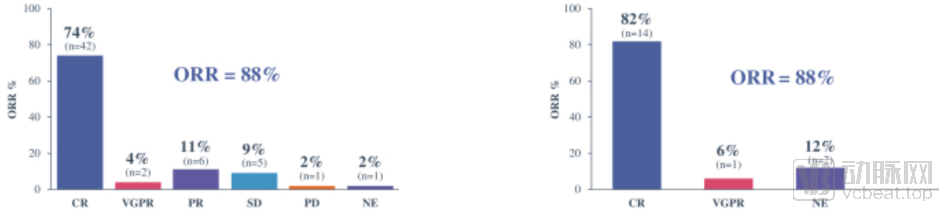
LCAR-B38M China Clinical Trial LEGEND-2 Data (Left: Patients Enrolled in Xi’an; Right: Other Regions)
In December 2019, Legend Biotech reported the Phase I clinical trial data of LCAR-B38M in China. The clinical trial was conducted at four independent enrollment sites, enrolling a total of 74 patients with relapsed/refractory multiple myeloma (RRMM). During a median follow-up period of 25–26 months, the overall response rate (ORR) among patients treated with LCAR-B38M reached 88%, with 74–82% of patients (varying slightly by site) achieving complete response (CR). Among the 57 patients enrolled at the largest site, the median overall survival reached 36.1 months.
Another Phase Ib clinical trial conducted in the United States, although it enrolled only 29 patients, demonstrated more pronounced therapeutic efficacy. The objective response rate (ORR) reached 100%, indicating that all enrolled patients responded to the treatment; among the 29 patients, 25 (86%) achieved complete response (CR) during a median follow-up period of 11.5 months. The 9-month progression-free survival rate also reached 86%. As of April 20, 2020, 22 of the 29 patients remained alive and progression-free.
According to data cited by Legend Biotech in its prospectus, there were an estimated 159,985 new cases of multiple myeloma (MM) globally in 2018. Existing therapies, including monoclonal antibodies, proteasome inhibitors, and immunomodulatory drugs, generated total sales of approximately $18 billion in 2018.
Currently, multiple drugs have been approved for the treatment of multiple myeloma, including blockbuster agents such as lenalidomide. However, multiple myeloma is still considered an incurable malignant plasma cell disorder, as the vast majority of patients eventually experience relapse and gradually develop drug resistance, ultimately progressing to relapsed/refractory multiple myeloma (RRMM).
In 2015, the U.S. FDA approved daratumumab for the treatment of relapsed/refractory multiple myeloma (RRMM). China’s National Medical Products Administration also approved its marketing in July 2019. According to the clinical data disclosed for daratumumab, the overall response rate was only around 30%, with a median progression-free survival (PFS) of approximately 4 months and a median overall survival (OS) of approximately 20 months.
In addition to Legend Biotech, several other companies and institutions are developing BCMA-targeted CAR-T products, with indications focused on relapsed/refractory multiple myeloma (RRMM). Among these, the most advanced candidates include Celgene’s self-developed JCARH125, as well as bb2121 and bb21217, which were co-developed by Celgene and Bluebird Bio.
Among the data released to date, the overall response rates (ORR) for several products have remained within the 80–90% range, with minimal differences between them. Regarding complete response (CR), JCARH125 reported a CR/strict CR (sCR) rate of 25% at the 2018 American Society of Hematology (ASH) Annual Meeting; previously reported results for bb2121 showed a CR rate of 45%; and data for bb21217 presented at the December 2019 ASH meeting indicated that 4 out of 12 patients achieved CR/sCR.
The complete response rates (CR) of several products remain below 50%, whereas Legend Biotech’s LCAR-B38M has achieved a CR exceeding 80%, demonstrating a significant advantage among BCMA-targeted CAR-T therapies.
Therefore, based on the data disclosed to date, LCAR-B38M is not only superior to approved drug products for relapsed/refractory multiple myeloma (RRMM), but also outperforms other products in the same class. Consequently, we believe that LCAR-B38M holds significant market potential in the RRMM treatment landscape.
However, LCAR-B38M is not without its weaknesses. It has yet to resolve the severe adverse reactions associated with immune cell therapy. In the two clinical trials with disclosed interim results, nearly all patients reported expected adverse events, including fever and cytokine release syndrome (CRS); however, most were Grade 1–2 adverse reactions manageable with standard treatments. Although safety concerns are common among CAR-T therapies, both clinical trials reported treatment-related patient deaths. Such serious adverse events could impact the future marketing approval application for LCAR-B38M.
Regarding other products, Legend Biotech made almost no mention of them in its prospectus. Apart from a brief description of the murine trial results for LB1901, a CD4-targeted therapy, and its plan to submit an Investigational New Drug (IND) application in the second half of 2020 for relapsed or refractory T-cell lymphoma, all other products were mentioned only in passing.
However, from Legend Biotech’s brief description, we can roughly discern its strategic layout. In addition to its lead candidate LCAR-B38M, three other products have entered open-label, investigator-initiated Phase 1 clinical trials, including two bispecific hematologic malignancy products and one solid tumor product targeting claudin 18.2. The preclinical pipeline comprises candidates for ovarian cancer and HIV, as well as several allogeneic CAR-T product candidates.
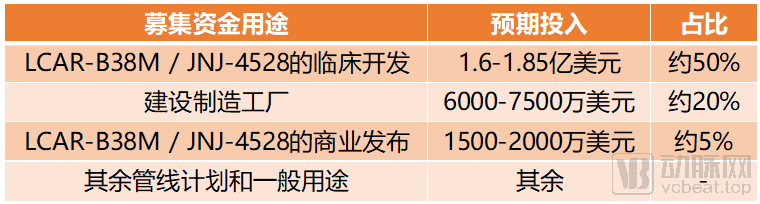
More than 50% of the proceeds from Legend Biotech’s public offering will be allocated to the clinical development of LCAR-B38M. Approximately 20% will be used to construct manufacturing facilities, primarily to enhance supply capacity for LCAR-B38M clinical trials. Around 5% will be dedicated to the commercial launch of LCAR-B38M, with the remaining smaller portion reserved for advancing other pipeline candidates and general corporate purposes.
Overall, Legend Biotech’s product pipeline appears somewhat thin. Nearly all resources have been devoted to the development of LCAR-B38M, reflecting a “burn-the-boats” strategy. However, given its limited financial resources, betting on a single product may well be Legend Biotech’s best current option. The clinical potential demonstrated by LCAR-B38M indeed makes this high-stakes gamble worthwhile for Legend Biotech.