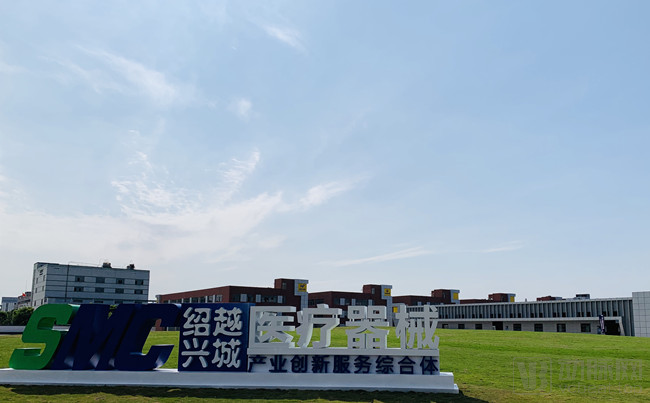
Shaoxing Yucheng Medical Device Industry Innovation Service Complex Files IPO Prospectus
The impact of the COVID-19 pandemic has elevated the development of public health systems to a higher level within national development strategies. As the foundation for industrial advancement, the development and innovation of industrial clusters have also entered a new phase of exploration and practice.
The Yangtze River Delta (YRD) urban agglomeration is a key convergence zone for the Belt and Road Initiative and the Yangtze River Economic Belt. It holds a pivotal strategic position in China’s overall modernization drive and opening-up framework, and is among the regions with the strongest foundation for urbanization in the country. The Development Plan for the Yangtze River Delta Urban Agglomeration stipulates that the YRD urban agglomeration should be developed into a world-class city cluster with global reach, radiating influence across the Asia-Pacific region, and leading the nation. It aims to become the most economically vibrant hub for resource allocation, a globally influential highland for scientific and technological innovation, and a globally significant center for modern services and advanced manufacturing. Guided by national strategic development plans and regional policies, the YRD economic circle has become a key option for medical enterprises to expand their footprint.
Shaoxing is a key component of China’s Yangtze River Delta (YRD) economic circle, serving as a link between the YRD and the Greater Bay Area. It is accelerating the cultivation of a RMB 100-billion-level biomedical manufacturing cluster and a specialized medical device industry chain, achieving leading development in four key areas: high-end medical dressings, high-performance medical imaging equipment, novel biomaterials, and implantable and interventional medical devices. Emerging sectors such as in vitro diagnostics (IVD), mobile healthcare, and rehabilitation assistive devices are rising rapidly. Among the 11 types of medical devices prioritized for national health and technological support, Shaoxing has achieved breakthroughs in seven. To date, Yuecheng District in Shaoxing has attracted numerous high-level overseas entrepreneurial teams, forming an industrial landscape led by backbone enterprises such as Mingfeng, Zhende, Zhenyuan, and Haisheng, alongside a vibrant ecosystem of highly innovative small and micro enterprises. This has established Shaoxing as a significant force in the medical device industry within the Yangtze River Delta and across China.
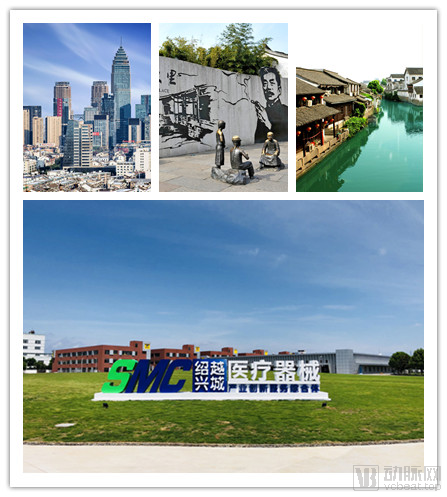
Today, building on the foundation of its major medical industry cluster development, Yuecheng District in Shaoxing is exploring new models for industry cluster governance, continuously innovating services and pushing beyond the boundaries of ecological aggregation capabilities, thereby creating a novel paradigm for industry cluster governance.
On June 4, 2020, the “2020 New Landmark of Healthcare and Industry Integration in the Yangtze River Delta & Cloud Promotion Conference for Yuecheng District, Zhejiang Province” was held. During the event, it was announced that the Shaoxing Yuecheng Medical Device Industry Innovation Service Complex had been included in Zhejiang Province’s Provincial List of Innovation Service Complexes under Development, followed by an unveiling ceremony. Distinguished guests who participated in the cloud-based promotion conference included Tang Lijun, Deputy District Mayor of Yuecheng District, Shaoxing; Yan Jianlin, Party Group Member and Senior Researcher of the Shaoxing Municipal Science and Technology Bureau; Gu Feng, Director of the Science and Technology Bureau of Yuecheng District, Shaoxing; Li Haisheng, General Manager of Peking University Medical Innovation Valley; Li Baowei, Deputy General Manager of Peking University Medical Innovation Valley; Professor Na Renmandula from the School of Medicine, Zhejiang University; Liang Jingfeng, Partner at Beijing Lanfeng Capital; Wu Chuanyong, Founder of Hengxin Biotech; Hou Yan, from the Park Business Division of Peking University Medical Innovation Valley; and Wei Xiaolin, Deputy General Manager of the Event Product Center at VCBeat.Watch Live Broadcast
As a key component of the Yangtze River Delta economic circle, Shaoxing ranks 33rd nationwide in terms of comprehensive urban economic strength. In 2019, its gross domestic product (GDP) reached RMB 578.1 billion, with a per capita GDP of RMB 114,800. The integrated circuit and high-end biopharmaceutical industries were respectively included in Zhejiang Province’s list of emerging industrial platforms under the “Ten Thousand Mu, One Hundred Billion Yuan” cultivation initiative. With the in-depth implementation of the Healthy China strategy, Shaoxing City, guided by Zhejiang Provincial policies such as the Implementation Opinions on Accelerating Scientific and Technological Innovation in Life and Health and Several Opinions on Promoting High-Quality Development of Zhejiang’s Pharmaceutical Industry, has leveraged Yuecheng District and Binhai New Area to vigorously develop high-end chemical pharmaceutical formulations, biotechnological drugs, and high-performance medical devices, aiming to establish a comprehensive life and health hub in the Yangtze River Delta region.
Tang Lijun, Deputy District Mayor of the People’s Government of Yuecheng District, Shaoxing City, stated in his speech at the online promotion event that Yuecheng District is focusing on building specialized industries in health equipment and new medical materials. To address challenges faced by medical device companies—such as difficulties in obtaining regulatory approvals, securing financing, attracting talent, and expanding market access—the district has firmly embraced the development philosophy of “innovation + services” to promote high-quality growth in the medical device industry. Specifically, 28 new policy measures have been formulated and implemented to support the development plan for the medical device sector, covering areas including talent recruitment, establishment of industrial funds, and financial support, with a particular emphasis on fostering innovation within medical device enterprises. To enhance the capacity and level of innovative services, the district has fully adopted a year-round application and acceptance model for certification. It has also established an Industrial Innovation Service Complex featuring three key lists: a “Service Enterprise List,” an “Enterprise Development Needs List,” and a “List of Key Common Technological Challenges in the Industry,” thereby providing technology-based enterprises with zero-distance, professional services.
To date, Shaoxing has established major platforms such as the National Torch Program Shaoxing Health Equipment and New Medical Materials Characteristic Industrial Base, the “Wanmu Qianyi” (Ten Thousand Mu and One Hundred Billion Yuan) Emerging Industry Platform for High-End Biopharmaceuticals in Shaoxing Binhai New Area, and the Zhejiang Shaoxing Yuecheng Medical Device Industry Innovation Service Complex. The city is home to more than 80 medical device enterprises. Industry leaders such as Zhende Medical, Minfound Medical Systems, Haisheng Medical, Damei Bioengineering, and Tongchuang Bio were all founded and have grown here.
The medical device industry is a strategic emerging sector strongly supported by the state. According to statistics, China’s medical device market reached RMB 628.5 billion in 2019, and is projected to exceed RMB 900 billion by 2022, indicating substantial growth potential for the industry. In terms of manufacturing enterprises, the number of medical device manufacturers in China has consistently increased over the past decade. Data from CB Insights shows that as of 2018, there were 17,236 medical device manufacturers in China, an increase of 1,112 compared to the previous year. It is predicted that this number will reach 20,000 by 2020. The medical device industry has entered a period of rapid development. Correspondingly, medical device industrial clusters have also reached a mature stage of development, with several prominent clusters emerging. How to continuously optimize the governance of these industrial clusters, effectively facilitate the rapid growth of enterprises within them, and drive industrial transformation remains a common challenge facing all industrial clusters today.
In terms of the agglomeration patterns of the medical device industry, the evolution from initial industrial parks characterized by the physical clustering of similar enterprises to integrated medical industry complexes that converge and fuse within a medical innovation ecosystem represents the construction of an ecosystem based on physical agglomeration and corporate attributes, with an emphasis on the aggregation of physical elements. Does an ecological aggregation driven by service elements exist?
Gu Feng, Director of the Shaoxing Yuecheng District Science and Technology Bureau, provided the answer: “Zhejiang Province’s distinctive Industrial Innovation Service Complexes have pioneered a new model for building innovation ecosystems and offered new platforms for enterprises’ innovative development.”
The Yuecheng Medical Device Industry Innovation Service Complex is a new type of integrated entity. Unlike traditional industrial complexes, which focus on concentrating various elements of the ecosystem within a unified physical space, the Industry Innovation Service Complex emphasizes the agglomeration of innovation service elements, achieving the integration of all components of the innovation ecosystem across the region. The Yuecheng Medical Device Industry Innovation Service Complex was officially approved in 2017, construction commenced in 2018, and it was formally inaugurated on May 28, 2019. In March 2020, the preparation began for comprehensive innovation service platforms, including the Complex itself and the Medical Device 3C Platform.
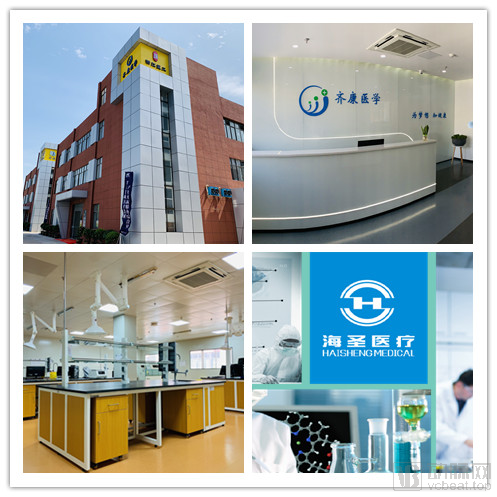
To better serve innovative enterprises within the industry, the Yuecheng Medical Device Complex has implemented a comprehensive design encompassing physical infrastructure, resource interoperability, and financial support:
Physical Carrier:The complex features public services, exhibition and display areas, public laboratories, testing platforms, shared cold chain facilities, business incubation services, and warehousing centers, with the public service area exceeding 10,000 square meters.
Interconnection of Innovation Resources:namely, the two major hospital systems of Shaoxing Local Hospitals and Peking University Healthcare, three provincial-level key enterprise research institutes, twelve academician/expert workstations, two provincial-level key laboratories, and an innovative R&D platform encompassing the scientific research and student resources of twelve local universities.
Funding Assurance:A RMB 300 million special fund for medical devices, a RMB 500 million talent fund, and a RMB 10 billion major healthcare industry fund. Special incubation startup capital of RMB 2–10 million per entity is established to support talent introduction. Multi-dimensional financial support and guarantees are provided, including registration certificate rewards of up to RMB 5 million per entity annually.
Evaluation System:The complex is evaluated based on the completeness and effectiveness of its innovative service system, guiding governments and management authorities to provide professional and precise services to enterprises.
The Shaoxing Yuecheng Medical Device Industry Innovation Service Complex maintains strong technical collaboration with the School of Medicine, Zhejiang University. Professor Na Renmandula from the School of Medicine, Zhejiang University, stated, “Scientific research serves as a driving force for industrial development. Enterprises need to rely on professional teams during technology introduction to assess the value and significance of the technologies being adopted. The School of Medicine, Zhejiang University is committed to facilitating the practical application and commercialization of scientific and technological achievements in the medical sector.”
As a novel model for industrial cluster services, the Shaoxing Yuecheng Medical Device Industry Innovation Service Complex is jointly established by the Yuecheng District Government, Beijing Lanfeng Capital, and Peking University Healthcare Innovation Valley. The three managing entities leverage their respective strengths to empower the development of the complex:
● The Yuecheng District Government provides strong policy guidance and support for the development of the complex, in line with the direction of national policies;
● Relying on its local team, Lanbei Investment, Beijing Lanfeng Capital structures and implements an innovative service system for the healthcare industry within its integrated complex;
● Leveraging its platform advantages, Peking University Medical Innovation Valley collaborates with the complex to enhance technology-oriented professional incubation capabilities, facilitating the rapid growth of connected innovative healthcare enterprises.
The tripartite management entities collaboratively promote the innovative development of the complex, coordinate the integration of various stakeholders within and across regional ecosystems, provide systematic services, and create an optimal environment for industry-academia-research-application collaboration.
Mr. Li Haisheng, General Manager of Peking University Medical Innovation Valley, stated: “After reaching a cooperation agreement with the Shaoxing Yuecheng Medical Device Industry Innovation Service Complex in 2018, Peking University Medical Innovation Valley dispatched a professional team to establish a standardized park management system and became deeply involved in preliminary project planning, renovation implementation, investment promotion, and operational management. Since the complex was officially launched in May 2019, it has attracted a cohort of high-quality medical device enterprises, delivering professional and precise innovation services and achieving significant industrial agglomeration effects. Both parties will continue to focus on technological innovation, support scientist-led entrepreneurship, facilitate corporate technological innovation, and share in the benefits of enterprise growth.”
To date, the complex has successfully attracted a cluster of enterprises spanning multiple categories, including implantable and interventional devices, in vitro diagnostic biochips and instruments, smart healthcare, novel medical materials, and protective medical supplies. This ecosystem has facilitated the rapid growth of projects such as the artificial magnetic sphincter and Hengxin Bio’s digital microfluidics initiative.
At the event, Dr. Wu Chuanyong, founder of Hengxin Bio’s digital microfluidics project, shared his insights on why the project chose to establish its presence at the Shaoxing Yuecheng Medical Device Industry Innovation Service Complex: “The decision to locate Hengxin Bio’s digital microfluidics project in the Yuecheng Complex was the result of multiple considerations. First, Shaoxing Yuecheng boasts a robust industrial foundation in the medical device sector, and the local government has demonstrated strong support and emphasis on this industry, creating a highly favorable environment for industrial development. Second, the Complex is jointly managed by Beijing Lanfeng Capital and Peking University Healthcare Innovation Valley, offering systematic management standards as well as professional and innovative services. Third, during the actual implementation process—including talent program applications, residency and site selection, business registration, and environmental impact and fire safety assessments—the Complex provided highly efficient assistance, significantly reducing our initial capital investment and saving time costs.”
The establishment of the Yuecheng Medical Device Industry Innovation Service Complex not only provides a new management model for the medical device industry cluster in the Yangtze River Delta region, but also offers a new growth platform for innovative enterprises within the healthcare industry and presents fresh options for companies seeking urban partnerships. It opens up new possibilities for the future development of China’s medical industry clusters.