

BeiGene's Global Anti-Cancer Drug Brukinsa® (Zanubrutinib) Receives First Domestic Approval in China for Two Indications
BeOne
Developer of Molecular Targeted and Immune Anti-Tumor Drugs
Today, BeOne Medicines announced that its next-generation BTK inhibitor, Brukinsa®, independently developed by the company®(Zanubrutinib Capsules) have been approved by the National Medical Products Administration (NMPA) of China for the treatment of adult patients with mantle cell lymphoma (MCL) who have received at least one prior therapy, and adult patients with chronic lymphocytic leukemia (CLL)/small lymphocytic lymphoma (SLL) who have received at least one prior therapy.
This marks Brukinsa as the first domestically developed BTK inhibitor to be launched in China, providing a new treatment option with high response rates for lymphoma patients in the country. Meanwhile, this represents another significant milestone in BeOne Medicines’ commercialization journey both locally and globally, following Brukinsa’s successful approval and launch in the United States.
Dr. Wu Xiaobin, General Manager of BeOne Medicines in China and President of the Company, stated, “We are thrilled to see Brukinsa receive its first approvals for two indications in China. As the first novel anticancer drug developed in China to enter developed markets abroad, Brukinsa is now available domestically, offering new treatment options for more lymphoma patients in our country. The successful launches of Brukinsa both in China and overseas serve as another strong testament to the rise of China’s innovative pharmaceutical industry in recent years. This milestone demonstrates that Chinese pharmaceutical companies now possess the full capability to develop high-quality, internationally competitive innovative drugs with improved accessibility and affordability, thereby helping to address the challenges faced by cancer patients in China regarding pharmacological treatment.”
Lymphoma is a collective term for a group of malignant tumors originating from the lymphohematopoietic system. It is one of the ten most common malignant tumors in China and among those with the fastest-growing incidence rates both in China and globally. According to epidemiological statistics, among approximately 88,200 new cases of lymphoma diagnosed annually in China, non-Hodgkin lymphoma (NHL) accounts for about 91%² of all lymphomas, including B-cell non-Hodgkin lymphoma, which constitutes 66%. Among these, mantle cell lymphoma (MCL) accounts for approximately 5%² of all B-cell non-Hodgkin lymphomas, while chronic lymphocytic leukemia (CLL)/small lymphocytic lymphoma (SLL) accounts for about 6.4%² of all B-cell non-Hodgkin lymphomas.
Brukinsa is a novel, potent BTK inhibitor that, through optimized molecular structure, achieves complete, durable, and precise inhibition of the BTK target. In a series of clinical trials, it has demonstrated favorable efficacy and safety in various B-cell lymphomas, including mantle cell lymphoma (MCL) and chronic lymphocytic leukemia (CLL). In November 2019, Brukinsa (zanubrutinib capsules) received FDA approval for the treatment of patients with mantle cell lymphoma who had received at least one prior therapy, becoming the first domestically developed anti-cancer drug from China to gain approval in the United States and marking a historic breakthrough in the global expansion of Chinese innovative drugs.
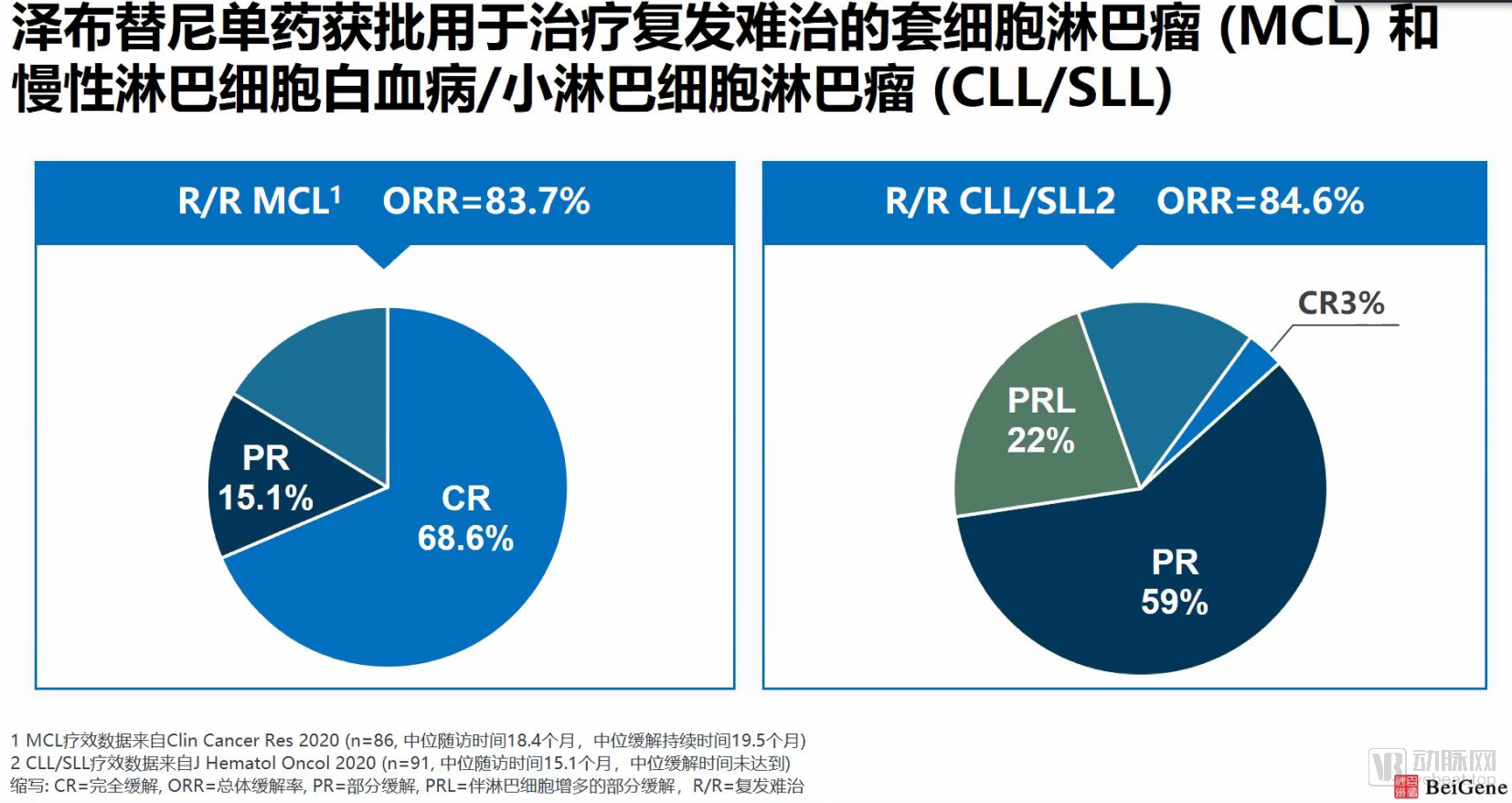
The simultaneous approval of two indications for Brukinsa in China is primarily based on data from two pivotal clinical studies. Data from the pivotal Chinese Phase 2 multicenter clinical trial BGB-3111-206 showed that monotherapy with Brukinsa achieved an overall response rate (ORR) of 84% and a complete response rate of 69% in patients with relapsed or refractory mantle cell lymphoma (R/R MCL). In another pivotal Chinese Phase 2 multicenter clinical trial, BGB-3111-205, which focused on patients with relapsed or refractory chronic lymphocytic leukemia/small lymphocytic lymphoma (R/R CLL/SLL), treatment with Brukinsa yielded an ORR of 62.6%, with a complete response rate of 3.3% and a partial response rate of 59.3%. Additionally, 22.0% of patients achieved a partial response with lymphocytosis.
Professor Li Jianyong, Director of the Department of Hematology at the First Affiliated Hospital of Nanjing Medical University and Director of the Pukou Center for Chronic Lymphocytic Leukemia (CLL), led the Phase 205 clinical study of Brukinsa in CLL. Professor Li stated, “Lymphoma is a disease with high incidence among the elderly, particularly indolent subtypes such as chronic lymphocytic leukemia, where many patients may have a survival period exceeding ten years. Therefore, the safety and tolerability of treatment regimens are critical considerations. I am pleased to have witnessed in clinical research the excellent efficacy and favorable tolerability profile of this new-generation BTK inhibitor, which demonstrates very low risks of adverse events such as atrial fibrillation and bleeding. I believe that its approval and launch in China will provide patients with more effective treatment options featuring fewer side effects, thereby improving prognosis and further enhancing quality of life. As clinicians, our confidence in treatment will also be strengthened.”
Professor Zhu Jun, Director of the Lymphoma Department and Director of the Department of Internal Medicine at Peking University Cancer Hospital, stated: “In the past, due to a lack of effective treatment options, patients with lymphoma long faced difficulties in accessing affordable medications, with room for improvement in both treatment outcomes and quality of life. Today, continuous breakthroughs in clinical research and new drug development in China have brought new hope to our patients. As a clinician and researcher, I am gratified to witness that Brukinsa, a next-generation oral targeted therapy independently developed in China, has improved patient survival and earned widespread acclaim from experts both domestically and internationally. I believe that in the near future, more new drugs from Chinese biopharmaceutical companies will gain global approval, thereby expanding treatment options for patients in China.”
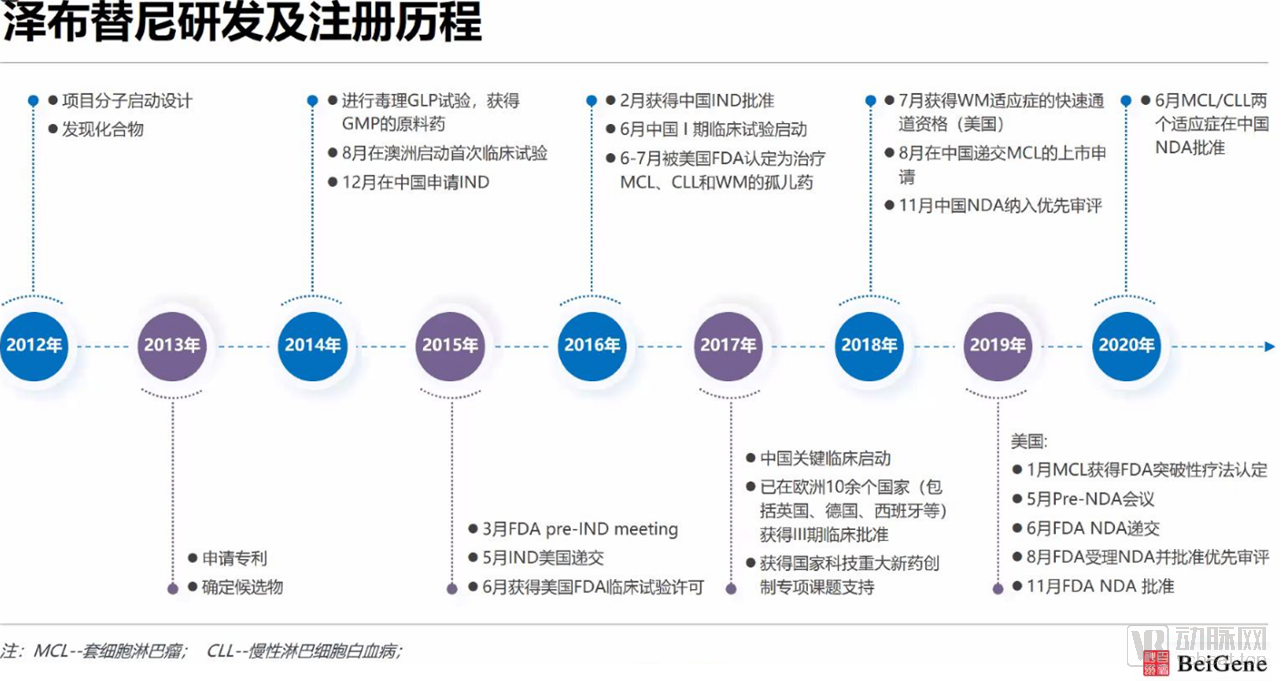
Brukinsa was born out of BeOne Medicines’ R&D center in Changping, Beijing. In June 2012, the research team officially launched the BTK development project. After a series of screening and testing processes, the final candidate molecule was selected from more than 500 compounds and assigned the code BGB-3111, signifying it as the 3,111th compound developed since the establishment of BeOne Medicines.
Dr. Wang Zhiwei, Head of Chemistry R&D at BeOne Medicines and one of the principal inventors of Brukinsa (zanubrutinib capsules), stated, “At the outset of the project, our objective was clear: to develop a compound with high selectivity and highly specific inhibition of the target. By optimizing the drug’s molecular structure, we aimed to maximize the specific binding rate to the BTK target while minimizing off-target effects, thereby reducing the incidence of adverse reactions and helping patients achieve better efficacy and safety in clinical practice.”
In April 2013, BeOne Medicines filed a patent application. This was a global patent originating from the China National Intellectual Property Administration, firmly establishing Brukinsa as an authentically Chinese homegrown innovative anticancer drug. In 2014, Brukinsa (zanubrutinib capsules) officially entered clinical trials in Australia, with the first patient dosed worldwide in August of that year.
From its initial laboratory project approval to its successful dual listing in China and the United States, the development of Brukinsa has spanned eight years. To date, nearly 25 clinical trials of Brukinsa have been initiated worldwide, covering more than 20 countries. Over 500 international clinical experts have participated in or led these trials, including more than 70 experts from China. Globally, over 1,700 patients have received treatment with zanubrutinib capsules.
“From the very inception of its clinical development, Brukinsa has adhered to a global development strategy, conducting clinical studies simultaneously in China and overseas countries. This approach has imposed higher requirements on the design and quality of our clinical trials,” introduced Dr. Lai Wang, Senior Vice President of BeOne Medicines, Head of Global Research, Clinical Operations and Biostatistics, and Head of Asia-Pacific Clinical Development, who was one of the key leaders in the research and development of Brukinsa (zanubrutinib capsules). “Throughout this process, we could not have succeeded without the contributions of numerous clinicians and patients in China and abroad. It is their trust and support in Brukinsa that have enabled the smooth progress of its clinical studies both domestically and internationally, bringing tangible benefits to more patients.”
Currently, BeOne Medicines is conducting 16 clinical studies of Brukinsa globally, including nine registrational or potentially registrational clinical trials. Meanwhile, Brukinsa is undergoing two global Phase III head-to-head comparative studies against ibrutinib for Waldenström’s macroglobulinemia (WM) and chronic lymphocytic leukemia (CLL), making it the first domestically developed novel drug in China to engage in direct head-to-head studies against products developed by foreign pharmaceutical companies. Among these, the already published Phase III head-to-head clinical data in WM demonstrate that zanubrutinib achieves higher response rates as well as superior safety and tolerability compared with ibrutinib.
Since entering clinical trials, Brukinsa has received multiple recognitions internationally and domestically. It has been granted Priority Review designation by China’s National Medical Products Administration (NMPA) and has achieved a “grand slam” of four Priority Review designations from the U.S. Food and Drug Administration (FDA). Furthermore, it has been successively included in Chinese and American clinical guidelines as an expert-recommended therapy for lymphoma treatment.
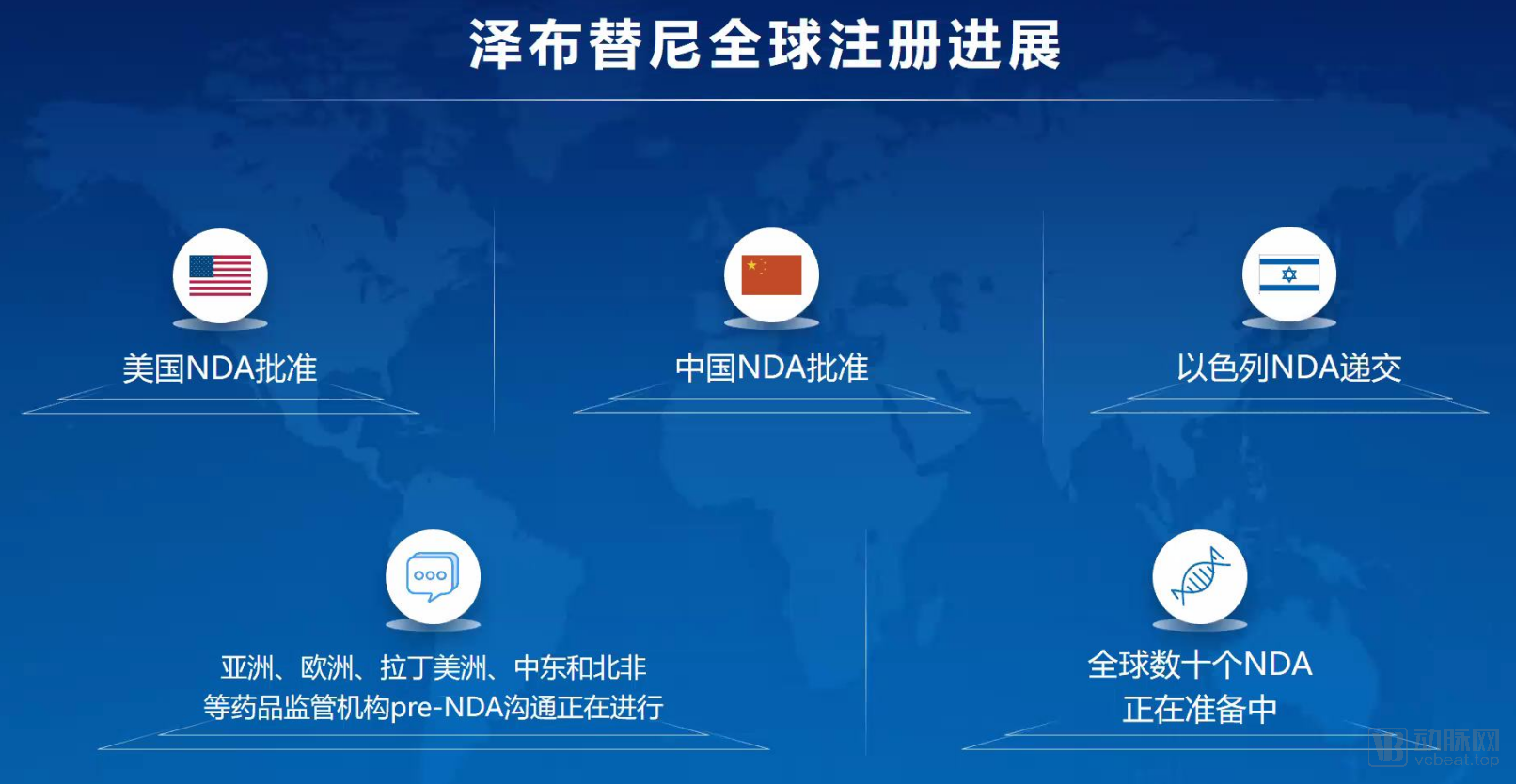
Following China and the United States, Brukinsa has recently submitted a new drug application in Israel, which has been accepted. According to previously announced plans, the company will engage with the European Medicines Agency (EMA) this year to accelerate the global launch of Brukinsa.
Ms. Yan Xiaojun, Senior Vice President and Head of Global Regulatory Affairs at BeOne Medicines, stated: “Thanks to the outstanding data achieved in clinical trials, we have engaged in close communications with regulatory authorities in multiple countries, aiming to bring this new drug, which boasts world-class quality, to patients in more nations. In this process, we are deeply grateful for the recognition bestowed upon Brukinsa by the Chinese and U.S. regulatory authorities. Its successive approvals in China and the United States have provided us with valuable experience and a solid foundation, which will help us better advance submission efforts in other countries and regions.”
Dr. Wu Xiaobin, President of BeOne Medicines, stated, “Currently, BeOne Medicines has made comprehensive preparations across all segments of the industrial chain to ensure immediate production and supply upon approval. As a high-quality novel drug independently developed in China and internationally recognized, we believe it will help patients in our country through improved accessibility and affordability. Meanwhile, we look forward to engaging in discussions with national healthcare security authorities to facilitate the early inclusion of Brukinsa into the National Reimbursement Drug List, thereby bringing benefits to domestic patients and promoting the sustainable operation of the healthcare security fund.”