Digital Marketing Transformation in the Trillion-Yuan Prescription Drug Market Is Now Imperative
Since 2017, the implementation of prescription drug-related policies—such as national medical insurance negotiations, volume-based procurement, and the “Two-Invoice System”—has prompted China’s prescription drug market, particularly the generics segment, to gradually move away from the long-established high-margin business model. As profit margins have been progressively compressed, the labor-intensive pharmaceutical marketing model has increasingly appeared costly and inefficient. In this context,The adoption of digital marketing strategies enables pharmaceutical companies to achieve superior promotional outcomes at lower costs, thereby sustaining their marketing capabilities even amid compressed gross margins.
During the COVID-19 pandemic, which began in late 2019, physical distancing measures severed the offline connections established between medical representatives and physicians, rendering traditional marketing approaches virtually inoperable. In contrast, digital pharmaceutical marketing based on online platforms remained largely unaffected, enabling pharmaceutical companies to maintain continuous communication with physicians through these digital channels.
What stage of development is China’s pharmaceutical digital marketing industry currently in? What is its market potential, and who are the representative companies and business models?
To clarify the aforementioned issues, VCBeat Research surveyed nearly 10 companies involved in digital pharmaceutical marketing and, drawing on its own research findings, authored"Innovation Report on the Pharmaceutical Digital Marketing Services Industry", attempting toPolicies, Market, Capital, and Typical Cases...and other dimensions to provide a comprehensive analysis of the digital pharmaceutical marketing industry, aiming to offer industry participants relatively complete industry information.
Key Perspectives:
1. Corresponding to the trillion-level prescription drug market, China's pharmaceutical digital marketing industry is expected to exceed RMB 8 billion in 2025
2. Digital technologies are transforming the traditional marketing model, which was primarily driven by offline visits from pharmaceutical sales representatives, thereby helping pharmaceutical companies control marketing costs.
3. Key players in the digital marketing of pharmaceuticals mainly encompass three categories: digital marketing platforms, physician-focused platforms, and retail terminals.
4. Policies squeeze profit margins for pharmaceuticals, prompting drug companies to strongly prioritize cost control and embrace digital transformation
5. It is highly challenging and costly for pharmaceutical companies to build their own digital marketing platforms; directly purchasing SaaS services better aligns with their cost-control objectives.
6. Digital marketing transformation among domestic pharmaceutical companies remains in its early stages, with related enterprises primarily at Series A and B financing rounds.
Concept
In China's drug regulatory system, medications are classified into two categories: prescription drugs and over-the-counter (OTC) drugs, based on whether a prescription from a licensed physician or licensed assistant physician is required for purchase.
Prescription drugs typically have potent pharmacological effects and require specific administration methods and timing; they must be used under the guidance or supervision of a physician. Over-the-counter (OTC) drugs, by contrast, carry more controllable risks and are primarily intended for routine self-medication.
Prescription drugs require a physician’s prescription for sale; therefore, traditional marketing strategies for these products have primarily focused on physician-facing promotion through offline visits by pharmaceutical sales representatives. Promotional activities include in-person training sessions, academic lectures, and case collection campaigns.
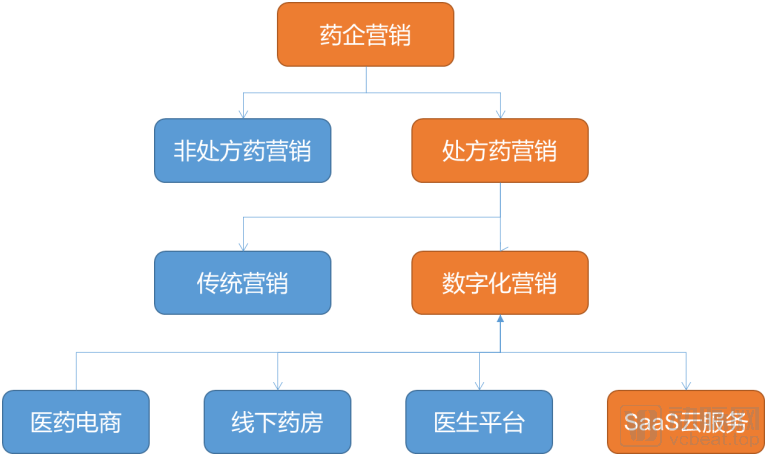
Key Positioning of the Digital Marketing Services Industry for Pharmaceuticals
Digital Marketing in the Pharmaceutical IndustryDigital marketing in the pharmaceutical industry primarily refers to the online promotion of prescription drugs under pharmaceutical companies’ portfolios, leveraging digital tools or digital-based application scenarios. It generally excludes over-the-counter (OTC) medicines and health supplements. This exclusion is mainly because OTC medicines and health supplements can be directly advertised to consumers (B2C), and because the overall market size of prescription drugs is significantly larger than that of OTC medicines and health supplements.
Pharmaceutical companies implement digital marketing primarily through three channels: SaaS cloud services, physician platforms, and retail terminals (including offline pharmacies and pharmaceutical e-commerce).
(1) Pharmaceutical Marketing SaaS Cloud Services:
Pharmaceutical Marketing SaaS Cloud Services migrate the offline tasks of medical representatives in traditional pharmaceutical marketing models to online platforms. Medical representatives can conduct remote visits to physicians via the SaaS platform and provide a range of services, from online training to remote academic conferences.
General-purpose SaaS CRM platforms struggle to precisely meet the core needs of different industries, particularly in healthcare, where there are higher professional requirements for cloud services. This has given rise to a specialized pharmaceutical marketing SaaS cloud service industry.
CRM System:CRM (Customer Relationship Management) refers to the process by which enterprises leverage information technology and internet technologies to coordinate interactions with customers across sales, marketing, and service functions, thereby enhancing management practices and delivering innovative, personalized customer engagement and services. Its ultimate goal is to attract new customers, retain existing ones, and convert them into loyal patrons, thus expanding market share. Mature CRM systems have become essential tools for customer management in most industries, applied in enterprise domains such as marketing, sales, service, and technical support that are customer-facing.
SaaS Cloud Services:SaaS (Software-as-a-Service) refers to the delivery of software services over the internet. SaaS cloud service providers centrally deploy application software on their own servers, allowing customers to subscribe to specific services based on their actual operational needs and pay according to usage volume and subscription period. The SaaS platform model is not only suitable for small and medium-sized enterprises but also beneficial for large-scale organizations. This product model effectively replaces traditional IT operations and maintenance (O&M) services; client companies no longer need to purchase hardware such as servers or establish dedicated maintenance roles, thereby significantly reducing O&M costs. Currently, SaaS cloud services have been widely applied across various business functions, including customer relationship management, human resources and administration, collaborative office work, and marketing.
Extended Analysis: How Pharmaceutical Companies Choose Between In-House Development and SaaS Cloud Services
There are significant differences between the healthcare sector and the IT industry. If pharmaceutical companies choose to build their own platforms, they must first commit substantial resources, and secondly, ensuring effective operation and maintenance becomes challenging. In contrast, suppliers of pharmaceutical marketing SaaS (Software-as-a-Service) cloud solutions leverage a unified system infrastructure to serve numerous different pharmaceutical enterprises. While assisting these companies, the providers continuously update and iterate their services based on collected data, enabling client companies to benefit from higher-quality products. Therefore, SaaS cloud services can offer pharmaceutical companies superior products at lower costs compared to in-house development, making them the preferred choice for pharmaceutical enterprises at this stage.
(2) Physician Platform
Physician platforms have amassed a substantial base of physician resources by offering services through the physician interface, such as case folders, online training, and academic forums. Pharmaceutical companies collaborate with these platforms to bridge the gap with physicians and ultimately reach their physician clientele. Leveraging the existing functionalities of physician platforms, pharmaceutical companies can also address specialized marketing needs, including case collection and patient management.
(3) Pharmaceutical E-commerce
As compliance efforts for online prescriptions advance, the prescription drug distribution model combining online sales with offline delivery by pharmaceutical e-commerce platforms is gaining increasing recognition. This sales model has also established a unique advantage for pharmaceutical e-commerce in chronic disease management. Pharmaceutical companies are collaborating with e-commerce platforms to provide whole-course disease management for chronic disease patients through online consultation and diagnosis services.
(4) Offline Pharmacies
Offline pharmacies have absorbed a significant volume of prescription drug demand diverted from hospitals due to the outflow of prescriptions. Similar to pharmaceutical e-commerce platforms, pharmaceutical companies are collaborating with offline pharmacies to help them establish digital chronic disease management systems, thereby enhancing the pharmacies’ service capabilities for patients with chronic conditions.
This article primarily discusses pharmaceutical digital marketing services centered on SaaS cloud services. Other types are not covered in this report, as their involvement in corporate business structures is relatively complex.
Market Role
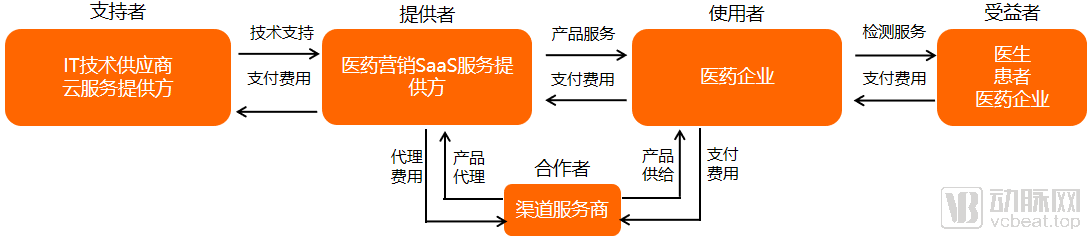
Industry Stakeholder Relationship Map for Digital Marketing Services in the Pharmaceutical Sector
Users of Digital Marketing Services in the Pharmaceutical Industry:Primarily pharmaceutical companies, it uses SaaS services to manage its sales team and maintain long-term communication with physicians.
Beneficiaries of Digital Marketing Services in the Pharmaceutical Industry:Mainincluding physicians, patients, and pharmaceutical companies, digital marketing helps physicians attend academic conferences, engage in academic exchanges, and enhance their professional value; helps patients reduce medication costs and optimize treatment cycles; and helps pharmaceutical companies control marketing expenses, improve marketing efficiency, minimize gray areas in marketing practices, and enhance compliance in pharmaceutical marketing.
Providers of Digital Marketing Services for the Pharmaceutical Industry:Pharmaceutical Marketing SaaS Service Provider, they provide SaaS cloud services to pharmaceutical companies.
Supporters of Digital Marketing Services in the Pharmaceutical Industry:It mainly includes software service providers and hardware suppliers.Software service providers mainly include cloud service providers and IT technology providers, offering technical support for enterprises to build service platforms; hardware service providers mainly include suppliers of equipment such as computers and servers.
Partners in Digital Marketing Services for the Pharmaceutical Industry:Channel Service Provider, helping pharmaceutical marketing SaaS services reach pharmaceutical companies.
Market Size
Listed pharmaceutical manufacturing companies on the Shanghai and Shenzhen Stock Exchanges broadly reflect the overall landscape of China’s domestic pharmaceutical market. From 2014 to 2019, the total revenue of listed pharmaceutical manufacturers continued to rise, while their cost of sales also increased steadily. Notably, the growth rate of cost of sales exceeded that of revenue, a trend that became significantly more pronounced starting in 2017. The proportion of cost of sales to total revenue remained at approximately 19% around 2014 but climbed to 25.53% by 2019.
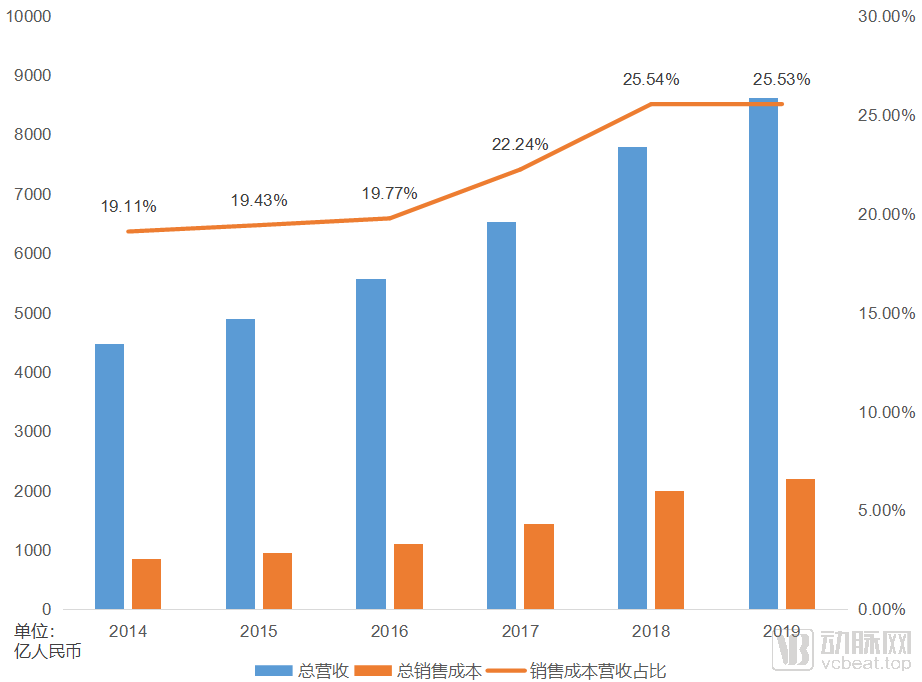
Statistics on Total Revenue and Cost of Sales for Pharmaceutical Manufacturing Companies Listed on the Shanghai and Shenzhen Stock Exchanges
High sales expenses have begun to impact profitability in the pharmaceutical industry. The total net income of listed companies in the pharmaceutical sector peaked at approximately RMB 94.8 billion in 2017, then declined rapidly over the following two years. Rapidly growing sales expenditures were a key contributing factor. Therefore, we believe that digital marketing transformation will become the choice for most pharmaceutical companies in the coming years, helping to control continuously rising marketing costs.
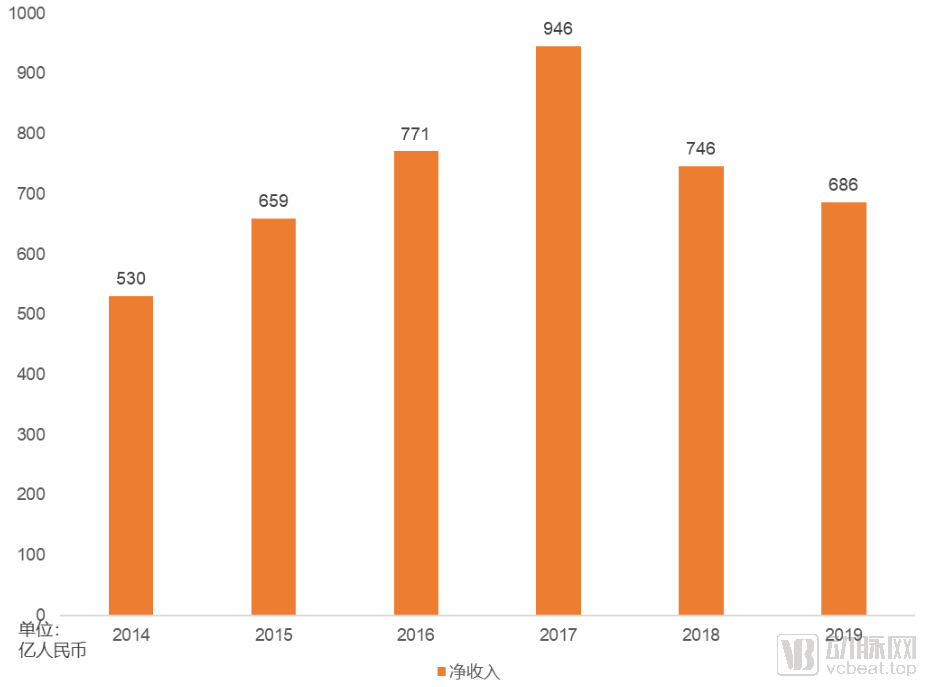
Total Net Profit of Listed Companies in China's Pharmaceutical Sector
According to the statistical results released by the National Bureau of Statistics in February 2020, pharmaceutical manufacturing enterprises above designated size in China generated total revenue of RMB 2.39086 trillion in 2019. Based on this figure, it is estimated that cost of sales accounted for 25% of revenue, with 10% of such costs allocated to the procurement of digital marketing services.In 2019, the market size of digital marketing services in the pharmaceutical industry approached RMB 60 billion.
Although the adoption of digital marketing strategies reduces pharmaceutical companies’ overall sales expenses, the proportion of digital marketing investment within the sales cost structure correspondingly increases. Therefore, we believe that the market potential of the pharmaceutical digital marketing services industry will not decline due to the widespread application of digital marketing methods.
Regarding the current market size of the digital marketing services industry for pharmaceuticals, we estimate that in 2017, the market size of China’s pharmaceutical digital marketing was approximately RMB 1.08 billion. This estimation is based on the overall digital marketing market size and the proportion of pharmaceutical manufacturing revenue, which accounts for about 2.4% of the national total output value. Over the past three years, this market has grown annually at a rate of around 20%.
We anticipate that in the coming years, as the volume-based procurement policy continues to be implemented, pharmaceutical companies’ demand for digital marketing will grow more robustly. We believe the growth rate of the pharmaceutical digital marketing market will outpace that of the overall digital marketing industry.
Therefore, based on the growth trends observed in recent years, we predict that the traditional Chinese medicine (TCM) digital marketing market will maintain a year-on-year growth trajectory in the coming years, outpacing the overall digital marketing industry.It is projected that by 2025, the market size of China’s digital pharmaceutical marketing industry will reach RMB 8.01 billion.
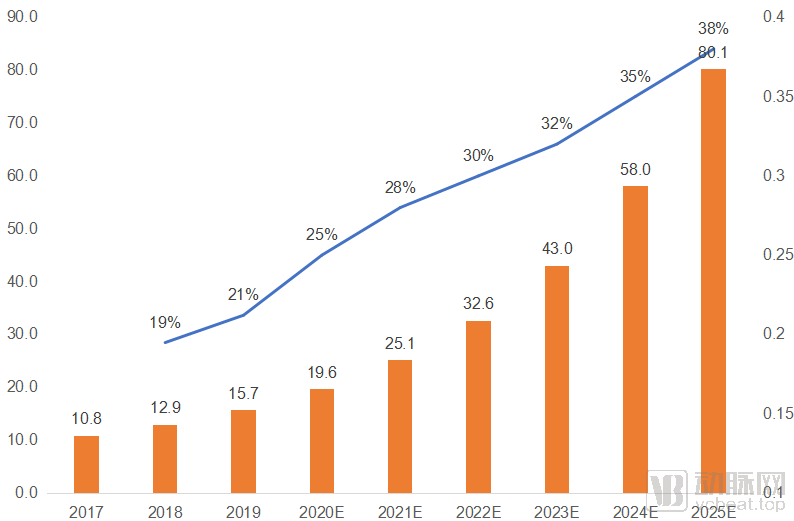
Market Size of Digital Marketing in China's Pharmaceutical Industry, 2017–2025 (RMB 100 Million)
Corporate Landscape
The upstream of the digital pharmaceutical marketing services industry mainly includes digital hardware products and cloud service providers; the midstream primarily consists of digital pharmaceutical marketing service providers; and the downstream is composed of pharmaceutical companies.
Upstream:Upstream enterprises in the digital pharmaceutical marketing services industry primarily provide midstream companies with the hardware and cloud computing support necessary for platform development and operational maintenance. This includes hardware product support from companies such as Intel, AMD, and Microsoft, as well as cloud service support from providers like Alibaba Cloud, Tencent Cloud, and Baidu Intelligent Cloud.
Midstream:Midstream companies provide digital marketing services for pharmaceuticals to downstream clients.Currently, this industry has reached a relatively mature stage abroad, with leading enterprises serving a large customer base and achieving scale; in contrast, most domestic companies are still in the early stages.
Downstream:Downstream pharmaceutical companies leverage digital marketing services to enhance their marketing efficiency,The primary objective is to maintain continuous tracking and management of marketing clients while compressing marketing costs.
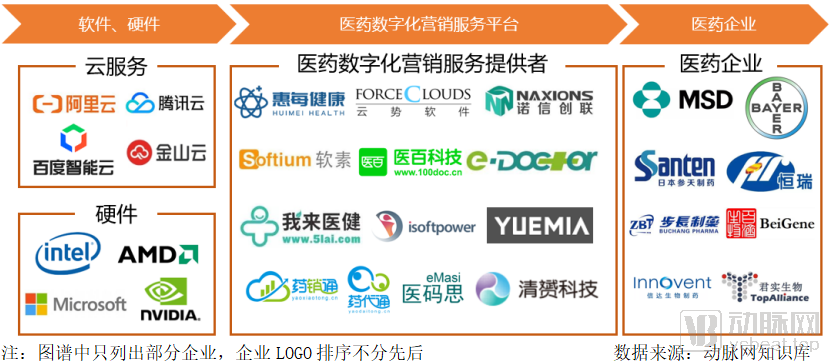
Industry Landscape of Digital Marketing Services in the Pharmaceutical Sector
Business Model
The business models in the pharmaceutical digital marketing services industry are mainly categorized into three major types.
(1) Basic CRM System
Enterprises provide pharmaceutical companies with basic marketing management platforms, which may be lightly customized to meet the specific needs of the pharmaceutical industry or may be general-purpose CRM systems widely used across various industries. While these products can manage and analyze user behavior data, they have not become the mainstream solution for digital pharmaceutical marketing services, as pharmaceutical marketing scenarios and target audiences require strong professional expertise.
(2) Public Cloud SaaS Platform
The company provides pharmaceutical enterprises with a public cloud-based SaaS platform for digital marketing, integrating numerous functions required in the pharmaceutical digital marketing process, such as online visits, academic conferences, and case collection. All users utilize the same digital marketing system and store information on the same public cloud server. This type of platform is suitable for small and medium-sized pharmaceutical companies with limited investment in digital marketing.
(3) Private Cloud SaaS Platform
The company provides pharmaceutical enterprises with a digital marketing SaaS platform based on private cloud. Building upon public cloud SaaS platforms, it offers further customization according to the specific needs of pharmaceutical companies and uses private cloud servers to store relevant information. This type of platform is suitable for large pharmaceutical enterprises that invest heavily in digital marketing.
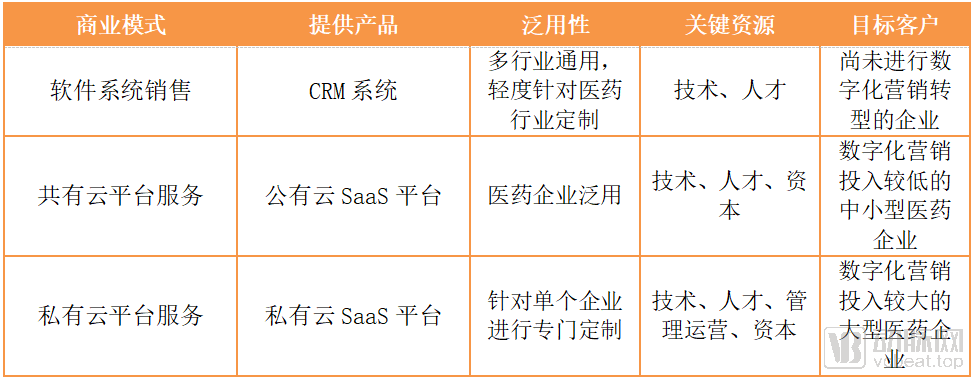
Comparison of Three Business Models for Digital Marketing Service Providers in the Pharmaceutical Industry
When selecting business models in practice, companies may launch different digital marketing products based on varying business models. Consequently, a single company may simultaneously operate under multiple business models.
Future Development
As previously mentioned, digital marketing services in the pharmaceutical sector are currently primarily applied to meet the marketing needs of pharmaceutical companies for prescription drugs. In future development, digital marketing will first gradually expand its scope across the industry, penetrating into the marketing operations of the medical device sector. Meanwhile, as pharmaceutical companies face increasing pressure to control costs, the proportion of digital marketing in their overall marketing expenditures will continue to rise. Furthermore, the target audience for marketing will evolve from its current focus on physicians to a comprehensive solution encompassing physicians, retail terminals, and even patients.
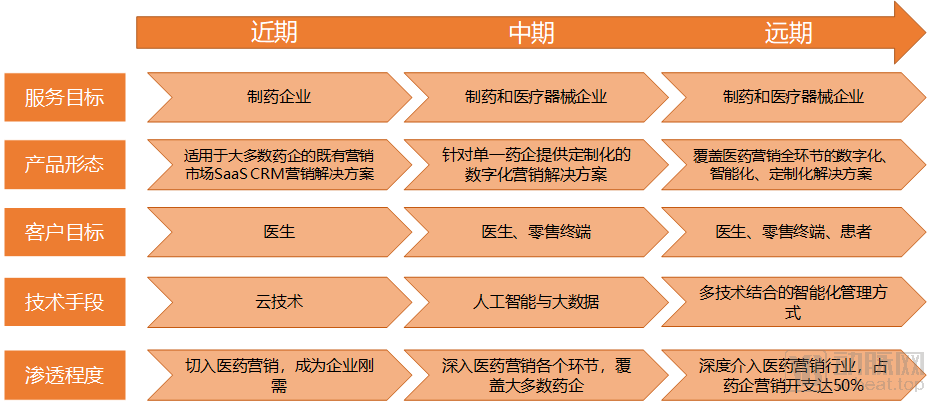
Future Development Trends in the Digital Pharmaceutical Marketing Services Industry
The factors driving the optimization and upgrading of the digital marketing services industry in the pharmaceutical sector are as follows:
Pharmaceutical Companies' Cost Control Needs:As a series of drug cost-control policies are introduced, profits in the prescription drug industry are being rapidly squeezed. Pharmaceutical companies’ need for cost control is further escalating, and since marketing expenditure constitutes a major component of costs in the pharmaceutical industry, the scale of demand for digital marketing will continue to expand.
Enhanced Digital Marketing Awareness:As enterprises gain a deeper understanding of integrating digital technologies into routine operational processes and heighten their awareness of digital transformation, the supply opportunities for digital marketing will increase.
Technical Capability Enhancement:User data continuously accumulated by pharmaceutical digital marketing service providers during service delivery is leveraged for product updates and iterations, thereby enhancing their platforms’ capacity to empower users. In the future, emerging technologies such as artificial intelligence algorithms and big data analytics are expected to gradually permeate the pharmaceutical digital marketing services sector, driving further technological advancements within the industry.
Expansion of New Service Offerings:Tailored to specific use cases, the service offerings of pharmaceutical digital marketing platforms will become increasingly refined. Customized services provided to enterprises may also undergo further upgrades, emerging as new offerings within public cloud services. Overall, pharmaceutical digital marketing companies will continue to accumulate and expand their new service portfolios through ongoing client engagement.
VCBeat has conducted statistics and an overview of relevant companies in the pharmaceutical digital marketing services industry.
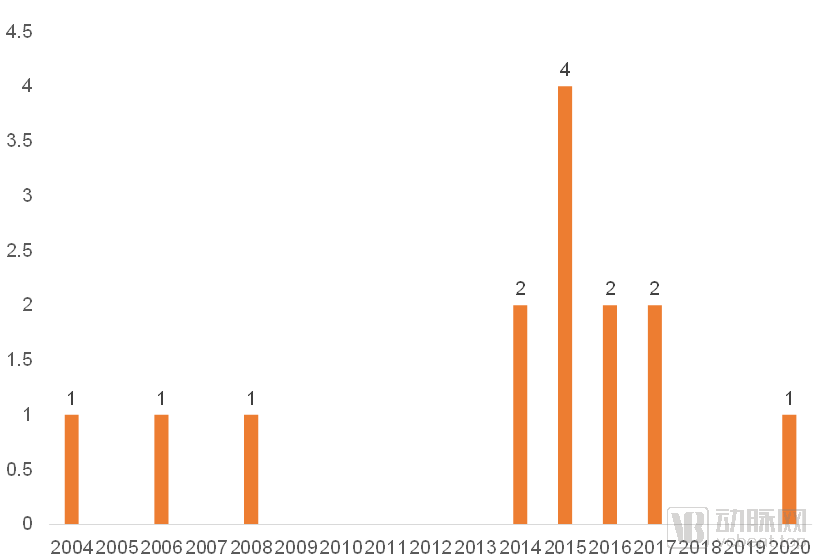
Distribution of Establishment Years for Pharmaceutical Digital Marketing Service Enterprises, 2004–2019
We identified a total of 14 companies in the relevant field. The establishment dates of these 14 companies are primarily concentrated in two periods. Three companies were founded around 2005, coinciding with the boom in CRM system development; consequently, some of these companies focused on providing CRM products to pharmaceutical enterprises.
By around 2015, the maturation of cloud and digital technologies prompted the digital marketing industry to shift from standalone CRM systems to SaaS-based solutions, thereby sparking a second wave of entrepreneurship in the pharmaceutical digital marketing services sector. Our statistics indicate that 11 companies established after 2014 are providing SaaS cloud services to pharmaceutical enterprises. Additionally, three companies founded around 2005 have also transitioned toward offering SaaS cloud services.
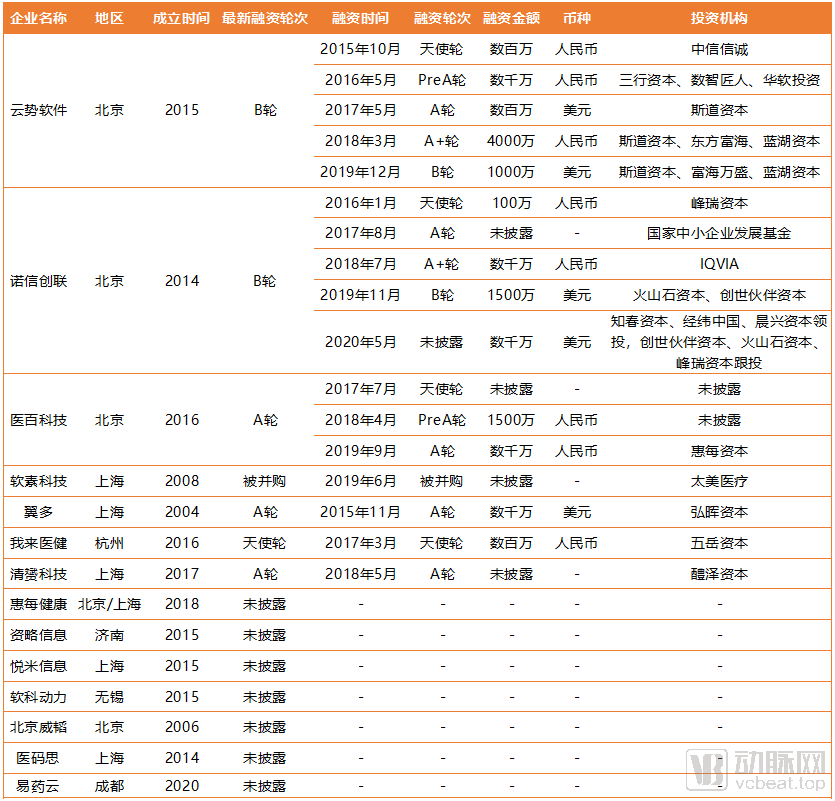
Key Players in the Pharmaceutical Digital Marketing Services Industry
Among the 14 companies engaged in digital marketing services for the pharmaceutical industry included in our statistics, seven have disclosed financing information through public channels. These seven companies are primarily at Series A to B stages, with one at the angel investment stage and one having been acquired. The financing landscape indicates that the pharmaceutical digital marketing services sector is still in a relatively early stage of development, although some companies have begun to emerge as notable players.
The main entities injecting capital into the field of digital marketing services for pharmaceuticals fall into three major categories:
The first category comprises investment firms specializing in the healthcare sector; for instance, Honghui Capital participated in YiDuo’s multi-million-dollar Series A financing round in 2015.
The second category comprises investment firms focused on the digital sector, such as Volcanic Stone Capital and Wuyue Capital; these institutions have also maintained sustained interest in the field of digital marketing services for the pharmaceutical industry.
The third category comprises healthcare industry enterprises with investment and M&A capabilities. For instance, Huimei Health, a subsidiary of the Huimei Medical Group, has independently launched services related to digital pharmaceutical marketing, while its affiliated investment arm, Huimei Capital, has invested in Yibai Technology, another digital marketing enterprise. IQVIA, a globally renowned CRO company, participated in the tens-of-millions-of-RMB Series A+ financing round of Nuoxin Chuanglian. Additionally, Taimei Medical, another digital CRO company, acquired Surpass Software in mid-2019, continuing to expand its footprint in digital pharmaceutical marketing services.
The above is an excerpt from the report.The complete report framework is as follows. Scan the QR code to access the mini-program and read the full report for free:
Report Table of Contents:
I. Industry Definition: Digital Technologies Reshape the Marketing Model for Prescription Drugs
II. Relevant Policies: Shrinking Profit Margins Drive the Digital Transformation of Pharmaceutical Marketing
III. Market Potential: The market size will exceed RMB 10 billion in 2025
IV. Capital Enthusiasm: The Industry Is Still in Its Early Stages, with Three Major Types of Capital Fueling Its Development
V. Typical Case: Leveraging Core Strengths to Support Pharmaceutical Companies’ Digital Marketing from Multiple Perspectives