

Nuohai Zhiyuan Files for STAR Market IPO After Three Attempts in 18 Months

Novogene
Gene Technology Products and Services Provider
On June 4, 2020, the Shanghai Stock Exchange’s STAR Market announced that it had accepted the listing application of Novogene (Beijing Novogene Co., Ltd.), with an expected fundraising amount of RMB 504 million.
Prior to this application for listing on the STAR Market, Novogene had previously scheduled public offerings three times and submitted two prospectuses, yet failed to achieve a successful listing. After two unsuccessful attempts to list on the ChiNext Board, Novogene has now turned its attention to the STAR Market. Only three months have passed since the termination of the review process for its previous application.
What adjustments did Novogene make in just three months? How has Novogene’s development progressed after the new prospectus updated its full-year 2019 revenue data?
Novogene’s IPO plans date back to 2016.

Novogene’s Pre-IPO Financing History
At that time, Novogene had already completed its RMB 200 million Series A financing round in 2015, with SDIC Innovation as the investor.
In June 2016, Novogene convened a shareholders' meeting and passed a resolution to establish a joint-stock company through overall conversion, with all six shareholders—Li Ruiqiang, Jiang Zhi, Fan Shibin, Mo Shuzhen, Zhiyuan Hegu, and Nuohe Hegu—as the founding shareholders.
According to documents disclosed by the China Securities Regulatory Commission (CSRC), Novogene signed the “A-Share Listing Tutoring Agreement” on July 25, 2016, and subsequently disclosed in August on the CSRC website that the listing tutoring institution was China Merchants Securities.
Subsequently, in November 2016, Novogene completed a Series B financing round of RMB 500 million. SDIC Innovation continued to participate in this round, while China Merchants Bank International and Fanghe Capital became new investors in Novogene. Following this round of financing, Novogene’s valuation reached RMB 7 billion, entering the ranks of unicorns.
After undergoing pre-IPO tutoring and securing substantial financing, Novogene even had the opportunity to vie for the title of the first NGS IPO.
The IPO application, which seemed imminent, failed to materialize. In an interview in January 2017, Li Ruiqiang from Novogene’s CRO division confirmed that the company did have listing plans. However, as BGI Genomics and Berry Genomics went public one after another, public attention shifted toward non-invasive prenatal testing (NIPT), and Novogene’s IPO narrative gradually lost momentum.
Two years later, Novogene once again drew widespread attention.
In August 2018, Novogene’s “Human EGFR, KRAS, BRAF, PIK3CA, ALK, and ROS1 Gene Mutation Detection Kit (Semiconductor Sequencing Method)” obtained the Class III Medical Device Registration Certificate from the National Medical Products Administration, becoming the second approved tumor NGS companion diagnostic kit.
With Key Products Approved, Novogene Puts IPO Plans Back on the Agenda.
In December 2018, the China Securities Regulatory Commission (CSRC) disclosed that Novogene had completed its pre-listing tutoring for an A-share initial public offering, with CITIC Securities serving as the tutoring institution. Following the completion of the tutoring, Novogene accelerated its progress and submitted the draft prospectus to the CSRC on December 14, 2018.
However, Novogene’s IPO plans remained fraught with difficulties even after the submission of its prospectus. The next update on Novogene’s listing efforts did not emerge until November 2019. Before the end of 2019, Novogene updated its prospectus and scheduled its IPO for the third time.
This time, the IPO process finally made some progress. Novogene’s listing review was quickly scheduled for November 28, 2019.
However, on the eve of the scheduled listing committee meeting, the China Securities Regulatory Commission (CSRC) announced the cancellation of the following day’s review session, citing the need for further verification of certain matters concerning Novogene. After another three months of waiting, Novogene failed to secure a review date and applied for termination of the examination process.
Regarding the reasons for Novogene’s unsuccessful listing review, one factor is related to its revenue growth rate and gross profit margin, while another is associated with its R&D investment and the industry’s development prospects.
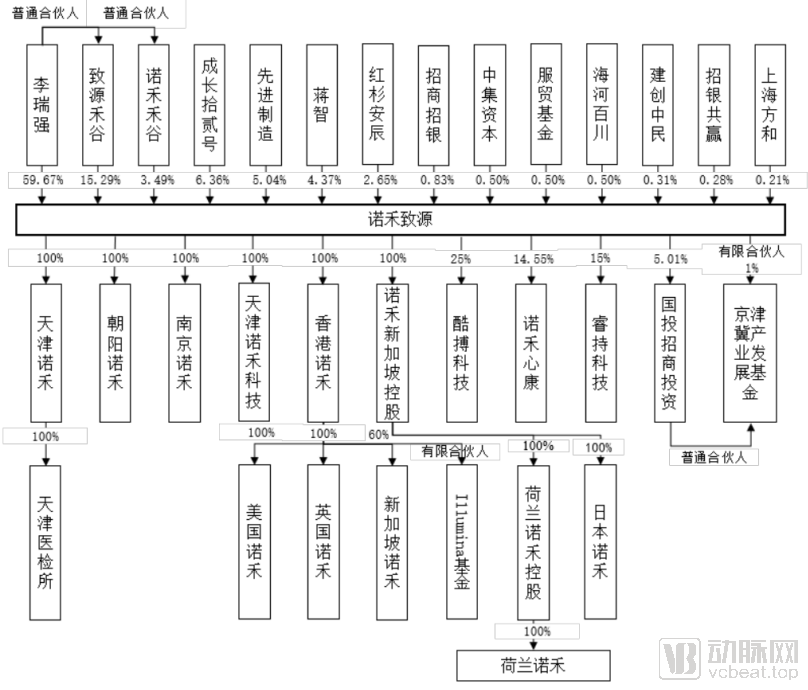
Novogene's Pre-IPO Equity Structure
Notably, in the period from April to May 2020, just prior to its application for listing on the STAR Market, Novogene centrally addressed equity-related matters. The shares held by two original shareholders were transferred to Chengzhang Shierhao; SDIC Innovation’s shares were transferred to Sequoia Anchen; and SDIC Xieli’s shares were separately transferred to China Merchants Bank-CMB International Capital, Haihe Baichuan, the China International Trade in Services Fund, CIMC Capital, and Jianchuang Zhongmin.
In its latest disclosed prospectus for the STAR Market, Novogene has clarified its equity structure in hopes of securing a smooth listing.
"Setting other factors aside, Novogene remains the largest scientific research sequencing service provider in China."
In 2011, Dr. Li Ruiqiang, founder of Novogene, left BGI, where he had worked for many years, to embark on his own entrepreneurial venture. Prior to this, Dr. Li had risen to the positions of Vice President of BGI and President of Technology Services.
During his tenure at BGI, Li Ruiqiang headed the technology services division of BGI Genomics. Consequently, when he embarked on his entrepreneurial venture, it was only natural for him to enter the field of technology services.
Those familiar with the genetic testing industry often refer to companies founded by former BGI employees as “BGI-affiliated startups.” As a leading player among these ventures, Novogene is inevitably compared to BGI. Li Ruiqiang, however, maintains a clear perspective on this matter. He has emphasized in numerous past interviews the importance of “doing what one does best.” In his view, every company should focus more intently on excelling in its core areas of expertise.
This may also be the primary reason why Novogene has continuously deepened its focus on the scientific research services sector over the past decade.
Novogene has established a leading high-throughput gene sequencing platform, primarily leveraging next-generation sequencing and bioinformatics technologies. By integrating multi-omics research methodologies, the company provides multi-tiered scientific research services and solutions for basic life sciences research, as well as medical and clinical application studies. Furthermore, building on its technical expertise in gene sequencing and its applications, Novogene independently develops innovative genetic testing medical devices.
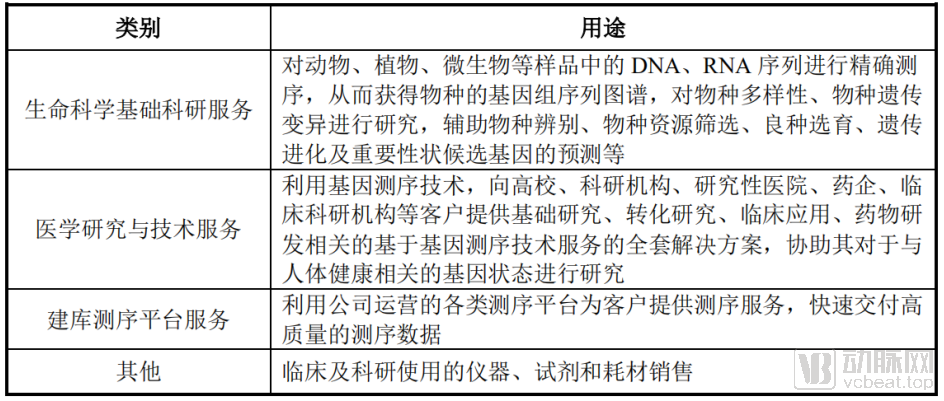
Major Services Provided by Novogene
Novogene’s services are primarily targeted at research institutes, with a client base exceeding 4,000 institutions. These include prestigious domestic and international research organizations such as the Chinese Academy of Sciences, the Chinese Academy of Medical Sciences, Peking University, Tsinghua University, Stanford University, Johns Hopkins University, and the Genome Institute of Singapore.
In addition to its central laboratories in Tianjin and Nanjing, China, Novogene has established subsidiaries in developed countries and regions including the United States, the United Kingdom, the Netherlands, Japan, and Singapore, with business operations covering more than 60 countries and regions across six continents worldwide.
Given the unique nature of its customer base, Novogene has consistently maintained a leading position in various high-complexity gene sequencing technologies. It has comprehensively mastered technical systems encompassing genomics, proteomics, metabolomics, and multi-omics integration, thereby establishing cross-disciplinary synergistic advantages spanning from basic research and translational research to clinical applications.
Over the past five years, they have published a total of 75 signed papers in international journals, including 26 papers in high-impact international journals such as Nature and its affiliated journals (with an impact factor >10). They have obtained 32 invention patents related to gene sequencing technology and 173 software copyrights.
These academic achievements demonstrate that Novogene has consistently kept pace with cutting-edge life science technologies, ensuring that its services remain closely aligned with the latest scientific research advancements.
To ensure service quality, Novogene strictly maintains high standards for employee qualifications. By the end of 2019, among its 2,575 employees, those holding a master’s degree or higher accounted for 64%, while only 135 employees had an associate degree or below.
In the field of clinical medicine, it has been previously mentioned that Novogene has had an NGS companion diagnostic kit approved for market launch. This product is the only tumor molecular testing system in China whose sequencing instruments, testing reagents, and analysis software have all obtained Class III medical device registration certificates. It is also the approved genetic testing product with the largest number of detected gene mutation sites and the largest clinical trial sample size in China.
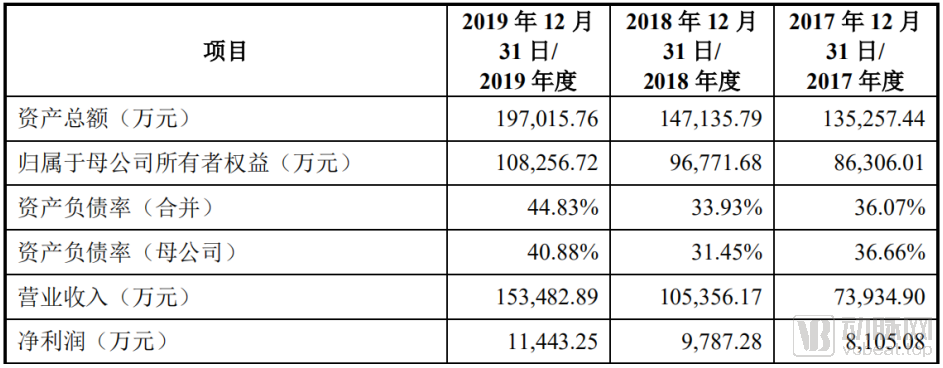
Selected Financial Data of Novogene
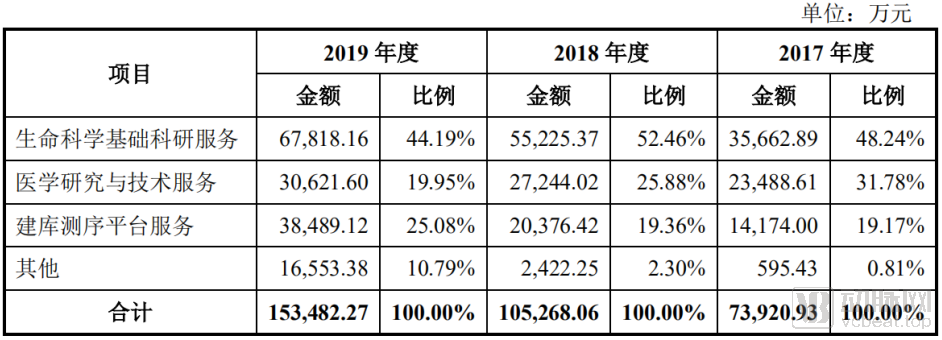
Novogene: Revenue and Proportion by Service Type
Novogene’s overall revenue performance has been quite impressive. Over the past three years, Novogene has maintained rapid business growth, with a total revenue growth rate approaching 50%. Within its revenue structure, the proportion of medical research and technical services has decreased year by year, while library preparation and sequencing platform services have increased annually. This indicates that Novogene’s business composition is becoming increasingly focused on scientific research services, without continued expansion into clinical operations.
Although the debt-to-asset ratio appears high, the largest component of current liabilities is nearly RMB 400 million in advance payments from customers. Taking this into account, Novogene’s debt level falls within a normal range.
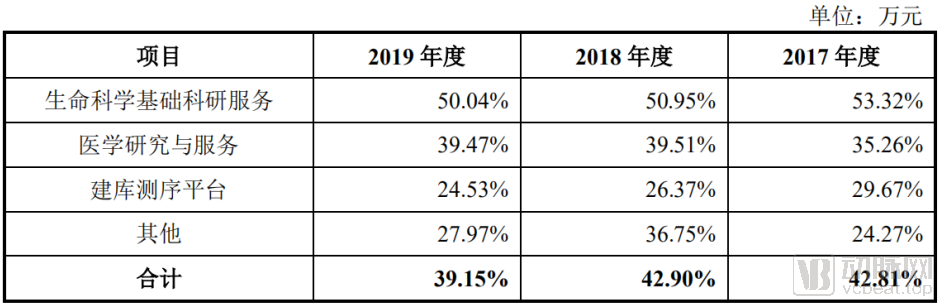
Novogene's Gross Profit Margin
Novogene’s declining gross profit margin has been a widely criticized issue in its two previous prospectus filings. Many have compared Novogene’s gross profit margin with those of BGI Genomics and Berry Genomics, arguing that Novogene’s margin is relatively low.
Although all three companies center their operations on next-generation sequencing (NGS) technology, there are significant differences in the business profiles of Novogene, BGI Genomics, and Berry Genomics. Novogene operates primarily in the scientific research services market, where competitive pressures have driven product unit prices down. Furthermore, the library preparation and sequencing services that Novogene has aggressively expanded in recent years carry particularly low gross margins. These factors collectively result in Novogene’s seemingly subpar gross profit margin.
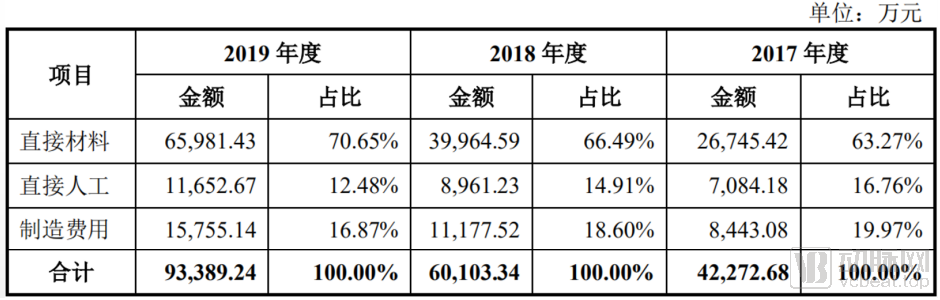
Novogene Cost Structure
Novogene’s cost structure also sheds light on the issue from another perspective. Over the past three years, the proportion of labor costs and manufacturing overhead in Novogene’s cost structure has continuously declined, while the share of direct material costs has risen from 63.27% to 70.65%. This trend strongly supports the view that the key driver behind Novogene’s low gross margin is not poor operational management, but rather inherent characteristics of the industry.

Novogene's R&D Investment
Novogene’s R&D investment also sparked controversy during the disclosures of its first two prospectuses. In the latest prospectus, Novogene’s total R&D expenditure in 2019 accounted for 8.19% of its revenue, essentially matching the industry average. Particularly given its relatively low gross profit margin, maintaining such a level of R&D investment sufficiently demonstrates Novogene’s commitment to research and development.
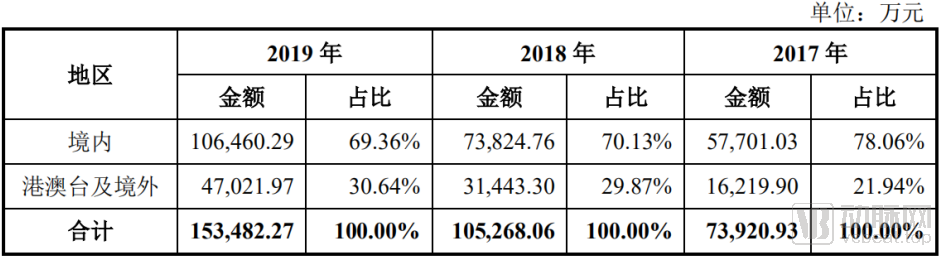
Novogene's Revenue Distribution by Region
Notably, Novogene is gradually expanding its overseas market, as evidenced by its revenue data. The company’s revenue from Hong Kong, Macao, Taiwan, and other international markets nearly tripled between 2017 and 2019. With its domestic market share already firmly ranked first in China, further expansion into overseas markets will help Novogene unlock new growth drivers.
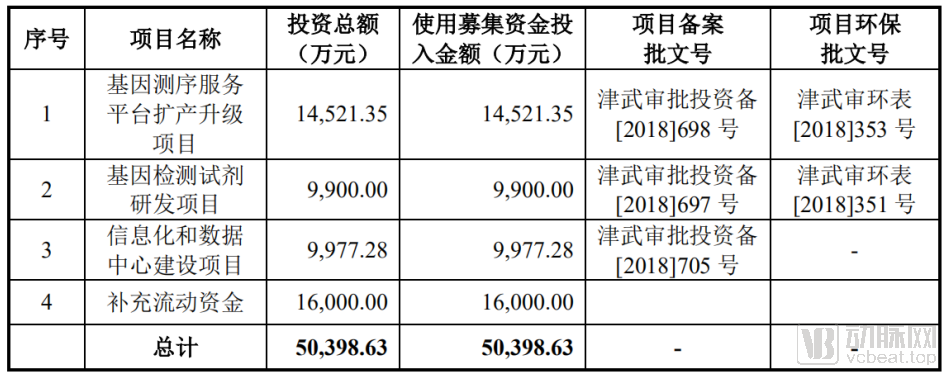
Use of Proceeds from the IPO
A notable point of concern is the use of proceeds by Novogene. In the latest updated prospectus for the STAR Market, Novogene’s issuance plan and intended use of funds remain largely unchanged. The first three substantive construction projects are identical to those in the previous two versions of the prospectus, with the only addition in the STAR Market prospectus being RMB 160 million allocated to supplement working capital.
From a purely business perspective, the funds raised through Novogene’s IPO will be allocated to expanding its sequencing service platform, developing diagnostic reagents, and building data centers. It appears that Novogene’s next development goals are quite clear: to continue advancing along its current path in the sequencing services market and strive for a higher market share. So, can Novogene successfully go public this time? It is certainly something to look forward to.