

IDSO Dental Alliance: Pioneering China's Localized DSO Model with Full Lifecycle Solutions for Dental Clinics
190,000 licensed dentists, 200,000 dental clinics, and a $139.8 billion market size... In the field of oral health, the United States leads the world.
The U.S. dental market system is not only an industry benchmark, but its unique operational and management organizational models have also been widely admired and emulated by the global dental industry. Among these, the Dental Service Organizations (DSO) model, which provides non-clinical business support to dentists, has garnered the most attention.
Interestingly, the DSO model was not invented by American dentists but by Wall Street investors and lawyers. Its origins can be traced back to the 1970s, and after decades of development, DSOs have now become virtually the “standard” for dental practices in the United States.
In contrast, the domestic market has yet to develop a truly large-scale, nationwide dental chain brand.
Ranging from a few to over a thousand dental clinics, the robust growth of the DSO model has attracted wave after wave of Chinese dental industry players to explore this space.
“The IDSO Dental Alliance is a new construct based on the American DSO model, dedicated to helping Chinese dentists resolve all challenges encountered during their entrepreneurial journey by providing full-lifecycle solutions for dental clinics,” introduced Sun Yan, Founder of the IDSO Dental Alliance and President of Happy Oral Care Group.
By deeply integrating with the realities of China’s dental market and empowering dental clinics from a B2B perspective, IDSO Dental Alliance, as one of the first pioneers in the localization of the DSO model, is poised to become a significant force driving the development of China’s dental industry.
When discussing DSOs, it is essential to first examine the dental market environment in the United States.
In the United States, there is a strong public emphasis on oral health. A healthy set of teeth is not only a marker of good health but also a valuable asset in social interactions. On average, Americans spend over RMB 10,000 annually on dental care, with 50% of the population visiting the dentist two to four times per year.
Robust market demand has spurred growth on the supply side. According to data from the American Dental Association (ADA), the number of dental professionals in the United States increased from 183,212 to 199,486 between 2010 and 2018. As of 2016, the total number of dental practices in the United States approached 200,000.
Against this backdrop, dentists who operate clinics face numerous challenges.
First, there is the pressure from funding.Due to the exorbitant cost of dental education, a typical dental student in the United States usually graduates with $300,000 to $400,000 in debt. Choosing to open a dental practice not only means shouldering this substantial debt burden but also facing the various financial pressures associated with establishing and operating a clinic.
Next are the operational and management challenges faced after the clinic opens.In the United States, laws prohibit non-dentist investors from establishing dental medical institutions; therefore, most dental clinics are founded by practicing dentists. While clinical practice is their expertise, dentists often lack proficiency in operational management. To run a clinic effectively and pursue its sustainable growth, it is essential to establish a mature operational management system.
The emergence of Dental Support Organizations (DSOs) offers a timely solution to these challenges. It not only helps dentists address their most pressing financial concerns but also effectively resolves operational management issues in accounting, legal affairs, procurement, and human resources, allowing dentists to focus more on their core clinical practice.
For example, an independent practitioner spends 40% of their time on non-clinical administrative tasks. A Dental Support Organization (DSO) takes over these non-clinical responsibilities, enabling the dentist to devote 100% of their time to patient care—the area where they create the greatest value.
According to statistics from the American Dental Association, dental practices affiliated with Dental Support Organizations (DSOs) accounted for 8.3% of all dental practices in the United States as of 2016, up from just 7.4% in 2015. Between 2010 and 2015, the DSO market size grew at a compound annual growth rate (CAGR) of 17.6%. Data disclosed in The COKER 2019 Market Summary indicates that the U.S. DSO industry is experiencing rapid growth, with a market size reaching $135 billion, and is projected to continue growing at an annual rate of 5%–6%.
Currently, there are more than 10 DSOs in the United States with over 200 affiliated locations each. Among them, Heartland Dental, the largest DSO nationwide, operated more than 1,000 clinics and served over 1,600 dentists as of 2019. Aspen Dental, ranked second, has more than 600 affiliated locations, while Pacific Services, ranked third, operates more than 500 locations.
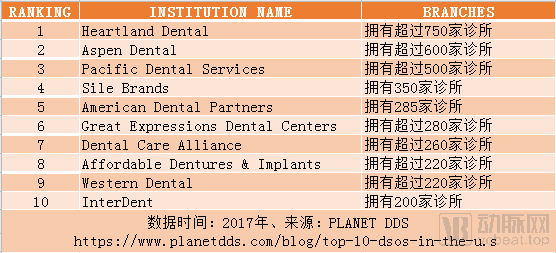
Figure Note: Top 10 DSO Organizations in the United States
Heartland Dental, founded in 1997 and headquartered in Illinois, provides comprehensive administrative support services to its affiliated dentists, including knowledge sharing, professional networking, promotion of technological innovation, and enhancement of clinical expertise. It addresses business challenges related to marketing, accounting, legal consultation, and other operational areas, enabling dentists to focus on improving the quality of patient care.
Heartland Dental’s Rise to Industry Leadership: A Look at Several Key Milestones
In 2000, Heartland Dental acquired its first clinic group, Mid South Dental Partners, comprising eight dental practices. In 2011, it acquired Neibauer Dental Care, which operated 26 clinics, bringing its employee count to 3,000. By 2015, Heartland Dental’s network had expanded to over 500 clinics. In 2016, it ranked among the top five dental support organizations (DSOs) in the United States. By September 2017, the number of affiliated clinics had exceeded 800. In 2018, leading investment firm Kohlberg Kravis Roberts & Co. L.P. (“KKR”) entered the picture by acquiring a majority stake in Heartland Dental from the Ontario Teachers’ Pension Plan, thereby accelerating its growth through capital infusion.
Beyond capital injection, Heartland Dental’s growth has been fundamentally driven by its internal capabilities, particularly its distinctive continuing education and business support systems. By partnering with Patterson Dental as its sales partner and engaging the Bell Leadership Institute—a recognized provider of executive education and development—as a consultant for mid- to long-term planning and strategic deployment, Heartland Dental not only offers dental professionals opportunities for advanced education (including professional education and non-clinical training) but also provides comprehensive non-clinical management support.
Through an in-depth analysis of Heartland Dental, we believe that the recognition and gradual systematization of Dental Support Organizations (DSOs) in the United States are driven by three core values:
I. Resolved the clinic's funding challenges;
II. Improve clinic operational efficiency from the operations perspective;
III. Unleash the professional capabilities of dentists, enabling them to work with greater focus.
Heartland Dental’s success story is merely the tip of the iceberg within the DSO model. A historical perspective clearly reveals that DSOs are not only a significant component but also an indispensable one in the development of the U.S. dental industry.
Compared with the mature DSO system in the United States, although China started later, opportunities still exist.
As of the end of 2018, there were approximately 99,000 private dental medical institutions in China, accounting for 78% of all dental medical institutions in the country. A report by Pacific Securities pointed out that the scale of China's dental medical industry reached approximately RMB 100 billion in 2018, a fivefold increase over the past decade. Despite the large market size, the overall market structure is characterized by small-scale, fragmented, and disordered operations.
In the pursuit of “enhancing operational management efficiency,” China and the United States arrive at the same goal by different routes.
Similar to the United States, most dental clinics in China are also founded by dentists. These clinics are typically owner-operated, with the dentists providing clinical care and managing operations themselves. Their sustainability generally relies on the practitioners’ clinical expertise and the patient networks they have cultivated over many years.
This “small-workshop-style” management poses numerous challenges for dentists, such as how to improve managerial efficiency, achieve streamlined operations, enhance profitability, and expand their brand.
In fact, in recent years, entrepreneurs in the dental clinic sector have been actively seeking breakthroughs in management. Particularly with the increasing attention and involvement of capital in the dental industry, dental clinics have generally begun to pursue improvements in operational efficiency and standardization. However, the management pain points they face are equally prominent. During their development, many clinics must simultaneously handle internal training, medical services, marketing, supply chain management, personnel structure management, and financial analysis. Faced with such multifaceted management challenges, it is difficult for dentists to excel in all areas.
In the past few years, the dental healthcare sector experienced a period of frenzied expansion. Bolstered by capital influx, industry players raced to capture market share, expanding from single locations to multiple regions and from individual clinics to full-scale dental hospitals, with dental chain consolidation reaching its peak in 2018. However, in the aftermath of this expansion boom, many chain brands have faced operational difficulties, sustainability challenges, and even successive store closures, leading to more cautious strategic planning.
Overall, the widespread difficulty in managing dental clinics is a common phenomenon in China’s dental industry, creating the “prerequisites” for the emergence of localized Dental Support Organizations (DSOs).
Given the differences in healthcare systems and stages of market development between China and the United States, the localization of DSOs is destined to follow a path with “Chinese characteristics.”
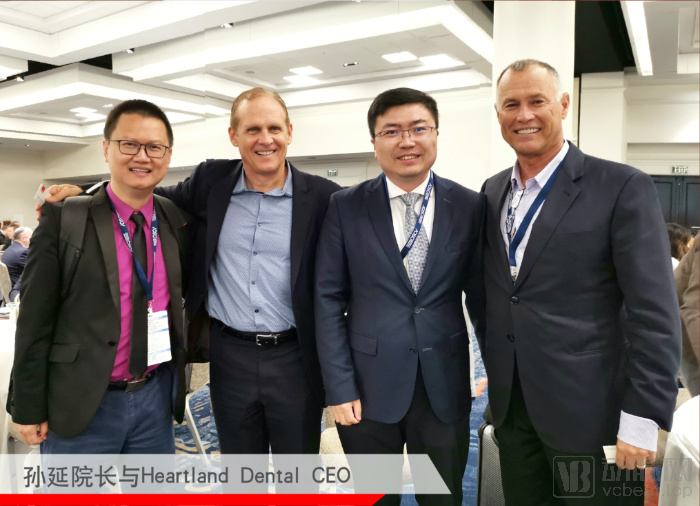
Figure caption: Sun Yan (second from right) and the CEO of Heartland Dental (second from left)
In 2017, during a visit to the United States, Sun Yan recognized the significant value of the American DSO (Dental Support Organization) model as a benchmark for learning. Upon returning to China and adapting the model to local conditions, Sun Yan and his team spent three years refining the concept before establishing the IDSO Dental Alliance. As China’s first professional management service alliance for dental outpatient clinics, the IDSO Dental Alliance is led by a core team with extensive experience in managing multiple clinics across the country and currently comprises over one hundred member institutions.
“We have observed that, unlike overseas clinics which prioritize demands for IT services, environmental protection, and compliance consulting, small and medium-sized dental clinics in China focus more on practical operational needs when engaging with Dental Support Organizations (DSOs)—such as recruiting, retaining, and training dentists, tracking patient treatment outcomes, and implementing more centralized procurement. Consequently, these clinics place greater emphasis on adopting mature and comprehensive operational expertise that has been validated through actual management practice,” pointed out Sun Yan.
To this end,The IDSO Dental Alliance attempts to redefine the DSO model with a localized definition for China, namely: a business organizational form in which dental chain institutions, after establishing a mature and standardized management system, export capabilities to empower the operation and management of clinics.
In short, the IDSO Dental Alliance operational system integrates the advanced concepts of U.S. DSOs with over a decade of management experience from Happy Dental Group, achieving the localization of the DSO model. Leveraging a global dental network platform and high-quality services, the IDSO Dental Alliance provides professional operational management solutions for oral diagnosis and treatment to its member units.At the management level, providing member clinics with services including new store preparation, training for service and medical staff, group purchasing, store management and operations, marketing, information management system development, human resources, financial analysis, and legal consulting;At the business levelEmpowering member clinics with capabilities in remote case consultations, personalized patient communication strategies, patient-side app management, and even the full digital implementation of complex diagnostic and treatment programs.It is a diversified dental clinic service platform that integrates clinical diagnosis and treatment, process monitoring, centralized procurement, and clinic management.
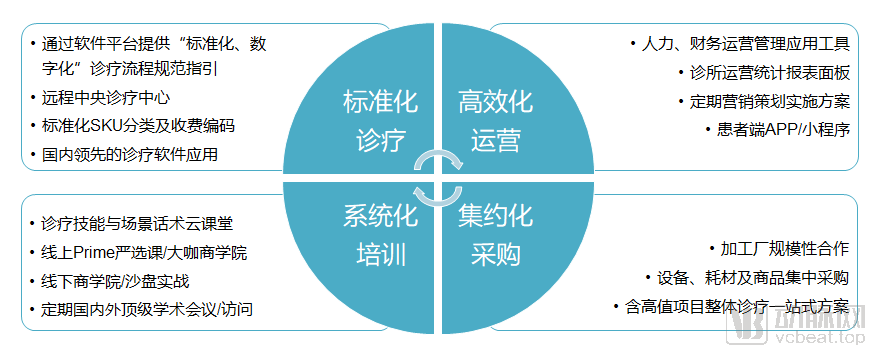
Figure Caption: IDSO Dental Alliance Business Model Diagram
The IDSO model was initially refined within the Happy Dental Group system, providing a suite of services to its affiliated clinics. Over a three-year period, by identifying customers’ core needs and establishing standardized clinical workflows, Happy Dental successfully developed and rolled out a standardized clinic model, while also digitizing operational standards across all branches. This facilitated the group’s steady growth in the Beijing market.
For Happy Dental Group, the IDSO initiative has achieved phased success. Currently, dental clinics in China are at an intersection where traditional and emerging models converge. The IDSO model integrates the advanced concepts and frameworks of American DSOs with Happy Dental’s decade of successful operational management experience as a local brand. Sun Yan believes that this standardized set of processes, system platforms, and clinic management training systems will continue to empower small and medium-sized dental institutions in their operational management.
“I believe our core challenge lies not on the consumer side, but on the supply side,” said Sun Yan.
At the IDSO Dental Alliance, Sun Yan’s team has provided comprehensive empowerment to dental clinics by enhancing their operational philosophies/values and management practices/methodologies.
As is well known, the dental industry has a high degree of marketization. Investors entering the dental sector mostly focus on how to stimulate growth in consumer-end (C-end) spending, whileThe IDSO Dental Alliance posits that the oral healthcare industry should embrace the mission of enabling Chinese people to lead better lives with improved quality of life, as this constitutes the fundamental need of patients.
“If a clinic focuses solely on the specific problematic tooth reported by the patient, it can only realize the value of ‘a single tooth.’ However, by building trust with patients, a clinic can comprehensively address all of their oral health issues, thereby securing greater returns. For instance, reputable Grade 3A dental hospitals never worry about patient volume or revenue,” said Sun Yan.
"Focusing solely on short-term value while neglecting patients' long-term trust will clearly hinder sustainable growth."IDSO Dental AllianceProposing to uphold "trust" as the foundation,Treat every tooth of each patient as your own responsibility. The key to a dentist’s survival lies in the level of trust patients place in you, not in packaging or promotion.
Currently, many dental clinics adopt a strategy of targeting high-net-worth individuals with higher per-customer transaction values, focusing on customer segments with low visit frequency. In contrast, the IDSO Dental Alliance takes a markedly different approach,IDSO Dental Alliance advocates for establishing lifelong relationships with clients, striving to ensure their dental health remains problem-free for life.China’s core consumer base consists of middle-class families. Taking a complete seven-member household as an example, the seven individuals collectively have 244 teeth.The IDSO Dental Alliance hopes that dental clinics on the supply side will change their mindset,Striving to keep these 244 teeth problem-free for life.
Based on this, the IDSO Dental Alliance providesClinic Operations Management SolutionsIncludes six major modules:Stomatology Business School, Stomatology Medical College, Outpatient Management System, Remote Consultation Center, Patient CRM Mini Program, and Outpatient Operations Management Module.
School of Stomatology BusinessWe primarily provide course services to dental clinic entrepreneurs through a combination of online and offline channels. Our training programs include executive classes, scenario-based courses, role-specific courses, SUP courses, and practical implementation workshops, covering areas such as clinic management, marketing strategy, service process training, and data analysis, thereby offering comprehensive support across the entire lifecycle of dental clinic development.
School of StomatologyLeveraging the robust expert network of Happy Dental Group, we regularly launch academic training courses, such as those on orthodontic aesthetic gnathology and implant restoration.
Outpatient Management System...is to encapsulate standardized processes and forms into an information management platform system, which is provided to other small and medium-sized dental institutions to help them improve their business management level.
It is worth noting that the standardized processes for outpatient management also includeStandardized clinical diagnosis and treatment protocols, standardized service classification information, and even a coding system fully aligned with international dental industry standards represent the key innovations that distinguish the IDSO Dental Alliance from foreign DSO models.
“We proposed the implementation of standardized clinical workflows and conducted extensive research on leading enterprises across various industries. We found that once standardized processes are in place, operational efficiency improves significantly, leading to a substantial increase in profitability. Currently, mergers and acquisitions of dental clinics face significant challenges, primarily due to the difficulty in standardizing business processes. Once standardization is achieved, many of these issues will be readily resolved,” introduced Sun Yan.
Healthcare differs from other industries, as diagnosis and treatment in clinical settings are often difficult to standardize into fixed processes. So how is IDSO implemented?
Sun Yan introduced that the IDSO Dental Alliance first independently developed a set ofAI-Based Diagnostic and Treatment System“The highlight of this system lies in our ability to process massive volumes of patient case data daily in real time, generate case analysis results, and derive corresponding lifelong treatment plans,” introduced Sun Yan.
Within this system, patients can not only gain insights into their oral health status, but those with certain non-healthy conditions may also proceed directly to the treatment phase. This model has already been successfully implemented at Happy Oral Care, and will next be made available simultaneously to IDSO member units.
In the process of standardizing diagnosis and treatment, the IDSO Dental Alliance has also created a “central kitchen” concept.Expert Consultation Data Middle PlatformThis means that patients in any region can benefit from expert-level, high-quality diagnosis. Standardizing the diagnostic and treatment process helps overcome technological and geographical barriers, thereby supporting brand expansion.
In addition to the AI system, the IDSO Dental Alliance has also launched aSmart Toothbrush, empowering B-side clinics and C-side consumers through physical products. “This smart toothbrush can link to the patient CRM mini-program, allowing users to monitor their oral health in real time and from all angles via their smartphones, while also providing health alerts. By integrating into daily brushing routines, it helps dental clinics deliver better oral healthcare management for patients, ultimately enabling each patient to achieve the goal of ‘preventive care’ at the source. This product holds strong appeal for those focused on daily oral health management, particularly mothers with young children,” introduced Sun Yan.
Within the outpatient operations management module, the IDSO Dental Alliance also centrally addresses the most pressing concerns of clinic administrators. For instance, it enables managers to monitor in real time whether each patient’s treatment plan is comprehensive and whether therapeutic procedures are progressing smoothly.
Overall, from business philosophy to architectural design encompassing products, technology, and services, the solutions provided by the IDSO Dental Alliance are comprehensive and precise.
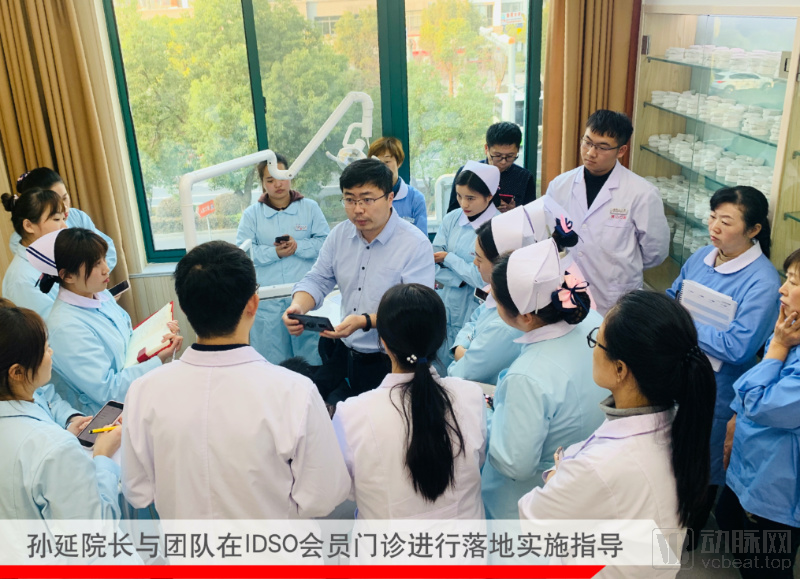
Figure Caption: Sun Yan and the team provided on-site implementation guidance at the IDSO member outpatient clinic
In the United States, DSOs collaborate with multiple product and service providers to jointly build a comprehensive resource ecosystem. “IDSO is an alliance where members progress and grow through sharing and learning,” said Sun Yan, describing the openness of the IDSO Dental Alliance.
Currently, the IDSO Dental Alliance has signed cooperation agreements with multiple domestic consumables and service suppliers, and its self-developed clinic management system platform has been integrated with WeChat and DingTalk., regardless of the platform used by organizations and personnel within the alliance, integration between outpatient management and instant messaging systems can be achieved, while also enabling connectivity with Hospital Information Systems (HIS), processing orders, human resources systems, financial systems, and other interfaces.
The COVID-19 pandemic has had a profound impact on the dental industry. During the outbreak, the IDSO Dental Alliance not only provided comprehensive support to Happy Dental, enabling it to maintain healthy development and build core competitiveness despite business suspensions, thereby positioning it for a stronger post-pandemic recovery; additionally, through IDSO Dental Alliance’s marketing planning and implementation services, a dental clinic that had been open for only four months achieved over RMB 200,000 in revenue from a single campaign. Furthermore, the online roundtable discussions hosted by the IDSO Dental Business School have provided hundreds of dental clinic managers with comprehensive management insights.
It is worth noting that the development of Dental Support Organizations (DSOs) in the United States began at an earlier stage, when their initial level of digitalization was insufficient. Today, however, the integration of digitalization with the DSO model forms the foundation for building future core competitiveness. Drawing on the successful experience of U.S. DSOs, the prospects for the DSO model in China are promising, with the potential to produce giants such as Heartland.
“Our goal is to become China’s Heartland,” said Sun Yan. “We do more than just offer one or two basic services to dental clinics; we provide comprehensive support to small and medium-sized dental healthcare institutions across clinical standardization, expert consultations, customer management, medical staff training, CRM, centralized procurement, marketing strategies, compensation and performance management, financial management, and legal services—making it easier for anyone to run a successful dental clinic.”
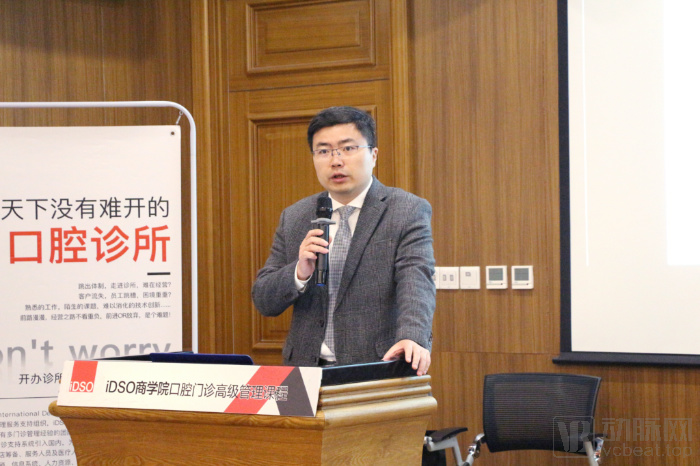
Figure caption: Sun Yan, Founder of the IDSO Dental Alliance and President of the Happy Oral Care Group
Currently, as a pioneer in the localization of DSOs, IDSO Dental AllianceWithin just one year, it has gained recognition from over 100 dental institutions across China, most of which are the leading clinics or hospitals in their respective counties and cities.
Finally, when discussing the “I” in the IDSO Dental Alliance, Sun Yan stated that this “I” can stand for “I” (self) or be interpreted as “Internet.” It signifies not only our own DSO but also a DSO that transcends international standards. We look forward to the day when the IDSO Dental Alliance will break away from its existing model and become a leader in setting international standards.