

VITALERTER Files IPO Prospectus: Israeli AI-Powered Remote Monitoring Platform Transforming Global Elder Care
Over the past decade, population aging has placed immense pressure on an already strained healthcare system. Without effective countermeasures, it is foreseeable that the medical insurance system will struggle to sustain the annually rising healthcare expenditures driven by the aging trend.
Among the many challenges of an aging society, the most fundamental is the issue of guardianship for the elderly. In 2019, the global population aged 65 and older surpassed that of children under five for the first time in history. Against the backdrop of a shrinking labor force, there are simply not enough young people available to care for the elderly who require assistance.
How to Crack Tough Problems: Technology Emerges as a Potent Solution.
As a provider of proactive and continuous monitoring services based on SaaS technology, the Israeli digital health company VITALERTER™ leverages sensors combined with AI algorithms to achieve non-contact or minimal-contact continuous monitoring of vital signs and physical movement. By continuously tracking vital indicators such as heart rate, body temperature, blood oxygen saturation, and respiratory rate, and by analyzing body posture and in-bed activity status, the system provides early warnings for fall risks. This enables caregivers to proactively prevent falls, pressure ulcers, sepsis, cardiac events, and blood pressure abnormalities.
In other words, it can provide virtual nursing assistant services to the elderly or patients through biosensors, enabling 24/7 monitoring and alleviating the burden on care and medical professionals. Unlike general vital signs monitoring solutions, VITALERTER™ can identify early warning signs of critical deterioration like healthcare workers, thereby improving care quality and reducing mortality rates.
Such programs can reduce the rate of accidental falls by 70%, the incidence of pressure ulcers and sepsis by 78%, and readmission rates by 50%, thereby lowering healthcare costs and significantly improving patient clinical outcomes.
Leveraging its technological leadership and the flexibility of its application scenarios, VITALERTER™ has established a presence on every continent except Antarctica, with current operations in Israel, Germany, Italy, the Netherlands, the United States, Brazil, Australia, Japan, and other countries. As the country with the largest elderly population in the world, China represents a high-potential market for VITALERTER™, which aims to leverage its technical expertise to enhance the quality of elderly care monitoring in China.
How Is VITALERTER™ by Vitaler Being Implemented in China? VCBeat Interviews Miki Ravi, Founder of VITALERTER™ by Vitaler.
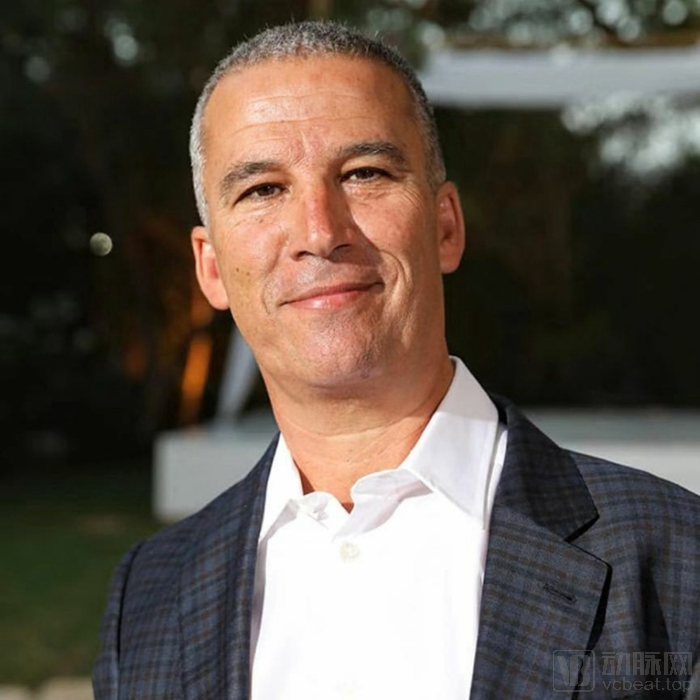
Miki Ravi, Founder of VITALERTER™
Mr. Miki, the founder of VITALERTER™, is a serial entrepreneur; VITALERTER™ is the fourth company he has established, following his previous ventures in wireless communications, security technology, and medical devices. The decision to focus on cloud-based monitoring products was driven both by Mr. Miki’s technical background and by the significant potential he recognized in the smart elderly care market.
In 2018, VITALERTER™ stood out among numerous digital health solutions and was selected by the Israeli Ministry of Health as one of the 12 representative digital health companies recommended globally. In 2019, Vitaler (China) – Guangzhou Vitaler Medical Technology Co., Ltd., a company invested in by the Guangzhou China-Israel Biological Industry Fund, was established on Guangzhou International Bio Island.
Interestingly, the launch of VITALERTER™ in China is not Miki’s first foray into the Chinese market.
He stated that as early as 2004, following the acquisition of the Israeli startup Victory Idea Limited by a Chinese company, he stayed in Zhuhai, China, for six months to assist his team in completing the technology transfer tasks.
He recalled, “In 2004, China’s high-tech ecosystem was virtually barren. At that time, China’s industrial landscape consisted solely of manufacturing and processing plants. However, I foresaw that China would become a major technological power in the future. Only by becoming such a power could China address the challenge of improving the quality of life for its vast population.”
In China, patient monitoring is often regarded as a core application area of the Medical Internet of Things (IoMT). The various challenges facing healthcare delivery make the deployment of cloud-based monitoring particularly critical in hospitals and elderly care facilities. On the patient side, older adults and their families require more transparent and efficient nursing care. For payers, there is a need for more frequent and precise monitoring methods. The demand for earlier disease detection and remote patient monitoring will fundamentally drive the adoption of cloud-based monitoring.
However, for medical and elderly care institutions, the backwardness of traditional ward facilities and immense cost pressures have hindered the large-scale implementation of cloud-based monitoring.
Currently, the penetration rate of intelligent solutions is very low. When introducing VITALERTER™, Geng Jianyue, General Manager of Guangzhou China-Israel Biomedical Industry Investment Fund, once investigated the Chinese cloud monitoring market. He told VCBeat,Compared to China’s current elderly market of 170 million, the penetration rate of cloud monitoring solutions is currently negligible.However, he believes that in the future, wherever internet coverage is available, older adults should be able to benefit from enhanced elderly care services provided by cloud-based monitoring.
In the promising market for remote monitoring of the elderly, numerous technology companies have also entered the fray. According to statistics from International Data Corporation (IDC), a technology research firm, remote monitoring represents the largest segment within the age-tech market. Other rapidly expanding segments include “personal response systems” (which can promptly detect falls in older adults and trigger alerts) and “medication adherence monitoring” (which ensures that medications are taken at the correct time and dosage).
Miki stated that, from a global perspective, the primary solutions for remote monitoring of the elderly can be categorized into two types. One type focuses on hardware-based products that monitor vital signs through wearable devices. For instance, the Apple Watch can track changes in heart rate among older adults. The other type emphasizes software and AI-driven products, which monitor patients’ conditions by analyzing collected data.
However, he pointed out that both approaches currently have flaws: “Smart hardware solutions present a certain barrier to operation for the elderly, while software-centric solutions are weakened by their heavy reliance on extensive data foundations, which most software solutions lack.”
VITALERTER™ is the only product that enables a company to leverage AI for real-time analysis of vital signs data and predictive decision-making in the cloud. The VITALERTER™ solution comprises two main components: the hardware devices, including Vitals (Vitalert Non-Contact Health Box), Bio-Patch (Vitalert Biele Patch), and Band-Aid (Vitel BangLe Patch); and the Vitalert AI Continuous Monitoring and Protection Cloud Service.
VITALERTER™ integrates remote monitoring systems with personal feedback systems, leveraging core technologies such as biosensors, artificial intelligence, and deep machine learning.
Unlike most electronic sensors, VITALERTER™ products utilize biosensors. Remote monitoring solutions based on electronic sensors often rely on wearable devices, limiting their application scenarios. Another hardware product from Vitalerter, the Bio-Patch, offers more versatile usage scenarios. It can be applied to the patient’s back or chest at any time, enabling real-time monitoring even while the patient is in motion.
VITALERTER™’s cloud-based analytical algorithm is the company’s core technology. In simple terms, it collects vibration frequency signals related to the user’s environment along with specific optical signals, then obtains data correlated with the user’s vital signs through data cleaning and classification. For example, it captures ballistocardiogram (BCG) information and analyzes it using sophisticated machine learning algorithms to derive results.
Miao Rongrong, Head of Operations for Viter Medical Technology in China, stated, “Our vibration detection has reached the nanometer scale, with a margin of error in vital sign data within ±2%.”
Biosensors combined with AI-driven continuous monitoring enable VITALERTER™ to deliver true 24/7 surveillance. At its core, VITALERTER™ continues to enrich and deeply explore the product’s potential; however, in terms of its external form factor, Vitaler will persist in simplifying the design.
Currently, VITALERTER™ can be installed in just three steps within 10 minutes. Both caregivers and the elderly or their family members can complete the installation after reading the product instructions. During use, the device is designed to be unobtrusive, making it difficult for users to notice its presence.
Taking the deployment of VITALERTER™ at an aged care facility in Australia as a case study, the order was placed online. Upon completion of the order, VITALERTER™ installers were able to complete the product installation solely through remote guidance. To date, VITALERTER™ products have been in operation at this Australian aged care facility for two years.
In the future, patch-sized sensors will become even more unobtrusive and skin-conforming. Currently, the third generation of VITALERTER™ has been iterated to be as soft and peelable as a bandage.
Notably, in terms of its business model, Vittel delivers services directly via cloud data, eliminating the need for institutions or end-users to invest in IT resources. Furthermore, Vittel operates on a SaaS (Software-as-a-Service) model, which obviates the burden of high hardware costs; as the user base expands, the service fees decrease. These two factors significantly reduce the cost for institutions to adopt cloud-based monitoring solutions.
VITALERTER™’s non-invasive, contactless remote monitoring also played a significant role in combating the COVID-19 pandemic. The VITALERTER™ active monitoring and protection system functions like a virtual nurse, enabling care teams to remotely and in real time assess the condition of hospitalized patients, identify early changes in vital sign trends, and isolate suspected cases until clinical diagnosis is confirmed.
Without contacting the patient, VITALERTER™'s Vital Health Box can analyze patient data in real time and issue alerts on a display screen outside the ward, ensuring staff safety and restricting access to isolation areas.
VITALERTER™ is actively researching additional monitoring modalities capable of detecting and characterizing irregular respiration, cough frequency, and core body temperature to signal potential disease onset. Taking COVID-19 as an example, two hospitals in Italy and Panama have begun employing vital signs monitoring services to track the physical condition of bedridden COVID-19 patients. This approach has effectively conserved scarce medical resources and healthcare personnel energy, while reducing the risks and anxiety associated with bed rest for COVID-19 patients, yielding positive feedback.
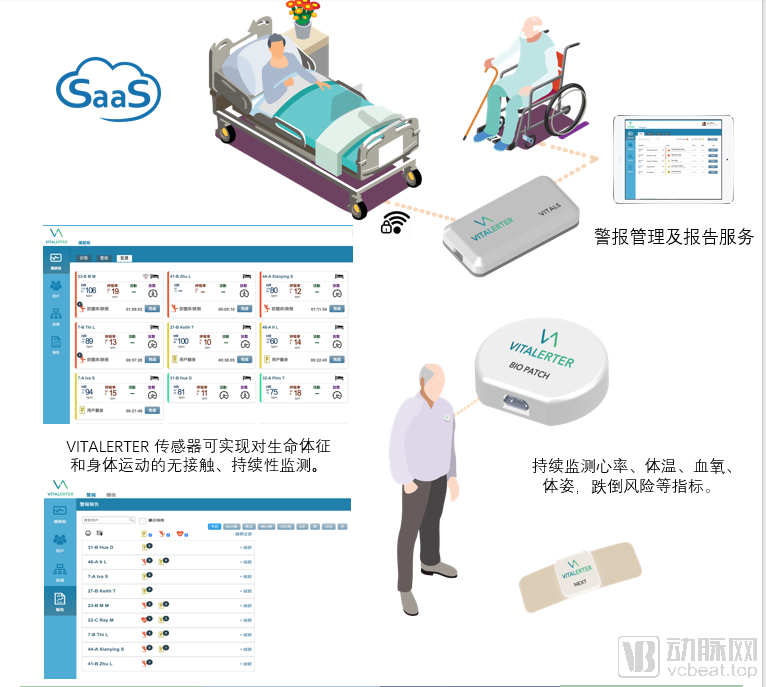
VITALERTER™ products have gained recognition in numerous countries worldwide, owing to their technological advancement and flexible adaptability.
According to Dr. Li Kaian, Project Manager at the Guangzhou China-Israel Bio-Industry Investment Fund, Israel’s elderly care model was implemented relatively early on a global scale and places significant emphasis on technology and the development of innovative programs. One of its most valuable research directions involves leveraging machine learning and big data to computationally model the aging process and the potential effects of interventions, positioning its approach at the forefront globally.
In Israel, VITALERTER™ and Deloitte jointly won the bid for a digital elderly care solution led by the Israeli Ministry of Health’s tender. The project covers more than 300 elderly care institutions in Israel, with a total of 25,000 beds, aiming to improve the efficiency of caregiving staff, reduce risks for care institutions, and comprehensively enhance the digitization of health records. This is also the largest pilot project for elderly care institutions in Israel to date.
In terms of global implementation experience, VITALERTER has successfully integrated into the healthcare systems of multiple countries. Miki Ravi stated that the policy environment is crucial for the deployment of smart elderly care technologies.
He stated, “In countries such as Australia and Israel, government policy subsidies and well-established insurance systems serve as a significant driving force for the implementation of cloud-based monitoring solutions.”
In Israel, although it is the "youngest" developed country, its growing elderly population continues to pose challenges to the nation's healthcare and social services. Israel has offered numerous innovative and cutting-edge solutions to address the challenges of aging, serving as a model for the world.
In the late 1980s, the Israeli government pioneered the global implementation of a long-term care insurance system and enacted the Long-Term Care Insurance Law. Israel also ensures that older adults have access to community and institutional care through a multi-tiered elderly care framework, including day care centers and neighborhood mutual aid programs.
In addition to institutional innovation, Israel is also vigorously promoting technological innovation in the elderly care industry, leveraging technologies such as AI, telemedicine, and precision medicine to empower the sector.
In January 2018, Israel’s first Innovation Lab for Healthy Aging was established in Beersheba to address the increasingly complex challenges of population aging by simulating living environments for older adults. The lab was jointly initiated by the Center for Digital Innovation (CDI) Negev, Ben-Gurion University (BGU), and the National Insurance Institute of Israel, among others. Vitalerter is also a project operating within this innovation lab.
Clearly, China’s eldercare technology industry lags behind foreign counterparts in terms of policy and institutional support; however, domestically, leading solutions can be introduced without borders. Vitalerter is collaborating with relevant health authorities in China to promote the deployment of its products across multiple settings, including elderly care institutions, hospitals, community health centers, and homes.
For a long time, the public has discussed aging with concern, but in reality, an aging population does not erode our society. The challenges posed by aging are a double-edged sword: if we fail to leverage technology to find effective solutions, aging will slow the pace of societal progress. However, if we harness the power of technology to address these challenges, aging will unlock entirely new market opportunities. Cloud-based monitoring is merely the starting point; in the future, built upon the collection of vast amounts of data, the senior tech market will hold even greater potential.