

Ceribell Secures $20 Million in Debt Financing to Advance Point-of-Care EEG Platform for Epilepsy Diagnosis

Ceribell
Medical Diagnostic System Developer
Recently, VCBeat learned that Ceribell, a developer of medical diagnostic systems, announced it had secured $20 million in debt financing from Horizon. The funds will be used for the company’s operational management and external strategic expansion.
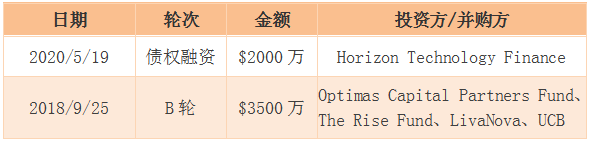
Ceribell's Historical Financing
As a medical diagnostic system developer, Ceribell’s FDA-cleared point-of-care EEG (electroencephalogram) system has successfully transformed the large, bulky machines previously used for detecting epilepsy and stroke into handheld terminals the size of a smartphone, reducing detection time from 2 hours to just 5 minutes.This detection system can be set up by healthcare professionals within 6 minutes. Its unique brain stethoscope function measures electrical activity in different regions of the brain and converts brainwaves into sound to detect seizures, greatly simplifying EEG interpretation.
This system does not require EEG specialists for analysis and operation, thereby meeting physicians’ need for rapid diagnosis of potential epilepsy patients and enabling clinicians to obtain results more quickly and make appropriate clinical decisions.
Early diagnosis and targeted treatment of patients with seizures, including the electroencephalographic (EEG) diagnosis of non-convulsive seizures, can significantly reduce mortality, secondary brain injury, hospital length of stay, and the risk of complications. This is undoubtedly welcome news for the vast population of epilepsy patients.
How to Make EEG Result Acquisition More Convenient and Effective?
Ceribell was founded in 2014 and is headquartered in California, USA. Ceribell is dedicated to developing widely accessible, more effective, and cost-efficient EEG systems to improve the diagnosis and treatment of patients with epilepsy or those at risk. The Ceribell EEG System was launched in the US market in 2017 and received FDA 510(k) clearance.

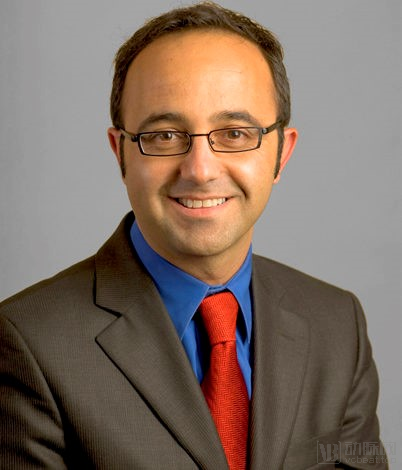
Ceribell’s Two Founders (Left: Jane Chao; Right: Josef Parvizi)
Jane Chao is the Founder and CEO of Ceribell. She completed her undergraduate studies in Chemistry at Peking University, then pursued further education abroad, earning a degree in Biophysics from Cornell University in the United States. She subsequently completed her postdoctoral fellowship at the University of California, San Francisco, where she led the development of anticancer drugs. After graduation, Jane Chao held senior positions at organizations including the U.S. Climate Works Foundation, McKinsey & Company, Novartis, and Genentech. In 2014, she founded Ceribell, embarking on a passionate entrepreneurial journey.
Josef Parvizi is another co-founder of Ceribell. In addition to his role as a founder, he serves as the company’s Chief Medical Advisor and Chairman. He is a Professor of Neurology at Stanford University School of Medicine, with significant contributions to the field of neurology and extensive experience in treating patients with refractory epilepsy.
When the two founders were asked about the reason for founding Ceribell, the founder stated,Traditional EEG systems have significant limitations; EEG monitoring may take hours to days, and clinicians may resort to overtreatment or undertreatment due to a lack of information.This situation urgently needs to be changed.
According to current statistics, among the global population of 7.6 billion, there are over 50 million people with epilepsy. In China, the estimated number exceeds 9 million, with an annual increase of approximately 400,000 cases.Epilepsy patients often present with comorbidities that severely impair their quality of life, leading to insomnia, headaches, and cognitive dysfunction—including diminished learning capacity and memory impairment—as well as depression and personality changes. In severe cases, self-harm and aggressive tendencies may occur. The treatment of epilepsy patients should not be neglected.
Among these, nonconvulsive status epilepticus is a form of status epilepticus that is particularly challenging to diagnose and is observed exclusively in patients with absence seizures or complex partial seizures. Diagnosing nonconvulsive status epilepticus requires a thorough assessment of the patient’s medical history and seizure semiology, and relies primarily on EEG monitoring. Nonconvulsive seizures also pose significant and unpredictable challenges for patients. Studies have shown:
· Approximately 25% of patients with neurological disorders and cardiac arrest in the Intensive Care Unit (ICU) experience non-convulsive seizures
· Prolonged non-convulsive seizures may lead to permanent brain damage in patients.
· EEG is required for the diagnosis of non-convulsive epilepsy
· If status epilepticus is suspected, relevant published medical guidelines explicitly require that patients undergo EEG monitoring within 15–60 minutes.
If patients with epilepsy can undergo early and precise diagnosis along with targeted treatment, their mortality rate, risk of secondary brain injury, length of hospital stay, and risk of complications can be significantly reduced. Therefore, obtaining EEG results for patients becomes crucial.
The main types of traditional scalp EEG monitoring are video EEG, ambulatory EEG, and routine EEG.These three types of EEG monitoring are time-consuming, necessitating selective extraction of information. Physicians must accurately interpret the raw, long-term continuous EEG waveforms recorded by the computer and compile a reliable and precise EEG report. Due to the inherent sensitivity and specificity of EEG, there is also a risk of interpretation errors by physicians.
Overall, traditional EEG monitoring and analysis demand a high level of technical expertise from operators. Any inadvertent error in the process that leads to a misdiagnosis may expose patients to the risk of long-term brain injury or even death.
However, EEG is not widely used in hospitals.Traditional EEG acquisition, due to its complex setup and workflow, often incurs delays ranging from several hours to several days—typically between 4 and 60 hours—with most cases experiencing prolonged wait times.For patients, this is undoubtedly an anxiety-inducing and protracted waiting process.
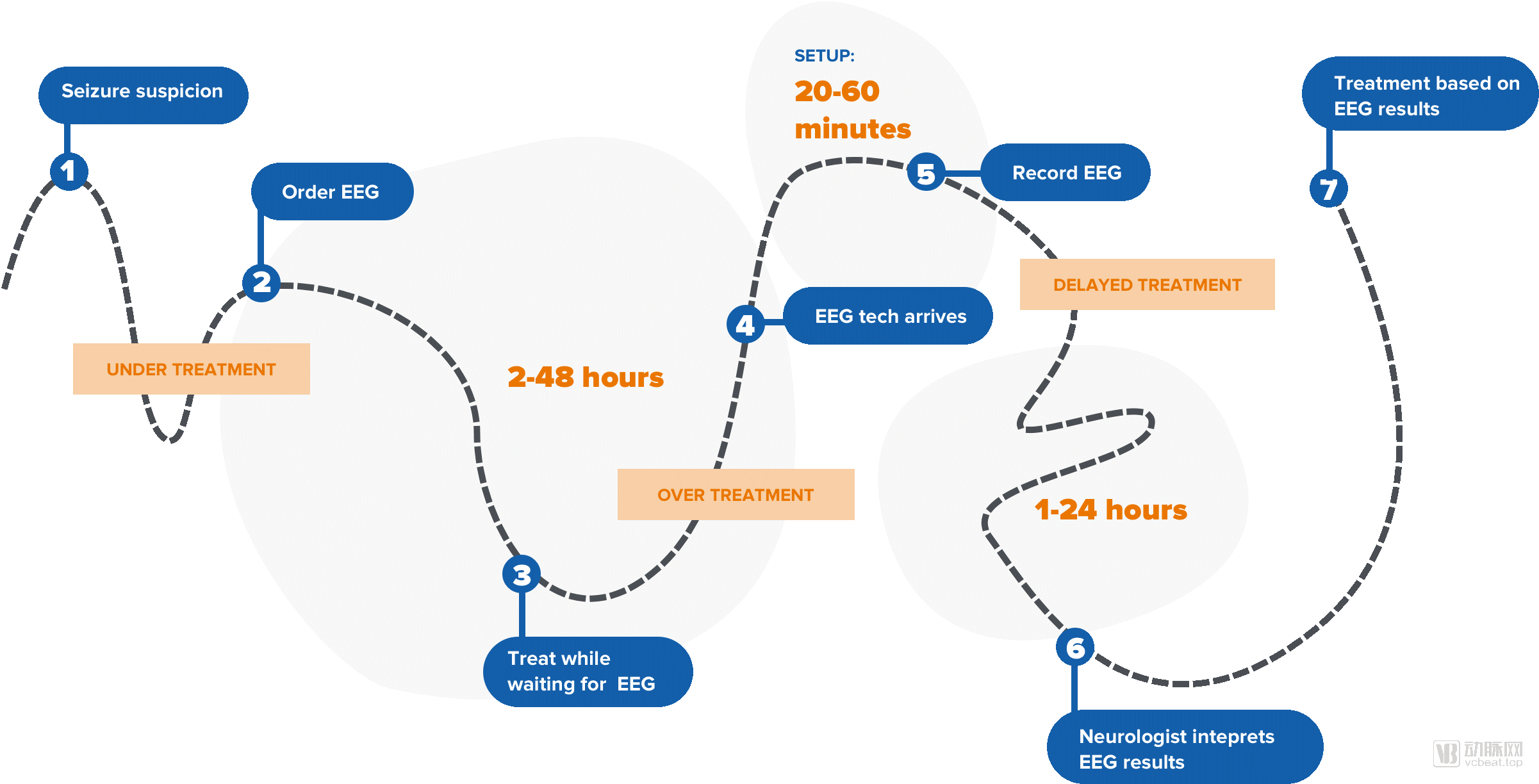
Traditional Workflow for EEG Acquisition
(Image source: Ceribell official website)
Moreover, traditional EEG machines are not only expensive but also bulky and difficult to transport, typically requiring fixed installation. The process of recording and interpreting EEG data with conventional systems is both complex and time-consuming, offering no significant advantages in terms of speed. Furthermore, the use of traditional EEG equipment necessitates skilled technicians to attach electrodes to the patient’s scalp, configure the system, and perform the recording. This procedure involves connecting numerous electrode wires to the patient’s scalp, resulting in considerable discomfort for the patient.
Once EEG data are collected by operators, trained EEG specialists are required to interpret the recordings and convey diagnostic information to physicians in the ICU and emergency department, alsoDue to the specialized nature of EEG services, there is a heavy reliance on qualified professionals, which makes it difficult to accommodate urgent requests, particularly when they occur outside of regular business hours.
However, if the patient forgoes EEG testing and the physician proceeds directly with emergency treatment, two uncertain outcomes may arise: overtreatment and undertreatment.Overtreatment may lead to increased sedation, prolonged hospital stays, and unnecessary intubation; undertreatment can result in prolonged seizure duration, extended hospitalization, and poor prognosis.
In light of this, the reform and emergence of next-generation electroencephalography (EEG) devices appear highly necessary.
Ceribell EEG System: Convenient, Accurate, Comfortable, Safe, and Cost-Effective
The Ceribell EEG system is designed to provide convenient, rapid, and efficient service for any healthcare provider, effectively addressing the longstanding challenges of time-consuming EEG monitoring and difficult interpretation.
Jane Chao, Founder and CEO of Ceribell, stated, “Ceribell’s advanced technology and medical devices capable of rapidly monitoring brain activity are addressing the urgent needs of physicians and hospitals by providing fast and accurate information that reduces the time required to diagnose and treat patients from hours to minutes.”
So, what are the specific advantages of the Ceribell EEG system that have earned it frequent favor among users?
Ceribell is a portable EEG device used in hospitals for the rapid diagnosis and treatment of cerebral epilepsy. The device primarily consists of two components: an EEG headband and an EEG recorder. The Ceribell EEG headband enables any healthcare provider to complete setup within six minutes, accommodating various hair types and head sizes. The Ceribell EEG recorder features a compact, pocket-sized design for easy portability, operates on battery power, and delivers clinical-quality EEG displays.
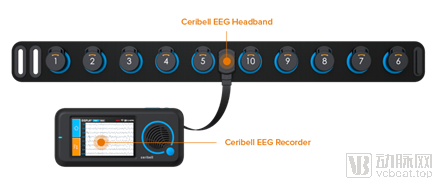
Ceribell EEG Device
(Image source: Ceribell official website)
Although compact, the Ceribell EEG recorder should not be underestimated. In addition to its role as a recorder, it serves as the system’s control unit and features an audio function known as the “brain stethoscope,” which converts brainwave signals into sound. Since many patients with epilepsy do not exhibit obvious clinical symptoms, healthcare providers often struggle to accurately assess the patient’s true condition.Through the audio capabilities of Ceribell’s “brain stethoscope,” physicians and nurses can immediately determine whether a patient is likely experiencing a seizure.
Meanwhile, the Ceribell device streams EEG data in real time to secure cloud servers, enabling physicians to access their patients’ real-time EEG data from anywhere.
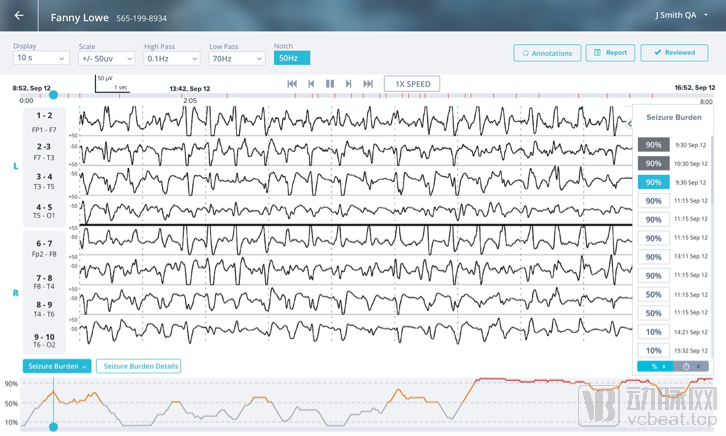
Real-time EEG Data Transmitted by Ceribell EEG to Cloud Servers
(Image source: Ceribell official website)
Ceribell devices also provide 24/7 bedside EEG monitoring and alerts: This is the first FDA-approved point-of-care alert system that provides continuous EEG monitoring and seizure burden analysis, automatically detecting seizures and alerting clinicians to brain activity consistent with status epilepticus.
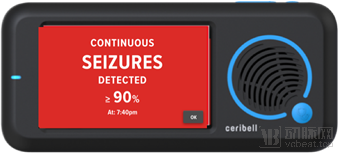
Ceribell EEG features 24/7 bedside EEG monitoring and alerting capabilities
(Image source: Ceribell official website)
Ceribell EEG represents a significant improvement over traditional EEG systems, featuring a compact, portable design and rapid setup (taking only about 6 minutes). It enables physicians to diagnose seizures within minutes, substantially reducing the time required to initiate effective treatment and prevent permanent damage, thereby proving highly valuable in busy hospital settings.
Ceribell EEG’s profound innovations deliver a true industry breakthrough. Its ease of use and provision of real-time information enhance the experience of healthcare providers while also improving patient comfort, convenience, and safety.
Of course, Ceribell has not only achieved a remarkable transformation in real-world applications through the support of advanced technology, but also stands out for its accuracy and sensitivity in use.
Overall, Ceribell EEG (HIPAA-compliant) offers the following advantages:
Signal quality is equivalent to that of conventional electroencephalography.
The first FDA-approved seizure warning monitor, capable of effectively monitoring patient conditions
is currently the most accurate EEG system for detecting seizure burden(Note: Seizure burden is defined by the American Clinical Neurophysiology Society (ACNS) as prevalence, i.e., the percentage of time during which EEG shows seizure activity.)
When Ceribell was tested side-by-side with traditional EEG systems, simultaneously recording the same patient.The results show that Ceribell has the same signal quality and durability as traditional EEG systems.Further research has also demonstrated that Ceribell’s simplified 10-electrode headband achieves comparable accuracy in diagnosing generalized seizures and can provide up to 10 hours of high-quality data recording.
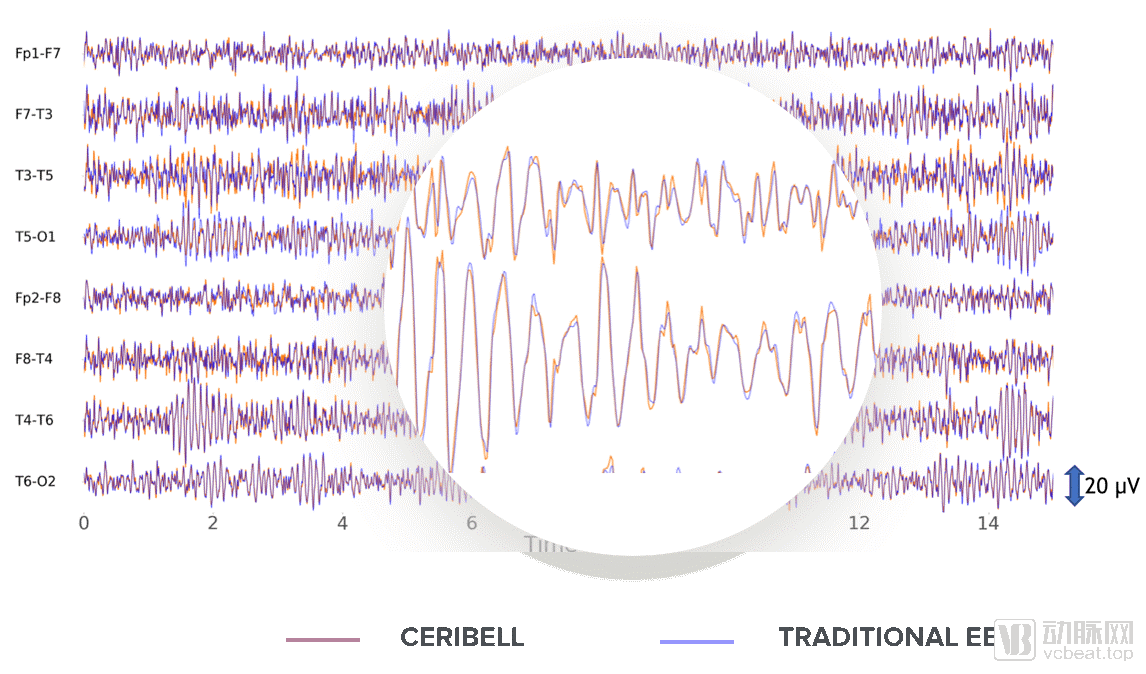
Side-by-Side Comparison of Ceribell EEG and Traditional EEG Systems
(Image source: Ceribell official website)
In a study comparing the sensitivity and specificity of seizure detection, 69 nurses and medical students assessed EEGs for seizure activity using Ceribell’s Brain Stethoscope feature, while 14 neurologists evaluated the same EEGs using visual interpretation.The results indicated that nurses and medical students demonstrated higher sensitivity in detecting seizures when using auditory signals from Ceribell.
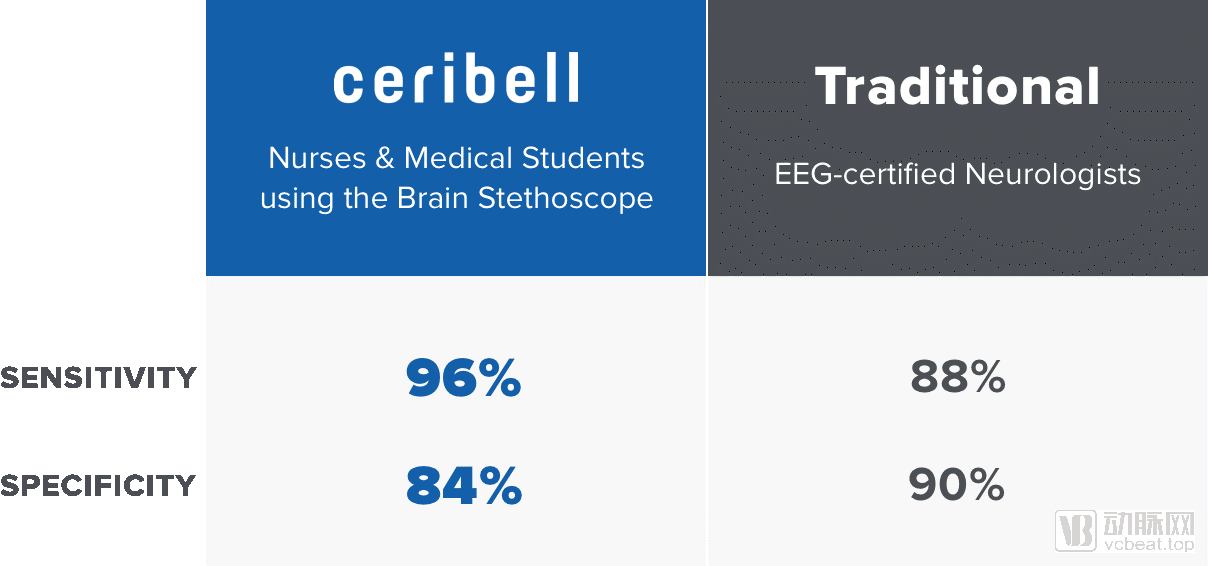
Comparison of Sensitivity Between Ceribell EEG and Traditional EEG Systems
(Image source: Ceribell official website)
In a prospective clinical study involving 10 ICU nurses with no prior EEG experience learning to use the Ceribell electroencephalogram (EEG) system: each nurse watched a 6-minute training video and had 2 minutes to ask questions before setting up the Ceribell device.Tests show that the average setup time for first-time users is 6.5 minutes. The EEG device is highly user-friendly.
Following research evaluation, the system used by Ceribell (rm-EEG) is comparable to standard montage EEG (fm-EEG) systems in seizure detection. The diagnostic concordance between rm-EEG and fm-EEG is high (95%), and the inter-rater agreement among EEG readers is also high (93%) when auxiliary information is equivalent.
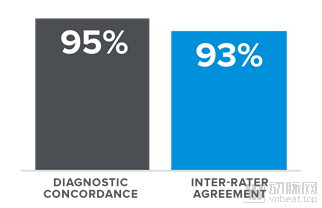
Ceribell EEG System Complies with Standard EEG Monitoring Requirements
(Image source: Ceribell official website)
Ceribell, Inc. stated that the Ceribell EEG device has 100% sensitivity for detecting and alerting to status epilepticus, 88% sensitivity for identifying epileptiform activity, and 99% accuracy in excluding seizure and seizure-like activities.
From an economic perspective, Ceribell’s enhanced EEG capabilities enable 24/7 on-site monitoring, indirectly generating substantial cost savings for patients. This is primarily reflected in the following aspects:
· Reduce delays in the treatment of nonconvulsive status epilepticus
· Avoid unnecessary antiepileptic drug therapy
· Avoid unnecessary patient transfers
· Reduce patients' length of hospital stay
As a result, patients can receive effective and scientifically rigorous testing and monitoring without needing to visit tertiary Grade A hospitals or specialized top-tier neurology hospitals.For hospitals seeking immediate access to electroencephalography (EEG), Ceribell represents a significant product and workflow innovation. The Ceribell EEG system has demonstrated the ability to generate high-quality EEG data and detect seizures with high sensitivity, while being easy to install and use.
Having gained multiple international accreditations, the continued development of high-quality products remains the core to maintaining its competitiveness.
On December 19, 2018, Ceribell won the U.S. "Good Design Award."
On February 11, 2019, FierceMedTech named Ceribell one of the 2018 “Fierce 15” medical technology companies.
On July 18, 2019, Ceribell Inc.’s Ceribell Rapid Response EEG received the Global Medical Design Excellence Award issued by MDEA.,Meanwhile, it also became a gold and silver medalist in the category of diagnostic testing equipment and systems, and was rated as "Best Display".
On January 27, 2020, the IDA awarded Ceribell’s Whipsaw product design a Gold Award.The award was granted because Ceribell EEG is a revolutionary, FDA-cleared mobile electroencephalogram (EEG) device that converts brain signals into audio. This user-friendly device offers significant benefits to comatose patients exhibiting non-convulsive seizure symptoms. Melissa Sterry, founder of Bionic City and a member of the IDA judging panel, described Ceribell as “an innovation urgently needed.”
Yongzhi Jiang, Partner and Chief Investment Officer at Optimas and an investor in Ceribell, stated, “Ceribell is transforming the way we monitor and diagnose seizures in ICU and ED patients at high risk for poor outcomes. Early and precise treatment for seizure patients is critical to their prognosis, and Ceribell provides the tools for early and accurate diagnosis. We believe that Ceribell’s groundbreaking innovative technology will not only save more lives but also significantly improve patients’ quality of life.”
Today, Ceribell’s rapid-response EEG has been adopted by multiple top-tier hospitals in the United States. As Ceribell expands its marketing efforts, it is poised to capture a significant market share.However, for Ceribell to sustain its market competitiveness, the core imperative remains the development of cutting-edge technologies and the continued delivery of high-quality products that address patient needs.