

China's Four Major Medical Industry Clusters Take Shape: Strategic Pathways for New Biomedical Parks
In August 1988, the Chinese government launched the Torch Program—a plan for the industrialization of high and new technologies—explicitly proposing the establishment of High-Tech Industrial Development Zones and High-Tech Business Incubators. Starting in 1991, numerous regions across China received approval to establish National High-Tech Industrial Development Zones, giving rise to biomedical parks that served as pharmaceutical industry hubs within these zones.
The past three decades have witnessed the rise of the first generation of biopharmaceutical industrial parks. As China’s biopharmaceutical industry matures, an increasing number of startups with proprietary technologies are emerging, and more regions are prioritizing the biopharmaceutical sector by establishing new biopharmaceutical industrial parks.
The landscape today is vastly different from what it was in the past. Leading industrial parks have already achieved a clustering effect, continuously attracting high-quality enterprises to settle within their premises. In contrast, newly established parks lack experience in enterprise services and a deep understanding of the healthcare industry, making it inevitable for them to encounter certain difficulties when first entering the sector.
Through visits and surveys of industrial clusters, VCBeat seeks to identify breakthrough strategies for new entrants by re-examining the landscape of China’s biopharmaceutical parks and the development histories of leading parks.
After three decades of development, four biopharmaceutical industrial clusters have initially taken shape in the Bohai Rim, the Yangtze River Delta, the Pearl River Delta, and central and western China, each radiating outward from its core industrial park.
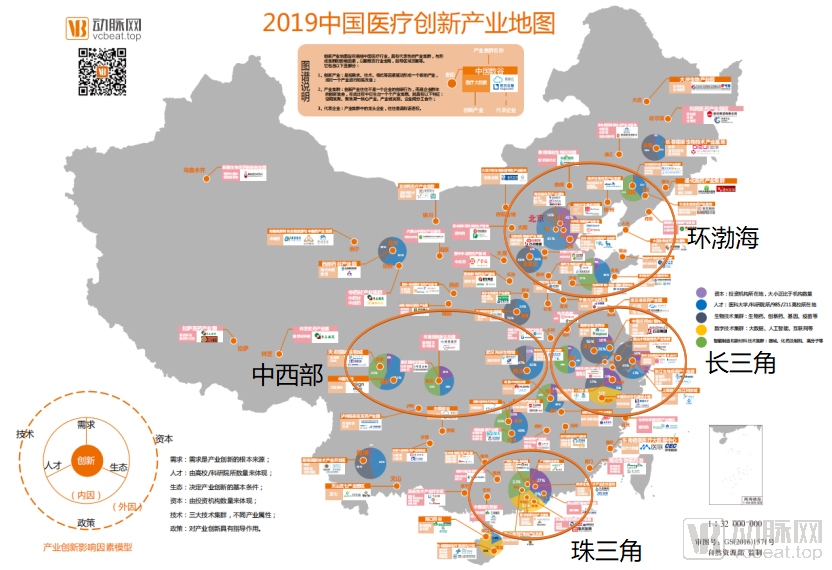
Each industrial cluster features several leading parks with their own distinct characteristics, such as the Zhongguancun Life Science Park in the Bohai Rim region; Zhangjiang Pharma Valley and Suzhou BioBAY in the Yangtze River Delta; the Shenzhen International Biovalley and Guangzhou International Bio Island in the Pearl River Delta; and the Wuhan Optics Valley Biopharmaceutical Industrial Park and Chengdu Tianfu Life Science Park in the central and western regions.
The clustering effect of leading industrial parks is highly pronounced. A robust entrepreneurial ecosystem is crucial for startups, and most large-scale parks have already nurtured publicly listed companies or industry leaders qualified for an IPO. Such proven incubation expertise is highly attractive to startups.
Centered around leading-tier industrial parks, a large number of second-tier parks have also achieved significant scale. Typical examples include the Xiaoshan Economic and Technological Development Zone, the Taizhou Biopharmaceutical Industrial Park, and the Tianjin Binhai High-Tech Industrial Development Area. Together with other surrounding medical industry parks, these first- and second-tier parks form a regional medical industry ecosystem.
The fundamental attribute of an industrial park is to provide enterprises with space suited to their current stage of development. Factors such as the available floor area, supporting facilities, pricing, and the intensity of policy support offered by the park all influence the willingness of companies to establish operations there. Among these, the most significant factor is local governmental policy support for the industry. Leading industrial parks in China are largely built upon strong local policy frameworks, which are continuously updated in response to the evolving landscape of local industrial development.
For example, Shanghai released the Action Plan for Promoting High-Quality Development of the Biopharmaceutical Industry in Shanghai (2018–2020) in 2018; Beijing issued the Implementation Plan for Phase III of the Beijing Biopharmaceutical Industry Leapfrog Development Project (G20 Project) in 2019; Chengdu issued Several Policies for Promoting the High-Quality Development of Chengdu’s Biopharmaceutical Industry in 2019; and Suzhou held a conference in March 2020 to conduct specialized research on improving policies for establishing a landmark biopharmaceutical industry.
Regions that have already achieved economies of scale in the biopharmaceutical industry continue to drive its growth through continuously updated policies, underscoring the critical importance of policy support for industrial development.
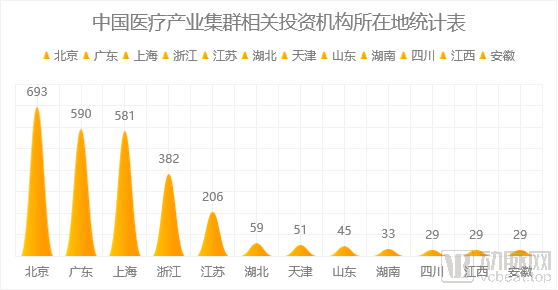
Investment institutions play a strong driving role in the development of industrial clusters.
After addressing policy issues, the second fundamental condition that industrial parks need to resolve for enterprises is the issue of funding.
For biopharmaceutical companies, prolonged R&D cycles and substantial R&D expenditures are virtually unavoidable. Most pharmaceutical firms may remain in a loss-making position before their products reach the market, or even for a period after the launch of their first product. Therefore, the development of the biopharmaceutical industry is inseparable from capital support.
Capital always tends to flow into advantageous regions, enabling rapidly developing areas to attract more investment. Under such circumstances, a sustained positive cycle can be formed, fostering continuous improvement in local industrial development. Statistics from VCBeat on the locations of investment institutions at the end of 2019 clearly show that provinces with rapid growth in the healthcare sector have undoubtedly attracted a significant influx of investment firms.
If the industrial park can collaborate with local or external fund institutions, it can rapidly aggregate corporate resources by attracting portfolio companies of these institutions to the park; meanwhile, newly admitted enterprises can engage with the institutions more quickly and are more likely to reach investment intentions.
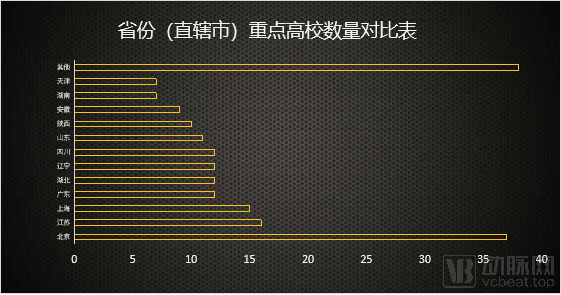
The third fundamental issue that startups need to address is talent.
Talent acquisition encompasses both the recruitment of high-caliber employees and the search for suitable entrepreneurial partners. The demand for partners is relatively low, and screening criteria are often unstable, making it difficult for industrial parks to help companies identify suitable candidates. In contrast, high-quality employees are akin to components in a machine: they must not only be of high quality but also require a continuous supply.
The primary source of high-caliber talent is university graduates. According to statistics compiled by VCBeat in late 2019, economically developed regions such as Beijing, Shanghai, Guangdong, and Jiangsu are home to numerous prestigious universities, which continuously supply talent to local enterprises and facilitate their rapid growth.
Individual enterprises have relatively few opportunities to engage with universities, with interactions primarily concentrated during the graduation season. Therefore, as park operators, you can collaborate with nearby universities by organizing salons, lectures, and networking events to foster interaction between enterprises within the park and academic institutions, thereby establishing a vital channel for talent recruitment from universities.
Policy, capital, and talent are merely fundamental elements for enterprises. To stand out from numerous competitors, industrial parks need additional highlights to attract entrepreneurs.
For industrial parks aiming to attract startups, incubators are virtually indispensable.
Whether incubators can truly provide assistance to startups may directly affect the latter’s enthusiasm for joining such programs. If an incubator’s functions are too deeply involved, the operational costs of the park may become excessively high; if they are too superficial, they may fail to meet the needs of startups.How to maintain balance in the process of building incubators is one of the core issues that industrial parks need to consider.
In the early development of the biomedical industry, Zhongguancun achieved significant results by leveraging incubators.
Zhongguancun’s biopharmaceutical industry is primarily concentrated in the Zhongguancun Life Science Park located in Changping, Beijing. As early as 2001, the Zhongguancun Life Science Park began planning its incubator project. Although incubators have now become virtually standard infrastructure for such parks, this forward-thinking approach was undoubtedly ahead of its time.
The predecessor of the Zhongguancun Life Sciences Academy Incubator was the Beijing Biopharmaceutical High-Tech Incubator (abbreviated as: Beilian Incubator), jointly established in 1997 by the Beijing Municipal Science & Technology Commission and Beijing Medical University. It is primarily engaged in the development, technology transfer, and business incubation of the biopharmaceutical industry, and is the first successfully operated professional biopharmaceutical incubator in China.
With the support of Beilian Incubator, the Zhongguancun Life Science Park Incubator was officially put into operation in May 2003, after only two years of development. To ensure its effective functioning, Zhongguancun and Beilian Incubator jointly established an incubator management company specifically responsible for its operational management.
Beilian Company’s professional incubation management software system and its entire technical team have been integrated into the newly established company, forming eight specialized incubator platforms. These include early-stage project screening services, pilot-scale testing services during new drug development, process technology services, clinical research services, and new drug registration agency services; venture financing services to assist projects in securing funding; as well as intermediary services for operational management and business administration services, thereby meeting nearly all the needs of startup enterprises.
Coupled with the steady influx of talent from major universities in the Beijing-Tianjin region, Zhongguancun’s incubators can provide comprehensive incubation support to enterprises. This model closely resembles the currently popular one-stop deep incubation approach.
The presence of an incubator signifies that the industrial park has acquired the fundamental capacity to provide services to tenant enterprises. However, to take this a step further and offer more collaborative opportunities for these businesses, building upstream and downstream industry chains may be the optimal strategy for the park.
A well-developed upstream and downstream industrial chain enables companies within the park and its surrounding areas to establish synergistic relationships, fostering intra-industry collaboration. Industrial agglomeration can significantly reduce logistics costs, a benefit that may be more pronounced in manufacturing but remains equally critical in the pharmaceutical industry.
After upstream and downstream players converge, communication between enterprises becomes smoother. Today, investment institutions are increasingly inclined to foster complementary relationships among their portfolio companies when mapping out industrial strategies, enabling them to collaborate and integrate the industry chain. The advantage lies in the synergies generated between upstream and downstream enterprises, which more effectively facilitate the commercialization of products from core companies within the industrial layout.
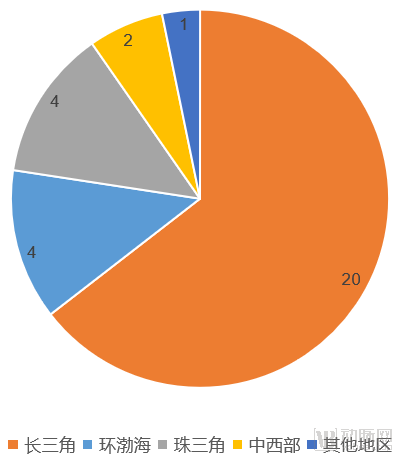
VCBeat’s statistics on biopharmaceutical companies listed on the STAR Market and those listed on the Hong Kong Stock Exchange after the implementation of its new regulations reveal that 60% of these enterprises are located in the Jiangsu-Zhejiang-Shanghai region, belonging to the Yangtze River Delta industrial cluster. Most of these listed companies are engaged in innovative drug research and development, thereby establishing the Yangtze River Delta as a hub for China’s innovative pharmaceutical industry.
As the “anchor” of the Yangtze River Delta industrial cluster, Zhangjiang Pharma Valley is highly representative of the development of biomedical industrial parks in China. The key to its growth lies in leveraging resources from foreign enterprises to establish a complete pharmaceutical industry chain within and around the park.
Zhangjiang Pharma Valley, as its name suggests, naturally prioritizes pharmaceuticals as a key sector for development. In its early stages, Zhangjiang Pharma Valley attracted a significant number of multinational pharmaceutical companies, which may also be attributed to Shanghai’s positioning as an international metropolis. In 1994, Roche Pharmaceuticals became the first multinational pharmaceutical company to establish operations in Zhangjiang Pharma Valley, acting as the “first mover.”
Since the turn of the 21st century, multinational pharmaceutical companies have further accelerated their expansion in China, with Zhangjiang Pharma Valley emerging as their preferred destination. Around 2005, multinational pharmaceutical giants such as Novartis, Pfizer, and AstraZeneca successively established R&D centers in Zhangjiang. To date, eight of the world’s top ten pharmaceutical companies have set up R&D centers in Shanghai.
Growing alongside these multinational pharmaceutical companies is China’s R&D outsourcing services industry. As multinational pharma firms’ demand for R&D and manufacturing in China continues to rise, a surge in outsourcing orders has followed. CRO/CMO companies such as WuXi AppTec, Medicilon, Tigermed (Hangzhou), and STA Pharmaceuticals (acquired by WuXi AppTec) have rapidly emerged and expanded in Shanghai and its surrounding areas.
As a result, Zhangjiang Pharma Valley has developed a comprehensive biopharmaceutical industry chain, enabling startup pharmaceutical companies to leverage local resources to accelerate product R&D.
Around 2010, China witnessed a wave of overseas scholars returning home. A large number of highly skilled professionals, who had spent over a decade working in foreign pharmaceutical companies, returned to China to embark on their entrepreneurial journeys. It was during this period that companies such as Innovent Biologics, Junshi Biosciences, and Ascentage Pharma were founded. Zhangjiang Pharma Valley took the initiative to prepare for this trend. Starting in 2009, Zhangjiang Pharma Valley gradually established incubation platforms within its park, including biotechnology platforms, contract research organization (CRO) platforms, and equipment-sharing platforms, providing comprehensive support to newly founded innovative pharmaceutical enterprises.
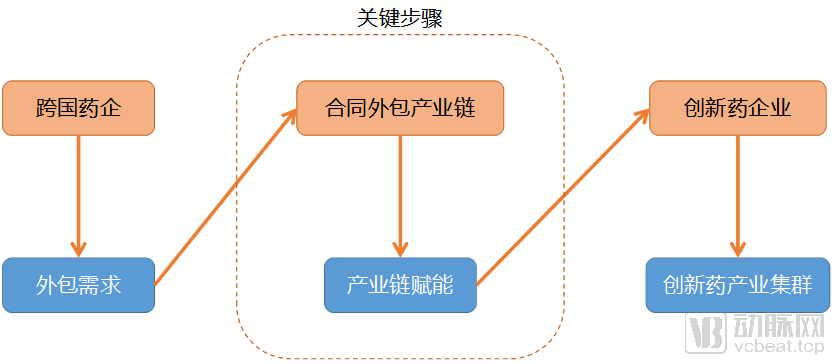
The development path of Zhangjiang Pharma Valley is clearly defined: it first leverages Shanghai’s strategic geographic location to attract multinational pharmaceutical companies, thereby fostering a localized biopharmaceutical industry chain; it then empowers innovative drug developers, encouraging them to establish their permanent bases in the area.
Although the origin of the entire development path was to attract multinational pharmaceutical companies to set up operations, the core of its development actually lies in forming a contract outsourcing industrial chain.Shanghai Zhangjiang began by attracting multinational pharmaceutical companies because China’s R&D outsourcing industry was still in its infancy at the time, requiring overseas orders to stimulate industry growth. Shanghai’s geographic location also facilitated international exchanges.
Today, China’s R&D outsourcing industry is highly mature. New industrial parks seeking to enter the innovative drug sector can readily attract CRO/CMO companies to establish operations within their premises. These outsourced R&D and manufacturing services may also be integrated into the parks’ incubator systems, serving as part of the support provided to tenant enterprises. Regardless of the specific form, empowering companies along the industry chain is crucial for the parks’ investment promotion efforts.
Incubators and industrial chains, together with the infrastructure within the park, constitute the hardware platform that the park builds for enterprises. In addition to optimizing this hardware platform, the park must further enhance its “software” by providing superior services to the enterprises located within it.
In the "2019 Evaluation and Analysis Report on the Competitiveness of China's Biopharmaceutical Industrial Parks" released in 2019, Suzhou Industrial Park ranked third in overall competitiveness among China's biopharmaceutical industrial parks, trailing only Zhongguancun and Shanghai Zhangjiang, while ranking first in industrial competitiveness. In just over a decade, it has risen to stand alongside the leading parks. The most significant distinction between Suzhou BioBAY and other parks lies in its specialized park services.
Following the success of Zhangjiang Pharma Valley, numerous industrial parks dedicated to the biopharmaceutical sector have emerged across the Jiangsu-Zhejiang-Shanghai region, leveraging a well-established industry chain. Notable examples include the Xiaoshan Economic and Technological Development Zone and Taizhou China Medical City. However, Suzhou BioBAY stands out as the fastest-growing among them.
The Suzhou Bio-Nano Technology Park was officially launched in 2007 and was formally renamed Suzhou BioBAY (Suzhou Biomedical Industrial Park) in 2017. The key to BioBAY’s development lies in its focus on attracting, recruiting, and retaining talent through high-quality services. On one hand, BioBAY has gathered numerous domestic and international universities and research institutes around the park through Suzhou’s “Talent Recruitment and Intelligence Introduction” initiative, while also attracting talent through engagement with Chinese professional associations. On the other hand, it retains talent through favorable talent policies and financial subsidies.
On one hand, open-sourcing; on the other, channeling talent—professionals flow into BioBAY as if through a funnel.
Talent drawn to BioBAY quickly experiences its unique service style. By continuously focusing on entrepreneurs’ needs and addressing their diverse and complex requirements in its own way, BioBAY’s human-centric approach makes founders want to stay once they arrive.
Entrepreneurs require funding, so BioBAY established BioCAPITAL within its park to gather outstanding venture capital firms from both domestic and international markets. Overseas-returnee entrepreneurs need solutions for their children’s education, so BioBAY founded a school specifically for the children of such talent. Entrepreneurs also need to communicate with service departments, so BioBAY set up a one-stop customer service center to provide zero-distance services to startups, including company registration and environmental consultation.
As entrepreneurs' needs continue to evolve, BioBAY is constantly adjusting the scope and delivery of its services.BioBAY has now introduced the “3C” philosophy of “Focus, Collaboration, and Innovation,” aiming to transform from a service-oriented team into a service-oriented community and provide enterprises with more in-depth services.
Based on the above, we can summarize key areas that industrial parks should focus on in their operations, drawing from past development experiences. Some of these points have even become essential elements of park services.
1. Align with local supporting policies to drive industrial development;
2. Attract capital to support startups;
3. Communicate with surrounding universities to build a talent bridge;
4. Establish an incubator to provide comprehensive support for the growth of enterprises within the park;
5. Build the industrial chain and promote upstream-downstream collaboration;
6. Stay attentive to the needs of entrepreneurs and address their concerns with high-quality services.
Beyond drawing on past experience, industrial parks seeking to quickly capture the industry’s attention should consider their own circumstances and select a suitable niche sector as an entry point.
High-quality enterprises in popular sectors, such as biopharmaceuticals and genetic testing, have long been absorbed by leading industrial parks. These top-tier parks have already established their own industry chain layouts and supporting facilities in these respective fields. It is extremely difficult for new entrants to compete with these leading parks for high-quality resources.
In reality, the pharmaceutical industry comprises a myriad of complex subsectors. Biopharmaceutical startups may require laboratory platforms to support their early-stage development; the medical device industry may need higher-specification laboratory environments to establish experimental facilities; and pharmaceutical manufacturing may demand large-scale production plants for product manufacturing.
Every sector plays an equally vital role in the healthcare industry. Even leading medical parks struggle to simultaneously meet the diverse and complex development needs of enterprises across different fields, thereby creating entry opportunities for emerging parks.
We have identified four key areas for development in the new industrial parks, which can serve as a reference for their strategic direction.
1. Innovative Biopharmaceutical Industry
Innovative biologics, represented by immune cell therapies, are gradually becoming a focal point in the biopharmaceutical industry. In March 2019, the National Health Commission issued the Administrative Measures for Clinical Research and Translational Application of Somatic Cell Therapies, marking that clinical trial pathways for immune cell therapy products finally had a regulatory basis. According to statistics from VCBeat, there are already 80 companies in China engaged in cellular immunotherapy, with total financing reaching RMB 7.35 billion. In May 2020, Legend Biotech, a Chinese immune cell therapy company, successfully listed on NASDAQ, becoming the first Chinese immune cell therapy firm to go public, with its stock price surging more than 60% on the first day of trading. These figures indicate that although no immune cell therapy products have been approved for marketing in China to date, the capital market remains highly optimistic about the development of this field.
In addition to the immune cell therapy industry, other innovative biopharmaceutical sectors, such as gene therapy and small nucleic acid drugs, are also attracting significant capital attention. Multiple provinces and municipalities, including Chongqing, Zhejiang, and Tianjin, have explicitly encouraged the development of innovative biotechnologies in their respective policy frameworks. Moreover, since the core R&D processes for innovative biopharmaceuticals are primarily conducted in biological laboratories, the demand for public platform services within industrial parks is relatively standardized. Therefore, when planning park development, it is advisable to center on the innovative biopharmaceutical industry to build a robust industrial ecosystem.
2. High-Value Medical Consumables Industry
The volume-based procurement of pharmaceuticals, initiated in 2018, has extended to the field of high-value medical consumables. For a long time, imported products have been widely used for high-value medical consumables in China, making domestic substitution the current central theme in this sector.
In its 2019 “Response to Suggestion No. 6395 from the Second Session of the 13th National People’s Congress,” the National Healthcare Security Administration (NHSA) stated that the National Health Commission would, in the next step, collaborate with relevant regulatory authorities to establish an agency for conducting consistency evaluations of medical consumables. Just one week prior, on June 5, the NHSA released the “Second Batch of Medical Consumable Information for the Medical Insurance Medical Consumables Classification and Code Database,” marking further progress toward unified coding standards for medical insurance information services. According to statistics from VCBeat, as of May 26, 2020, a total of 262 medical devices had entered the innovative device approval process, among which 144 were high-value consumables, accounting for 54.96% of the total.
Policy directives indicate that the localization of high-value medical consumables will inevitably become a key focus for the development of China’s healthcare industry in the next phase, and thus may serve as a major strategic entry point for industrial parks seeking to establish a presence in the medical sector.
3. Healthcare Informatics Industry
On May 22, 2020, the Bureau of Medical Administration and Medical Services issued the Notice on Further Improving the Appointment-based Diagnosis and Treatment System and Strengthening the Construction of Smart Hospitals, which stipulates that hospitals at Level II and above shall universally establish appointment-based diagnosis and treatment systems, and reiterates the need to strengthen the construction of smart hospitals.
In recent years, policies issued by relevant authorities have frequently mentioned the construction of smart hospitals. In March 2019, the National Health Commission specifically issued the "Graded Evaluation Standard System for Smart Hospital Services (Trial)," which established five categories comprising a total of 17 evaluation items and provided clear definitions for smart hospitals at levels 0 to 5.
A series of policy releases has accelerated the development of the healthcare informatics industry. Data on public hospital informatics bidding and tendering in 2019, compiled by VCBeat, shows that there were 5,628 winning bid records for healthcare informatics procurement published solely on the China Government Procurement Network in 2019. Meanwhile, the market size of healthcare informatics in 2019 is estimated to have reached approximately RMB 60 billion. For this rapidly growing industry, new industrial parks still have many opportunities to enter the market.
4. Traditional Chinese Medicine Industry
On October 26, 2019, the Central Committee of the Communist Party of China and the State Council issued the “Opinions on Promoting the Inheritance, Innovation, and Development of Traditional Chinese Medicine.” In addition to addressing the development of TCM talent, improving legal frameworks for quality and safety supervision of traditional Chinese medicines, and optimizing registration management, the document specifically highlighted issues such as medical insurance reimbursement for TCM services and the construction of TCM informatization systems, thereby facilitating the integration of TCM into the broader healthcare system.
In recent years, the Chinese government has continuously promoted the development of the traditional Chinese medicine (TCM) industry. Regions with an existing foundation in TCM have responded to this national call by beginning to plan and establish TCM industrial parks. A notable example is Bozhou City in Anhui Province, where the scale of the TCM industry surpassed RMB 100 billion in 2018. Therefore, if a locality possesses a strong foundation in TCM, developing in this direction represents a viable strategic option for its industrial park.