

One U.S.-Listed, One Raises $100M: Comprehensive Analysis of 27 Immune Cell Therapy Clinical Trials in China
On June 6, 2020, Legend Biotech listed on the NASDAQ stock market in the United States. Its share price rose by 60.8% on the first day of trading, driving its total market capitalization to nearly $4.8 billion. The prospectus revealed that Legend Biotech is aggressively advancing global clinical trials for LCAR-B38M/JNJ-4528, a CAR-T therapy with rapid commercialization progress, and plans to submit a Biologics License Application (BLA) to the U.S. Food and Drug Administration (FDA) in the second half of 2020 for JNJ-4528 as a treatment for multiple myeloma.
On the evening of June 9, JW Therapeutics announced that it had completed a $100 million Series B financing round. CPE, Mirae Asset, China Resources Zhengda Life Science Fund, and Yuanhe Holdings joined the investment, while existing investors continued to increase their stakes. JW Therapeutics stated that the proceeds from this financing round would be used to continuously advance the clinical development of its lead product, JWCAR029 (a CD19-targeted CAR-T therapy), further expand its R&D pipeline, and prepare for commercialization to support the launch of new products.
Legend Biotech and WuXi Juno Therapeutics have each secured fresh victories in the capital markets. Coupled with the approval of multiple immune cell therapy drugs for clinical trials since the beginning of this year, it appears that domestic innovative pharmaceutical companies are on the verge of achieving success in their tumultuous commercialization efforts for immune cell therapies.
Immune cells, also known as leukocytes, include lymphocytes (comprising four categories: T lymphocytes, B lymphocytes, K lymphocytes, and NK lymphocytes) and various phagocytes. Among these, lymphocytes are the fundamental components of the immune system. They are widely distributed throughout the body, become activated upon antigen stimulation, and mount specific immune responses through proliferation and division. Immune cell therapy refers to a process in which cells are cultured, expanded, and activated ex vivo before being reinfused into the patient’s body. This procedure induces an autologous immune response against foreign substances, leading to the continuous production of anti-foreign agents. Early studies have shown that most T cells with tumor-killing activity differentiate into memory cells after activation and are stored within lymphoid tissues, thereby providing long-term protection for the thorough elimination of tumor cells and the prevention of metastasis and recurrence.
Efforts to activate the human immune system to combat malignant tumors have been underway for nearly half a century. According to CAR-T and Immune Cell Therapy for Tumors, authored by Dr. Wang Liqun, President of Fosun Kite, the scientific community began striving to develop more specific adoptive cell therapies for cancer in the 1980s, ushering in the current wave of research into immune cell therapy.
Through research on T cell function, scientists have discovered that T cells must simultaneously recognize two key molecular signaling pathways on the surface of target cells—namely, the binding of T cell surface receptors to tumor cell surface antigens, and the binding of T cell surface co-stimulatory receptors to tumor cell co-stimulatory ligands—in order to exert their cytotoxic effects. This finding has laid the theoretical foundation for the development of modern immune cell therapy drugs.
In China, the history of various institutions engaging in cell therapy is not short. As of the end of May 2020, a total of 295 clinical trials on immune cell therapy were registered with the Chinese Clinical Trial Registry and the Drug Clinical Trial Registration and Information Publicity Platform, among which 27 projects were drug clinical trials approved or tacitly permitted by the Center for Drug Evaluation of the National Medical Products Administration.
Prior to 2018, publicly disclosed clinical trials of immune cell therapies were predominantly investigator-initiated exploratory studies requiring only ethical review by medical institutions. While these studies provided valuable guidance for registered clinical trials and incurred lower costs, the true surge in clinical trials of immune cell therapy drugs aimed at new drug registration and approval occurred only after the current regulatory framework was clearly established, due to compliance considerations.
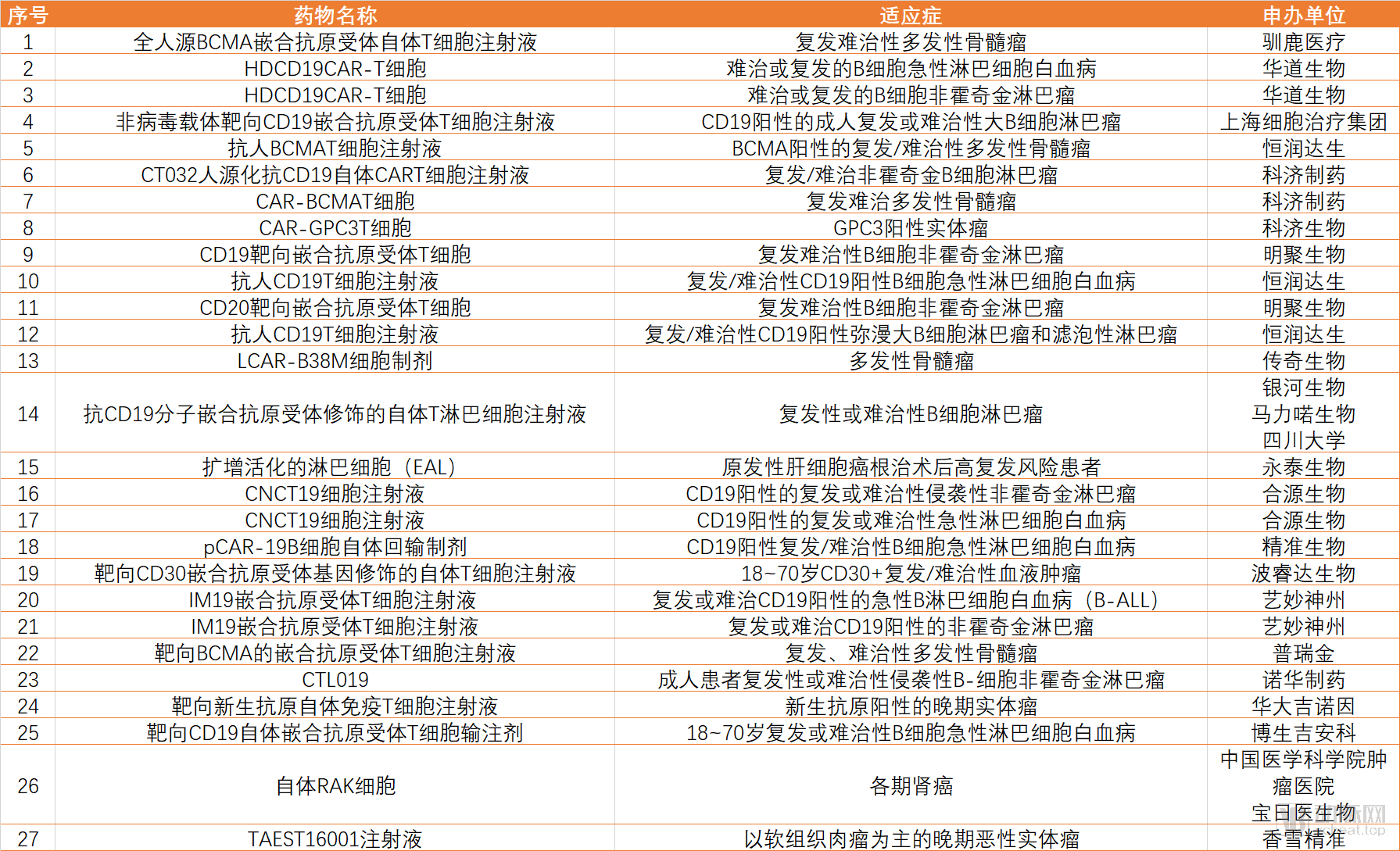
As of the end of May 2020, Immune Cell Therapy Drug Projects Approved for Clinical Trials in China (Data Source: Compiled by VCBeat)
In December 2017, the National Medical Products Administration (NMPA) promulgated the Technical Guidelines for Research and Evaluation of Cell Therapy Products (hereinafter referred to as the “Guidelines”), which explicitly stipulated that cell therapy products entering the clinical trial phase must conduct trials in accordance with the Good Clinical Practice (GCP) requirements. In other words, applicants are required to submit applications and supporting documentation for first-in-human clinical trials of new drugs in compliance with relevant regulations, thereby aligning China’s regulatory framework for cell therapy drug registration with international standards. Since then, there has been a surge in Investigational New Drug (IND) applications for immune cell therapy products.
Generally, the scope of clinical trials should, in principle, include assessments of clinical safety, pharmacokinetic studies, pharmacodynamic studies, dose-exploration studies, and confirmatory clinical trials. Due to the highly specialized biological characteristics of cell therapy products, clinical trial research often requires an overall strategy that differs from those used for other drugs. This includes administration via specific surgical procedures, distinct routes of administration, or combination therapy strategies, which undoubtedly complicates the establishment of unified standards for clinical trials of immune cell therapy drugs.
However, VCBeat has learned from Tigermed, China’s largest clinical CRO service provider, that there are currently few clinical trial projects in China requiring clinical CRO services. Such services are typically employed to address relatively urgent clinical trial needs, including subject recruitment. As the commercialization of cell therapy continues to gain momentum, third-party service providers involved in new drug development, such as clinical CROs and CDMOs, are increasingly establishing their presence in this sector.
An analysis of the 27 immune cell therapy projects approved for new drug clinical trials as of May 31, 2020, reveals that statistical data indicate CD19 remains the most prominent target for immune cell therapy drugs. This phenomenon is underpinned by fundamental technical logic: B-cell acute lymphoblastic leukemia and lymphoid system tumors are caused by the malignant proliferation of B cells, which universally express the B-cell-specific surface protein CD19. Since CD19 is not expressed in any non-B-lineage cells, it serves as an ideal validation target.
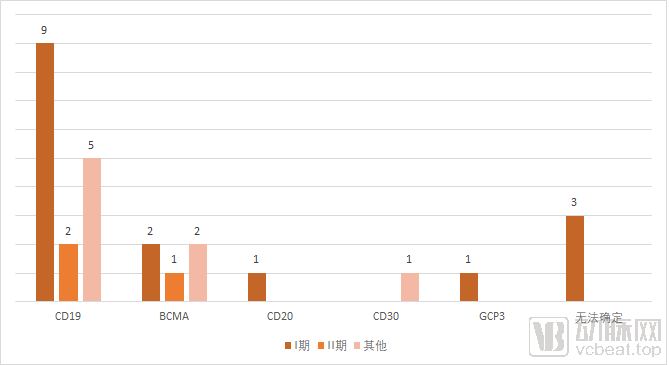
Distribution of Targets and Phases for Clinically Approved Immune Cell Therapy Drug Trials in China (Data Source: VCBeat)
Whether in the exploratory clinical research phase or during commercial development, CD19-targeted CAR-T technology has demonstrated significant potential for broad application in the clinical treatment of malignant tumors.
In 2014, Kite Pharma licensed the KTE-C19 technology from the U.S. National Cancer Institute and initiated the ZUMA-1 clinical trial for its CAR-T therapy, targeting relapsed/refractory diffuse large B-cell lymphoma (DLBCL). Among the 101 patients enrolled in the Phase II trial, 82% achieved an objective response rate (ORR), with 52% attaining a complete response (CR). In contrast, conventional therapies for this disease yield a CR rate of only 7% and a median overall survival of 6.3 months, underscoring the significant clinical value of CAR-T technology.
The following year, the multinational pharmaceutical company Novartis initiated a registrational clinical trial for its CAR-T cell therapy, codenamed CTL-019. Also targeting CD19, the trial focused on pediatric patients with relapsed or refractory acute lymphoblastic leukemia and enrolled a total of 63 patients. In the clinical trial results submitted by Novartis to the FDA, 52 patients achieved remission, including 40 who attained complete remission.
In August 2017, Novartis’ CTL019, marketed under the brand name Kymriah, received regulatory approval for launch, becoming the world’s first CAR-T therapy. In October of the same year, Kite Pharma’s KTE-C19, branded as Yescarta, secured the FDA’s second approval for an immune cell therapy drug, with its initial indication being relapsed/refractory diffuse large B-cell lymphoma (DLBCL). VCBeat has learned from industry insiders that approved immune cell therapies are currently being explored for use in earlier lines of treatment. For instance, Novartis has reported favorable clinical data from U.S. studies evaluating Kymriah as a second-line therapy for cancer.
In China, 12 companies have been approved to conduct a total of 13 clinical trials for immunocellular therapeutic drugs targeting CD19. The indicated conditions include B-cell lymphoma, non-Hodgkin lymphoma, lymphocytic leukemia, and hepatocellular carcinoma. Among these, clinical trials for non-Hodgkin lymphoma and lymphocytic leukemia face the most intense competition. In terms of publicly disclosed clinical trial phases, Mingju Bio is among the leaders in development progress for non-Hodgkin lymphoma.
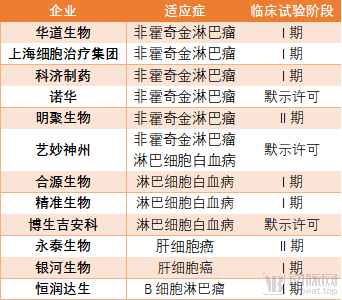
Indications and Trial Phases of CD19-Targeted Clinical Trials Approved in China (Data Source: Compiled by VCBeat)
Mingju Biologics is an affiliate of WuXi Juno, a joint venture between the WuXi AppTec Group and U.S.-based Juno Therapeutics. Its CAR-T therapy product submitted for the treatment of non-Hodgkin lymphoma is JWCAR029, as mentioned at the beginning of this article. Data from the Drug Clinical Trial Registration and Information Disclosure Platform, operated by the Center for Drug Evaluation (CDE) under the National Medical Products Administration (NMPA), shows that JWCAR029 has registered three domestic clinical trials in China: an open-label Phase I/II study for the treatment of primary refractory diffuse large B-cell lymphoma, and a Phase I study for the treatment of relapsed or refractory B-cell non-Hodgkin lymphoma.
According to publicly available information, JWCAR029 is a CAR-T product independently developed by JW Therapeutics based on Juno Therapeutics’ JCAR017 from the United States, and thus is not entirely an in-house independent development. In December 2017, Mingju Biopharma submitted an Investigational New Drug (IND) application for JWCAR029 to the National Medical Products Administration (NMPA), which was accepted in January 2018. However, VCBeat found no publicly available information as of May 2020 indicating that Mingju Biopharma had enrolled its first patient.
It is evident that the domestic market for CD19-targeted CAR-T products has become intensely competitive, turning into a "red ocean" even before these products have officially launched. Although CAR-T products employ cutting-edge innovative technologies, companies cannot simply follow established paths to advance their in-development products into clinical trials through patent licensing alone. Having incurred substantial costs, these firms find it difficult to pivot or withdraw. VCBeat’s analysis suggests that from 2015 to 2020, China’s immune cell therapy industry was characterized by weak independent innovation. This was primarily due to the lack of a systematic industrial foundation and nascent regulatory frameworks, which made source innovation highly risky and deterred many companies from entering the field. Industry insiders told VCBeat that as China’s biopharmaceutical innovation ecosystem continues to improve and optimize, we can expect to see more independent innovations emerge in China over the next decade.
At this stage, some companies are pursuing diversified innovation to break through the competitive landscape. For instance, Imunopharm, which recently obtained approval for two CAR-T clinical trials in late April, has independently developed a lentiviral vector suspension production system and one-stop CAR-T drug manufacturing capabilities, enabling the development of as many CAR-T drugs as possible under controlled costs. Another company based in Zhangjiang, Shanghai, Huadao Bio, is also focusing its breakthrough efforts on commercial-scale manufacturing processes. It has independently developed consumables for CAR-T cell preparation and live-cell proliferation culture instruments, thereby controlling the costs of this expensive therapy at the source. In an interview with VCBeat, Yu Xuejun, founder of Huadao Bio, stated that compared to pure technological innovation, optimization of manufacturing processes can help CAR-T companies rapidly establish competitive barriers in the current phase. “Huadao Bio is committed to positioning CAR-T therapy as an alternative to chemotherapy.”
Data from clinical drug trials indicate that, in China, multiple myeloma and its corresponding BCMA target represent another hotspot for CAR-T development. Companies such as Legend Biotech, Hengrundaisheng, Puruijin, Keji Pharma, and IASO Biotherapeutics have all established a presence in this field. Among them, Legend Biotech has advanced its clinical trials to Phase II, marking the fastest progress among domestic peers.
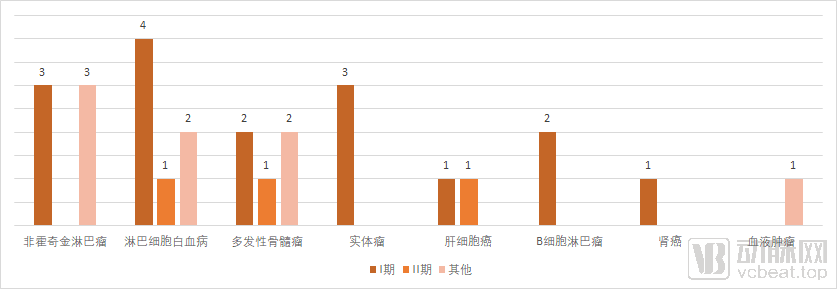
Distribution of Indications and Developmental Stages for Domestically Approved Clinical Trials of Immune Cell Therapy Drugs (Data Source: Compiled by VCBeat)
BCMA is a specific protein expressed exclusively on multiple myeloma cells, with no or low expression on plasma cells and mature B cells. Multiple myeloma (MM) is a malignant disease characterized by the clonal proliferation of abnormal plasma cells. It is the second most common hematologic malignancy in many countries, predominantly affects the elderly, and remains incurable. In the "Chinese Guidelines for Diagnosis and Treatment of Multiple Myeloma (2020 Revision)" released in May 2020, CAR-T therapy was included for the first time as a treatment option for relapsed/refractory multiple myeloma.
Statistical data released by the International Myeloma Foundation in 2018 indicates that there are approximately 750,000 patients with multiple myeloma worldwide. In China, the incidence of multiple myeloma has surpassed that of acute leukemia, reaching approximately one case per 100,000 individuals. A comparison of sample size designs in CAR-T therapy clinical trials across different indications reveals that clinical trials for BCMA-targeted CAR-T drugs in the treatment of multiple myeloma generally require a larger number of enrolled patients than trials targeting other antigens or indications. This poses a significant challenge for trial sponsors, who already struggle to identify suitable participants.
In fact, the CAR-T developers in the BCMA space are quite similar in terms of both technical principles and innovative capabilities. Under intense competition, the differences in financing capabilities among these still-unprofitable companies will largely determine which company launches the first commercialized product to market. It is believed that Legend Biotech’s U.S. listing has placed considerable pressure on its competitors.
According to the VCBeat database, Hengrun Dasheng has completed three rounds of external financing since its establishment, raising a cumulative total of over RMB 200 million. Its investors include Shenzhen Capital Group and Qianhai Capital, among others. Puruijin disclosed one round of financing in 2017, raising tens of millions of RMB from the National Small and Medium Enterprises Development Fund. In March this year, IASO Biotherapeutics announced a USD 60 million investment from Hillhouse Ventures.
In January 2020, BGI Genomics announced that its Investigational New Drug (IND) application for the “Targeted Neoantigen Autologous Immune T-Cell Injection” had received implicit approval for clinical trials from the National Medical Products Administration (NMPA), making it the first tumor neoantigen cell therapy drug in China approved to initiate registration-enabling clinical trials. As a more cutting-edge immune cell therapy technology theoretically superior to CAR-T in both efficacy and safety, tumor neoantigen therapy has gained significant momentum in recent years. A wave of domestic technical teams has engaged in related exploratory clinical studies, producing a series of promising clinical data presented at global oncology conferences, thereby attracting attention from early-stage investment institutions.
Huada Genoin’s receipt of China’s first IND approval marks a pivotal milestone in the development of tumor neoantigen therapies. Even more encouraging for the industry is that the Center for Drug Evaluation (CDE) has approved Huada Genoin to conduct clinical trials for advanced solid tumors positive for neoantigens. In other words, this is a pan-tumor clinical trial. Unlike CAR-T therapy, which requires specific alignment between targets and indications, tumor neoantigen technology allows for flexible, personalized prediction and customization of neoantigens based on each patient’s unique condition. By transcending indication-specific restrictions, Huada Genoin may find it easier to enroll participants, thereby significantly increasing the likelihood of achieving clinical endpoints.
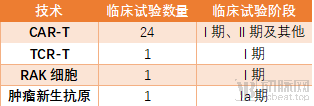
Distribution of Technologies and Stages of Domestically Approved Clinical Trials for Immune Cell Therapy Drugs (Data Source: Compiled by VCBeat)
Under the immense spotlight of tumor neoantigen technology, RAK cell and TCR-T therapies have appeared somewhat less prominent; nevertheless, domestic investigational products had already advanced into clinical trials. According to publicly disclosed trial information, the RAK cell clinical trial is co-sponsored by the Cancer Hospital of the Chinese Academy of Medical Sciences and Baoriyi Biotech, with the Phase I trial conducted at the Cancer Hospital of the Chinese Academy of Medical Sciences. The indication is renal cell carcinoma, and the first patient was enrolled in September 2017. Qichacha shows that Baoriyi Biotech is a wholly-owned subsidiary of Japan’s TaKaRa BIO, which acquired the cloning technology division of Becton, Dickinson and Company (BD) from the United States.
The only TCR-T technology project to have obtained an Investigational New Drug (IND) approval is the TAEST16001 injection clinical trial sponsored by Xiangxue Precision, which is indicated for the treatment of advanced malignant solid tumors, primarily soft tissue sarcomas. Amid multiple factors such as restrictions on the use of traditional Chinese medicine (TCM) injections and the introduction of lists for adjuvant medications, many domestic pharmaceutical companies with strengths in TCM or generic drugs have begun to lay out their pipelines in innovative drugs. Xiangxue Pharmaceutical has also joined the research and development of immune cell therapy drugs under this trend.
Xiangxue Pharmaceutical dedicated eight years to this clinical trial. In 2012, the company established an internal Life Sciences Research Center and co-founded a joint laboratory with the Guangzhou Institutes of Biomedicine and Health, Chinese Academy of Sciences, which incubated Xiangxue Precision Medicine. Over five years, it invested RMB 180 million in advancing its TCR-T project. However, lacking the requisite technical foundation, Xiangxue Pharmaceutical pursued extensive external collaborations while establishing its subsidiary, Xiangxue Precision Medicine. For instance, it joined forces with Celera, KingMed Diagnostics, and Da An Gene to launch the Guangzhou Bioindustry Alliance, and selected GenScript as the supplier for cell therapy product vector services, providing process development for plasmids and viruses, as well as GMP-grade production of plasmid and viral clinical samples.
In this section, we observe that although emerging technologies have expanded the possibilities for immune cell therapy, the path from tumor neoantigens, RAK cells, or TCR-T technology to final commercialization as clinical therapeutics remains long and arduous.
Through a comprehensive analysis of the full text, we may identify several noteworthy trends in current clinical trials of immune cell therapy drugs in China:
1. Despite the surge in exploratory clinical studies, immune cell therapy trials are heavily concentrated and prone to imitation; the lack of independent intellectual property rights and patent protection may have negative consequences;
2. Indications and disease targets are relatively concentrated, resulting in intense competitive pressure within niche segments;
3. A large number of investigator-initiated clinical studies are conducted, yet very few progress to drug clinical trials;
4. More enterprises are attempting to build competitive advantages by optimizing production processes and promoting the domestication of key equipment and consumables;
5. Beyond CAR-T technology, more innovative therapies are progressively entering clinical practice, injecting vitality into China’s immune cell therapy market.