

Xuzhou Health Pass Enhances Patient Experience with Personalized Medical Services: Showcasing the 'Xuzhou Model'
Xuzhou is a major hub for medical services, with 20 tertiary hospitals currently serving a population of nearly 120 million across the four provinces of Jiangsu, Shandong, Henan, and Anhui. Continuously optimizing and improving patients’ healthcare experience to help them “access medical care conveniently and receive high-quality treatment” has always been one of the key objectives of the local Health Commission.
In October 2019, the online medical service platform “Xuzhou Health Pass” was officially launched, bringing about a qualitative change in local residents’ healthcare-seeking habits. Ji Peichen, Director of the Planning and Information Division of the Xuzhou Municipal Health Commission, introduced to VCBeat that the platform has been operating smoothly for over eight months since its initial planning and design phase. During the pandemic, its functions such as online appointment registration and web-based consultations played a critical role.
Looking back at the global outbreak of the novel coronavirus disease (COVID-19) since 2020, China demonstrated highly efficient organizational capabilities in its response. During this critical period, “Xuzhou Health Pass” emerged as a vital tool for epidemic control in Xuzhou, addressing numerous healthcare-related concerns for local residents.
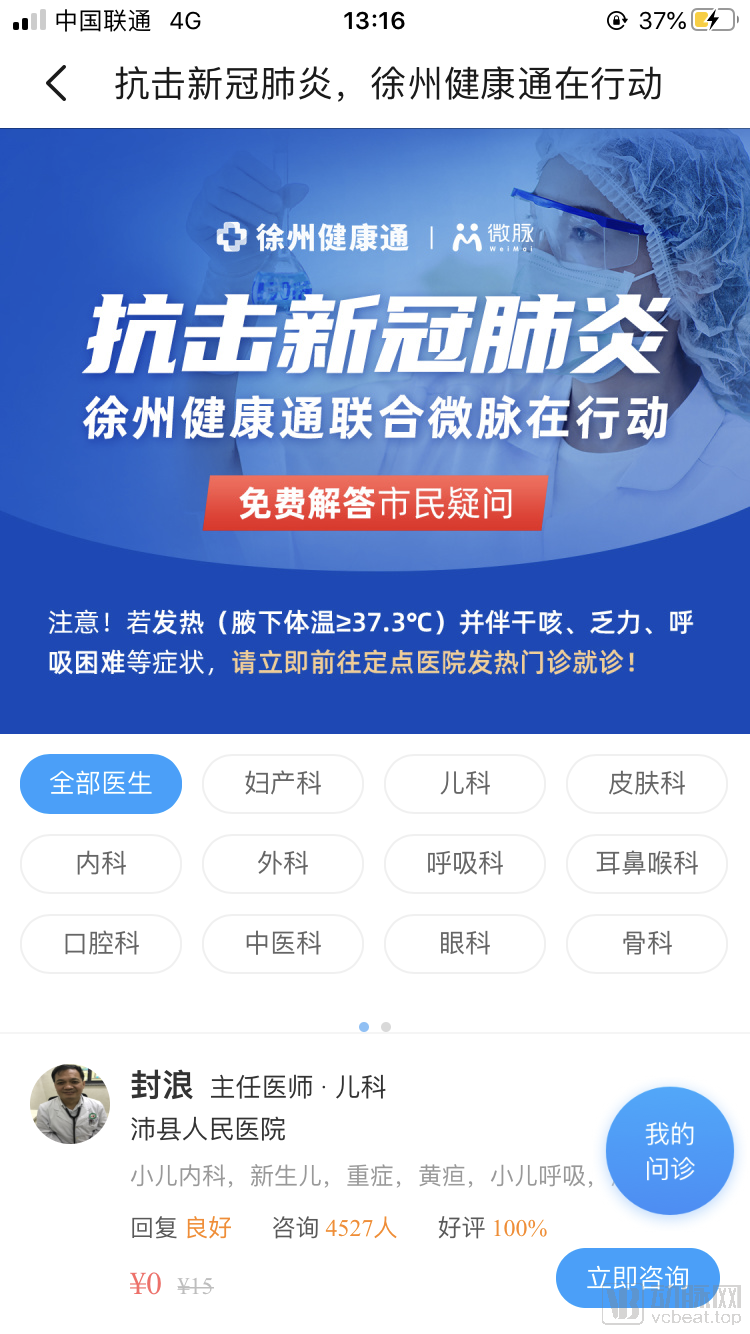
In the early stages of the epidemic, as the general public largely lacked an accurate understanding of the situation and physical hospitals faced relatively scarce medical resources, the Xuzhou Municipal Health Commission partnered with the internet healthcare platform “Weimai” to accelerate the development and launch of an “Online Epidemic Consultation” feature on the “Xuzhou Health Pass” app. Approximately 1,200 physicians from relevant departments voluntarily joined the Xuzhou Health Pass platform, providing free 24/7 consultation services covering areas such as respiratory health and mental well-being. This initiative offered precise guidance to patients for orderly medical visits, thereby alleviating the treatment burden on hospitals.
During the pandemic, this “cloud” medical team helped alleviate social anxiety and panic to a certain extent, opening up a second “front” in the fight against the epidemic. To date, the Xuzhou Health Pass app has provided more than 70,000 free online consultations.
Furthermore, “Xuzhou Health Pass” promptly launched an AI-powered self-check assistant for epidemic prevention. By simply filling out a form, users can receive AI-assisted assessments of their risk of infection and obtain appropriate recommendations for medical consultation or isolation.
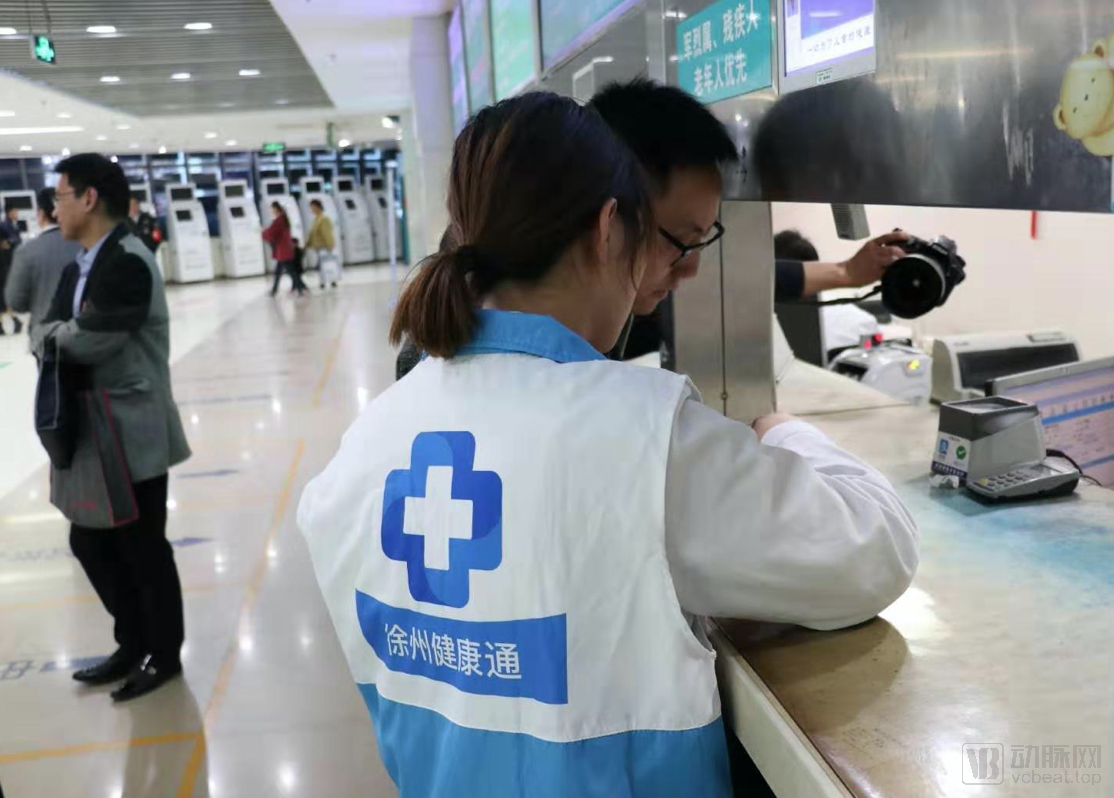
In addition to launching the most urgently needed functional modules to help the public navigate this special period, “Xuzhou Health Pass” did not neglect the public’s basic medical service needs during the pandemic.
In accordance with the overall requirements of Jiangsu Province during the pandemic, hospitals were required to suspend offline registration and consultations, fully implementing appointment-based medical services. At that time, “Xuzhou Health Pass,” which had been launched for approximately three months, promptly met the public’s healthcare needs through its time-slot appointment registration function. Ji Peichen introduced,At that time, the daily volume of online appointment registrations exceeded 4,000, far surpassing pre-pandemic levels and highlighting the significant advantages of internet-based healthcare in epidemic prevention and control.
In fact, the rapid response and critical role demonstrated by the “Xuzhou Health Pass” app during the pandemic were directly attributable to Xuzhou City’s comprehensive strategic planning implemented in advance.
In 2018, Xuzhou City implemented the "Opinions of the General Office of the State Council on Promoting the Development of 'Internet + Medical Health'" and launched a two-year initiative to leverage internet technologies for convenient and affordable healthcare services, aiming to improve patients’ medical experience through informatization. The Xuzhou Health Pass APP is one of the key measures in this initiative.
To ensure the successful implementation of the Xuzhou Health Pass app, the Xuzhou Municipal Health Commission began on-site investigations into the operational status of hospitals in Xuzhou in December 2018. After four months of deliberation and discussion, it signed a cooperation agreement with the internet healthcare platform “Weimai” in April 2019, officially launching the construction project.
System framework establishment, hospital system renovation and interface development, testing and trial operation... The planned completion of this series of processes required joint efforts from the government, enterprises, hospitals, and other stakeholders. Ultimately, the “Xuzhou Health Pass” APP was successfully launched on October 29, 2019.

A relevant official from the Xuzhou Municipal Health Commission stated,The advantages of the “Xuzhou Health Pass” app are mainly reflected in three aspects: saving time, effort, and money, which has indeed helped address the real-world problems of high medical costs and difficulty in accessing healthcare.In particular, the “Xuzhou Health Pass” app shifts time-consuming queuing tasks in the traditional healthcare process—such as appointment registration, report collection, and payment for outpatient and inpatient services—to online platforms, significantly reducing wait times, streamlining healthcare workflows, and improving the public’s time efficiency.
According to backend data, within six months of its launch, the platform had accumulated over 6,000 registered physicians from public hospitals. It offers services including appointment scheduling, online payment, access to laboratory and diagnostic test reports, queue management and calling, health record inquiries, online contracting with family doctors, health education, physician consultations, self-health assessments, and pro bono counseling related to COVID-19.
Nationwide, Hangzhou City, Guangzhou City, Jiangsu Province, and Liaoning Province have all developed their own “Health Pass” apps.
After drawing on the functional designs and service features of various regional “Health Pass” platforms, the Xuzhou Municipal Health Commission and Weimai have also incorporated numerous innovative elements better aligned with local needs.
In the past, patients had to download separate service apps for each hospital they chose to visit. Today, the Xuzhou Municipal Health Commission has further consolidated fragmented resources to provide centralized medical and health services. This “smart” approach has resolved the hassles and complexities of seeking medical care, bringing high-quality medical and health resources closer to the public. In this way,Residents of Xuzhou can access all hospitals across the city by simply downloading the "Xuzhou Health Pass" app.
The emergence of the citywide universal medical services app has, in fact, brought many benefits to hospitals, particularly by advancing the development of hospital information systems.“It not only promotes the optimization of service processes across hospitals but also enhances patient satisfaction with medical care,” Ji Peichen added. Xuzhou City has implemented time-slot-based appointment scheduling, with appointment times precise to 30-minute intervals, thereby minimizing patients’ non-clinical waiting time at hospitals. Moreover, first-time patients without a hospital registration card can still book appointments through the “Xuzhou Health Pass” platform without needing a physical card. This represents a significant improvement over traditional healthcare apps, which require users to bind a registration card before they can schedule appointments.
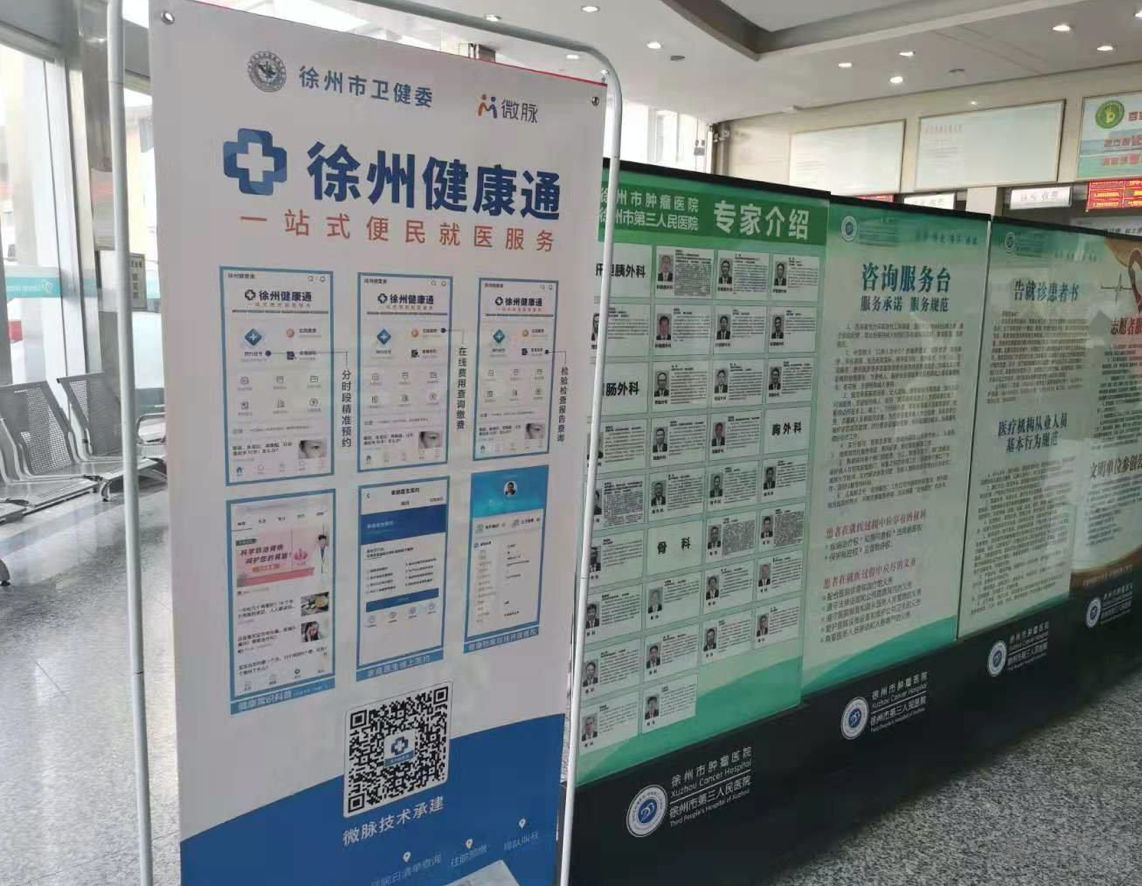
For all medical institutions on the Xuzhou Health Pass,Xuzhou Health Pass is not merely a portal for appointment registration and consultation services; it also serves as an online-offline integrated platform through which hospitals can provide value-added services, allowing patients to voluntarily opt for related featured value-added services.For example, the integrated maternity care service currently being piloted, which combines in-hospital and out-of-hospital service resources, is an innovative specialty service offered by the hospital through the “Xuzhou Health Pass” APP as its access channel.
Furthermore,In the Family Doctor Contract Service Function, residents can independently complete the contract signing via their mobile phones. Primary healthcare institutions will proactively communicate with residents upon receiving the contract information.In the area of remote ECG services,In 2020, 40% of village clinics (urban family doctor studios) were equipped with remote ECG devices. All township health centers (community health service centers) and public secondary hospitals across the city provided remote ECG diagnostic services, achieving a model of primary-level ECG acquisition and upper-level diagnosis.
Although the Health Connect app has accumulated over 1.2 million downloads and maintains approximately 400,000 active users, its step-by-step promotion has been far from easy, requiring long-term, dedicated personnel and systematic operations.
InDuring the promotion and operation of Xuzhou Health Pass, the Xuzhou Municipal Health Commission also drew on the localized operational models and experience implemented by its partner, Weimai, in over 150 cities across China. By deploying a professional operations and service team of more than 20 personnel from Weimai, promotional and operational maintenance activities were carried out in major hospitals throughout Xuzhou City, guiding users to adopt new healthcare-seeking habits.
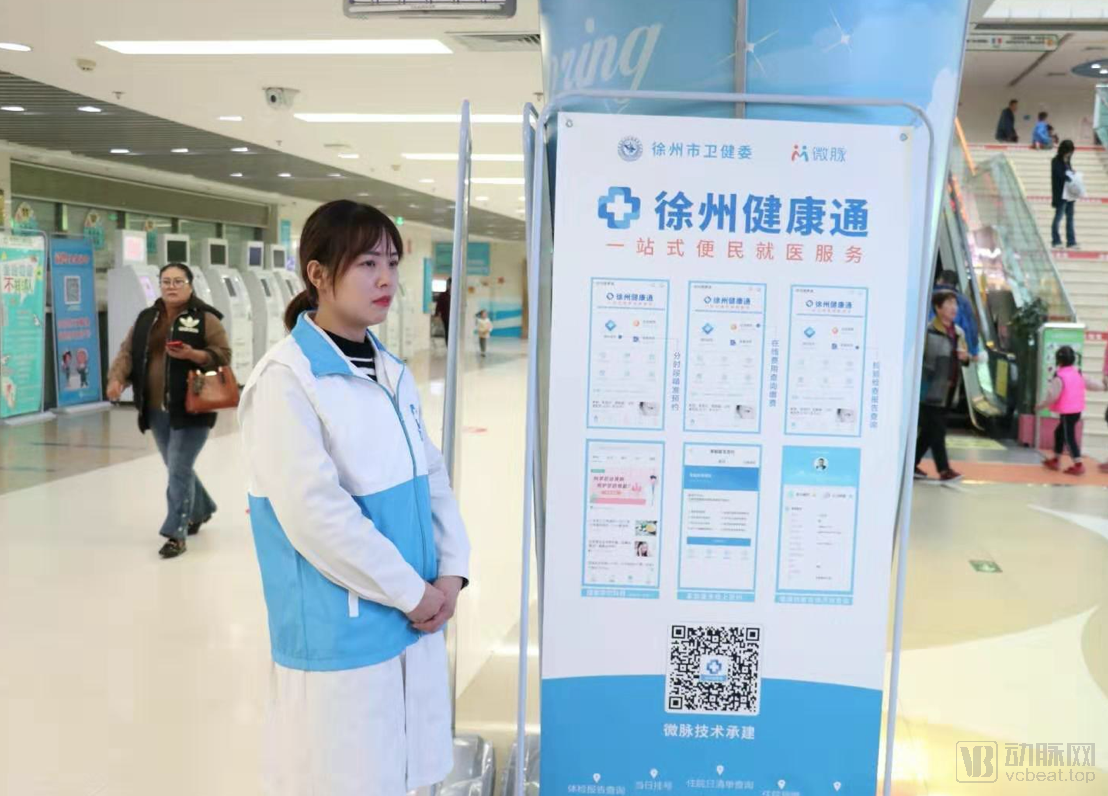
In its collaboration with internet platforms such as Weimai, the Xuzhou Municipal Health Commission has been deeply involved, and the mutual trust established between the parties has been key to the smooth operation of the Xuzhou Health Pass, thereby addressing the public’s actual healthcare access issues.
In line with the original design intent of “enabling the public to resolve all healthcare needs through a single app,” Xuzhou Health Pass has effectively established a closed-loop service covering the entire care continuum, including pre-consultation inquiries, registration and payment during consultations, and post-consultation follow-up.
On this basis, the public also has access to a portal for viewing their health information across the entire life cycle.
“Leveraging the full-lifecycle health information aggregated and integrated by the Xuzhou City Population Health Information Platform, residents can query and view their records on the ‘Health Pass’ app, thereby addressing the issue of incomplete medical record data across individual hospitals.” Director Ji Peichen opened the app to demonstrate the user-friendly “Health Record” feature to those around him.
Regarding the question of how “Xuzhou Health Pass” can coordinate with “Jiangsu Health Pass” (the internet hospital service platform built by the Jiangsu Provincial Health Commission), Ji Peichen stated that in the later stages, “Xuzhou Health Pass” will actively introduce internet diagnosis and treatment services as well as support services from the provincial platform, including electronic license repositories and video services, thereby establishing an internet hospital portal for the Xuzhou area with “Xuzhou Health Pass” as the main entity.
Regarding the development plan for Health Tong, Ji Peichen told Health Circle that, on the basis of connecting all public hospitals at secondary level and above in the city, the "Xuzhou Health Tong" APP is currently interfacing with county-level hospitals (county people's hospitals and traditional Chinese medicine hospitals), so as to provide unified "Internet + medical health" services for the main hospital service objects in each county, district and city of Xuzhou City.
Within Xuzhou’s long-term layout for “Internet + Healthcare,” the development plan for “Xuzhou Health Pass” serves as a key component, offering insight into the broader strategic framework of the Xuzhou Municipal Health Commission.
Ji Peichen introduced that in July 2020, Xuzhou City will fully implement the application of electronic medical records (EMRs) for outpatient and emergency services in public hospitals at Level II and above, as well as in township health centers and community health service centers. This initiative aims to provide patients with standardized and regulated outpatient and emergency EMRs, thereby addressing issues associated with traditional paper-based records, such as illegible physicians’ handwriting and difficulties in storage and portability.
Next step,The Xuzhou Municipal Health Commission will continue to uphold the people-centered, health-oriented philosophy, with the fundamental aim of providing convenient and beneficial services to the public, by innovatively establishing a new, efficient, and accessible model of “Internet + Medical Health” services.
Phase II functionalities will leverage internet technologies to efficiently aggregate high-quality medical service resources. By relying on internet hospital services operated by physical hospitals, it will serve as a centralized portal for online follow-up consultations, prescription circulation, and smart pharmacy services across the city. The initiative aims to facilitate online consultations and video visits with specialists from more tertiary hospitals; enable personalized customization of health checkup packages and flexible scheduling of appointment times; and provide specialized premium services, including VIP-style end-to-end specialist care, thereby enhancing the comfort index of healthcare services.
While ensuring that the goal of “further enhancing the quality of medical services and improving patients’ healthcare experience” does not become mere rhetoric, the Xuzhou Municipal Health Commission and medical institutions at all levels have already delivered a satisfactory performance in practice. The Xuzhou Health Pass, which serves as an innovative model for internet-based healthcare platforms, holds great promise in continuing to leverage its application functionalities.