

One Year After Becoming China's First Internet Aesthetic Medicine Listed Company, How Is SoYoung Defending Its Moat?
To date, it has been one year since So-Young, the “first stock of internet-based medical aesthetics,” went public. Riding the wave of the “beauty economy,” So-Young has built its moat over seven years, emerging as a leader in the RMB 100 billion medical aesthetics market.
In fact, from “community + e-commerce” to third-party service platforms, and further to building a content ecosystem, New Oxygen is now striving to create the “new infrastructure” for the medical aesthetics industry. Through initiatives such as partnering with hundreds of medical aesthetic institutions to establish an “Advisory Committee,” promoting the digitalization of the industry, and cracking down on illegal medical aesthetic practices, New Oxygen’s series of innovative measures are continuously leading the medical aesthetics industry toward healthier and more standardized development.
According to So-Young’s latest financial report, So-Young Technology reported total revenue of RMB 182.6 million in the first quarter of 2020. The average number of monthly active users (MAUs) on its mobile platform increased to 4.17 million in the first quarter, representing a 117% year-over-year growth from 1.92 million in the same period last year. Data from QuestMobile, an authoritative third-party data platform, showed that So-Young ranked first in April with over 9.66 million MAUs, becoming the leading traffic platform in the vertical healthcare sector for the month.
After seven years of exploration and development, So-Young, with a market capitalization exceeding $1.1 billion, has firmly secured a leading position in the medical aesthetics industry. With the advent of the post-pandemic era, what new strategies and approaches will So-Young adopt? At the Chengdu stop of the 2020 “CEO Face-to-Face” salon, So-Young Technology’s CEO Jin Xing, Vice President Liu Rong, and Vice President Cai Rui provided an in-depth analysis of So-Young’s 2020 strategic layout centered on “full openness, new ecosystem, and collaborative governance.” VCBeat offers its interpretation of these developments.
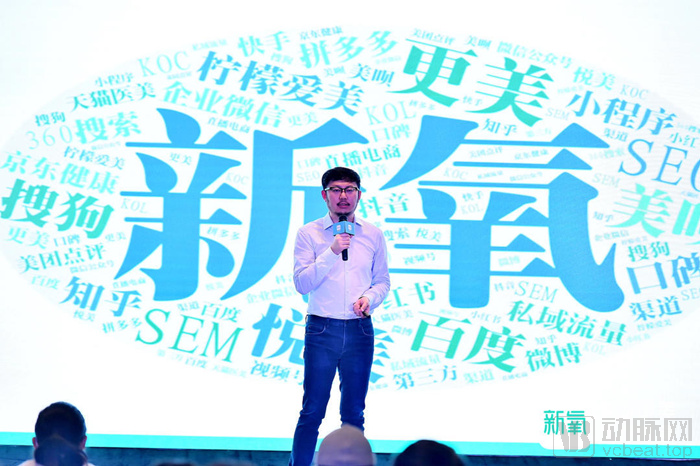
At the event, Jin Xing, CEO of New Oxygen Technology, delivered a speech.
In 2020, New Oxygen’s strategic layout placed greater emphasis on how to empower the industry.
According to the "White Paper on Insights into China's Medical Aesthetics Industry (2020)" released by iResearch, there are more than 13,000 institutions in China qualified to provide medical aesthetic services. Taking So-Young as an example, only over 3,000 institutions have comprehensive information profiles on the So-Young platform. This indicates that at least 70% of these institutions have not yet achieved an "online presence."
Over the past two decades, sectors such as retail, travel, education, and food services have pioneered their digital transformation. In contrast, the online development of the medical aesthetics industry has lagged behind. An examination of the developmental trajectories of other industries reveals that the evolution from information digitization to service digitization is an inevitable process in the overall digital transformation of any industry.
Jin Xing pointed out that the essence of going online is to front-load consumer decision-making, aiming to influence and capture consumers at an earlier stage. Institutions that achieve online presence earlier stand to gain more benefits.
The outbreak of the COVID-19 pandemic has significantly impacted various industries, and aesthetic medicine institutions have faced substantial challenges over the past few months. Amidst uncertainties in both the industry landscape and marketing channels, it is particularly crucial for these institutions to identify certainties within the uncertainty to maximize their steady development. Embracing digital transformation is an indispensable step for these institutions.
Online transformation is not merely about digitizing information, but also about delivering services online. As a platform provider, New Oxygen facilitates the digitalization of institutional information and services by offering comprehensive data—including details on clinics, physicians, and procedures—as well as a suite of online services such as appointment booking, Q&A sessions, private messaging, video consultations, live streaming, and post-operative care.
Meanwhile, based on the specific circumstances of each institution, New Oxygen categorizes them into different types, such as e-commerce-oriented, content-driven, and social-focused. Corresponding solutions are provided for each category to help institutions reduce operational complexities and lower the barriers to entry. “Our goal is to have at least 10,000 institutions complete information-based onboarding by the end of this year. Furthermore, through our customized services, we aim to bring merchants greater traffic and more opportunities,” stated Jin Xing.
The digitization of industry information and services is merely a microcosm of So-Young’s 2020 “Full Openness” strategy.
In May, New Oxygen joined forces with 103 professional medical aesthetics and consumer healthcare institutions across China, including Mylike Group, United LiGe Group, Yestar Group, Reborn Group, Hualing Group, Jianli Medical Aesthetics Group, Junda Plastic Surgery Group, Taikang Bybo Dental, and Shengbei Dental, to establish the “New Oxygen Advisory Committee,” drawing significant attention within the industry.
It can be said that the establishment of the Advisory Committee marks a significant step for New Oxygen in building a new industry ecosystem.
According to Jin Xing, since the launch of SoYoung’s “Advisory Committee,” a total of 31 specific needs from medical aesthetic institutions have been collected, among which 15 have been resolved, 7 are pending progress updates, and 9 require further clarification. The upgrade of the SoYoung APP to V8.0 leverages this Advisory Committee mechanism, inviting institutional committee members to participate in a “trial run” of product iteration.
In addition to establishing an advisory committee, New Oxygen is also strengthening its own content ecosystem. Currently, New Oxygen operates seven WeChat official accounts, 16 Weibo accounts, and 15 video columns. In February this year, the total views across its new media matrix exceeded 1.1 billion. Within its broader community, content formats such as Beauty Diaries, live streams, Q&A sessions, encyclopedias, and trending topics have garnered significant user attention on the New Oxygen platform, with authentic Beauty Diaries alone numbering in the millions.
Leveraging its precise and extensive user base in the medical aesthetics sector and its strong community attributes, the SoYoung app achieved a 117% year-on-year growth in MAU during the pandemic.
“Professional content production has always been SoYoung’s core strength,” pointed out Jin Xing. In the future, SoYoung will offer more diverse and enriched content. For instance, its previously pure medical aesthetics content will be restructured into four major sections: facial management, skin management, body shaping, and health management. Operationally, each category will expand beyond pure medical aesthetics to include topics such as weight loss, dieting, fitness, and slimming tips. This broadening of content scope will enhance user retention and improve conversion rates. Leveraging its strong content DNA, SoYoung is committed to becoming China’s largest content ecosystem platform for medical aesthetics.
The rapid development of the medical aesthetics industry has also given rise to significant market irregularities. The White Paper on “Underground Illegal Injections” in China’s Medical Aesthetics Industry reveals that there are approximately 17,000 compliant practitioners in China’s medical aesthetics sector, while the number of illegal practitioners exceeds 150,000. Among the numerous medical aesthetics institutions, the number of unlicensed clinics has surpassed 60,000, six times that of licensed clinics. The annual number of surgical procedures performed by unlicensed clinics is 2.5 times that of licensed clinics, exceeding 25 million cases. Furthermore, these unlicensed clinics may be responsible for up to 40,000 medical accidents annually, including issues such as surgical infections and severe scarring.
As market development outpaces regulatory policies, industry stakeholders must jointly maintain and purify the ecosystem. In terms of governance, New Oxygen has made substantial investments. By joining the “Quality Consumption Leader Organization” under Heimao Complaints, launching medical aesthetic insurance, establishing a Customer Advisory Committee, focusing on victims of illegal medical aesthetics, and initiating the New Oxygen Public Welfare Assistance Project, New Oxygen is striving to build the “new infrastructure” for a healthy medical aesthetics industry.
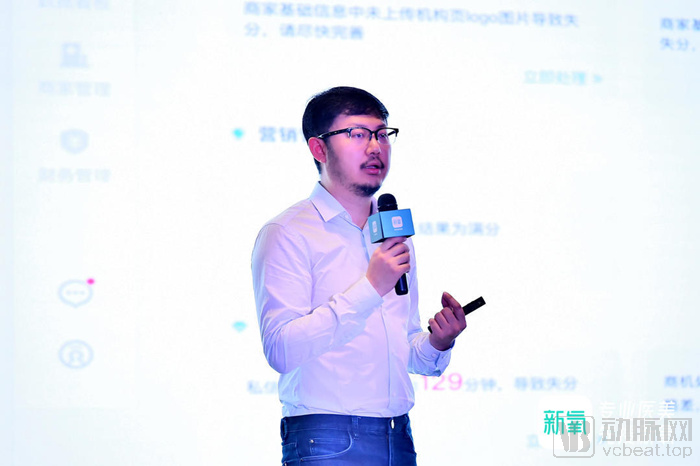
Jin Xing, CEO of New Oxygen Technology
“Customer success is inseparable from user trust.” Jin Xing pointed out that, going forward, New Oxygen will comprehensively strengthen platform governance across dimensions such as authentic reviews, accurate information, performance guarantees, and dispute resolution. Meanwhile, it will launch a “Small Court” and a more automated review system to vigorously combat illegal medical aesthetic practices and address chaotic phenomena on the platform, thereby helping reputable institutions thrive and fostering a healthy industry ecosystem.
Liu Rong, Vice President of New Oxygen Technology, pointed out that the company’s newly iterated “1 Strengthening, 3 Reductions, 2 Enhancements” strategy will comprehensively support institutional development.
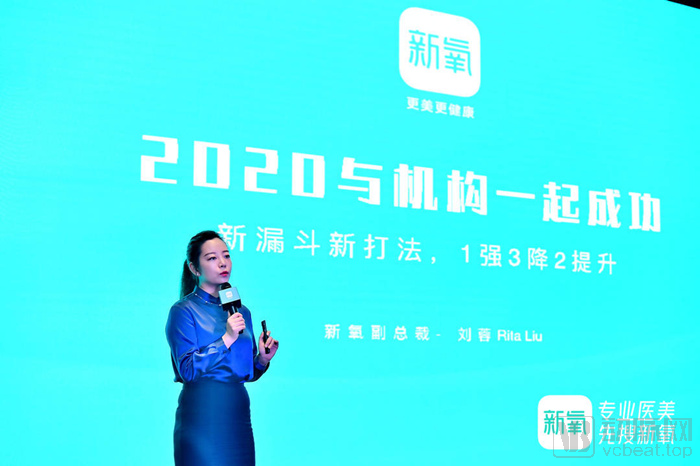
Liu Rong, Vice President of New Oxygen Technology
First, strengthen communication by establishing an advisory committee to fully understand and address the actual needs of institutions. Second, adopt a tiered membership mechanism with city-specific strategies to lower the entry threshold for institutions. Simplify the system and provide proven operational models to reduce usage complexity. Mitigate institutional risks through a suite of security assurance and financial services. Finally, leverage intelligent diagnostic “external brain” services and big data empowerment to optimize operations, enhance efficiency, and improve conversion rates.
In addition, New Oxygen will develop distinct “new strategies” for large, medium, and micro/small institutions based on dimensions such as facility size, geographic location, lead physicians, daily patient volume, acquisition channels, and staff headcount. These strategies will be tailored to different user segments, including those who rely on guides, reviews, store visits, celebrity endorsements, and influencer recommendations. By implementing these new approaches, institutions can fully achieve cost reduction and efficiency improvement, thereby fostering sustainable and healthy development.
Liu Rong emphasized that, going forward, New Oxygen will continuously provide aesthetic medical institutions with “new strategies” and create “blockbuster offerings,” leveraging its ability to deliver solutions efficiently and promptly to accelerate their growth.
Cai Rui, Vice President of New Oxygen Technology, stated that under the trend of digitalization, the development of medical aesthetic institutions and platforms is mutually reinforcing and symbiotic. New Oxygen’s technological product iterations have consistently focused on addressing the pain points in institutional development. Currently, the New Oxygen platform has successively launched mini-tools such as New Oxygen Magic Mirror, drug authenticity verification, video consultations, and skin analysis. From May 2019 to the present, these mini-tools have been used over 230 million times in total. Among them, the daily peak number of users for video consultations reached 4,000, while the daily peak active users for New Oxygen Magic Mirror’s facial analysis exceeded 330,000.
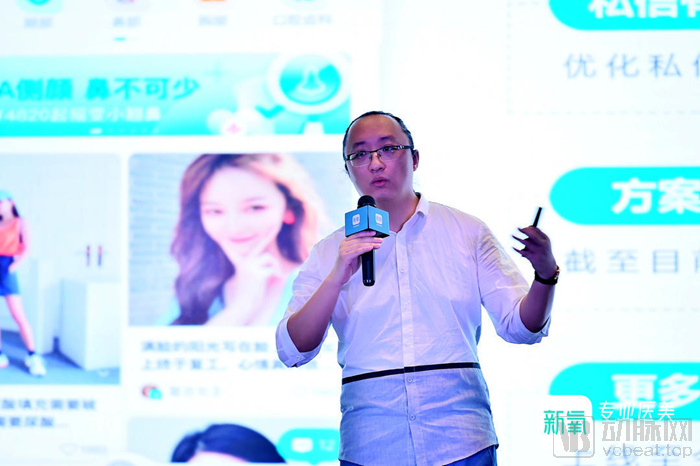
Cai Rui, Vice President of New Oxygen Technology
He stated that, at the technical level, New Oxygen will continuously provide industry big data to medical institutions, thereby consistently supporting their operational management. In the future, there remains significant potential for New Oxygen to drive further technological innovation.
From building the medical aesthetics ecosystem to its comprehensive iteration, New Oxygen is contributing to the development of the industry’s “new infrastructure.” In 2020, as New Oxygen embarks on a new journey, it is well worth our anticipation.